Description
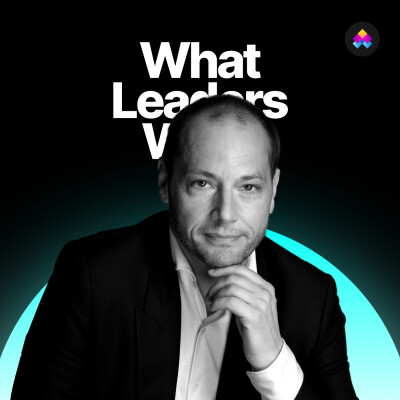
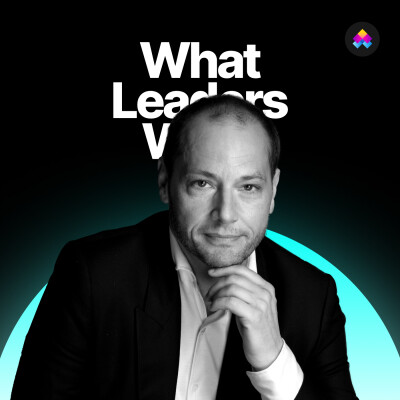
SBS CEO Eric Bierry explains how AI is taking over banking, from fraud detection to client relationships, and why "human in the loop" still matters.
Hosted on Ausha. See ausha.co/privacy-policy for more information.
Description
SBS CEO Eric Bierry explains how AI is taking over banking, from fraud detection to client relationships, and why "human in the loop" still matters.
Hosted on Ausha. See ausha.co/privacy-policy for more information.
Transcription
Welcome to What Leaders Want, the podcast series that features experts in the finance industry. Today, I'm happy to welcome back Eric Bieri, CEO of SBS and Deputy CEO of 74 Software. This is actually the third time that we are recording together. So if you haven't caught the first two episodes, I have dropped the link below. I have mainly presented Eric Bieri. in the last two episodes. And in the last one, we talked mainly about the merger between SBS and Exway. And since then, a lot has happened, a lot has changed. So this year, we are going to look back at the 12 past months and see where things stand today. But before we dive in, I'd like to know, Eric, because I'm guessing that you took some time off this summer to recharge. So what did you get into?
I took a break, I should say a big break, three weeks. Usually I'm not taking so much. And I did a crazy experience. And let me maybe just in two minutes tell you what was my experience during the vacation.
Yeah, sure.
I'm having a tradition in my family because, you know, I'm not there every week supporting everyone. because I'm traveling a lot and you know during the year I'm really busy. So my tradition is since 2019 I'm renting a house during 10 to 15 days and the day I'm renting I'm opening during the first week booking for people in my family and the idea is just to spend time together and after the first week of booking I'm opening the second week with the remaining I would say not seats, but bed and bathroom in the house, to my people close to me, to my friends. And we did that, as I said, since 2019. And it's a fantastic memories, I should admit. So this year we did that. And for the first time, we did not that in Spain. And we did that in Greece.
That's nice.
So it was really cool. And there is only one rule. This is the rule to come. The rule is simple. No one can force me to do anything. The idea is everyone is coming, everyone is laughing, I'm cooking, but I refuse to follow any orders. Or if someone wants to do something, I don't want to do the same thing. The people can feel free to do what they want, but I do also what I want.
You say you like cooking. What do you like cooking best?
I like to cook fish. I like to go very early in the morning when everyone is sleeping because we finish very late. I like to go to the market, the fresh one, at the port and just to purchase fresh fish from the night. And I love to cook fish, especially during vacation. So I'm not strong at all to cook cake and everything with sugar. But the rest, I love to do it when I'm having the time to select the right products And giving my love, I would say, to prepare. And then when people are waking up, a large part is already ready and we can start with some beers and then we enjoy the time together.
Okay, great. So I'm glad to know that you had a lovely time with family, friends.
I hope you did the same.
Yeah, yeah, yeah, I had. Yeah, I went to the French Alps and yeah, I did a lot of activities like... biking and stuff like that. So yeah, I enjoyed it. Yeah. Great to have you back for this new year ahead and you look well rested. So thank you. So let's dive into the topic that everyone is talking about that is very far away from holidays, but it's AI. And from what I know over the course of your career, you have lived through... several major technological shifts.
You're saying I'm a veteran.
Maybe not, but me too. I have experienced the same technological shifts, so that's okay. The internet, for instance, before we had the Minitel, I can remember that. So the internet, the mobile phone, the cloud even. So I was wondering, what feels genuinely different this time to you about AI?
There are two things for me. The first one is, surprisingly, It's not new. All the algorithms, all the strategies around AI were known for most of them already 10, 15 years ago. What has changed is the ability to have the power to calculate, to process, and then to deliver the value we see from AI at the moment. So for me, that's something very important because cloud was not really existing or many other such like the mobile phone. This was something not existing at all before. The second thing is the speed. When we are looking at the speed of internet fully deployed or the smartphone fully deployed, it took two, three, four, five years sometimes to really become something used by everyone and impacting the life of everyone. AI, I should admit that in one year, it's already like a revolution. So first we need to accept that. So I think one year ago, some people were still saying, Do we have to embrace AI? Is it really for us? I think that question did disappear very rapidly. AI is everywhere already. And the key question is not, do I accept to use AI? But the key question now is, how do I use AI? For what? For which outcome? And does it make sense in my life, being personal or business-like?
I'm curious, has it changed anything in the way you work, think, or even take decisions?
That question is difficult because, of course, we have a stronger access to knowledge. The ability to have synthesis of many, many topics is definitely there. But at the opposite, you know, I'm receiving many, many reports each week. And I'm asking analysis on the market, on product, on competition. Or I'm asking sometimes just to design a plan to launch a new product. And I see definitely when it has been generated by AI and it's not generated by AI. And my key question behind your question is, I think we all need to use AI, but we all need to continue to keep our capability to analyze and to really deliver the message we want. So if someone is just using AI and sending to you the result of what the AI generates, I think we start to miss many, many things. So, yes, it has changed, back to your question, it has changed the way we are working, the way we are preparing. If I'm visiting a client, the 360 view of this client in only a few minutes is ready, where in the past it was taking a lot of time. So many, many different tasks we are having on a day-to-day basis is impacted, I think, positively by AI. And to give you another perspective, you know, two years ago, we were looking at doing acquisition for the company. And the valuation of some software companies were very high. And now with AI, acquiring the same company would not make the same benefits. And we are not expecting the same outcome. And the valuation has changed. It has changed many, many things in the way we are looking at the future, in the way we are looking at our investment. It's also accelerating when we need to deliver something, a new feature or a new product. It was acceptable two, three years ago to have two years delay. Today with AI, it's not acceptable at all, and we are expecting to deliver something new, and our clients and the market are expecting us to go a lot faster because of AI. So many things are changing progressively, Liam. And just to conclude on this, there are things we can do today. Three months ago, it was not possible to do because of the speed of the evolution of the capabilities and a new LLM is popping up and putting the previous one obsolete. So that ability to stay very agile in that environment is also very high demanding for us in the way we are operating.
Another tricky question. If you had to bet on one thing AI will do to banking in the next few years, what would it be?
I'm trying to separate what this will be doing for you as a client of the bank and what this will be doing for an employee of a bank dealing with you. So let me start with the employee. Today, the ability of the employee to really spend time with you. and to really, I would call it being augmented, to have more capabilities to better support your expectations. It's starting to arrive and I'm convinced that tomorrow you are sales representative in the bank, someone who is taking care of you. Maybe there will be less people, but they will be having a lot more time to spend time with you to understand what you are doing because a lot of things will be anticipated and automated in the ability to support your expectation. You want to acquire an apartment. you're having a... children coming and suddenly there are many many things changing and where today we are spending a lot of time to anticipate all of this this should be coming faster so we see the benefits from that perspective as a client i think there will be first more automation and more options you will be adding in front of the table i was talking with one of my friends he's working in a spanish bank and he was telling me today and when my client is visiting me he's coming with more options than even I was anticipating because he did the same exercise with AI to anticipate the meeting. So to have access to many more options we can do it today, I think we would be personally expecting that a lot more is going to be automated with only one condition, the human in the loop has to stay. So I will never, Maybe I'm too old. I just said that at the beginning. I will never accept that the transaction would be executed without my approval. So, and I don't think really that someone in the next 10 years would accept to have a payment processed on his behalf without having a clear approval at some point in time, being uncipated because it's recurring, or being just informed and just to say, I approve at the moment of the transaction. So that's the way we see at the moment things moving.
Can you be more specific about what you would change for a banker's day-to-day job?
Yeah, I was talking only on the sales rep in front of you, but there are many other people working in the bank. And, you know, there is one thing for me where we start to see the benefits. And at the same time, we start to see increasingly the risk around cyber and the risk of fraud. So today, AI is helping and should be helping a lot more. First in... identifying behaviors and correlating a lot more data and the perception of behavior where the bank should be identifying and then immediately intervening because there is a risk of fraud. So that's one. And the second, and maybe no one is really anticipating this, but there are a lot of false positives in fraud. And today we see the first benefit also in reducing the false positives. with AI, which is giving more time to bankers to spend time on what matters for the bank and not in, let's say, just confirming that it was a false positive. So this is really something important. You know, everything is real time today. We expect payment real time. We expect a credit decision close to be real time. If you want to purchase something and you're expecting to have the approval not in one week and you want it immediately. And as a consequence, the volume of data which have to be processed, are augmenting a lot. And the risk of fraud around this data are augmenting a lot. And cybersecurity, of course, is becoming a key thing. By the way, on cybersecurity, it's the first time in our decade, I would say, that the cost to defend is higher than the cost to attack. Five years ago, hackers were spending more money to try to hack. the system. And of course, they were trying to really access to very important data, to sell this data on the dark web and so on. Today, all the analysis are showing that it's the opposite. We need to spend and invest more money than what they do spend. So in a nutshell, that's the way we see all the benefits for bankers at the moment. And you know, and we need never forget that this is a fortress for us. We trust our bank to protect us. So they need, they must, I would say, absolutely to take the benefit of AI to improve that fortress and to make sure that they will be keeping your trust for the future.
Talking about that, I'd like to focus a bit more on SBS and how it is evolving with AI. So today, the common advice right now is to run your AI on the big US cloud platforms. But SBS is heading in another direction. So why is SBS betting against the consensus? You've just listened to part one of our conversation with Eric Geary. In the next part, we will focus more on SBS itself and how the organization is evolving and is embracing the new opportunities coming with AI. So don't miss part two. There is more to come.
Description
SBS CEO Eric Bierry explains how AI is taking over banking, from fraud detection to client relationships, and why "human in the loop" still matters.
Hosted on Ausha. See ausha.co/privacy-policy for more information.
Transcription
Welcome to What Leaders Want, the podcast series that features experts in the finance industry. Today, I'm happy to welcome back Eric Bieri, CEO of SBS and Deputy CEO of 74 Software. This is actually the third time that we are recording together. So if you haven't caught the first two episodes, I have dropped the link below. I have mainly presented Eric Bieri. in the last two episodes. And in the last one, we talked mainly about the merger between SBS and Exway. And since then, a lot has happened, a lot has changed. So this year, we are going to look back at the 12 past months and see where things stand today. But before we dive in, I'd like to know, Eric, because I'm guessing that you took some time off this summer to recharge. So what did you get into?
I took a break, I should say a big break, three weeks. Usually I'm not taking so much. And I did a crazy experience. And let me maybe just in two minutes tell you what was my experience during the vacation.
Yeah, sure.
I'm having a tradition in my family because, you know, I'm not there every week supporting everyone. because I'm traveling a lot and you know during the year I'm really busy. So my tradition is since 2019 I'm renting a house during 10 to 15 days and the day I'm renting I'm opening during the first week booking for people in my family and the idea is just to spend time together and after the first week of booking I'm opening the second week with the remaining I would say not seats, but bed and bathroom in the house, to my people close to me, to my friends. And we did that, as I said, since 2019. And it's a fantastic memories, I should admit. So this year we did that. And for the first time, we did not that in Spain. And we did that in Greece.
That's nice.
So it was really cool. And there is only one rule. This is the rule to come. The rule is simple. No one can force me to do anything. The idea is everyone is coming, everyone is laughing, I'm cooking, but I refuse to follow any orders. Or if someone wants to do something, I don't want to do the same thing. The people can feel free to do what they want, but I do also what I want.
You say you like cooking. What do you like cooking best?
I like to cook fish. I like to go very early in the morning when everyone is sleeping because we finish very late. I like to go to the market, the fresh one, at the port and just to purchase fresh fish from the night. And I love to cook fish, especially during vacation. So I'm not strong at all to cook cake and everything with sugar. But the rest, I love to do it when I'm having the time to select the right products And giving my love, I would say, to prepare. And then when people are waking up, a large part is already ready and we can start with some beers and then we enjoy the time together.
Okay, great. So I'm glad to know that you had a lovely time with family, friends.
I hope you did the same.
Yeah, yeah, yeah, I had. Yeah, I went to the French Alps and yeah, I did a lot of activities like... biking and stuff like that. So yeah, I enjoyed it. Yeah. Great to have you back for this new year ahead and you look well rested. So thank you. So let's dive into the topic that everyone is talking about that is very far away from holidays, but it's AI. And from what I know over the course of your career, you have lived through... several major technological shifts.
You're saying I'm a veteran.
Maybe not, but me too. I have experienced the same technological shifts, so that's okay. The internet, for instance, before we had the Minitel, I can remember that. So the internet, the mobile phone, the cloud even. So I was wondering, what feels genuinely different this time to you about AI?
There are two things for me. The first one is, surprisingly, It's not new. All the algorithms, all the strategies around AI were known for most of them already 10, 15 years ago. What has changed is the ability to have the power to calculate, to process, and then to deliver the value we see from AI at the moment. So for me, that's something very important because cloud was not really existing or many other such like the mobile phone. This was something not existing at all before. The second thing is the speed. When we are looking at the speed of internet fully deployed or the smartphone fully deployed, it took two, three, four, five years sometimes to really become something used by everyone and impacting the life of everyone. AI, I should admit that in one year, it's already like a revolution. So first we need to accept that. So I think one year ago, some people were still saying, Do we have to embrace AI? Is it really for us? I think that question did disappear very rapidly. AI is everywhere already. And the key question is not, do I accept to use AI? But the key question now is, how do I use AI? For what? For which outcome? And does it make sense in my life, being personal or business-like?
I'm curious, has it changed anything in the way you work, think, or even take decisions?
That question is difficult because, of course, we have a stronger access to knowledge. The ability to have synthesis of many, many topics is definitely there. But at the opposite, you know, I'm receiving many, many reports each week. And I'm asking analysis on the market, on product, on competition. Or I'm asking sometimes just to design a plan to launch a new product. And I see definitely when it has been generated by AI and it's not generated by AI. And my key question behind your question is, I think we all need to use AI, but we all need to continue to keep our capability to analyze and to really deliver the message we want. So if someone is just using AI and sending to you the result of what the AI generates, I think we start to miss many, many things. So, yes, it has changed, back to your question, it has changed the way we are working, the way we are preparing. If I'm visiting a client, the 360 view of this client in only a few minutes is ready, where in the past it was taking a lot of time. So many, many different tasks we are having on a day-to-day basis is impacted, I think, positively by AI. And to give you another perspective, you know, two years ago, we were looking at doing acquisition for the company. And the valuation of some software companies were very high. And now with AI, acquiring the same company would not make the same benefits. And we are not expecting the same outcome. And the valuation has changed. It has changed many, many things in the way we are looking at the future, in the way we are looking at our investment. It's also accelerating when we need to deliver something, a new feature or a new product. It was acceptable two, three years ago to have two years delay. Today with AI, it's not acceptable at all, and we are expecting to deliver something new, and our clients and the market are expecting us to go a lot faster because of AI. So many things are changing progressively, Liam. And just to conclude on this, there are things we can do today. Three months ago, it was not possible to do because of the speed of the evolution of the capabilities and a new LLM is popping up and putting the previous one obsolete. So that ability to stay very agile in that environment is also very high demanding for us in the way we are operating.
Another tricky question. If you had to bet on one thing AI will do to banking in the next few years, what would it be?
I'm trying to separate what this will be doing for you as a client of the bank and what this will be doing for an employee of a bank dealing with you. So let me start with the employee. Today, the ability of the employee to really spend time with you. and to really, I would call it being augmented, to have more capabilities to better support your expectations. It's starting to arrive and I'm convinced that tomorrow you are sales representative in the bank, someone who is taking care of you. Maybe there will be less people, but they will be having a lot more time to spend time with you to understand what you are doing because a lot of things will be anticipated and automated in the ability to support your expectation. You want to acquire an apartment. you're having a... children coming and suddenly there are many many things changing and where today we are spending a lot of time to anticipate all of this this should be coming faster so we see the benefits from that perspective as a client i think there will be first more automation and more options you will be adding in front of the table i was talking with one of my friends he's working in a spanish bank and he was telling me today and when my client is visiting me he's coming with more options than even I was anticipating because he did the same exercise with AI to anticipate the meeting. So to have access to many more options we can do it today, I think we would be personally expecting that a lot more is going to be automated with only one condition, the human in the loop has to stay. So I will never, Maybe I'm too old. I just said that at the beginning. I will never accept that the transaction would be executed without my approval. So, and I don't think really that someone in the next 10 years would accept to have a payment processed on his behalf without having a clear approval at some point in time, being uncipated because it's recurring, or being just informed and just to say, I approve at the moment of the transaction. So that's the way we see at the moment things moving.
Can you be more specific about what you would change for a banker's day-to-day job?
Yeah, I was talking only on the sales rep in front of you, but there are many other people working in the bank. And, you know, there is one thing for me where we start to see the benefits. And at the same time, we start to see increasingly the risk around cyber and the risk of fraud. So today, AI is helping and should be helping a lot more. First in... identifying behaviors and correlating a lot more data and the perception of behavior where the bank should be identifying and then immediately intervening because there is a risk of fraud. So that's one. And the second, and maybe no one is really anticipating this, but there are a lot of false positives in fraud. And today we see the first benefit also in reducing the false positives. with AI, which is giving more time to bankers to spend time on what matters for the bank and not in, let's say, just confirming that it was a false positive. So this is really something important. You know, everything is real time today. We expect payment real time. We expect a credit decision close to be real time. If you want to purchase something and you're expecting to have the approval not in one week and you want it immediately. And as a consequence, the volume of data which have to be processed, are augmenting a lot. And the risk of fraud around this data are augmenting a lot. And cybersecurity, of course, is becoming a key thing. By the way, on cybersecurity, it's the first time in our decade, I would say, that the cost to defend is higher than the cost to attack. Five years ago, hackers were spending more money to try to hack. the system. And of course, they were trying to really access to very important data, to sell this data on the dark web and so on. Today, all the analysis are showing that it's the opposite. We need to spend and invest more money than what they do spend. So in a nutshell, that's the way we see all the benefits for bankers at the moment. And you know, and we need never forget that this is a fortress for us. We trust our bank to protect us. So they need, they must, I would say, absolutely to take the benefit of AI to improve that fortress and to make sure that they will be keeping your trust for the future.
Talking about that, I'd like to focus a bit more on SBS and how it is evolving with AI. So today, the common advice right now is to run your AI on the big US cloud platforms. But SBS is heading in another direction. So why is SBS betting against the consensus? You've just listened to part one of our conversation with Eric Geary. In the next part, we will focus more on SBS itself and how the organization is evolving and is embracing the new opportunities coming with AI. So don't miss part two. There is more to come.
Share
Embed
You may also like
Description
SBS CEO Eric Bierry explains how AI is taking over banking, from fraud detection to client relationships, and why "human in the loop" still matters.
Hosted on Ausha. See ausha.co/privacy-policy for more information.
Transcription
Welcome to What Leaders Want, the podcast series that features experts in the finance industry. Today, I'm happy to welcome back Eric Bieri, CEO of SBS and Deputy CEO of 74 Software. This is actually the third time that we are recording together. So if you haven't caught the first two episodes, I have dropped the link below. I have mainly presented Eric Bieri. in the last two episodes. And in the last one, we talked mainly about the merger between SBS and Exway. And since then, a lot has happened, a lot has changed. So this year, we are going to look back at the 12 past months and see where things stand today. But before we dive in, I'd like to know, Eric, because I'm guessing that you took some time off this summer to recharge. So what did you get into?
I took a break, I should say a big break, three weeks. Usually I'm not taking so much. And I did a crazy experience. And let me maybe just in two minutes tell you what was my experience during the vacation.
Yeah, sure.
I'm having a tradition in my family because, you know, I'm not there every week supporting everyone. because I'm traveling a lot and you know during the year I'm really busy. So my tradition is since 2019 I'm renting a house during 10 to 15 days and the day I'm renting I'm opening during the first week booking for people in my family and the idea is just to spend time together and after the first week of booking I'm opening the second week with the remaining I would say not seats, but bed and bathroom in the house, to my people close to me, to my friends. And we did that, as I said, since 2019. And it's a fantastic memories, I should admit. So this year we did that. And for the first time, we did not that in Spain. And we did that in Greece.
That's nice.
So it was really cool. And there is only one rule. This is the rule to come. The rule is simple. No one can force me to do anything. The idea is everyone is coming, everyone is laughing, I'm cooking, but I refuse to follow any orders. Or if someone wants to do something, I don't want to do the same thing. The people can feel free to do what they want, but I do also what I want.
You say you like cooking. What do you like cooking best?
I like to cook fish. I like to go very early in the morning when everyone is sleeping because we finish very late. I like to go to the market, the fresh one, at the port and just to purchase fresh fish from the night. And I love to cook fish, especially during vacation. So I'm not strong at all to cook cake and everything with sugar. But the rest, I love to do it when I'm having the time to select the right products And giving my love, I would say, to prepare. And then when people are waking up, a large part is already ready and we can start with some beers and then we enjoy the time together.
Okay, great. So I'm glad to know that you had a lovely time with family, friends.
I hope you did the same.
Yeah, yeah, yeah, I had. Yeah, I went to the French Alps and yeah, I did a lot of activities like... biking and stuff like that. So yeah, I enjoyed it. Yeah. Great to have you back for this new year ahead and you look well rested. So thank you. So let's dive into the topic that everyone is talking about that is very far away from holidays, but it's AI. And from what I know over the course of your career, you have lived through... several major technological shifts.
You're saying I'm a veteran.
Maybe not, but me too. I have experienced the same technological shifts, so that's okay. The internet, for instance, before we had the Minitel, I can remember that. So the internet, the mobile phone, the cloud even. So I was wondering, what feels genuinely different this time to you about AI?
There are two things for me. The first one is, surprisingly, It's not new. All the algorithms, all the strategies around AI were known for most of them already 10, 15 years ago. What has changed is the ability to have the power to calculate, to process, and then to deliver the value we see from AI at the moment. So for me, that's something very important because cloud was not really existing or many other such like the mobile phone. This was something not existing at all before. The second thing is the speed. When we are looking at the speed of internet fully deployed or the smartphone fully deployed, it took two, three, four, five years sometimes to really become something used by everyone and impacting the life of everyone. AI, I should admit that in one year, it's already like a revolution. So first we need to accept that. So I think one year ago, some people were still saying, Do we have to embrace AI? Is it really for us? I think that question did disappear very rapidly. AI is everywhere already. And the key question is not, do I accept to use AI? But the key question now is, how do I use AI? For what? For which outcome? And does it make sense in my life, being personal or business-like?
I'm curious, has it changed anything in the way you work, think, or even take decisions?
That question is difficult because, of course, we have a stronger access to knowledge. The ability to have synthesis of many, many topics is definitely there. But at the opposite, you know, I'm receiving many, many reports each week. And I'm asking analysis on the market, on product, on competition. Or I'm asking sometimes just to design a plan to launch a new product. And I see definitely when it has been generated by AI and it's not generated by AI. And my key question behind your question is, I think we all need to use AI, but we all need to continue to keep our capability to analyze and to really deliver the message we want. So if someone is just using AI and sending to you the result of what the AI generates, I think we start to miss many, many things. So, yes, it has changed, back to your question, it has changed the way we are working, the way we are preparing. If I'm visiting a client, the 360 view of this client in only a few minutes is ready, where in the past it was taking a lot of time. So many, many different tasks we are having on a day-to-day basis is impacted, I think, positively by AI. And to give you another perspective, you know, two years ago, we were looking at doing acquisition for the company. And the valuation of some software companies were very high. And now with AI, acquiring the same company would not make the same benefits. And we are not expecting the same outcome. And the valuation has changed. It has changed many, many things in the way we are looking at the future, in the way we are looking at our investment. It's also accelerating when we need to deliver something, a new feature or a new product. It was acceptable two, three years ago to have two years delay. Today with AI, it's not acceptable at all, and we are expecting to deliver something new, and our clients and the market are expecting us to go a lot faster because of AI. So many things are changing progressively, Liam. And just to conclude on this, there are things we can do today. Three months ago, it was not possible to do because of the speed of the evolution of the capabilities and a new LLM is popping up and putting the previous one obsolete. So that ability to stay very agile in that environment is also very high demanding for us in the way we are operating.
Another tricky question. If you had to bet on one thing AI will do to banking in the next few years, what would it be?
I'm trying to separate what this will be doing for you as a client of the bank and what this will be doing for an employee of a bank dealing with you. So let me start with the employee. Today, the ability of the employee to really spend time with you. and to really, I would call it being augmented, to have more capabilities to better support your expectations. It's starting to arrive and I'm convinced that tomorrow you are sales representative in the bank, someone who is taking care of you. Maybe there will be less people, but they will be having a lot more time to spend time with you to understand what you are doing because a lot of things will be anticipated and automated in the ability to support your expectation. You want to acquire an apartment. you're having a... children coming and suddenly there are many many things changing and where today we are spending a lot of time to anticipate all of this this should be coming faster so we see the benefits from that perspective as a client i think there will be first more automation and more options you will be adding in front of the table i was talking with one of my friends he's working in a spanish bank and he was telling me today and when my client is visiting me he's coming with more options than even I was anticipating because he did the same exercise with AI to anticipate the meeting. So to have access to many more options we can do it today, I think we would be personally expecting that a lot more is going to be automated with only one condition, the human in the loop has to stay. So I will never, Maybe I'm too old. I just said that at the beginning. I will never accept that the transaction would be executed without my approval. So, and I don't think really that someone in the next 10 years would accept to have a payment processed on his behalf without having a clear approval at some point in time, being uncipated because it's recurring, or being just informed and just to say, I approve at the moment of the transaction. So that's the way we see at the moment things moving.
Can you be more specific about what you would change for a banker's day-to-day job?
Yeah, I was talking only on the sales rep in front of you, but there are many other people working in the bank. And, you know, there is one thing for me where we start to see the benefits. And at the same time, we start to see increasingly the risk around cyber and the risk of fraud. So today, AI is helping and should be helping a lot more. First in... identifying behaviors and correlating a lot more data and the perception of behavior where the bank should be identifying and then immediately intervening because there is a risk of fraud. So that's one. And the second, and maybe no one is really anticipating this, but there are a lot of false positives in fraud. And today we see the first benefit also in reducing the false positives. with AI, which is giving more time to bankers to spend time on what matters for the bank and not in, let's say, just confirming that it was a false positive. So this is really something important. You know, everything is real time today. We expect payment real time. We expect a credit decision close to be real time. If you want to purchase something and you're expecting to have the approval not in one week and you want it immediately. And as a consequence, the volume of data which have to be processed, are augmenting a lot. And the risk of fraud around this data are augmenting a lot. And cybersecurity, of course, is becoming a key thing. By the way, on cybersecurity, it's the first time in our decade, I would say, that the cost to defend is higher than the cost to attack. Five years ago, hackers were spending more money to try to hack. the system. And of course, they were trying to really access to very important data, to sell this data on the dark web and so on. Today, all the analysis are showing that it's the opposite. We need to spend and invest more money than what they do spend. So in a nutshell, that's the way we see all the benefits for bankers at the moment. And you know, and we need never forget that this is a fortress for us. We trust our bank to protect us. So they need, they must, I would say, absolutely to take the benefit of AI to improve that fortress and to make sure that they will be keeping your trust for the future.
Talking about that, I'd like to focus a bit more on SBS and how it is evolving with AI. So today, the common advice right now is to run your AI on the big US cloud platforms. But SBS is heading in another direction. So why is SBS betting against the consensus? You've just listened to part one of our conversation with Eric Geary. In the next part, we will focus more on SBS itself and how the organization is evolving and is embracing the new opportunities coming with AI. So don't miss part two. There is more to come.
Description
SBS CEO Eric Bierry explains how AI is taking over banking, from fraud detection to client relationships, and why "human in the loop" still matters.
Hosted on Ausha. See ausha.co/privacy-policy for more information.
Transcription
Welcome to What Leaders Want, the podcast series that features experts in the finance industry. Today, I'm happy to welcome back Eric Bieri, CEO of SBS and Deputy CEO of 74 Software. This is actually the third time that we are recording together. So if you haven't caught the first two episodes, I have dropped the link below. I have mainly presented Eric Bieri. in the last two episodes. And in the last one, we talked mainly about the merger between SBS and Exway. And since then, a lot has happened, a lot has changed. So this year, we are going to look back at the 12 past months and see where things stand today. But before we dive in, I'd like to know, Eric, because I'm guessing that you took some time off this summer to recharge. So what did you get into?
I took a break, I should say a big break, three weeks. Usually I'm not taking so much. And I did a crazy experience. And let me maybe just in two minutes tell you what was my experience during the vacation.
Yeah, sure.
I'm having a tradition in my family because, you know, I'm not there every week supporting everyone. because I'm traveling a lot and you know during the year I'm really busy. So my tradition is since 2019 I'm renting a house during 10 to 15 days and the day I'm renting I'm opening during the first week booking for people in my family and the idea is just to spend time together and after the first week of booking I'm opening the second week with the remaining I would say not seats, but bed and bathroom in the house, to my people close to me, to my friends. And we did that, as I said, since 2019. And it's a fantastic memories, I should admit. So this year we did that. And for the first time, we did not that in Spain. And we did that in Greece.
That's nice.
So it was really cool. And there is only one rule. This is the rule to come. The rule is simple. No one can force me to do anything. The idea is everyone is coming, everyone is laughing, I'm cooking, but I refuse to follow any orders. Or if someone wants to do something, I don't want to do the same thing. The people can feel free to do what they want, but I do also what I want.
You say you like cooking. What do you like cooking best?
I like to cook fish. I like to go very early in the morning when everyone is sleeping because we finish very late. I like to go to the market, the fresh one, at the port and just to purchase fresh fish from the night. And I love to cook fish, especially during vacation. So I'm not strong at all to cook cake and everything with sugar. But the rest, I love to do it when I'm having the time to select the right products And giving my love, I would say, to prepare. And then when people are waking up, a large part is already ready and we can start with some beers and then we enjoy the time together.
Okay, great. So I'm glad to know that you had a lovely time with family, friends.
I hope you did the same.
Yeah, yeah, yeah, I had. Yeah, I went to the French Alps and yeah, I did a lot of activities like... biking and stuff like that. So yeah, I enjoyed it. Yeah. Great to have you back for this new year ahead and you look well rested. So thank you. So let's dive into the topic that everyone is talking about that is very far away from holidays, but it's AI. And from what I know over the course of your career, you have lived through... several major technological shifts.
You're saying I'm a veteran.
Maybe not, but me too. I have experienced the same technological shifts, so that's okay. The internet, for instance, before we had the Minitel, I can remember that. So the internet, the mobile phone, the cloud even. So I was wondering, what feels genuinely different this time to you about AI?
There are two things for me. The first one is, surprisingly, It's not new. All the algorithms, all the strategies around AI were known for most of them already 10, 15 years ago. What has changed is the ability to have the power to calculate, to process, and then to deliver the value we see from AI at the moment. So for me, that's something very important because cloud was not really existing or many other such like the mobile phone. This was something not existing at all before. The second thing is the speed. When we are looking at the speed of internet fully deployed or the smartphone fully deployed, it took two, three, four, five years sometimes to really become something used by everyone and impacting the life of everyone. AI, I should admit that in one year, it's already like a revolution. So first we need to accept that. So I think one year ago, some people were still saying, Do we have to embrace AI? Is it really for us? I think that question did disappear very rapidly. AI is everywhere already. And the key question is not, do I accept to use AI? But the key question now is, how do I use AI? For what? For which outcome? And does it make sense in my life, being personal or business-like?
I'm curious, has it changed anything in the way you work, think, or even take decisions?
That question is difficult because, of course, we have a stronger access to knowledge. The ability to have synthesis of many, many topics is definitely there. But at the opposite, you know, I'm receiving many, many reports each week. And I'm asking analysis on the market, on product, on competition. Or I'm asking sometimes just to design a plan to launch a new product. And I see definitely when it has been generated by AI and it's not generated by AI. And my key question behind your question is, I think we all need to use AI, but we all need to continue to keep our capability to analyze and to really deliver the message we want. So if someone is just using AI and sending to you the result of what the AI generates, I think we start to miss many, many things. So, yes, it has changed, back to your question, it has changed the way we are working, the way we are preparing. If I'm visiting a client, the 360 view of this client in only a few minutes is ready, where in the past it was taking a lot of time. So many, many different tasks we are having on a day-to-day basis is impacted, I think, positively by AI. And to give you another perspective, you know, two years ago, we were looking at doing acquisition for the company. And the valuation of some software companies were very high. And now with AI, acquiring the same company would not make the same benefits. And we are not expecting the same outcome. And the valuation has changed. It has changed many, many things in the way we are looking at the future, in the way we are looking at our investment. It's also accelerating when we need to deliver something, a new feature or a new product. It was acceptable two, three years ago to have two years delay. Today with AI, it's not acceptable at all, and we are expecting to deliver something new, and our clients and the market are expecting us to go a lot faster because of AI. So many things are changing progressively, Liam. And just to conclude on this, there are things we can do today. Three months ago, it was not possible to do because of the speed of the evolution of the capabilities and a new LLM is popping up and putting the previous one obsolete. So that ability to stay very agile in that environment is also very high demanding for us in the way we are operating.
Another tricky question. If you had to bet on one thing AI will do to banking in the next few years, what would it be?
I'm trying to separate what this will be doing for you as a client of the bank and what this will be doing for an employee of a bank dealing with you. So let me start with the employee. Today, the ability of the employee to really spend time with you. and to really, I would call it being augmented, to have more capabilities to better support your expectations. It's starting to arrive and I'm convinced that tomorrow you are sales representative in the bank, someone who is taking care of you. Maybe there will be less people, but they will be having a lot more time to spend time with you to understand what you are doing because a lot of things will be anticipated and automated in the ability to support your expectation. You want to acquire an apartment. you're having a... children coming and suddenly there are many many things changing and where today we are spending a lot of time to anticipate all of this this should be coming faster so we see the benefits from that perspective as a client i think there will be first more automation and more options you will be adding in front of the table i was talking with one of my friends he's working in a spanish bank and he was telling me today and when my client is visiting me he's coming with more options than even I was anticipating because he did the same exercise with AI to anticipate the meeting. So to have access to many more options we can do it today, I think we would be personally expecting that a lot more is going to be automated with only one condition, the human in the loop has to stay. So I will never, Maybe I'm too old. I just said that at the beginning. I will never accept that the transaction would be executed without my approval. So, and I don't think really that someone in the next 10 years would accept to have a payment processed on his behalf without having a clear approval at some point in time, being uncipated because it's recurring, or being just informed and just to say, I approve at the moment of the transaction. So that's the way we see at the moment things moving.
Can you be more specific about what you would change for a banker's day-to-day job?
Yeah, I was talking only on the sales rep in front of you, but there are many other people working in the bank. And, you know, there is one thing for me where we start to see the benefits. And at the same time, we start to see increasingly the risk around cyber and the risk of fraud. So today, AI is helping and should be helping a lot more. First in... identifying behaviors and correlating a lot more data and the perception of behavior where the bank should be identifying and then immediately intervening because there is a risk of fraud. So that's one. And the second, and maybe no one is really anticipating this, but there are a lot of false positives in fraud. And today we see the first benefit also in reducing the false positives. with AI, which is giving more time to bankers to spend time on what matters for the bank and not in, let's say, just confirming that it was a false positive. So this is really something important. You know, everything is real time today. We expect payment real time. We expect a credit decision close to be real time. If you want to purchase something and you're expecting to have the approval not in one week and you want it immediately. And as a consequence, the volume of data which have to be processed, are augmenting a lot. And the risk of fraud around this data are augmenting a lot. And cybersecurity, of course, is becoming a key thing. By the way, on cybersecurity, it's the first time in our decade, I would say, that the cost to defend is higher than the cost to attack. Five years ago, hackers were spending more money to try to hack. the system. And of course, they were trying to really access to very important data, to sell this data on the dark web and so on. Today, all the analysis are showing that it's the opposite. We need to spend and invest more money than what they do spend. So in a nutshell, that's the way we see all the benefits for bankers at the moment. And you know, and we need never forget that this is a fortress for us. We trust our bank to protect us. So they need, they must, I would say, absolutely to take the benefit of AI to improve that fortress and to make sure that they will be keeping your trust for the future.
Talking about that, I'd like to focus a bit more on SBS and how it is evolving with AI. So today, the common advice right now is to run your AI on the big US cloud platforms. But SBS is heading in another direction. So why is SBS betting against the consensus? You've just listened to part one of our conversation with Eric Geary. In the next part, we will focus more on SBS itself and how the organization is evolving and is embracing the new opportunities coming with AI. So don't miss part two. There is more to come.
Share
Embed
You may also like