Description
Hosted on Ausha. See ausha.co/privacy-policy for more information.
Description
Hosted on Ausha. See ausha.co/privacy-policy for more information.
Transcription
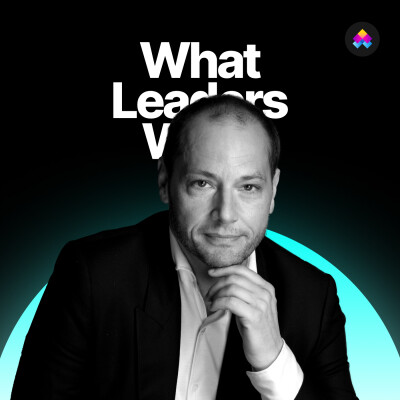
Welcome to part two of our What Leaders Want episode with Eric Berry, CEO of SBS and Deputy CEO of 74 Software. So in the first part, we dwell on what is changing with AI, and now we are going to focus more on SBS itself and how the organization is embracing the opportunities coming with AI. I'd like to focus a bit more on SBS and how it is evolving with AI. So today, the common advice right now is to run your AI on the big US cloud platforms. But SBS is heading in another direction. So why is SBS betting against the consensus?
Yeah, let me maybe refine a bit and give more detail. It's obviously not black and white. If I give you the last nine months, because a lot of things did happen the last nine months. For me in March, April, it was, I've called it the wake up call. I should say I did ask all the managers to join me for two hours discussion saying, guys, we absolutely need to embrace AI at any level, any activities of the company. And when I was saying that, we closed three partnerships, so three contracts. at the end of the day, it's three contracts, with who were, at that point in time, the best in class. And by the way, US-based. These three were Anthropic. It was Cloud. It was Microsoft with Copilot. And it was with Amazon to deliver Cairo for developing what we call EASDLC. So I... forced the team and all the employees to really embrace and to go fast and of course as they are and were the most advanced to immediately see the benefit and to immediately see what we can do, what we can accelerate, which quality we can improve. So really to explore and it was the objective for the second quarter this year to explore. In parallel In the discussion with our clients, especially in Africa and in Europe, the sovereignty, and by the way, United Kingdom for me is in Europe in that case, which is sovereignty in the UK is also very important. All our clients are trying to protect sovereignty in front of the big US players. So there is something like a dilemma. If we want to go fast, we want to rely on the US-based capabilities. And at the same time, our clients are expecting us to provide alternatives. They know that they will never be in a situation to be without having any US-based capabilities. Today, it's not feasible, whatever the cost. But at least to give these alternatives and to move forward. So the decision we have taken is when we build something ourselves, we still use US capabilities because that's state of the art at the moment. But we still, in parallel, study open-sourced LLMs to make sure that if one day there is a big chaos or drama, we are able to shift. So that was our first decision. The second, we took the decision also not to force any selection of LLM to our clients. So when we are providing AI features on top of our product, our capabilities are totally agnostic. to the choice of the LLM. So of course when we do a demo or when we demonstrate the proof with use cases, we are using one of them, sometimes open source, sometimes very well done from the US. But at the end, the client will keep that ownership and they will keep deciding which one they want to take and to avoid that we are forcing them, I would say, in a direction which is against their willingness to protect their sovereignty so that's where we are so reason why i was saying it's not black and white but it was very important for us because we were considering that forcing the choice of llm is also taking the liability of that llm so that llm is suddenly let's say having vision we cannot take that responsibility at the end so our clients and many of our clients are big clients. So they want to manage that part. And some are contracting with Mistral, like BNP Paribas in France. Some others are testing a lot of open source. And they want to keep that ability to decide by their own.
It's interesting the fact that you're talking about sovereignty and we'll come back to talk about sovereignty later on in this podcast. But you said it. It's clear that we are using AI internally, but how are we thinking about building it in our product?
So you're perfectly right. There are two worlds of AI for us. One is how we work. One is what we deliver to our clients. So your question on what we deliver on our clients is a very important one because our clients are banks. So we are in a regulated industry. So I'm giving you just one example. You're waking up tomorrow morning at 7.12. Okay. I don't know if it's true, but let's take that example. If you want to know what's the amount you're having on your current account at your main bank, you will never accept that the answer of your request at 7.12 will be around 4,000 euros. You will never accept that. The reason why you are not accepting that is the bank and your money, it has to be deterministic. And by the way, the regulation is forcing to be deterministic. So your expectation is at 7-12, my current account is having 3,912 euros and not around 4,000, right? And it's really important. So that means that... When we are delivering our product and our services to our clients, it has to be able to run AI-free because of deterministic. And having delivered that, then we augment the capability to provide additional features. And these additional features have to be explainable. And the audit trail, so let's take an example. One month later... Three AI agents were manipulating your data on your current account because you wanted to invest during the day on small investments, just each day trying to benefit from stock exchange. And you did put in place an agent which was automating that transaction. One month later, we are forced by regulation to justify how we are able to arrive. at that amount, 6,012 euros. If we are not able to demonstrate all the audit trail to come back to tomorrow at 7.12, that means that the process has not been deterministic. And that means that if someone is doing that, he will lose the banking license. You see what I mean? So we need to deliver deterministic part. And then we need to deliver... capabilities ai based where it's explainable at any point in time with the od train so that's what we are doing so we took the decision that on all our products the product itself will stay ai free it does not mean that i cannot develop my product with ai but the product itself is ai free then we have the data platform which is giving the opportunity that to know that your current account at 712 is having that amount. So what's important, you're going to say maybe no, but what's important is not the 3,900. What's important is it was at 712. So this is part of what we call the lineage in the data platform. And then the data, with what we call a semantic layer to make this data easy to understand, then you can access to this data with an AI prompt, or you can put agents, you can put whatever you want. But what's very important is that layer is protecting the determinism. So that's what we provide on top of all our products. The first client is live since beginning of July with that data plus AI platform. This is in the UK. It's a Scottish building society. The CEO did a press release and a super smart and funny video, by the way, in July. And we are working with him at the moment to deliver the proof. and we are measuring is measuring for us the benefit of having this 30 use case and again the core savings and lending platform, which is behind, which is called MSS, is fully deterministic. There is no AI inside that core. The AI is on top. And he committed to talk publicly again end of this month to give the real results of all of these use cases. So that's what we do.
Great. So what could a bank working with SBS actually do? Yeah, in the next few months or a few years.
To give a super simple example, today we are doing Gen AI, right? So we are not doing agentic, and I'm going to come back into what means agentic. So today, the 30 use cases we have given to Scottish, these are capabilities not existing in the product, and only using the product would require three, four weeks of work. of one or two people. And today, this is just one request. And in a few seconds, there is the answer. Back to the example. They want to study who is in that age range having savings, you know, savings in the UK, you bring your savings. There is a three-month period and you benefit of the bonus on the rates. And after the three months, usually people are taking their money back and investing somewhere else. So how to track and anticipate the behavior of these people within a range of age and having the full market analysis on all their clients and then to generate call for action immediately to anticipate that these people could move or could churn. So this kind of use case, we have put that in place. They were asking the same question one year ago. We measure together how much time it took to have that answer. And, you know, it's taking three weeks. And then you're back three weeks later. And then the market has moved and some clients could show. And then we did it again. And it was less than one minute, including the call for action. So that's a very simple example. The second example is really when sales rep of... of scottish are meeting their members because they don't call it a client they call it members and and the ability to have the full 360 view on these clients all the different events the different trigger what it change in the behavior so everything is just in one click and and again it's changing dramatically the ability for the sales rep to really support expectation from the member so these are very simple use case and you know some people did ask me but This should have been part of the product. And my answer is, it's more than only no. Our products have been designed to process. They have not been designed to leverage data to take decisions. And our competition is the same, because we did design this product the last 10, 20, 25 years, and our job was to drive processing. When you drive processing, you do not expose the data and you... do not anticipate that this data will be manipulated to take decisions. So, and by the way, the market is moving like us. So the ability to generate Gen AI capability up to the call for action, but we are calling it Gen AI and not Adjantic because the result of this call for action are not changing the system, right? It's changing actions, it's taking more decisions, but it's not automatically changing something in... in the processing platform. Adjunct tech is the next wave. Adjunct tech would mean that following the call for action, if there is an approval, for example, then automatically if you approve that they are investing twice more each month in that savings, without any action, then automatically the request for funding for the next month is going to double, then you will see in the system of record immediately that it has been taken into account. To do that, there are two missing pieces today. And I think in six months we'll be ready. One is having what we call the business API to make sure that we are able to update the system. Remember, with the explainability, the traceability and everything. And the second, to set the rules of the human-in-the-loop decision. Because this will never be accepted, that everything is fully in automation. and that you even are not aware that it's happening like this so these are the two missing pieces we are working already on this and i think we should be announcing for Next summer, the launch of, so we launch SBS AI for Gen AI and we will be launching, I think, next summer, at least on the first product, this agentic capability in addition.
Talking about agentic AI, how is it different for financial institutions compared to other industries? What risks does that raise and how can SBS manage to prevent them?
First... as I said, the determinism. So we are in a regulated industry. By the way, if we would be in healthcare, that would be the same concern. So that regulated industry is forcing us to keep that determinism. So compared to some other industry not regulated, there are things we cannot do, or at least we cannot do if there is no human in the loop. Second, you know the last 10 years we were talking about APIs and orchestrating the APIs and there are so many APIs everywhere and it was very difficult to manage. But APIs were linked to your system, right? So the APIs of the others, the question was to connect, but the question was not, does it impact my system? At Gentic, you have your agents in your system, but the agent of all the others who could come and enter into your system. So the ability to orchestrate all of these agents in that regulated industry is becoming very critical. So that's what we call, it's the word said by Forrester and Gartner, that's what we call the control plane. And I think we are lucky in 74 Software because the ability to orchestrate the business rules, it's our DNA in SVS. know what's the regulation in one country and how to implement the business constraints into the system and we know exactly how to manage that any decision any processes will be compliant with the regulation so that's what we do at svs historically actually historically is orchestrating apis and managing transfer and securing data actually is investing for the last one year and a half in what we call AI Gateway. So we were having API Gateway in Axway. So it's exactly the same, replacing the API by agents. So that AI Gateway, if we are able to, for the financial services vertical, if we are able to combine the expertise of SBS on the business rules and the Axway expertise on the technical rules to orchestrate the different agents, we are having the control plane for financial services. And we're working on that. And that would be maybe the first time we will be in a position to deliver the 1 plus 1 equals 3, the joint added value of the group. The AI Gateway will still be under Axway, Umbrella, Brand, and Positioning. The product from SBS will still be like this. But there are many, many financial institutions which will be expecting what we call a full front to back with AI capabilities. where they will be expecting the ability to process what SVS is doing and the ability to orchestrate all the agentic world where Axway is preparing for the future. So I think we are lucky to be in that position. We are not the only one playing that game, but at least we are in the game. So we'll see in one, two years. But you know, Axway is running at the moment a funny race. Their objective beginning of this year was to sell 100 to 100 clients. AI gateway. So Roland Royer told me a few days ago that they are close to 56 already this year and they think they will be crossing this 100. So out of this 56, there is maybe one third in financial services. So meaning that if we are able to bring that vision to the market and to make it happen and we are having together Axion SVS 2, 3 clients with prospects for this. I think we'll be really in a strong position to prepare the future in that AI era.
So we'll meet again next year to talk about that. Pleasure.
It's another tradition, you know?
Yes. So coming back to SBS AI Foundation, can you tell us about a client that's using it?
I told you about Scottish. So Scottish is what we call the first beta client. For us, it was really important first to have... the feedback from the clients to tell the others what are the benefits. So there are two other building societies, I cannot give the name, we are in what we call paperwork, so contracting phase. And then there is one on Amplitude, and there is one on SAP, and there is one on SF for the wholesale financing. So these are the other beta. I promise the day I can publish the name, I publish the name of the others. But what's important also, and it's maybe the first time we are doing that, the feedback from the client is super important. But what really matters to me is the feedback of our team. What I'm saying that is how much does it cost to operate? Because we are operating, it's a SaaS mode. How complex it is to maintain? You know, it's that new world you need to patch every day. You need to upgrade every day. You need to protect from a cyber perspective every day because there are all the data. So we are also experimenting and really driving a learning curve to make sure that... let's say we are in the good direction that's easy but that we are not going to lose money on something we are launching to the market and trying to align also that the pricing strategy we are having is aligned with what this is going to cost to us and align with the value this is going to provide to our clients so this is that exercise which is uh exciting sometimes a bit scary because of course we are playing It's not going to change our revenue profile in the next three years, but I think it's really influencing and impacting what will be SBS from 2030 to 2035. And I think our responsibility, my responsibility is to make sure that the company is sustainable for the future and not only delivering the figures for the next one year. So, yeah, it's an exciting time.
Yeah. And what role does SBS want to play in helping banks operate in this world of? emerging AI ecosystems?
You know, I will be a bit old school in my answer. Our dream in the past was to be the partner long term of banks. They start to rely on us, they give us more, we cross-sell, we up-sell, we take a lot of responsibility and they treat you as a partner and not as a supplier. So that was old school way to look at the situation. I think it's the same. When I'm visiting clients at the CEO level, you know, they are all saying the same and it's not very surprising. The first thing they tell you, I don't want to be on the front page of a newspaper because there was a failure or there was a problem or there was an impact to the market. First thing, I visited 20 CEOs in two months. All of them gave it. as a first answer. The second, they told us, because sometimes I was with other executives, and they told us, we rely on you first on the fortress. We consider that you are our partner on the fortress and to make it compliant, reliable, sustainable, open, secure. And they said, never forget. that for us, you are that first. And then they said, we are happy to see that you are preparing the future and we want to tell our board that our partner is preparing the future with us and is investing. And then many of them are saying at the end that we are not in a hurry, we have time. We don't need to implement that immediately. So my dream or what we are building at the moment is really to keep that trusted partner position, being able to bring them into that AI era and then to deal with that complexity. The complexity for them in enabling AI capability for their employees and for their clients, but also the complexity for the rest of the ecosystem where Adjantic will come. And they are not only in an ecosystem with banks. A bank is an ecosystem with real estate, an ecosystem with insurance, with many other domains where maybe the regulation is not going to be the same. So helping them in orchestrating that complexity and staying at that hole to help them to orchestrate and to manage that infrastructure for the future, I think is the perfect alignment in terms of vision. and ambition for us for the next decade.
So you talked about sovereignty earlier, but practically speaking, how does a bank stay independent when the whole ecosystem is pulling toward a handful of providers? So you've just listened to part two of our conversation with Eric Berry. In the next episode, we will focus on the bigger stakes for banks, customers and the society in general.
Description
Hosted on Ausha. See ausha.co/privacy-policy for more information.
Transcription
Welcome to part two of our What Leaders Want episode with Eric Berry, CEO of SBS and Deputy CEO of 74 Software. So in the first part, we dwell on what is changing with AI, and now we are going to focus more on SBS itself and how the organization is embracing the opportunities coming with AI. I'd like to focus a bit more on SBS and how it is evolving with AI. So today, the common advice right now is to run your AI on the big US cloud platforms. But SBS is heading in another direction. So why is SBS betting against the consensus?
Yeah, let me maybe refine a bit and give more detail. It's obviously not black and white. If I give you the last nine months, because a lot of things did happen the last nine months. For me in March, April, it was, I've called it the wake up call. I should say I did ask all the managers to join me for two hours discussion saying, guys, we absolutely need to embrace AI at any level, any activities of the company. And when I was saying that, we closed three partnerships, so three contracts. at the end of the day, it's three contracts, with who were, at that point in time, the best in class. And by the way, US-based. These three were Anthropic. It was Cloud. It was Microsoft with Copilot. And it was with Amazon to deliver Cairo for developing what we call EASDLC. So I... forced the team and all the employees to really embrace and to go fast and of course as they are and were the most advanced to immediately see the benefit and to immediately see what we can do, what we can accelerate, which quality we can improve. So really to explore and it was the objective for the second quarter this year to explore. In parallel In the discussion with our clients, especially in Africa and in Europe, the sovereignty, and by the way, United Kingdom for me is in Europe in that case, which is sovereignty in the UK is also very important. All our clients are trying to protect sovereignty in front of the big US players. So there is something like a dilemma. If we want to go fast, we want to rely on the US-based capabilities. And at the same time, our clients are expecting us to provide alternatives. They know that they will never be in a situation to be without having any US-based capabilities. Today, it's not feasible, whatever the cost. But at least to give these alternatives and to move forward. So the decision we have taken is when we build something ourselves, we still use US capabilities because that's state of the art at the moment. But we still, in parallel, study open-sourced LLMs to make sure that if one day there is a big chaos or drama, we are able to shift. So that was our first decision. The second, we took the decision also not to force any selection of LLM to our clients. So when we are providing AI features on top of our product, our capabilities are totally agnostic. to the choice of the LLM. So of course when we do a demo or when we demonstrate the proof with use cases, we are using one of them, sometimes open source, sometimes very well done from the US. But at the end, the client will keep that ownership and they will keep deciding which one they want to take and to avoid that we are forcing them, I would say, in a direction which is against their willingness to protect their sovereignty so that's where we are so reason why i was saying it's not black and white but it was very important for us because we were considering that forcing the choice of llm is also taking the liability of that llm so that llm is suddenly let's say having vision we cannot take that responsibility at the end so our clients and many of our clients are big clients. So they want to manage that part. And some are contracting with Mistral, like BNP Paribas in France. Some others are testing a lot of open source. And they want to keep that ability to decide by their own.
It's interesting the fact that you're talking about sovereignty and we'll come back to talk about sovereignty later on in this podcast. But you said it. It's clear that we are using AI internally, but how are we thinking about building it in our product?
So you're perfectly right. There are two worlds of AI for us. One is how we work. One is what we deliver to our clients. So your question on what we deliver on our clients is a very important one because our clients are banks. So we are in a regulated industry. So I'm giving you just one example. You're waking up tomorrow morning at 7.12. Okay. I don't know if it's true, but let's take that example. If you want to know what's the amount you're having on your current account at your main bank, you will never accept that the answer of your request at 7.12 will be around 4,000 euros. You will never accept that. The reason why you are not accepting that is the bank and your money, it has to be deterministic. And by the way, the regulation is forcing to be deterministic. So your expectation is at 7-12, my current account is having 3,912 euros and not around 4,000, right? And it's really important. So that means that... When we are delivering our product and our services to our clients, it has to be able to run AI-free because of deterministic. And having delivered that, then we augment the capability to provide additional features. And these additional features have to be explainable. And the audit trail, so let's take an example. One month later... Three AI agents were manipulating your data on your current account because you wanted to invest during the day on small investments, just each day trying to benefit from stock exchange. And you did put in place an agent which was automating that transaction. One month later, we are forced by regulation to justify how we are able to arrive. at that amount, 6,012 euros. If we are not able to demonstrate all the audit trail to come back to tomorrow at 7.12, that means that the process has not been deterministic. And that means that if someone is doing that, he will lose the banking license. You see what I mean? So we need to deliver deterministic part. And then we need to deliver... capabilities ai based where it's explainable at any point in time with the od train so that's what we are doing so we took the decision that on all our products the product itself will stay ai free it does not mean that i cannot develop my product with ai but the product itself is ai free then we have the data platform which is giving the opportunity that to know that your current account at 712 is having that amount. So what's important, you're going to say maybe no, but what's important is not the 3,900. What's important is it was at 712. So this is part of what we call the lineage in the data platform. And then the data, with what we call a semantic layer to make this data easy to understand, then you can access to this data with an AI prompt, or you can put agents, you can put whatever you want. But what's very important is that layer is protecting the determinism. So that's what we provide on top of all our products. The first client is live since beginning of July with that data plus AI platform. This is in the UK. It's a Scottish building society. The CEO did a press release and a super smart and funny video, by the way, in July. And we are working with him at the moment to deliver the proof. and we are measuring is measuring for us the benefit of having this 30 use case and again the core savings and lending platform, which is behind, which is called MSS, is fully deterministic. There is no AI inside that core. The AI is on top. And he committed to talk publicly again end of this month to give the real results of all of these use cases. So that's what we do.
Great. So what could a bank working with SBS actually do? Yeah, in the next few months or a few years.
To give a super simple example, today we are doing Gen AI, right? So we are not doing agentic, and I'm going to come back into what means agentic. So today, the 30 use cases we have given to Scottish, these are capabilities not existing in the product, and only using the product would require three, four weeks of work. of one or two people. And today, this is just one request. And in a few seconds, there is the answer. Back to the example. They want to study who is in that age range having savings, you know, savings in the UK, you bring your savings. There is a three-month period and you benefit of the bonus on the rates. And after the three months, usually people are taking their money back and investing somewhere else. So how to track and anticipate the behavior of these people within a range of age and having the full market analysis on all their clients and then to generate call for action immediately to anticipate that these people could move or could churn. So this kind of use case, we have put that in place. They were asking the same question one year ago. We measure together how much time it took to have that answer. And, you know, it's taking three weeks. And then you're back three weeks later. And then the market has moved and some clients could show. And then we did it again. And it was less than one minute, including the call for action. So that's a very simple example. The second example is really when sales rep of... of scottish are meeting their members because they don't call it a client they call it members and and the ability to have the full 360 view on these clients all the different events the different trigger what it change in the behavior so everything is just in one click and and again it's changing dramatically the ability for the sales rep to really support expectation from the member so these are very simple use case and you know some people did ask me but This should have been part of the product. And my answer is, it's more than only no. Our products have been designed to process. They have not been designed to leverage data to take decisions. And our competition is the same, because we did design this product the last 10, 20, 25 years, and our job was to drive processing. When you drive processing, you do not expose the data and you... do not anticipate that this data will be manipulated to take decisions. So, and by the way, the market is moving like us. So the ability to generate Gen AI capability up to the call for action, but we are calling it Gen AI and not Adjantic because the result of this call for action are not changing the system, right? It's changing actions, it's taking more decisions, but it's not automatically changing something in... in the processing platform. Adjunct tech is the next wave. Adjunct tech would mean that following the call for action, if there is an approval, for example, then automatically if you approve that they are investing twice more each month in that savings, without any action, then automatically the request for funding for the next month is going to double, then you will see in the system of record immediately that it has been taken into account. To do that, there are two missing pieces today. And I think in six months we'll be ready. One is having what we call the business API to make sure that we are able to update the system. Remember, with the explainability, the traceability and everything. And the second, to set the rules of the human-in-the-loop decision. Because this will never be accepted, that everything is fully in automation. and that you even are not aware that it's happening like this so these are the two missing pieces we are working already on this and i think we should be announcing for Next summer, the launch of, so we launch SBS AI for Gen AI and we will be launching, I think, next summer, at least on the first product, this agentic capability in addition.
Talking about agentic AI, how is it different for financial institutions compared to other industries? What risks does that raise and how can SBS manage to prevent them?
First... as I said, the determinism. So we are in a regulated industry. By the way, if we would be in healthcare, that would be the same concern. So that regulated industry is forcing us to keep that determinism. So compared to some other industry not regulated, there are things we cannot do, or at least we cannot do if there is no human in the loop. Second, you know the last 10 years we were talking about APIs and orchestrating the APIs and there are so many APIs everywhere and it was very difficult to manage. But APIs were linked to your system, right? So the APIs of the others, the question was to connect, but the question was not, does it impact my system? At Gentic, you have your agents in your system, but the agent of all the others who could come and enter into your system. So the ability to orchestrate all of these agents in that regulated industry is becoming very critical. So that's what we call, it's the word said by Forrester and Gartner, that's what we call the control plane. And I think we are lucky in 74 Software because the ability to orchestrate the business rules, it's our DNA in SVS. know what's the regulation in one country and how to implement the business constraints into the system and we know exactly how to manage that any decision any processes will be compliant with the regulation so that's what we do at svs historically actually historically is orchestrating apis and managing transfer and securing data actually is investing for the last one year and a half in what we call AI Gateway. So we were having API Gateway in Axway. So it's exactly the same, replacing the API by agents. So that AI Gateway, if we are able to, for the financial services vertical, if we are able to combine the expertise of SBS on the business rules and the Axway expertise on the technical rules to orchestrate the different agents, we are having the control plane for financial services. And we're working on that. And that would be maybe the first time we will be in a position to deliver the 1 plus 1 equals 3, the joint added value of the group. The AI Gateway will still be under Axway, Umbrella, Brand, and Positioning. The product from SBS will still be like this. But there are many, many financial institutions which will be expecting what we call a full front to back with AI capabilities. where they will be expecting the ability to process what SVS is doing and the ability to orchestrate all the agentic world where Axway is preparing for the future. So I think we are lucky to be in that position. We are not the only one playing that game, but at least we are in the game. So we'll see in one, two years. But you know, Axway is running at the moment a funny race. Their objective beginning of this year was to sell 100 to 100 clients. AI gateway. So Roland Royer told me a few days ago that they are close to 56 already this year and they think they will be crossing this 100. So out of this 56, there is maybe one third in financial services. So meaning that if we are able to bring that vision to the market and to make it happen and we are having together Axion SVS 2, 3 clients with prospects for this. I think we'll be really in a strong position to prepare the future in that AI era.
So we'll meet again next year to talk about that. Pleasure.
It's another tradition, you know?
Yes. So coming back to SBS AI Foundation, can you tell us about a client that's using it?
I told you about Scottish. So Scottish is what we call the first beta client. For us, it was really important first to have... the feedback from the clients to tell the others what are the benefits. So there are two other building societies, I cannot give the name, we are in what we call paperwork, so contracting phase. And then there is one on Amplitude, and there is one on SAP, and there is one on SF for the wholesale financing. So these are the other beta. I promise the day I can publish the name, I publish the name of the others. But what's important also, and it's maybe the first time we are doing that, the feedback from the client is super important. But what really matters to me is the feedback of our team. What I'm saying that is how much does it cost to operate? Because we are operating, it's a SaaS mode. How complex it is to maintain? You know, it's that new world you need to patch every day. You need to upgrade every day. You need to protect from a cyber perspective every day because there are all the data. So we are also experimenting and really driving a learning curve to make sure that... let's say we are in the good direction that's easy but that we are not going to lose money on something we are launching to the market and trying to align also that the pricing strategy we are having is aligned with what this is going to cost to us and align with the value this is going to provide to our clients so this is that exercise which is uh exciting sometimes a bit scary because of course we are playing It's not going to change our revenue profile in the next three years, but I think it's really influencing and impacting what will be SBS from 2030 to 2035. And I think our responsibility, my responsibility is to make sure that the company is sustainable for the future and not only delivering the figures for the next one year. So, yeah, it's an exciting time.
Yeah. And what role does SBS want to play in helping banks operate in this world of? emerging AI ecosystems?
You know, I will be a bit old school in my answer. Our dream in the past was to be the partner long term of banks. They start to rely on us, they give us more, we cross-sell, we up-sell, we take a lot of responsibility and they treat you as a partner and not as a supplier. So that was old school way to look at the situation. I think it's the same. When I'm visiting clients at the CEO level, you know, they are all saying the same and it's not very surprising. The first thing they tell you, I don't want to be on the front page of a newspaper because there was a failure or there was a problem or there was an impact to the market. First thing, I visited 20 CEOs in two months. All of them gave it. as a first answer. The second, they told us, because sometimes I was with other executives, and they told us, we rely on you first on the fortress. We consider that you are our partner on the fortress and to make it compliant, reliable, sustainable, open, secure. And they said, never forget. that for us, you are that first. And then they said, we are happy to see that you are preparing the future and we want to tell our board that our partner is preparing the future with us and is investing. And then many of them are saying at the end that we are not in a hurry, we have time. We don't need to implement that immediately. So my dream or what we are building at the moment is really to keep that trusted partner position, being able to bring them into that AI era and then to deal with that complexity. The complexity for them in enabling AI capability for their employees and for their clients, but also the complexity for the rest of the ecosystem where Adjantic will come. And they are not only in an ecosystem with banks. A bank is an ecosystem with real estate, an ecosystem with insurance, with many other domains where maybe the regulation is not going to be the same. So helping them in orchestrating that complexity and staying at that hole to help them to orchestrate and to manage that infrastructure for the future, I think is the perfect alignment in terms of vision. and ambition for us for the next decade.
So you talked about sovereignty earlier, but practically speaking, how does a bank stay independent when the whole ecosystem is pulling toward a handful of providers? So you've just listened to part two of our conversation with Eric Berry. In the next episode, we will focus on the bigger stakes for banks, customers and the society in general.
Share
Embed
You may also like
Description
Hosted on Ausha. See ausha.co/privacy-policy for more information.
Transcription
Welcome to part two of our What Leaders Want episode with Eric Berry, CEO of SBS and Deputy CEO of 74 Software. So in the first part, we dwell on what is changing with AI, and now we are going to focus more on SBS itself and how the organization is embracing the opportunities coming with AI. I'd like to focus a bit more on SBS and how it is evolving with AI. So today, the common advice right now is to run your AI on the big US cloud platforms. But SBS is heading in another direction. So why is SBS betting against the consensus?
Yeah, let me maybe refine a bit and give more detail. It's obviously not black and white. If I give you the last nine months, because a lot of things did happen the last nine months. For me in March, April, it was, I've called it the wake up call. I should say I did ask all the managers to join me for two hours discussion saying, guys, we absolutely need to embrace AI at any level, any activities of the company. And when I was saying that, we closed three partnerships, so three contracts. at the end of the day, it's three contracts, with who were, at that point in time, the best in class. And by the way, US-based. These three were Anthropic. It was Cloud. It was Microsoft with Copilot. And it was with Amazon to deliver Cairo for developing what we call EASDLC. So I... forced the team and all the employees to really embrace and to go fast and of course as they are and were the most advanced to immediately see the benefit and to immediately see what we can do, what we can accelerate, which quality we can improve. So really to explore and it was the objective for the second quarter this year to explore. In parallel In the discussion with our clients, especially in Africa and in Europe, the sovereignty, and by the way, United Kingdom for me is in Europe in that case, which is sovereignty in the UK is also very important. All our clients are trying to protect sovereignty in front of the big US players. So there is something like a dilemma. If we want to go fast, we want to rely on the US-based capabilities. And at the same time, our clients are expecting us to provide alternatives. They know that they will never be in a situation to be without having any US-based capabilities. Today, it's not feasible, whatever the cost. But at least to give these alternatives and to move forward. So the decision we have taken is when we build something ourselves, we still use US capabilities because that's state of the art at the moment. But we still, in parallel, study open-sourced LLMs to make sure that if one day there is a big chaos or drama, we are able to shift. So that was our first decision. The second, we took the decision also not to force any selection of LLM to our clients. So when we are providing AI features on top of our product, our capabilities are totally agnostic. to the choice of the LLM. So of course when we do a demo or when we demonstrate the proof with use cases, we are using one of them, sometimes open source, sometimes very well done from the US. But at the end, the client will keep that ownership and they will keep deciding which one they want to take and to avoid that we are forcing them, I would say, in a direction which is against their willingness to protect their sovereignty so that's where we are so reason why i was saying it's not black and white but it was very important for us because we were considering that forcing the choice of llm is also taking the liability of that llm so that llm is suddenly let's say having vision we cannot take that responsibility at the end so our clients and many of our clients are big clients. So they want to manage that part. And some are contracting with Mistral, like BNP Paribas in France. Some others are testing a lot of open source. And they want to keep that ability to decide by their own.
It's interesting the fact that you're talking about sovereignty and we'll come back to talk about sovereignty later on in this podcast. But you said it. It's clear that we are using AI internally, but how are we thinking about building it in our product?
So you're perfectly right. There are two worlds of AI for us. One is how we work. One is what we deliver to our clients. So your question on what we deliver on our clients is a very important one because our clients are banks. So we are in a regulated industry. So I'm giving you just one example. You're waking up tomorrow morning at 7.12. Okay. I don't know if it's true, but let's take that example. If you want to know what's the amount you're having on your current account at your main bank, you will never accept that the answer of your request at 7.12 will be around 4,000 euros. You will never accept that. The reason why you are not accepting that is the bank and your money, it has to be deterministic. And by the way, the regulation is forcing to be deterministic. So your expectation is at 7-12, my current account is having 3,912 euros and not around 4,000, right? And it's really important. So that means that... When we are delivering our product and our services to our clients, it has to be able to run AI-free because of deterministic. And having delivered that, then we augment the capability to provide additional features. And these additional features have to be explainable. And the audit trail, so let's take an example. One month later... Three AI agents were manipulating your data on your current account because you wanted to invest during the day on small investments, just each day trying to benefit from stock exchange. And you did put in place an agent which was automating that transaction. One month later, we are forced by regulation to justify how we are able to arrive. at that amount, 6,012 euros. If we are not able to demonstrate all the audit trail to come back to tomorrow at 7.12, that means that the process has not been deterministic. And that means that if someone is doing that, he will lose the banking license. You see what I mean? So we need to deliver deterministic part. And then we need to deliver... capabilities ai based where it's explainable at any point in time with the od train so that's what we are doing so we took the decision that on all our products the product itself will stay ai free it does not mean that i cannot develop my product with ai but the product itself is ai free then we have the data platform which is giving the opportunity that to know that your current account at 712 is having that amount. So what's important, you're going to say maybe no, but what's important is not the 3,900. What's important is it was at 712. So this is part of what we call the lineage in the data platform. And then the data, with what we call a semantic layer to make this data easy to understand, then you can access to this data with an AI prompt, or you can put agents, you can put whatever you want. But what's very important is that layer is protecting the determinism. So that's what we provide on top of all our products. The first client is live since beginning of July with that data plus AI platform. This is in the UK. It's a Scottish building society. The CEO did a press release and a super smart and funny video, by the way, in July. And we are working with him at the moment to deliver the proof. and we are measuring is measuring for us the benefit of having this 30 use case and again the core savings and lending platform, which is behind, which is called MSS, is fully deterministic. There is no AI inside that core. The AI is on top. And he committed to talk publicly again end of this month to give the real results of all of these use cases. So that's what we do.
Great. So what could a bank working with SBS actually do? Yeah, in the next few months or a few years.
To give a super simple example, today we are doing Gen AI, right? So we are not doing agentic, and I'm going to come back into what means agentic. So today, the 30 use cases we have given to Scottish, these are capabilities not existing in the product, and only using the product would require three, four weeks of work. of one or two people. And today, this is just one request. And in a few seconds, there is the answer. Back to the example. They want to study who is in that age range having savings, you know, savings in the UK, you bring your savings. There is a three-month period and you benefit of the bonus on the rates. And after the three months, usually people are taking their money back and investing somewhere else. So how to track and anticipate the behavior of these people within a range of age and having the full market analysis on all their clients and then to generate call for action immediately to anticipate that these people could move or could churn. So this kind of use case, we have put that in place. They were asking the same question one year ago. We measure together how much time it took to have that answer. And, you know, it's taking three weeks. And then you're back three weeks later. And then the market has moved and some clients could show. And then we did it again. And it was less than one minute, including the call for action. So that's a very simple example. The second example is really when sales rep of... of scottish are meeting their members because they don't call it a client they call it members and and the ability to have the full 360 view on these clients all the different events the different trigger what it change in the behavior so everything is just in one click and and again it's changing dramatically the ability for the sales rep to really support expectation from the member so these are very simple use case and you know some people did ask me but This should have been part of the product. And my answer is, it's more than only no. Our products have been designed to process. They have not been designed to leverage data to take decisions. And our competition is the same, because we did design this product the last 10, 20, 25 years, and our job was to drive processing. When you drive processing, you do not expose the data and you... do not anticipate that this data will be manipulated to take decisions. So, and by the way, the market is moving like us. So the ability to generate Gen AI capability up to the call for action, but we are calling it Gen AI and not Adjantic because the result of this call for action are not changing the system, right? It's changing actions, it's taking more decisions, but it's not automatically changing something in... in the processing platform. Adjunct tech is the next wave. Adjunct tech would mean that following the call for action, if there is an approval, for example, then automatically if you approve that they are investing twice more each month in that savings, without any action, then automatically the request for funding for the next month is going to double, then you will see in the system of record immediately that it has been taken into account. To do that, there are two missing pieces today. And I think in six months we'll be ready. One is having what we call the business API to make sure that we are able to update the system. Remember, with the explainability, the traceability and everything. And the second, to set the rules of the human-in-the-loop decision. Because this will never be accepted, that everything is fully in automation. and that you even are not aware that it's happening like this so these are the two missing pieces we are working already on this and i think we should be announcing for Next summer, the launch of, so we launch SBS AI for Gen AI and we will be launching, I think, next summer, at least on the first product, this agentic capability in addition.
Talking about agentic AI, how is it different for financial institutions compared to other industries? What risks does that raise and how can SBS manage to prevent them?
First... as I said, the determinism. So we are in a regulated industry. By the way, if we would be in healthcare, that would be the same concern. So that regulated industry is forcing us to keep that determinism. So compared to some other industry not regulated, there are things we cannot do, or at least we cannot do if there is no human in the loop. Second, you know the last 10 years we were talking about APIs and orchestrating the APIs and there are so many APIs everywhere and it was very difficult to manage. But APIs were linked to your system, right? So the APIs of the others, the question was to connect, but the question was not, does it impact my system? At Gentic, you have your agents in your system, but the agent of all the others who could come and enter into your system. So the ability to orchestrate all of these agents in that regulated industry is becoming very critical. So that's what we call, it's the word said by Forrester and Gartner, that's what we call the control plane. And I think we are lucky in 74 Software because the ability to orchestrate the business rules, it's our DNA in SVS. know what's the regulation in one country and how to implement the business constraints into the system and we know exactly how to manage that any decision any processes will be compliant with the regulation so that's what we do at svs historically actually historically is orchestrating apis and managing transfer and securing data actually is investing for the last one year and a half in what we call AI Gateway. So we were having API Gateway in Axway. So it's exactly the same, replacing the API by agents. So that AI Gateway, if we are able to, for the financial services vertical, if we are able to combine the expertise of SBS on the business rules and the Axway expertise on the technical rules to orchestrate the different agents, we are having the control plane for financial services. And we're working on that. And that would be maybe the first time we will be in a position to deliver the 1 plus 1 equals 3, the joint added value of the group. The AI Gateway will still be under Axway, Umbrella, Brand, and Positioning. The product from SBS will still be like this. But there are many, many financial institutions which will be expecting what we call a full front to back with AI capabilities. where they will be expecting the ability to process what SVS is doing and the ability to orchestrate all the agentic world where Axway is preparing for the future. So I think we are lucky to be in that position. We are not the only one playing that game, but at least we are in the game. So we'll see in one, two years. But you know, Axway is running at the moment a funny race. Their objective beginning of this year was to sell 100 to 100 clients. AI gateway. So Roland Royer told me a few days ago that they are close to 56 already this year and they think they will be crossing this 100. So out of this 56, there is maybe one third in financial services. So meaning that if we are able to bring that vision to the market and to make it happen and we are having together Axion SVS 2, 3 clients with prospects for this. I think we'll be really in a strong position to prepare the future in that AI era.
So we'll meet again next year to talk about that. Pleasure.
It's another tradition, you know?
Yes. So coming back to SBS AI Foundation, can you tell us about a client that's using it?
I told you about Scottish. So Scottish is what we call the first beta client. For us, it was really important first to have... the feedback from the clients to tell the others what are the benefits. So there are two other building societies, I cannot give the name, we are in what we call paperwork, so contracting phase. And then there is one on Amplitude, and there is one on SAP, and there is one on SF for the wholesale financing. So these are the other beta. I promise the day I can publish the name, I publish the name of the others. But what's important also, and it's maybe the first time we are doing that, the feedback from the client is super important. But what really matters to me is the feedback of our team. What I'm saying that is how much does it cost to operate? Because we are operating, it's a SaaS mode. How complex it is to maintain? You know, it's that new world you need to patch every day. You need to upgrade every day. You need to protect from a cyber perspective every day because there are all the data. So we are also experimenting and really driving a learning curve to make sure that... let's say we are in the good direction that's easy but that we are not going to lose money on something we are launching to the market and trying to align also that the pricing strategy we are having is aligned with what this is going to cost to us and align with the value this is going to provide to our clients so this is that exercise which is uh exciting sometimes a bit scary because of course we are playing It's not going to change our revenue profile in the next three years, but I think it's really influencing and impacting what will be SBS from 2030 to 2035. And I think our responsibility, my responsibility is to make sure that the company is sustainable for the future and not only delivering the figures for the next one year. So, yeah, it's an exciting time.
Yeah. And what role does SBS want to play in helping banks operate in this world of? emerging AI ecosystems?
You know, I will be a bit old school in my answer. Our dream in the past was to be the partner long term of banks. They start to rely on us, they give us more, we cross-sell, we up-sell, we take a lot of responsibility and they treat you as a partner and not as a supplier. So that was old school way to look at the situation. I think it's the same. When I'm visiting clients at the CEO level, you know, they are all saying the same and it's not very surprising. The first thing they tell you, I don't want to be on the front page of a newspaper because there was a failure or there was a problem or there was an impact to the market. First thing, I visited 20 CEOs in two months. All of them gave it. as a first answer. The second, they told us, because sometimes I was with other executives, and they told us, we rely on you first on the fortress. We consider that you are our partner on the fortress and to make it compliant, reliable, sustainable, open, secure. And they said, never forget. that for us, you are that first. And then they said, we are happy to see that you are preparing the future and we want to tell our board that our partner is preparing the future with us and is investing. And then many of them are saying at the end that we are not in a hurry, we have time. We don't need to implement that immediately. So my dream or what we are building at the moment is really to keep that trusted partner position, being able to bring them into that AI era and then to deal with that complexity. The complexity for them in enabling AI capability for their employees and for their clients, but also the complexity for the rest of the ecosystem where Adjantic will come. And they are not only in an ecosystem with banks. A bank is an ecosystem with real estate, an ecosystem with insurance, with many other domains where maybe the regulation is not going to be the same. So helping them in orchestrating that complexity and staying at that hole to help them to orchestrate and to manage that infrastructure for the future, I think is the perfect alignment in terms of vision. and ambition for us for the next decade.
So you talked about sovereignty earlier, but practically speaking, how does a bank stay independent when the whole ecosystem is pulling toward a handful of providers? So you've just listened to part two of our conversation with Eric Berry. In the next episode, we will focus on the bigger stakes for banks, customers and the society in general.
Description
Hosted on Ausha. See ausha.co/privacy-policy for more information.
Transcription
Welcome to part two of our What Leaders Want episode with Eric Berry, CEO of SBS and Deputy CEO of 74 Software. So in the first part, we dwell on what is changing with AI, and now we are going to focus more on SBS itself and how the organization is embracing the opportunities coming with AI. I'd like to focus a bit more on SBS and how it is evolving with AI. So today, the common advice right now is to run your AI on the big US cloud platforms. But SBS is heading in another direction. So why is SBS betting against the consensus?
Yeah, let me maybe refine a bit and give more detail. It's obviously not black and white. If I give you the last nine months, because a lot of things did happen the last nine months. For me in March, April, it was, I've called it the wake up call. I should say I did ask all the managers to join me for two hours discussion saying, guys, we absolutely need to embrace AI at any level, any activities of the company. And when I was saying that, we closed three partnerships, so three contracts. at the end of the day, it's three contracts, with who were, at that point in time, the best in class. And by the way, US-based. These three were Anthropic. It was Cloud. It was Microsoft with Copilot. And it was with Amazon to deliver Cairo for developing what we call EASDLC. So I... forced the team and all the employees to really embrace and to go fast and of course as they are and were the most advanced to immediately see the benefit and to immediately see what we can do, what we can accelerate, which quality we can improve. So really to explore and it was the objective for the second quarter this year to explore. In parallel In the discussion with our clients, especially in Africa and in Europe, the sovereignty, and by the way, United Kingdom for me is in Europe in that case, which is sovereignty in the UK is also very important. All our clients are trying to protect sovereignty in front of the big US players. So there is something like a dilemma. If we want to go fast, we want to rely on the US-based capabilities. And at the same time, our clients are expecting us to provide alternatives. They know that they will never be in a situation to be without having any US-based capabilities. Today, it's not feasible, whatever the cost. But at least to give these alternatives and to move forward. So the decision we have taken is when we build something ourselves, we still use US capabilities because that's state of the art at the moment. But we still, in parallel, study open-sourced LLMs to make sure that if one day there is a big chaos or drama, we are able to shift. So that was our first decision. The second, we took the decision also not to force any selection of LLM to our clients. So when we are providing AI features on top of our product, our capabilities are totally agnostic. to the choice of the LLM. So of course when we do a demo or when we demonstrate the proof with use cases, we are using one of them, sometimes open source, sometimes very well done from the US. But at the end, the client will keep that ownership and they will keep deciding which one they want to take and to avoid that we are forcing them, I would say, in a direction which is against their willingness to protect their sovereignty so that's where we are so reason why i was saying it's not black and white but it was very important for us because we were considering that forcing the choice of llm is also taking the liability of that llm so that llm is suddenly let's say having vision we cannot take that responsibility at the end so our clients and many of our clients are big clients. So they want to manage that part. And some are contracting with Mistral, like BNP Paribas in France. Some others are testing a lot of open source. And they want to keep that ability to decide by their own.
It's interesting the fact that you're talking about sovereignty and we'll come back to talk about sovereignty later on in this podcast. But you said it. It's clear that we are using AI internally, but how are we thinking about building it in our product?
So you're perfectly right. There are two worlds of AI for us. One is how we work. One is what we deliver to our clients. So your question on what we deliver on our clients is a very important one because our clients are banks. So we are in a regulated industry. So I'm giving you just one example. You're waking up tomorrow morning at 7.12. Okay. I don't know if it's true, but let's take that example. If you want to know what's the amount you're having on your current account at your main bank, you will never accept that the answer of your request at 7.12 will be around 4,000 euros. You will never accept that. The reason why you are not accepting that is the bank and your money, it has to be deterministic. And by the way, the regulation is forcing to be deterministic. So your expectation is at 7-12, my current account is having 3,912 euros and not around 4,000, right? And it's really important. So that means that... When we are delivering our product and our services to our clients, it has to be able to run AI-free because of deterministic. And having delivered that, then we augment the capability to provide additional features. And these additional features have to be explainable. And the audit trail, so let's take an example. One month later... Three AI agents were manipulating your data on your current account because you wanted to invest during the day on small investments, just each day trying to benefit from stock exchange. And you did put in place an agent which was automating that transaction. One month later, we are forced by regulation to justify how we are able to arrive. at that amount, 6,012 euros. If we are not able to demonstrate all the audit trail to come back to tomorrow at 7.12, that means that the process has not been deterministic. And that means that if someone is doing that, he will lose the banking license. You see what I mean? So we need to deliver deterministic part. And then we need to deliver... capabilities ai based where it's explainable at any point in time with the od train so that's what we are doing so we took the decision that on all our products the product itself will stay ai free it does not mean that i cannot develop my product with ai but the product itself is ai free then we have the data platform which is giving the opportunity that to know that your current account at 712 is having that amount. So what's important, you're going to say maybe no, but what's important is not the 3,900. What's important is it was at 712. So this is part of what we call the lineage in the data platform. And then the data, with what we call a semantic layer to make this data easy to understand, then you can access to this data with an AI prompt, or you can put agents, you can put whatever you want. But what's very important is that layer is protecting the determinism. So that's what we provide on top of all our products. The first client is live since beginning of July with that data plus AI platform. This is in the UK. It's a Scottish building society. The CEO did a press release and a super smart and funny video, by the way, in July. And we are working with him at the moment to deliver the proof. and we are measuring is measuring for us the benefit of having this 30 use case and again the core savings and lending platform, which is behind, which is called MSS, is fully deterministic. There is no AI inside that core. The AI is on top. And he committed to talk publicly again end of this month to give the real results of all of these use cases. So that's what we do.
Great. So what could a bank working with SBS actually do? Yeah, in the next few months or a few years.
To give a super simple example, today we are doing Gen AI, right? So we are not doing agentic, and I'm going to come back into what means agentic. So today, the 30 use cases we have given to Scottish, these are capabilities not existing in the product, and only using the product would require three, four weeks of work. of one or two people. And today, this is just one request. And in a few seconds, there is the answer. Back to the example. They want to study who is in that age range having savings, you know, savings in the UK, you bring your savings. There is a three-month period and you benefit of the bonus on the rates. And after the three months, usually people are taking their money back and investing somewhere else. So how to track and anticipate the behavior of these people within a range of age and having the full market analysis on all their clients and then to generate call for action immediately to anticipate that these people could move or could churn. So this kind of use case, we have put that in place. They were asking the same question one year ago. We measure together how much time it took to have that answer. And, you know, it's taking three weeks. And then you're back three weeks later. And then the market has moved and some clients could show. And then we did it again. And it was less than one minute, including the call for action. So that's a very simple example. The second example is really when sales rep of... of scottish are meeting their members because they don't call it a client they call it members and and the ability to have the full 360 view on these clients all the different events the different trigger what it change in the behavior so everything is just in one click and and again it's changing dramatically the ability for the sales rep to really support expectation from the member so these are very simple use case and you know some people did ask me but This should have been part of the product. And my answer is, it's more than only no. Our products have been designed to process. They have not been designed to leverage data to take decisions. And our competition is the same, because we did design this product the last 10, 20, 25 years, and our job was to drive processing. When you drive processing, you do not expose the data and you... do not anticipate that this data will be manipulated to take decisions. So, and by the way, the market is moving like us. So the ability to generate Gen AI capability up to the call for action, but we are calling it Gen AI and not Adjantic because the result of this call for action are not changing the system, right? It's changing actions, it's taking more decisions, but it's not automatically changing something in... in the processing platform. Adjunct tech is the next wave. Adjunct tech would mean that following the call for action, if there is an approval, for example, then automatically if you approve that they are investing twice more each month in that savings, without any action, then automatically the request for funding for the next month is going to double, then you will see in the system of record immediately that it has been taken into account. To do that, there are two missing pieces today. And I think in six months we'll be ready. One is having what we call the business API to make sure that we are able to update the system. Remember, with the explainability, the traceability and everything. And the second, to set the rules of the human-in-the-loop decision. Because this will never be accepted, that everything is fully in automation. and that you even are not aware that it's happening like this so these are the two missing pieces we are working already on this and i think we should be announcing for Next summer, the launch of, so we launch SBS AI for Gen AI and we will be launching, I think, next summer, at least on the first product, this agentic capability in addition.
Talking about agentic AI, how is it different for financial institutions compared to other industries? What risks does that raise and how can SBS manage to prevent them?
First... as I said, the determinism. So we are in a regulated industry. By the way, if we would be in healthcare, that would be the same concern. So that regulated industry is forcing us to keep that determinism. So compared to some other industry not regulated, there are things we cannot do, or at least we cannot do if there is no human in the loop. Second, you know the last 10 years we were talking about APIs and orchestrating the APIs and there are so many APIs everywhere and it was very difficult to manage. But APIs were linked to your system, right? So the APIs of the others, the question was to connect, but the question was not, does it impact my system? At Gentic, you have your agents in your system, but the agent of all the others who could come and enter into your system. So the ability to orchestrate all of these agents in that regulated industry is becoming very critical. So that's what we call, it's the word said by Forrester and Gartner, that's what we call the control plane. And I think we are lucky in 74 Software because the ability to orchestrate the business rules, it's our DNA in SVS. know what's the regulation in one country and how to implement the business constraints into the system and we know exactly how to manage that any decision any processes will be compliant with the regulation so that's what we do at svs historically actually historically is orchestrating apis and managing transfer and securing data actually is investing for the last one year and a half in what we call AI Gateway. So we were having API Gateway in Axway. So it's exactly the same, replacing the API by agents. So that AI Gateway, if we are able to, for the financial services vertical, if we are able to combine the expertise of SBS on the business rules and the Axway expertise on the technical rules to orchestrate the different agents, we are having the control plane for financial services. And we're working on that. And that would be maybe the first time we will be in a position to deliver the 1 plus 1 equals 3, the joint added value of the group. The AI Gateway will still be under Axway, Umbrella, Brand, and Positioning. The product from SBS will still be like this. But there are many, many financial institutions which will be expecting what we call a full front to back with AI capabilities. where they will be expecting the ability to process what SVS is doing and the ability to orchestrate all the agentic world where Axway is preparing for the future. So I think we are lucky to be in that position. We are not the only one playing that game, but at least we are in the game. So we'll see in one, two years. But you know, Axway is running at the moment a funny race. Their objective beginning of this year was to sell 100 to 100 clients. AI gateway. So Roland Royer told me a few days ago that they are close to 56 already this year and they think they will be crossing this 100. So out of this 56, there is maybe one third in financial services. So meaning that if we are able to bring that vision to the market and to make it happen and we are having together Axion SVS 2, 3 clients with prospects for this. I think we'll be really in a strong position to prepare the future in that AI era.
So we'll meet again next year to talk about that. Pleasure.
It's another tradition, you know?
Yes. So coming back to SBS AI Foundation, can you tell us about a client that's using it?
I told you about Scottish. So Scottish is what we call the first beta client. For us, it was really important first to have... the feedback from the clients to tell the others what are the benefits. So there are two other building societies, I cannot give the name, we are in what we call paperwork, so contracting phase. And then there is one on Amplitude, and there is one on SAP, and there is one on SF for the wholesale financing. So these are the other beta. I promise the day I can publish the name, I publish the name of the others. But what's important also, and it's maybe the first time we are doing that, the feedback from the client is super important. But what really matters to me is the feedback of our team. What I'm saying that is how much does it cost to operate? Because we are operating, it's a SaaS mode. How complex it is to maintain? You know, it's that new world you need to patch every day. You need to upgrade every day. You need to protect from a cyber perspective every day because there are all the data. So we are also experimenting and really driving a learning curve to make sure that... let's say we are in the good direction that's easy but that we are not going to lose money on something we are launching to the market and trying to align also that the pricing strategy we are having is aligned with what this is going to cost to us and align with the value this is going to provide to our clients so this is that exercise which is uh exciting sometimes a bit scary because of course we are playing It's not going to change our revenue profile in the next three years, but I think it's really influencing and impacting what will be SBS from 2030 to 2035. And I think our responsibility, my responsibility is to make sure that the company is sustainable for the future and not only delivering the figures for the next one year. So, yeah, it's an exciting time.
Yeah. And what role does SBS want to play in helping banks operate in this world of? emerging AI ecosystems?
You know, I will be a bit old school in my answer. Our dream in the past was to be the partner long term of banks. They start to rely on us, they give us more, we cross-sell, we up-sell, we take a lot of responsibility and they treat you as a partner and not as a supplier. So that was old school way to look at the situation. I think it's the same. When I'm visiting clients at the CEO level, you know, they are all saying the same and it's not very surprising. The first thing they tell you, I don't want to be on the front page of a newspaper because there was a failure or there was a problem or there was an impact to the market. First thing, I visited 20 CEOs in two months. All of them gave it. as a first answer. The second, they told us, because sometimes I was with other executives, and they told us, we rely on you first on the fortress. We consider that you are our partner on the fortress and to make it compliant, reliable, sustainable, open, secure. And they said, never forget. that for us, you are that first. And then they said, we are happy to see that you are preparing the future and we want to tell our board that our partner is preparing the future with us and is investing. And then many of them are saying at the end that we are not in a hurry, we have time. We don't need to implement that immediately. So my dream or what we are building at the moment is really to keep that trusted partner position, being able to bring them into that AI era and then to deal with that complexity. The complexity for them in enabling AI capability for their employees and for their clients, but also the complexity for the rest of the ecosystem where Adjantic will come. And they are not only in an ecosystem with banks. A bank is an ecosystem with real estate, an ecosystem with insurance, with many other domains where maybe the regulation is not going to be the same. So helping them in orchestrating that complexity and staying at that hole to help them to orchestrate and to manage that infrastructure for the future, I think is the perfect alignment in terms of vision. and ambition for us for the next decade.
So you talked about sovereignty earlier, but practically speaking, how does a bank stay independent when the whole ecosystem is pulling toward a handful of providers? So you've just listened to part two of our conversation with Eric Berry. In the next episode, we will focus on the bigger stakes for banks, customers and the society in general.
Share
Embed
You may also like