- Speaker #0
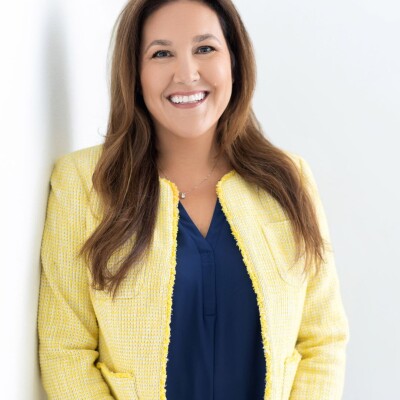
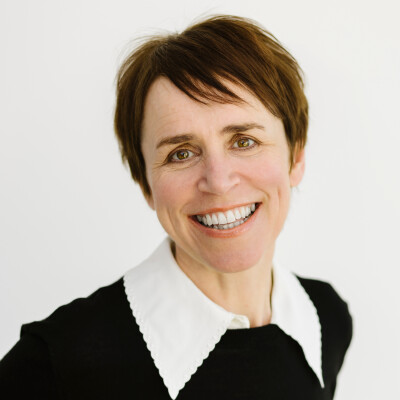
Have you ever felt like you needed to pause and ask yourself, what do I really want my life to be about? I'm Ruth Kearns-Volman, and this is your path to success, created to inspire, encourage, and equip you on your leadership journey. Today's guest is Holly O'Driscoll, an innovation strategist, facilitator, and former P&G design and innovation leader. During her fourth maternity leave, Holly applied the design thinking tools she'd used with her clients to her own life. She asked, what's my why? And she landed on unleashing the potential of people and ideas. A North Star that led to the founding of her company, Ampersand Innovation, and that has guided her ever since. In this episode, Holly shares her career journey from engineering to design, to launching her own business, and the principles she learned along the way about asking for what you want, prototyping your next chapter, and redefining success on your own terms. Enjoy the interview. Okay, so Holly, welcome to the podcast.
- Speaker #1
Thanks so much, Ruth. Excited to be with you today.
- Speaker #0
Yeah, I'm looking forward to this conversation. And we know each other because we both worked at P&G. But that was quite a long time ago, wasn't it?
- Speaker #1
It was, right? But how is it that we're still 30?
- Speaker #0
Yeah, that's a good question. And yeah, and I think the reality is we don't know each other very well, just to be clear. But you're one of those people who there was some kind of thing where I thought there's something here that connects us in terms of values or ways of thinking. And as we've reconnected, I get that sense still that we're thinking about the same things and wanting to make a difference in the world. I'm very much looking forward to this conversation and hearing about your journey.
- Speaker #1
I feel the same, Ruth. It's really fun to be reconnected and to share that energy for sure.
- Speaker #0
Great. So about nine years ago, you started your own business. Give us an idea of what a typical week looks like for you, if there is such a thing.
- Speaker #1
Yeah, you know, it's very much a variable experience, but I'll give you a snapshot of, you know, what the past few weeks have been. And so it's really common for me to play in a variety of different spaces. So I have a lot of time that I spend at universities and with students in an exec ed programs. And then I also have kind of more corporate clients that I go and work with. And so this past week, I actually had... A session at a university with a local team of lawyers, and then quickly hopped on a plane and went to go work with some clients on really helping to move their team forward and to do that using some of the human-centered approaches that we'll get into in a bit. And so for me, that looks like leading workshops and holding space for people to do their very best work. This week, it was more of a teaming orientation. Next week, I'm with an innovation team. working on their innovation pipeline for the next couple of years. And so I'm generally in a position where I am, I call it kind of on stage, either at the front of the room giving a talk or leading a workshop and taking a team through a series of exercises and holding space for them to really get the outcomes that they're looking for in their business.
- Speaker #0
Yeah. So today you're very much in this innovation and design space. You've done a lot of work there and we're going to look back over your journey today. So I'm just curious, like earlier on in your life, when you were growing up, when you were deciding what to study, what motivated you then?
- Speaker #1
Oh my goodness. Wow. I've always had this relentless curiosity. In fact, when I was in college, I got in a little bit of trouble in my philosophy class for asking too many questions, ironically. I always think, oh, what about this? What about this? And I, I tend to look at problems from some different angles and possibilities in that way. And, you know, if I think about... that hasn't always been viewed as a good thing. For example, I got kicked out of kindergarten. I went for two weeks. And why did I get kicked out of kindergarten, right? You might wonder. I was doing other people's work and telling the teacher what to do and telling her how many minutes she had left to teach, and it wasn't working out so well. So my roots of pushing boundaries and challenging assumptions showed up very early in my life, long before it was something that was kind of in vogue. And so I'm grateful that the world has come around to this idea of kind of choosing curiosity and kind of leaning in in that way. But if I think about some of those other things that really mattered to me, I really wanted to make a difference for people. And that was a motivator for me early on as well. In fact, when I went to university, I thought I'm probably going to go to medical school. That was the ambition to kind of think about that. And that didn't come to life. And in many ways, I'm really grateful. It's kind of funny the way life has twists and turns and we make these pivots and adjustments. Things end up working out really well. even if it's not necessarily the vision and the intent that maybe we had early on.
- Speaker #0
Yeah. I mean, often when we start out, we don't really even know what it would look like to do the vocation that we're training for. So it does work out a little bit different. And then you ended up at P&G as an engineer. How did that come about?
- Speaker #1
Oh my goodness. I interviewed on campus the last semester of college because I thought, it'll be really hard and I'm sure that they give a really tough interview and they called me back and I spent a day visit and interviews. And at that point, it was probably the longest day I'd had in my life where I went for interviews around about 7 a.m. and didn't wrap up until 5 and I had never been so tired. That was a lot. That is no longer true, right? I've had many days that are now longer, but I was barely 21 at that time and they offered me a role and I thought, huh, all right, I think I'm going to go to medical school and they're like, oh, it's okay. you know, you can do this for a few years and it'll be fine. And so I joined the engineering organization with a bachelor's in chemistry. And so I didn't know what I didn't know even about engineering at that time. And so that was a really big learning experience for me. I learned an awful lot.
- Speaker #0
Where did you start?
- Speaker #1
I was in a corporate role. Yeah. Corporate engineering. And we were working on all the liquid systems. So my area of focus was on emulsion dispersion characterization. And so... What that means is really managing droplet sizes inside of liquid products. So if you imagine a conditioner product or a lotion product, those are emulsions. And like salad dressing, if you shake it up and it's emulsified, but then it phase separates over time, we didn't want conditioners to phase separate over time. So it was my job to make sure the droplets were properly sized and distributed, such that there wasn't that phase separation. And so we did that from the bench scale that you might find in any laboratory to the pilot plant scale that you might find. in an on-site facility, but certainly bigger than a beaker, more like the size of maybe a keg of beer or round about that size. And then taking that to full plant scale where the diameter of the main mix tank might've been 20 meters. It's a pretty large, large tank. If you go to a manufacturing site and try to pump those things out. And so my job was to make sure that the same size particles were in and droplets were in each of those three volumes of material.
- Speaker #0
Wow. So that's pretty different from what you do now.
- Speaker #1
It was pretty different. Pretty different for sure. So I spent, I guess, four or so years doing that work and then went back and got an MBA, which took me another about two years. So all in six years in engineering. And when I finished my MBA, I thought, I think I'm ready to go do something else in the commercial side of the business. And about that time, design was just taking off inside of P&G. When I came to the design department, there were 40 people and now there's around about 300. And so. the really, really different scale of the organization. And I think it was around about that time that we met Ruth, right? That might've been
- Speaker #0
2002-ish. I think it was a little bit after that.
- Speaker #1
A little after,
- Speaker #0
yeah. I think it was when I was working in home care, so on home. Oh, right. Okay. Dish care. Yeah, yeah. When you were in dish. We call them here.
- Speaker #1
Yeah,
- Speaker #0
yeah. And so that must've been after 2007.
- Speaker #1
After 2007, gosh, my goodness, it blurs a bit, right?
- Speaker #0
It's still nearly 20 years, okay?
- Speaker #1
Nearly 20 years, yeah, for sure.
- Speaker #0
Tell us a little bit about that, about, you know, the whole thought process or whether it was thinking or I don't know what kind of process it was for you to think. I'm not sure I want to carry on this engineering path. I want to do something more commercial and then getting into design.
- Speaker #1
Yeah, for sure. So at the time that I was finishing my MBA and starting to explore what roles were possible for me on the commercial side, I got involved in this community of practice. It was called Design Matters. And I fell in love with that experience. And it was really rooted in how do you deliver a well-designed experience for consumers and to make sure that the brands were hitting on these touch points that mattered a lot. And so that was really making it easy to shop. making it easy to use, having a delightful usage experience, making sure that people felt great about using the products. And I thought, I love that. Wow. It's finally putting people at the center. And for me, that was really game changing. And I remember having a conversation with the leader of that community of practice. And I said, I just finished my MBA. I don't know if you take people like me. I've been in engineering for six years. And he said, can you come on Monday? And I said, I don't know. So I said, you need to call my boss and figure that out, right? And so they brokered a plan and I got to move a couple months later over into design. And so that really, it's amazing where if you can articulate what you want and ask for it, how often it becomes possible. And, you know, it's one of the things that I feel like I'm coaching my children on as well. You know, if you can nail what it is that you want, generally there are people that will help you get there. But if you're not clear on what you want, no one's going to read your mind. And if someone else makes that choice for you, it might not be what you want. And so how can you spend the time choosing for yourself what that path might look like and recognizing that, I mean, at the time I was, my goodness. 27, I guess, so quite young when I moved over to the commercial side. And wow, things are changeable. If I had wanted to go and do something different, I could have still done something different. And I think we often get stuck in this mindset of the next decision I'm going to make is a forever decision. And that's generally not true of many things. Marriage and parenting seems to be the one, right? Those are the ones. But other things, I mean, really looking back now at the macro level, so many things are changeable. And as we learn and grow as people and as organizations learn and grow and new possibilities emerge, I never heard the words design thinking when I came to design and it wasn't available at that time, right? That was kind of a 2007, 2008 kind of thing. And subsequently that experience changed my life. being open to, gosh, I never thought about that before. I never heard about that before. Let me go learn about that. And for me, I think this is back to stitching that curiosity together with opportunity and saying, yeah, I'm going to give it a shot because what's the worst that could happen? And that's one of the questions I asked myself when I launched my business, Ruth, as well on what's the worst that could happen. Either this thing goes well and I keep doing that, which luckily has been the case. I've really had a great, great experience. But I thought the calculus was, if it doesn't, do I have confidence I can go get another corporate job? And I was like, yeah, I'm pretty sure I can. And I wanted my kids to see me doing something hard and to try to figure that out. So that was also a piece of the conversation and the decision making there.
- Speaker #0
Yeah. Wow. You've talked about many, many things. I just want to kind of underline a few of them.
- Speaker #1
Yeah, please.
- Speaker #0
I love what you said about asking for what you want. and and I know and is one of your words and the point is that it doesn't have to be forever so you know I feel very much that the way that I was brought up I would never dare to ask for things you know and I'm as like you say with your kids I am encouraging my daughter now to if she wants something to ask for it I mean what happens if the answer is no I mean you can just try and if it doesn't work out as you said you can try again. So I think I grew up very much more with the mentality of, I have to get this right. And that didn't free me up to experiment in quite the same way. And I think it's a really important learning for our careers. You know, ask for what you want. People want to help in general. So important. And if it doesn't work out the way you thought, which it won't, you know, it never works out exactly how you thought, there's always a way to adjust the path. I think that's really important to realise that. I'm sure, you know, when you started in design, then design thinking came and we'll talk a little bit about what that is and how that's influenced you and then starting your own business. There have been like adjustments along the path, I'm sure.
- Speaker #1
Oh, absolutely. And wow, I connect so much with what you described, Ruth, around needing to get it right. I certainly was kind of brought up with that mindset as well. And one of the things that I spend time with teams on now is that getting something wrong doesn't mean there's something wrong with you. And in fact, If we are hung up on getting something like an innovation right the first time, we're really not setting ourselves up with an expectation of being able to deliver that. It just doesn't. That's not the work of innovation. It takes multiple iterations. And you know what, right? We also take multiple iterations at figuring out what it is that we want to do and making those adjustments along the way. And so kind of getting comfortable with that and being able to model that and talk about it in ways like this. For others, I hope that it can make a difference for them as well. Because I think a lot of us carry that around on, but I've got to get it right. And I know I spent a lot of years of my life carrying that around as well. And wow, is it freeing to feel like, I just need to make the next right decision and the next right decision after that. And I can do a few do-overs along the way if I want to, right? So those are all possibilities. And the best thing to do is to just start and to get going.
- Speaker #0
Yeah. I'm curious to talk about design thinking a bit.
- Speaker #1
Yeah, let's do it.
- Speaker #0
Well, actually, what I'm interested in is you said, you know, before we started the call that you actually use that to think about yourself. Yeah. You know, during your... last maternity leave. And for the context also of the people listening, I didn't say this to you, but I have spoken to another ex-PNG design thinker who did exactly the same thing. And I know that these tools are a really great way of thinking about designing, you know, whatever product services, but also about our own lives. So tell us a bit about that.
- Speaker #1
Yeah, for sure. Wow. For me, was really kind of exploring When I was on mat leave with baby number four, who's almost 13 now, it was trying to figure out my why, you know, what do I want my why to be and how do I live with a congruence? And so exploring some of that from a design thinking model, the principles are empathy, problem definition, ideation, prototyping, and testing. And there's also a book called Designing Your Life by some Stanford professors who were working closely with the team that also did the design thinking approach.
- Speaker #0
And is that the one that has the Odyssey plan in?
- Speaker #1
Yes, you got it. The Odyssey Plan. Yeah. Bill Burnett. Yeah. It's a great one for sure. And they have a workbook that goes along with the book and lots of really great things coming out.
- Speaker #0
I'll put the information in the show notes to be confirmed.
- Speaker #1
Oh yeah, for sure. Please do. Cause it's a great reference and lots of inspiration in there as well. But this idea of figuring out what do you want your why to be? For me, I landed on unleashing the potential of people and ideas because I see a lot of teams that are focused on one or the other. figure out the people or let's figure out the ideas and we're not going to worry about the people. But I think there's value in both and it's really influenced my approach going forward. But so I think about launching my business. It was really the, hey, I need to try this on and I need to figure it out. In fact, I ran my business for a year and a half on the side before I left my corporate job. And so this idea of what really, really is the problem I'm trying to solve. Ironically, it was sparked by a user need, a consumer need. I had a former internal Thank you. P&G client who left the company and would call and say, hey, can you come do with my new team what you do with my old team? And I'm like, I don't know. I have a job and four kids and a husband and a dog. And I don't know how that works. And so she kept calling. And then she said, hey, I really need a date. And that was the invitation. So answering the gap in the marketplace, right? If I'm using the principles that we use all the time, what does that need? She needed someone to come in and really help to develop her team such that they could do the very best work. that they could in their innovation space, right? And so building that out. For me, it was, all right, what problem am I solving? I'm filling this gap in the market. Let me ideate and prototype and test. And the prototype and test really came in heavy because I needed to make a choice on, was I going to stay in my corporate role, which I enjoyed, but I saw this opportunity to go and do something different and to prototype and test that. And so my agreement with the company was to take vacation to run my side business. And when I ran out of vacation, I quit. So that was the story.
- Speaker #0
That was, again, asking for what you wanted, right? Yes, exactly right. Another example. And this idea of prototyping, I know that that's something, like, I feel like this odyssey plan of, like, what could the future look like? And then trying some things on a small scale, doing some pilot testing of, is that really what I want? I do that all the time in my business. If I want to try something new, I try it out with a smaller team or something else and see how it works. And then I land on it, you know?
- Speaker #1
It's exactly right. I continue to do that. So I work with a university in more of a student-facing capacity. And I'll get to run new ideas through the students. And I'll get feedback there. And then I'll take it to more of an exec ed at another university. And I'll get some more feedback there. And I'll kind of get that refinement. As I think about taking that to a large corporate client, and I continue to do that to this day, right? And to be able to practice because there are so many new things. And I wake up most days, Ruth, and think, oh, I know absolutely nothing. And what do I need to learn to really continue to bring this forward? So I think there's some value in that, I call it more intellectual humility on what do I need to learn today that can really deliver the most impactful experience for my clients going forward. There's great stuff happening all the time. And I try to write a little bit of that on my own as well, based on the experiences that I have. But really being on the, what I hope is that kind of cutting edge of leadership and innovation and creating these climates for innovators is where I want to play. And it is just energizing and satisfying work. So.
- Speaker #0
Well, I'd like if we may to come back a little bit to your own leadership, because you mentioned leadership and Thank you. I think for most of us, P&G was a big leadership school. You learned a lot about yourself. So true. This whole self-awareness. You know, what are the big leadership lessons you learned during this? 20 years or 22 years you were at P&G?
- Speaker #1
I was, yeah. I left, I was in my 23rd year after just kind of completing my 22nd. And yeah, it was a long journey for sure. A couple of key things, and it's interesting because it's less about the business and more about the people. And I think you can learn business skills in many places, but I think there are a few places in the world that really give you a world-class education on the importance of people. So integrity, absolutely. I would much rather have someone that is loaded with integrity and I can coach skills. And you can send someone to be developed in an area you need them to grow in. But I don't think that you can really develop integrity if it's not there. I don't know how that comes to life. I still don't know the answer to that question. And so thinking about integrity as a core principle, I think, is a really important one. When I joined the company, John Pepper was the CEO. There's something about his approach to leadership that just is unmatched. And I remember him giving a talk once, and he talked about this idea of how do you strive to be a leader that others, when they look back on their lives or their career, look back and say, if it weren't for them, I wouldn't be where I am, who I am, have the life that I have. And I think that I get chills every time I say it, Ruth, I'm saying it again, right? And I think these are the aspirations that I have, right? I want to make that kind of impact on people and I want to support other people to be able to make that kind of impact as well. And I would love to see more of that in the world today. I feel like I'm always looking and going, oh, wow, gosh, there's an opportunity for that leader to really be game-changing in the lives of others and to be one of those, if it weren't for them, people. And that matters a lot. And I think it's mattering more and more as we think about the state of the world today. I'm longing for that integrity and that leadership style.
- Speaker #0
I think there's something key there, which is, I don't know how John Pepper would have articulated it, but leaders are not just leading projects. They're not just leading people. They're thinking about the next generation. So it's what's coming behind, you know, and. That's what I hear you saying. It's a desire to see the world get a better place, that the people leading have integrity and know how to take things forward in a way that's making the world and people better, not worse.
- Speaker #1
Yeah, it's so true, right? And as I think about some friends who are kind of approaching retirement, and I don't have any interest in retiring. If my body and my brain work okay. I'm going to keep doing this because I feel a responsibility in many ways to do that because I think the world needs it. And I want to be a part of that. And in small ways that maybe aggregate into a bigger impact, I want that for the world. And I want to be a part of that for sure. And leadership, I think, can be game changing. Even in the work in innovation that I do, I spend a lot of time working on how do you create the climate for innovators to do their very best work. Because there's no innovation without the innovators. And everybody talks about innovation. And I'm like, well, hold on a second. Tell me about your team. And they're like, well, what do you mean? Well, what's it like to work here? What are they excited about? Can they speak up? Are they able to have the safety to be able to share the ideas that maybe feel wild and crazy? Can they push back on the questions? Can they push back on the goals? How's that feel for you as a leader? And I get responses that are all over the place around the spectrum of, you know, hey, really, really open or no, they can't question me and here's why. And it's really an interesting space on, boy, if everybody's going after this innovation, how do we create the very best environments for our innovators so that they can go and do the great work? Because it's living in us, right? We have the opportunity and the potential to solve an awful lot of things.
- Speaker #0
Exactly. And, you know, there's two things I'd like to build on. Thursdays. Close to my heart, it's kind of why I do the work I do. You know, I believe that it's not one person who's going to change the world. It's when each of us steps up in integrity to do our part. And that's what I love about how you're describing continuing to work, because, you know, we all have a role to play. We all have a sphere of influence that we enjoy, that we can make a difference in. And so that's also why I do the work I do. I love to work with leaders because I think they're the ones who are going to make a difference for the next people down the road. And the other thing is this whole thing of the environment, the environment for innovators to do their work. That's also close to my heart, too. You know, I'm currently doing this internal family systems work for coaches. And one of the teachers on this course was talking about, you know, we're not trying to solve the problem. We're not trying to give people the next thing to work on. We're trying to kind of upgrade the problem solver. We're trying to enable people to heal, to grow, so that they are the person who solves the problem. Not trying to give them a quick fix of, you know, you just need to do this a bit more. In fact, just is one of my least favorite words because so many times in the past I've had this feedback of you just need to do this. And it's like, well, it's not that easy for me. I need something needs to change inside for me to become the person who can do that thing you're asking me. That's the other thing that you said that really resonated with the work I do, you know, about enabling people.
- Speaker #1
I think it's true, right? I love the framing of we're trying to build better problem solvers. One of the things I talk about with the university students is, do you see yourself as a problem finder or a problem solver? And I ask usually the problem solver question first, and all the hands in the room go up. And then I ask, do you see yourselves as problem finders? And they kind of look at me like, what's that? And I said, are you able to spot opportunities to make a difference, either for people or in a market capacity, right? So you Do you see, and generally I'm talking to entrepreneurship students, so they've kind of got a keen eye anyway for market opportunities. I think it sits in both, right? Where is that opportunity for potential that is living in each of us that it's there, right? Are we looking closely enough to tap into some of those things that maybe could really help us be who we want to be or to really achieve our potential? And I think the same thing is true in terms of ideas and kind of market opportunities. But there's a lot hiding in plain sight if we're willing to get curious and look closely.
- Speaker #0
Exactly. And I think sometimes there are things that we have not yet seen that we need other people who know us well to help us to see. And that's the beauty of mentoring, coaching, getting to work with students, all of that kind of thing, for sure.
- Speaker #1
I think that's spot on. In fact, I'm in the middle of getting my ICF certification for executive coaching as well. I've been doing that. For many years, but without the intentional ICF certification. So again, kind of building on these same skills and trying to take that a step further as you think about kind of where those opportunity spaces going to be in the future and how important it is to really have a keen mastery that is kind of credentialed there. So it's exactly, the work is great, right? And thankfully there's a lot of it.
- Speaker #0
Yes. So unfortunately, we're running out of time and we've got so much we could talk about, Holly.
- Speaker #1
That's right.
- Speaker #0
I do want to ask you this question because I call the podcast Your Path to Success. It's because I believe that all of us have different paths, but we maybe also have different definitions of success. I'm curious how you define success for yourself. Maybe we've touched on some of these things and how that has changed since you started out.
- Speaker #1
Oh my goodness. It's such a great question, Ruth. And like I said, when I started my corporate life, I was barely 21 and I didn't know what I didn't know. And so I feel like coming from that upbringing of, boy, you got to get it right. I felt I put a lot of pressure on myself to, oh, you've got to get it right. You have to look the part. You have to really kind of fit into this mold. And gosh, if I were to tell my younger self something about that, I'd say, oh, get over it already. Lean in and get uncomfortable and worry way less about what others are thinking about you because chances are they're not, right? They're thinking about themselves as well in a similar kind of way. And so go learn and grow all the things that you want to learn and grow in and to dive in with that. But I think letting go of the fear of judgment has been a really, really great thing. I tell people when I turned 40, my BS meter broke. And what a liberating thing that has been. Right? Because you can kind of let go of some of those things. And I think that starts to transition kind of in your kind of mid to late thirties for sure. But earlier in your career, right, this fear of judgment and the need to advance or the need to kind of outperform the person sitting next to you was what I was laser focused on. And now it's exactly the stuff that I try to do with teams that to, to have them not do that, but to have them really come together and to fully leverage their... individual capabilities and their diverse experiences to be able to make a difference there. And so for me, if I think about success now, it's really rooted in freedom and freedom of choices to go and do the work I want to do, who I want to do it with and for and alongside, and the freedom to kind of say when and where that happens. So I have two kids at university now, and two that are, one's in high school and one's in middle school, and having the flexibility and the freedom to have engaged with them has also been a really important piece of that. My two college kids are going to be in Spain for most of the summer on study abroad programs. And so I'm going to go over for a while. And so maybe we can see each other face to face as well. You know,
- Speaker #0
when you're in Europe, although it's not around the corner, you know.
- Speaker #1
Yeah, yeah, for sure. But, you know, I'll be there for some time because we're also renovating our home during that period. But this experience of really the freedom to say, wow. what do I want to do and how can I go and learn more about that? And how do I choose who it is I want to work with and the work that we want to do together and the freedom to also hit pause and to really hang out with my family more and to be able to make those choices. It is that freedom that it was not on my radar when I was 25, even 35, right? It was, you know, go, go, go, continue to try to climb the ladder and to make progress there. And Thank you. Wow. I had it backwards.
- Speaker #0
I think it's such a privilege, isn't it? To be able to choose what we do. And yeah,
- Speaker #1
for sure.
- Speaker #0
You know, sometimes it's fortunate that we had that drive in the early years to pay for our freedom.
- Speaker #1
You're so right. It's exactly right. I think without those investments, it's a little bit of pay me now or pay me later. If you follow that, that kind of, of narrative, it's true. And I don't, I don't think I work any less hard, but I work differently. And I really appreciate the freedom and the flexibility that comes along with that and the opportunity to learn from so many interesting people like you and many others that are continuing to push the narrative of what's possible in this space of leaders and people and innovators and really setting the stage for what's possible in the world. So it's fun to be a part of that.
- Speaker #0
Yeah. Well, there were so many things that we could talk about. I would love to have asked you about, you know, how you managed doing all of this with four kids and, you know, especially starting off your business. I know that that was important to you to be able to role model that and to do that.
- Speaker #1
Every day is a prototype, Ruth. That's our macro philosophy.
- Speaker #0
Every day is a prototype. Yeah, we learn, we fail, we try again.
- Speaker #1
That's right.
- Speaker #0
Everything is like that. Just say this, we close, what your hopes for the future are for... For the work you're doing especially and how that will impact things.
- Speaker #1
Yeah, for sure. I hope that one conversation, one interaction at a time, the work that I do and others like you in this space are able to do is to really make an impact on not only the people who are in these challenges today, but also to set the stage for what's possible. So this past Tuesday morning before I went to do the other... Session with the lawyer team. I was supposed to give a talk at my kid's high school in their entrepreneurship department. They ended up having a snow day, so it got scratched. But I'm trying to build out this capability really as deeply into our communities as we can, because I hope, my wish is that the next generation grows up with this philosophy of human-centeredness and curiosity and iteration and prototyping, all with this kind of core principle of integrity being at the heart of that. And. that's the kind of world I want to live in.
- Speaker #0
Exactly. So we're looking at humans and ideas and how, you know, the humans are the ones who come up with the ideas. I know you've been posting on LinkedIn about, you know, AI and being human centered and it's really an interesting space. So I'm looking forward to seeing what happens next.
- Speaker #1
Sure. Thanks so much for having me on, such a pleasure to connect with you.
- Speaker #0
Yeah. Thank you. Holly's journey reminds us. that clarity doesn't always come from thinking harder. Sometimes it comes from slowing down to reflect and using the right tools at the right time. On her maternity leave, she used design thinking principles to figure out her why. And that single question, what do I want my why to be, gave her the clarity and courage she needed to take the next bold step. If you're curious about this approach, the book Designing Your Life by Bill Burnett and Dave Evans is a great place to start. It includes the Odyssey Plan framework Holly mentioned, and I'll put a link to it in the show notes. And if you'd like some structured space to explore your own why, not just intellectually, but in a way that truly energizes you, I'm running a free 75-minute online session called Connect to Your Purpose on the 2nd of April at 8am Central European Time. This session is for you if you've thought about your purpose before. Maybe you've even written something down, but it isn't quite coming alive for you at the moment. We'll work with what you already know and go deeper. Reconnect to when you felt most aligned and explore what that tells you about who you are and the impact you have. You can register for this at yourpathtosuccess.ch forward slash events. I'll put that link in the show notes too. And if Holly's story encouraged you in any way, please do share it with someone who might need to hear it. And subscribe to hear more inspiring stories on your path to success with Ruth Kearns Volman. Thanks for listening. Until next time.