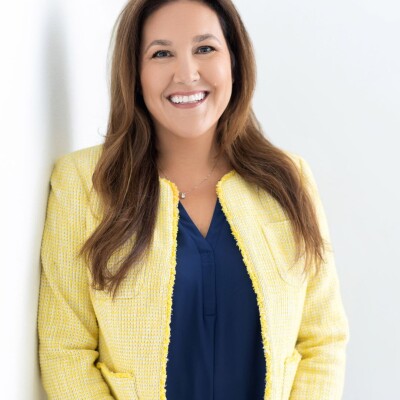
- Speaker #0
Welcome to Your Path to Success with Ruth Kearns Vollman, a podcast created to inspire, encourage and equip you on your leadership journey. If you've ever felt like you needed to make a significant career move, or that one has been thrust upon you, I have no doubt today's interview will speak to you. My guest, Dr. Michelle Wright, is a qualified medical doctor and health educator. Her passion is to make health information accessible and understandable so people feel empowered rather than overwhelmed by health issues. Michelle came to the Lake Geneva region 22 years ago as a young GP, having been a partner in a busy East London practice, following her husband as he took up a professional opportunity here. In this conversation, you'll hear her talk about her process of reinvention in a new country and environment. Becoming a health communicator and leading Health First, the health education and training company she founded while continuing to practice as a doctor. Her story is one I'm sure many of us can identify with and learn from, especially if you've made or are thinking of making a significant geographical or career move. It's a journey of rediscovering passion, strengths and purpose and stepping out with courage, confidence and humility. So I'm here with Dr. Michelle Wright. Welcome, Michelle.
- Speaker #1
Hi, Ruth. Lovely to be talking to you today.
- Speaker #0
Yes. So you are a medical doctor, you are a radio show host, and most of all, a founder of a company called Health First. But obviously, you're a lot more than that. Can you describe the essence of who you are, what you do and why you do it?
- Speaker #1
Absolutely, Ruth. Well... As you say, I'm a British trained doctor by background. I'm a GP, a general practitioner, a family doctor, but I moved to Switzerland in 2004. So not just British, I'm very proud to have my red Swiss passport too. And I do a number, I'd like to describe myself as a portfolio GP now, really. I do a number of different things. I work as a doctor for the staff members in the International Labour Organization. one of the United Nations organizations in Geneva. So I work in the staff medical service there, usually one day a week. For over 15 years now, I've actually been the host of Health Matters on World Radio Switzerland, and I continue to create my Health Matters podcast right now as well. And then the main part of my time I spend as the director of Health First. And Health First is essentially a health education and training company. So I guess the essence of who I am at the heart, I would say I'm a people person and I'm a communicator. Yeah, I'm a doctor by training, but I think the human interaction side of being a doctor is what I've always been drawn towards, if you like. So really passionate about making health information. understandable, making it accessible, and helping people feel empowered rather than overwhelmed by health issues. I think also, Ruth, though, I'm a really strong believer in prevention and lifestyle medicine. So that age-old idiom, isn't it? Prevention is better than cure. That's really important. That really matters to me. So just really helping to give people you practical tools to be able to support their own health and well-being but also to be able to support that of those around them yeah and in fact
- Speaker #0
I met you when I was doing a mental health first aid training you were one of the people training and that's something which I know that is very valuable to me but also I've recommended it to other people because kind of all some of us learnt in the girl guides or wherever what to do with someone physically hurts themselves, but it's not so obvious to know what to do when someone's mental health is not okay and when there might be a crisis. So I really value that.
- Speaker #1
Absolutely. And I think, you know, you don't have to have been to medical school for five years, like I have, or even trained to be a nurse or a paramedic. You know, you don't have to have had lots of education and for that to be your profession. in order to be able to learn some simple skills that could potentially be life-saving for someone. So, yeah, I think that's really important for everybody to get a foundation in physical and mental health first aid.
- Speaker #0
Yeah. And what I really love also about what you do, and I don't want to go off on too much of a tangent because I do want to get to your story, but is that... So much of medicine these days, when you are a client, I use that word because it's often that that's what it feels like, particularly in Switzerland, is you don't get the full picture. So you're trying to read between the lines and make sense of what this person is telling you. And this expert is telling you and to have some people who are see the whole person and how we can approach this from a, you know, the whole person sense, I think is really important, and helping people to... understand how to ask the right questions, how to understand things for themselves is really important.
- Speaker #1
Yeah, absolutely. Holistic medicine. So a really holistic approach. That's how I've always liked to practice. And certainly that's what I like to bring to all of our trainings, our workshops, our interactions today.
- Speaker #0
Great. So let's get onto your story. You started your medical career in the UK. You know, you said you're a people person, you're a communicator. What led you to do medicine?
- Speaker #1
Well, it's so funny, actually, Ruth, because when I was little, I actually wanted to read the BBC News on TV. So I didn't actually dream of being a doctor from, you know, being a child. But I was good at school. I was strong academically, especially in the sciences. And I think perhaps I had a lot of encouragement. Maybe some would say pressure from my parents, from teachers, and was kind of pushed towards medicine. And certainly, since I became a medical student, and then in my time as a junior doctor earlier on in my career, it was that human side of medicine that I was always drawn towards the most. So, you know, the patient contact, the listening, the explaining. the reassuring where possible as well. And it's just quite interesting, I think, how, you know, what was important to me in the beginning is still with me in what I do today as well. And I think, you know, when I was working in hospital medicine, because to train to be a GP, you have to move through different specialties in hospital. So you do some pediatrics and some psychiatry, some general medicine, some obstetrics and gynecology. I worked in accident and emergency. And then I became a salaried GP partner in South East London. And again, that was really where I kind of developed, if you like, the art of the consultation and really that art of communication. I was so young though, Ruth. I was so young at that time, you know. I was only 30. I wasn't even 30, actually, when I became a salaried partner in South East London. So I guess huge responsibility really early on in my career.
- Speaker #0
Right.
- Speaker #1
Responsibility to my patients, obviously, but responsibility to the practice as well. And my colleagues in the practice. And my goodness, they were long days. I would see minimum. 40 patients in a day, plus home visits, plus all the paperwork. So it was really tough. I was having 10 minute consultations. So you've got 10 minutes in order to, you know, get this communication, or use your communication skills and try to get to the depths of what's going on for somebody and make a diagnosis. And of course that meant that... You would perhaps leave, I would go home in the evening, perhaps worrying, still thinking about some of the patients that I'd seen, had I made the right diagnosis, had I made the right decision. So they were really challenging times, if I'm honest, but formative. Yeah,
- Speaker #0
huge learning curve, I'm sure.
- Speaker #1
Huge learning curve, huge responsibility at such a young age, as I said.
- Speaker #0
What do you think you did learn? the most from those years in general practice? Maybe about yourself even, you know?
- Speaker #1
Yeah, I think I'm still learning today because I think probably one of the biggest challenges is trusting your instincts. And I think, you know, you develop skills or you have to quickly developed skills as a GP to... be able to identify those patients who really are sick and need attention right now as an emergency yeah and then perhaps those ones that you can spend more time perhaps bring back to another consultation you know explore things a little deeper but I think it also helped me to as just going back to what we were saying in the beginning Thank you. realize the whole kind of holistic side of of being a doctor and the fact that our mental and our physical health is so closely entangled
- Speaker #0
I think that was probably one of the the big learnings that I that I had during that time yeah well after a few years in general practice your husband had the opportunity to come to Switzerland for a job so that was quite a big decision I guess for you. together and as an individual, how did you go about making that decision? What were the factors involved in it for you?
- Speaker #1
It was a huge decision, actually, as you can imagine.
- Speaker #0
Life-changing.
- Speaker #1
Yeah, totally life-changing, totally life-changing. In fact, he'd already for a few years been traveling between London and Switzerland. So. He'd been a few days a week in Switzerland. He had a team based here as well as a team based in London. So we'd already been enduring that challenge, if you like, and we'd only just got married as well. So we were a very young couple starting out in married life. But actually around that time, my father was diagnosed with lymphoma. I'm really happy to say he's still alive and very well today. So lots of treatments, he had a bone marrow transplant, all sorts of things. But I guess it made us both just stop and just reassess our priorities and our life direction, if you like. And it kind of, I guess, was one of those, well, if not now, then when type moments. As I said, I was really young. We were both really young. Perhaps it made us more willing to take risks. But of course, it was so difficult because I was leaving behind this career that I trained really hard for. I was leaving behind my identity, if you like, as a salaried GP and the professional security as well. So it was a huge decision. But on the other hand, it was exciting as well. It was this new challenge. And I'll never forget because we're actually based near to Verve. And I will never forget the first time that I turned up in Verve and my husband was actually in a work meeting. And I had the day off and I took myself off around the lake. And I just looked at the mountains and I was just like, oh my goodness, How come he has never explained this to me? And just that sheer kind of beauty made me really excited, I think. And yeah, it was it was OK. Let's let's go for it. Let's let's give this let's give this a chance.
- Speaker #0
Yeah. So it's you know, you're relatively young. You know, there's a lot of opportunity and there's a lot of also I think we talked about you talked about reinventing yourself when we spoke about it beforehand. Because you're leaving behind a professional identity, it's not clear how you can construct that identity in a country which is not where you trained. And what was it like to come with that blank sheet of paper? What were some of the key milestones for you in establishing yourself again?
- Speaker #1
It was hard. I really did think that it was kind of this sense of starting from scratch, if you like. And I'll never forget. I literally had my last day in my GP practice on the Friday. And as you can imagine, having worked there for a number of years, there was lots of things to tie up. We were also completely relocating. So the whole removals, packing up. We flew to Switzerland on the Saturday. And on the Monday morning at 8.30am, I had to be in Lausanne to begin an intensive French course. So I kind of like... threw myself in to learning French. And I think that was probably the kind of first milestone was to improve my French or to try to improve my French. And I was really lucky at the time because my husband's company actually supported spouses to help them reintegrate or integrate into into the local community. And part of that was... this immersive language program that I began. So that was the first thing, kind of trying to get to grips with the language. And that was really important because I needed that to get my medical qualifications recognized here in Switzerland. So I needed a certain level of French to help with that. But also, of course, we need... a certain level of French to get by, to feel like we're part of the community, to be able to get things done. So I think first milestone absolutely was kind of the French language and trying to get to grips with that, if you like.
- Speaker #0
So it sounds like that you had thought about it before coming, if you started the French course on the Monday and you knew already that you wanted to, you know, get your qualifications recognised in Switzerland so there were some things that were already laid out.
- Speaker #1
Yeah absolutely and you know I like to be relatively thinking ahead in terms of my planning and I'm quite a driven person so I like to put plans in place to make things happen and I guess that's an example of doing that and so just having that Monday morning where I knew that Right. This is the beginning of my French language journey, if you like.
- Speaker #0
Right. But I'm sure not everything went according to plan. What were some of the challenges that you came up against?
- Speaker #1
Well, look, firstly, I'm going to tell you that I still haven't finished my French language journey. I still have French lessons now. And, you know, this is kind of 20 years on or however long it's been. I think adapting to different systems, to different culture. was another challenge. And I guess I realised that more when I actually made the decision to start my own company here in Switzerland. And maybe we can just talk a little bit about why that happened or how that happened, and then perhaps pick up on the challenge. I can help the challenge question a little bit more. I guess, you know, there was this you this reinvention as we said so number one was learning the French language getting my medical qualifications recognized here but then I was trying to just reconnect I guess with what I truly enjoyed and felt most was most me so that human connection that communication that the prevention aspects of medicine. And so I started initially. helping people who wanted to improve their lifestyle to support their health. And it was one-on-one consultations. And I set up a company called My Wellbeing at the time. And through that is how I was connected to World Radio Switzerland and how I then started with my weekly radio show, health matters all those years ago. But then as part of... that, I realised that actually there was this real need for evidence-based health information for the Anglophone community. So I was getting phone calls, I was getting messages, I was getting people contacting me through the radio, asking me all of these things, you know, what do I do if my son hits his head and it's 7pm in the evening and my partner's away with work? And around that time, again, through my radio show, I met another British trained doctor, Dr. Penny Fraser. And together we thought, OK, there's something here. We need to formalise some training, some sessions. And that's essentially how health first began, just trying to answer all of these questions. But coming back to the challenges, I think the challenge was, I'm a doctor. not a business person. So I'd never had any training in any of this. So again, that was a huge kind of leap for me and a huge challenge for me starting this company and learning about payroll and HR and all of the admin and, you know, the leadership side of all of that.
- Speaker #0
Let me just interrupt for a moment to say though, Michelle, you did something that a lot of people don't do very well when they start a business is that they knew what the consumer need was. So as someone who used to work in Consumer Insights, you were getting, you were, people were naturally coming to you, but you knew what the need was or you started to listen to what the need was. And then you knew what service you wanted to provide. Afterwards, the rest is, yeah, there's some learning there, but it's pretty practical.
- Speaker #1
No, absolutely. And, you know, it's the way that my journey took me after. After arriving here in Switzerland, I was fortunate that all of the dots began to become connected together.
- Speaker #0
Yes.
- Speaker #1
But yeah, my goodness, I think how I've helped myself kind of overcome challenges and obstacles in terms of running a company, I guess, is. bringing in the right people, you know. So looking for support with payroll and accounting, setting up contracts, employment contracts in Switzerland. So I've got a great small company that I've been working with from the beginning that have helped me with all of that. And then as soon as I could, getting in some administrative support to help me with the day-to-day running of the company as well. But also, as the company has grown, having an amazing team of other doctors and nurses that I work with that allow me to and allow us to grow as the company. And it means that, you know, I can't be all over Switzerland all of the time delivering trainings myself. So I guess it's learning that. delegation, it's learning that sense of, I guess, reliance on the skills and abilities of the amazing team members that I have working with me.
- Speaker #0
Yeah, I think one of the things that strikes me is that you are quite a resourceful person, you know what you're good at, you know where you need help, you're not afraid to ask for help or find it. In order to be able to help the Anglophone community, you had to figure it out yourself, you know, how to interact with the medical system here and all of those things. So I think knowing who you are and what you're good at and where you need help, who are the right people to bring in, is something that doesn't seem to be that much of a challenge for you because it's something you know how to do.
- Speaker #1
Yeah, I think building my own self-awareness has definitely helped me. I guess, understand what motivates me, recognise my impact on others around me as well. And also, I think, create the kind of professional but also personal environment that I really want to be part of. Again, it's been a journey. And again, I was young when I landed here in this country. And we're now kind of 20 years on. But yeah, self-awareness. and and it's been really important to me.
- Speaker #0
So after those 20 some years, as you look back, what are you most proud of?
- Speaker #1
I think having the courage to completely reinvent myself and, you know, build this meaningful life and career in another country. I think creating health first from scratch and being able to see its impact. I'm I'm really proud to employ and to support other people. So I'm proud to employ people within the company, but I'm really proud of the work that we do, the support that we give to others, to our clients, to our course participants. And, you know, in terms of the help that we can give people through our health education, through our trainings. I'm really proud also of the longstanding work that I've done on the radio and that I continue to do with my Health Matters podcast. And I think as well, I'm proud and it's another really important aspect for me is maintaining a strong focus on my own personal well-being and my own personal health. Because I think often that's forgotten, but I love the app. doors. It's one of the reasons why we did stay in Switzerland all of this time. I love being in the mountains. They're my medicine, physically and mentally. So skiing, ski touring, hiking, running, that's where I'm happiest. So I'm proud to be able to dedicate time to myself to be able to enjoy that and one thing that I've recently achieved with my husband and another close friend is we did the short Patrouille des Glaciers from Arola to Verbier in April. So really proud of that. It's mentally demanding, it's physically demanding, but again, it kind of requires resilience and endurance. And I'm hugely proud of what we achieved there.
- Speaker #0
So just explain what it is to people who might be listening who don't know.
- Speaker #1
Essentially, it's a ski mountaineering race. We didn't do it to race. So it involves ski touring, so climbing uphill with skins on your skis. And then you get to the top, you rip the skins off, you ski down. But it's lots of different times that you do that during the race. It took us just over seven hours to complete. And it's, yeah, I think 2,200 meters of vertical ascent. So. It's a physical challenge.
- Speaker #0
It's a physical challenge.
- Speaker #1
Absolutely. And a mental challenge as well.
- Speaker #0
Yeah. Yeah. And probably a relational challenge as well with your team.
- Speaker #1
I tell you, our third teammate did very well to kind of keep the peace.
- Speaker #0
Great. Well done.
- Speaker #1
My husband was amazing too.
- Speaker #0
Yeah. So, yeah, as you look back and you think about that young girl who wanted to be in news. reader and you've got a radio show and wants to communicate about health and role model health I think you can be very proud of what you've achieved Michelle I think it's amazing what you've done as we sort of start drawing to a close I'm curious to ask you and also for the benefit of other people who might also be needing to reinvent themselves or move to a completely new career or environment. What are some of the things you wish you'd known when you came with that blank slate?
- Speaker #1
Good question. I guess when, particularly for careers, professions like medicine, there's often this kind of mapped out path, isn't there? Right,
- Speaker #0
yeah.
- Speaker #1
You don't need to have your entire future mapped out perfectly. I think is something that I wish that I'd have known because some of the best opportunities, I think, come from uncertainty. I think moving to Switzerland, it did feel risky, did feel uncomfortable at times, but I think that growth often comes out of uncomfortable situations. Another thing, we keep using this word reinvention and I think it's so true. It takes patience. It takes persistence. And so if you fall down with courage, with support, with perseverance, you can get back up again. And I think also it's really important to trust your instincts and stand by your values because meaning and fulfillment, I think, matter so much more. than external achievement. So I guess in a nutshell, it's okay if life unfolds perhaps differently than you originally planned it might do, because I guess that's what makes life exciting.
- Speaker #0
Yeah, and you have an opportunity, you seized it, you have challenges, you learn from them. I have seen it again and again that we Thank you. have in our heads or in our being somehow this path that we think people expect of us and at some point we have to let go of something in order to be able to you know break the the script and and choose something new which is even better sometimes or always if we're true to our values and true to the biggest difference we can make in the world absolutely that's how i see it i completely agree I agree. Yeah. Well, I think we do need to draw it to a close. It's been wonderful to have this conversation. And thank you so much for sharing your story on the podcast.
- Speaker #1
My pleasure.
- Speaker #0
What stuck with you about Michelle's story of professional reinvention, her self-awareness, her courage, her patience, her persistence? Michelle didn't just rebuild a medical career from scratch in a new country. She had to learn to lead, building a team and a company, as someone who, in her own words, was a doctor, not a business person. So wherever you are right now, know that success lies at the intersection of your brilliance and the world's need. And take heart. You are not alone. There are generations of people who have gone before you that. and reinvented themselves too. Thank you for listening to your path to success. Please subscribe to hear more inspiring stories of ordinary people forging their own path to success. And do share this episode to spread the encouragement. And until next time, stay curious, be courageous, lead the way.