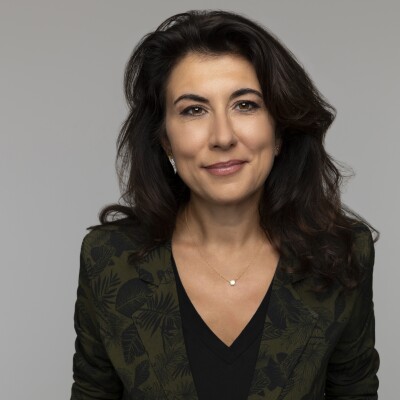
- Speaker #0
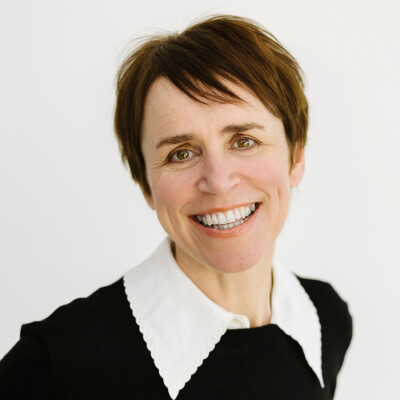
What will it take to create the life and the impact you want? That's a question today's guest and her family ask themselves more than once. I'm Ruth Kearns Wollmann and this is Your Path to Success, created to inspire, encourage and equip you on your leadership journey. My guest today is Janice Johnston. CEO of Edge Growth Ventures in Johannesburg, one of South Africa's leading impact investing small and medium-sized enterprises. For nearly 20 years, Edge Growth has backed SME as the engine of job creation in a country facing an unemployment crisis. Janice and I first met many years ago in London, where she spent a decade in investment banking at Prudential Capital. In this conversation, she takes us from her graduate program at Standard Bank in South Africa, to the city of London where she juggled a demanding job with two small children and then to the family decision to return to South Africa. They wanted to build a life that worked for all of them and Janice wanted work with an impact beyond the bottom line. Towards the end we turned to leadership and what Janice had to learn when she realised that being a great functional expert doesn't automatically make you a good leader. So my guest today is Janice Johnston, the CEO of Edge Growth Ventures, which is a leading South African SME impact investing located in Johannesburg. So welcome, Janice. It's great to have you.
- Speaker #1
Thank you, Ruth. Wonderful to be with you today.
- Speaker #0
Yeah, and we met a long time ago in London, which is where I'm originally from and was working at that time and where you also lived and worked for about 10 years, I think. So... You know, we've certainly had a lot to catch up on as we've met up again. But before we talk about your journey, I'd love it if you would tell us a bit about your current role. What is Edge Growth Ventures all about?
- Speaker #1
Thank you, Ruth. So Edge Growth Ventures, as you mentioned, is one of the leading SME investors in South Africa. sit is currently being in operation for nearly 20 years. So it's been a long journey in terms of SME development in the country. It was born out of the premise that SME are the growth engine of the economy and are the leading job-creating engines. And basically, in order to address... the unemployment crisis in South Africa, the founders felt that this was the best place for them to have an impact, to support the SME that can create the jobs. Originally, it was set up just as an accelerator or advisory company for SME. And then very quickly, the realization came that one of the key stumbling blocks for SME was access to finance. And so that then led you to the creation of our flagship fund that got investment from one of the key banks in South Africa, First National Bank or FNB. And we set up a fund called Vumela. And that one fund over the last couple of decades has grown to seven funds, all with slightly different mandates. So we cover the full spectrum of SME in the various... aspects of very development finance for SME that are in the mining communities, for example. We have a lot of mining companies that we manage funds for, to far more VC-like mandates where we support fintech, healthtech, and edutech companies that are growing in a very different kind of trajectory and in a slightly more broader market and more sophisticated, if you like. So Hence the... number of funds that we manage so that we really have a very good cross-section of investments. And also we invest both equity and debt, so across the capital spectrum as well.
- Speaker #0
Okay, so it's investment and consultancy or advisory now? You cover both?
- Speaker #1
So we do within the broader group. So the ventures part, which I head up, is just the fund management part. And then we have a sister company that does the programmatic interventions or work for business development support, non-financial for SME. Even in our impact investing relationship with our investee companies, there's a lot of heavy lifting that we do to help support them to grow and scale and progress in terms of their business maturity and ability to access further markets and further capital and ultimately provide growth vectors for them.
- Speaker #0
Okay. And how do you measure your impact? Maybe you have a few stories to tell of the type of impact you're able to have as an organization.
- Speaker #1
Absolutely. It's so interesting because when we originally started out, as I say, the real sort of core North Star for us was job creation. And so that was the primary metric that we measured. And originally it was permanent jobs. And we did some amazing investments that... allowed, you know, a huge amount of job creation to happen, particularly in things like manufacturing, enterprises and the like. But over time, that's kind of evolved because we then realized that, you know, to have significant growth, maybe fully, you know, permanent jobs isn't necessarily the only access point. You know, there may be more full-time equivalent jobs in some of the platform types of businesses that were. particularly prevalent in the South African market. So then we invested in some cleaning, it's called SweepSouth, for example, that provided a platform for cleaning people to be able to connect with households in a much more efficient manner and to be able to not necessarily do full-time, but, you know, plug in different days. And it was a great opportunity for them to expand their economic creation. And so we had to evolve that in terms of temporary jobs as well as permanent. And then as we've grown and there's been an expansion in how people think of impact from an ESG perspective as well, we've also begun to track and measure things that relate to the environment, broader socioeconomic initiatives such as healthtech and education. And so we have a much broader picture. of what impact could be now than what we thought of 10 years ago.
- Speaker #0
Amazing. And, you know, now you're in this role, how is it a good fit for you with your passions, your skills, your strengths, all the experience that you've built over your career?
- Speaker #1
So I'm very fortunate that it is a composite role that does seem to speak to a lot of Not just my skills and equally skills that I need to develop. They're not necessarily fully baked, but the interest in the skills I want to develop. But also a sense of purpose and passion. And the sort of alignment of technical ability as well as values, I think ultimately really does set us up for success. So for me, I had a very traditional... finance background. I worked in the city for many years, studied finance, various tertiary degrees in that area, which was a great foundation to be able to augment impact investing into the language that funders understand, while also being an intersect for the more broader, you know, sort of social needs of the country. So I felt like people took me a little bit more seriously because I did have that background. And so that was really helpful. And it's also been able to sort of professionalize, if you like, in our world, how we show up and how we analyze and also assist the SME in a really meaningful way. And then I got to a point in my career that where I felt it needed to be about something a bit more. More than just myself, more than just the team that I worked in and a profit-orientated, bottom-line, key focus. And it was sort of, you know, it comes over time. It's not just something you wake up one day. It was just sort of a general sense that I'm not sure I can keep up this energy if it's just about me. I felt like the energy needed to come from other areas of interest. And so when I went back to South Africa, that's when I felt I had the opportunity to really look at this more intent, you know, with more intention. And, you know, the sort of opening at Edge Growth presented itself and a number of things seemed to sort of click together.
- Speaker #0
Yeah. Well, let's talk a little bit about this journey. If we think about... The fact you're a CEO today, have you always been an ambitious person from when you were young?
- Speaker #1
I'd have to say yes.
- Speaker #0
It's okay. It's good.
- Speaker #1
I don't know. I don't know why we sort of feel a bit embarrassed, but yes, I have been ambitious. I have always wanted to work hard and I have always wanted to try something that was difficult and see if I was able to do it. It's a bit of an innate drive. And I think that has taken me quite far in terms of where I wanted to see myself.
- Speaker #0
Right.
- Speaker #1
And maybe it was to prove on some level that I could keep up with particularly my brother, for example, who is a couple of years older than me. And it was at that time where it was opening up for women to say, you can do whatever you want.
- Speaker #0
Right.
- Speaker #1
And, you know, compared to perhaps the previous generation. And I took that to mean, well, I'm going to see what this means for me and give it a go.
- Speaker #0
Yeah. Great. So you started off in finance. Sounds like that's always been your area. You studied finance. Yeah,
- Speaker #1
investment banking. So I started off in structured finance in Johannesburg. I was on a graduate training program there with Stana Bank and then moved to the city. And then I worked on a sort of principal finance desk doing a number of sort of infrastructure and other kind of investments within a very sort of technical, often male dominated environment.
- Speaker #0
Right. Yeah. Yeah, of course. And what was that like, especially moving from South Africa to London?
- Speaker #1
So that was a very interesting dynamic because in South Africa... Where you went to school or where you went to university and some of the people that you know create a network, even before you've sort of joined first role, they can place you. They can see who you are and get a sense for what that might mean for the role. Coming into London was a lot more difficult because people didn't necessarily know the school or the environment or I mean, they knew the degree to an extent, but it wasn't the same as what they were more familiar with. So I did feel like it took quite a bit of sort of resilience and determination to actually be able to get a role in a more sort of front office financial services environment in London. And then I had to really prove myself so that they could actually match that skill set with sort of education and qualification background. that I had.
- Speaker #0
And what was it like for you as a woman in that in the city in that type of environment?
- Speaker #1
I was very fortunate that I had a really great team and and some great colleagues that I worked with so I never really felt it until I had children to be honest and then it was a bit more difficult there's no doubt juggling the responsibilities of a demanding job with children is the first time that I was really presented with the fact that it's different. It is different for us and you need to actually make sure that you get either the support more broadly to be able to manage that or you have to for a period of time accept that your career might Look. a little bit different and it can't necessarily be at the same pace and intensity as as some of your male colleagues and so that is a kind of that challenge that you faced and that that let's be honest women
- Speaker #0
tend to face more than than men men don't seem to ask themselves the same questions but I think what helped you to navigate that in terms of support maybe both in your mindset what you were thinking externally
- Speaker #1
So what helped me continue my career was, if I'm honest, a deep sort of people-pleasing desire to keep up the work and still performing at a similar level, even though I had these other commitments. And to be honest, it wasn't actually sustainable after a particular point in time because I was just trying to do too much. And there was just this depletion of resources that meant I needed to reframe what the art of the possible was and consider what my values were versus how much I wanted to still be a part of my children's lives and give to them and how much I could deliver and commit to from a work perspective. that required a reframing and a sense that if I'm going to work in an interesting, dynamic, engaging environment, I'm going to have to do it a bit differently for the long term to be the mother and the type of and have the kind of home life that I wanted. And that was a personal choice.
- Speaker #0
Yeah. And so. What did that mean for you? What was, what kind of reframe did you have to do for yourself at that point? Because it evolves over time.
- Speaker #1
Yeah, so the first thing was to move back to South Africa.
- Speaker #0
Right, okay.
- Speaker #1
But this was all the catalyst to the move. So I carried on working in the city for five years after my daughter was born and another, oh, six years actually also, and another three, four years with my son. And that's when I realized it was not going to work for me. To continue working on that basis. And so that actually led us as a family to reconsider our options and led us, along with other factors, these things are never one-dimensional. Invariably, there's a collection of things that come together. But for us, it meant coming back to South Africa. And there, we did have more family support. We did have more ability to create a better work-life balance for both my husband and myself. And then that also quite quickly led to this desire to combine both those technical skills and the social impact, which was the opportunity of the impact investing role at Edge Growth.
- Speaker #0
Wow. I think I want to pause for a bit because we've skipped over something, which I think is you know, I can relate to, which is when you have a family and you're working in a country where you do not have close family, your support system is not as robust as people who are, you know, managing work and family, but they have, you know, their parents or brothers and sisters down the road to kind of share the load with. And I think that's incredibly significant. So I totally... understand why you know going back to South Africa was part of the picture for for you as a family because not you know for some people you know it may be it may be simpler they may be living in the same place as their family for me like you I'm not living near my family so that's another dimension which has an impact for sure so let's talk about you know the decision to move from this more of a mainstream finance role. You know, the bottom line is king and profit is important and so on to this, this desire to move to something which has more of a socioeconomic impact beyond that. What were the elements that brought that together for you?
- Speaker #1
The orientation that we can use certain skills to uplift. perhaps a segment of the economy that's underserved, was something that just resonated with me. And I can't even sort of say it was one, you know, this program or this book or this other external influence that made it clear to me. But when I started thinking about how do I want to spend the next 10 years of my life. There was this sense of having been outside of South Africa for so long that when we came back, we wanted to make a meaningful difference in whatever sort of playing field that we happened to find ourselves. And that was very much the drive that this move needed to have, you know, to be meaningful.
- Speaker #0
Right. And what were the things that you felt? you had to weigh up in that decision. Was it obvious or were there things that you thought, oh, I'm going to have to let go of this or I'm going to have to...
- Speaker #1
No, no, it became easy because of the way that my internal sort of value system was starting to clash a bit with the more traditional financing system. But there were still some elements that one had to, you know, make peace with, so to speak, in terms of, you know, your... ability to sort of remuneration context will change and that will have some implications that you need to. be happy with. You know, you can't expect it to be the same if you're doing something different. And that was an important element that, you know, we had to be comfortable to shift and also weigh it up with the slightly less time demanding, stressful workload and seeing the value that you would get in terms of a slightly more flexible. environment. And for us, that made sense. We were happy to let go of the one to get the other. And people, it's such a personal decision. And it's also very time and stage dependent, I think, when you make it. But yeah, there are always trade-offs to any decision. But invariably, it's no one element that you're basing the decision on. There's a few things that come together.
- Speaker #0
to help you make it and then it doesn't seem so hard yes yeah yeah and I think one of the things which you have said implicitly is that you used we so it's clear that you know with your husband with the family you made a decision that was about what was best for all of you and what the implications were for all of you of going back to South Africa maybe changing the focus of the work more time or energy let's say also because you mentioned energy before it's not just about
- Speaker #1
time and the number of hours you're working it's how meaningful the work is that is giving you energy yeah and I think it's also interesting how you know things change over time so you know my children were you know when at that particular stage were very much in the phase of quite physically and emotionally demanding in terms of being present and lifting and you know all sorts of other extramural activities. you know, that changes over time. And so whatever it is, a decision you make, it also evolves. And so whilst I may have, I think when I first started, I worked four days a week, you know, quite quickly. And, you know, now I work full time because I'm able to. And that has also meant that we've been able to grow and scale the business and all sorts of other opportunities have presented themselves as time capacity. You know, also, you know, you match that with with where you are and and what you're able to to give.
- Speaker #0
Yeah. Yeah. Well, let's talk a little bit about leadership, if we may. I'm curious, you know, what you've learnt as you have moved through your career about yourself, you know, what leadership is about and the things that you've had to learn the hard way.
- Speaker #1
Yeah. You know, it's interesting how often if you do well in a technical job, there's this assumption that you will be a good leader.
- Speaker #0
Right.
- Speaker #1
That because you can do your transacting role or you can structure a deal really well or you can, you know, create value in a particular way, that you will naturally evolve into a good, you know, manager or. team leader. And I think it was so valuable at some point that it was pointed out to me through a sort of course that we were put on or that I was exposed to that, that why should that be? They're totally different skills. Obviously, you need the context and the ability to understand the environment that you're leading, but it's not the same. And to move from And Being responsible to your own outcomes and your own actions to shift to managing and taking responsibility for other people's actions and outcomes and the systems and processes that you put in place for people to show up in their, you know, in their best possible way for the business is very different. And I think once I realized that that meant I needed to evaluate. what is the skill set for this new orientation of my career? You know, what were the strengths, what were the weaknesses and how I could grow and develop? That definitely allowed me to be vulnerable in certain aspects and to ask for help and to say, maybe I don't know exactly how I should do this. Let me either, you know, take on my own sort of study or, you know, reach out to those who've done it before and that I... It doesn't mean that I'm expected to know how to do this just because I've been in the industry for 15 years.
- Speaker #0
And so what have been the biggest growth accelerators for you in terms of your leadership?
- Speaker #1
So that, I mean, that course in terms of orientating was quite literally almost like one of the key sort of orientating growth vectors for, OK, now we're in this next phase. So I would say that that was definitely a huge catalyst for it. And then thereafter, it's been seeing other leaders. do it well and not so well. And seeing how does that, you know, how does it authentically sit with me about how I would like to show up as a leader. And some I think, oh my goodness, that is exactly how I would like to be led. And so therefore, that's what I need to sort of model and how I need to show up. And then other cases, even from very good leaders, but you aspects of the leadership, I've sort of thought, oh my goodness, no, that's not how I would like to incorporate into my team for one reason or another. And so it's trying to always sense check the sort of values alignment with what is our core strategy and goal and what would be the best way to get the team engaged and aligned on the same journey.
- Speaker #0
Yeah. So, you know, you're talking about it's actually sounds quite thoughtful, like the awareness of being willing to learn from others, observing, seeing what works both for you and your organization, you know, as in getting people aligned and committed to move towards in a certain direction towards a goal.
- Speaker #1
And quite quickly, and I think, you know, I realized and I think this was because one of the leaders that I was, you know, very close to showed this up in Technicolor. Was the sense that it's not about you as an individual.
- Speaker #0
Right.
- Speaker #1
It's about a collective goal that you're working towards.
- Speaker #0
Yeah.
- Speaker #1
And sometimes it's very much about putting yourself and your own agenda to one side.
- Speaker #0
Yeah.
- Speaker #1
And trying to have this framework to orientate your decisions around.
- Speaker #0
Right.
- Speaker #1
Not just some sort of gut feel or tendency to... agree with the people that you like or you know something more intangible but that you understand that consistency and and this sort of sense of decision making that can be well understood and substantiated creates safety for the team yeah and it's creating that safety for
- Speaker #0
others to be able to shine in fact to to do a good job together as a team that's what I'm hearing you say yeah and I think before you mentioned you know this is about it's not about having one brilliant person at the head of organization it's having you
- Speaker #1
know someone who can bring out the best in the whole organization yeah and and trying trying as best as possible to orientate people to play to their strengths. And whilst obviously trying to sort of develop some of the weaknesses or development areas, but, you know, understanding that it's more about the fit, the person and the role than this person is a good or bad. It's like, is there a role within this organization that they can turn up and thrive? And then, you know, seeing how you can manage that in a cohesive fashion. Whilst also trying to, I think the difficult thing you ask about, one of the difficult things is within an organized structure is to be able to still create the career development opportunities that everybody wants. You can do it for some, but sometimes there are limitations to how you can manage that. And that always feels like a hard compromise to make with the reality of what you actually can deliver.
- Speaker #0
Yeah, you can't always give everyone within your organisation the career path that they desire. And sometimes that means that they're better off going somewhere else. And that's not always easy, right? No, and that they need, you need to let them go and almost give them permission to go.
- Speaker #1
Yeah.
- Speaker #0
In a, you know, respectful way. And actually what we found sometimes when you do that, they come back, you know, a few years later with the experience that they've, that they needed to get and can sort of plug back into your organization at a senior level.
- Speaker #1
Yeah. Wonderful. Well, we're going to have to draw to a close because I noticed that time is. going by, but I'd love as we close to ask you a particular question, because a lot of people who I work with and who I meet have the same challenge that you had. They would love to do something which is more meaningful for them, which has a greater impact on society, not just on, you know, the bottom line of a company. What would your advice or encouragement be to people who are considering making such a move?
- Speaker #0
So to be curious about what the opportunities are, if there's a particular element of that impact that you really would like to explore more and sort of understanding what the ecosystem looks like and whether a move within your current skill set makes sense. Or if there's additional way that you could try and find that impact or purpose where you are. And if you can even shift your current organization into thinking more broadly. about these these issues and see if there are other elements that you can bring in so I think it can be both in terms of there may be an actual shift to be made there is those kind of things or it is actually about trying to bring that purpose into the environment that you are
- Speaker #1
I totally agree and I've seen this happen with many people who when they get clear on what their values and what's important to them they find a way to make meaning where they are. And sometimes then they do move later, but it gives them the space to create more meaning and more energy where they are before they make a bigger move.
- Speaker #0
Yeah. And I think it's just about being attuned to those promptings and seeing where you can take it. And I think that creates a bit of energy and purpose within yourself that will either lead to something that's more tangibly different or internally different. that can equally make all the difference.
- Speaker #1
Yes, absolutely. Well, Janice, thank you so much for sharing your story. And it's been wonderful to have you.
- Speaker #0
Yeah, thank you, Ruth. I've so enjoyed it and hope to catch up with you a lot sooner than the last time.
- Speaker #1
Absolutely,
- Speaker #0
for sure.
- Speaker #1
It's not about you as an individual. It's about a collective goal. That's what Janice learned from one of the leaders she worked closely with. And you can hear how she's taken it to heart. What I loved about this conversation is how intentionally Janice reflects. She's honest about her ambition and the people pleasing behind some of it and then when the pace was no longer sustainable she and her family stopped to ask what it would take to create the life and the impact they wanted. She brings that same intentionality to her leadership, recognizing that leading is a different skill set from being a functional expert. and building it deliberately by watching other leaders and asking herself what fits the kind of leader she wants to be. I know how hard it is to take time out to reflect in a busy schedule. I also know the benefits. That's why twice a year I make time to look back and look forward for myself and with others. My next free guided reflection is on Friday the 11th of December at 8am or midday Central European time. You'll have 90 minutes in one of those slots to pause, reflect on where you've come from, what you've achieved and what you want for next year. And if you'd like to go deeper on your own situation, you can book a one-to-one end of year reflection session with me in December or January. The links for both of those you are in the show notes. Until next time then, stay curious, be courageous, lead the way.