Description
Hosted on Acast. See acast.com/privacy for more information.
Hosted on Ausha. See ausha.co/privacy-policy for more information.


Description
Hosted on Acast. See acast.com/privacy for more information.
Hosted on Ausha. See ausha.co/privacy-policy for more information.
106 episodes
Season 4


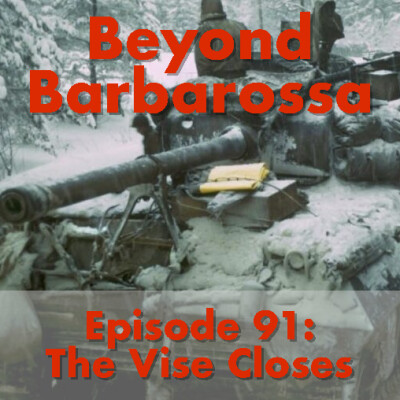
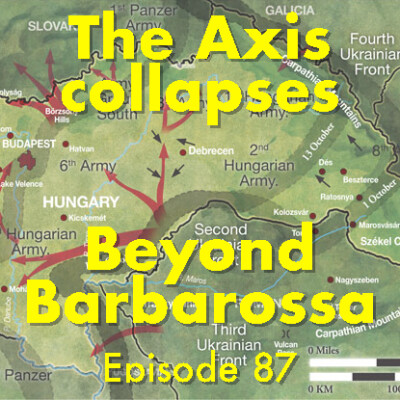
"Budapest lay athwart the main entry route to Austria and Bohemia. It was the main railway hub of the region and also the largest Danubian port. The Red Army could not bypass it. This was the first time in the war that the Red Army had to lay siege to a major city." The Red Army assaults the capital of nazi Germany’s final remaining partner in the Second World War. The war appears to be almost lost—but that’s seen through hindsight. No one at the time knew that. Map 1: The Eastern Front, December 1944 Map 2: Germany’s eastern and western fronts, 1 December 1944 Map 3: The Petsamo-Kirkenes operation in northern Finland Map 4: The Red Army attacks BudapestOperation Konrad II People Mihai I, King of Romania, 1944–1947 Miklos Horthy, Regent of Hungary Miklos Horthy Jr. Ference Szalasi, nazi dictator of Hungary, 1944–1945 Edmund Veesenmayer, Hitler’s “Special Envoy” to Hungary, 1944–1945 SS-Obergruppenführer Karl Pfeffer-Wildenbruch, commander of IX SS Mountain Corps Historical photos: Fighting in Budapest Sources Antony Beevor, The Second World War. New York, NY, USA: Little, Brown and Company, 2012. Evan Mawdsley, Thunder in the East: The Nazi-Soviet War, 1941–1945. London: Bloomsbury Academic, 2016. Anthony Tucker-Jones, Slaughter on the Eastern Front: Hitler and Stalin’s War, 1941–1945. Stroud, Gloucestershire, UK: The History Press, 2017. Morse code by Thane Brown Music composed and recorded by Nicolas Bury Hosted on Acast. See acast.com/privacy (https://acast.com/privacy) for more information. Hosted on Ausha. See ausha.co/privacy-policy for more information.
38min | Published on December 22, 2025


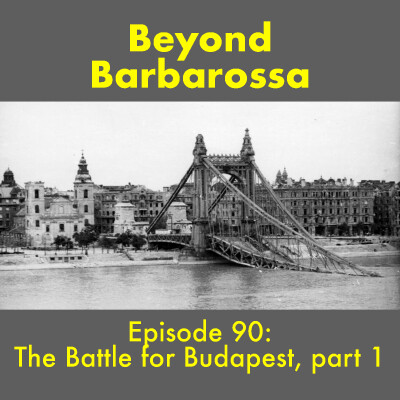
There was a lot of action on the Eastern Front in the autumn of 1944. In late September, the Red Army and its new allies enter Yugoslavia and connect with communist Partisans led by a man called Tito. The results will echo across the decades. Map 1: The Balkan military theatre, September 1944–January 1945 Map 2: The Bulgarian incursion Map 3: The Battle of Belgrade Photos The Lockheed P-38 Lightning and the Focke-Wulf fw189 The Yakovlev Yak-9 in flight The Yakovlev Yak-9 in the Russian military museum Josip Broz, a.k.a. Tito, far right, with his staff.Sources Antony Beevor, The Second World War. New York, NY, USA: Little, Brown and Company, 2012. Evan Mawdsley, Thunder in the East: The Nazi-Soviet War, 1941–1945. London: Bloomsbury Academic, 2016. Giles Milton, The Stalin Affair: The impossible alliance that won the war. New York, NY, USA: Henry Holt and Company, 2022. Anthony Tucker-Jones, Slaughter on the Eastern Front: Hitler and Stalin’s War, 1941–1945. Stroud, Gloucestershire, UK: The History Press, 2017. Morse code by Thane Brown Music composed and recorded by Nicolas Bury Hosted on Acast. See acast.com/privacy (https://acast.com/privacy) for more information. Hosted on Ausha. See ausha.co/privacy-policy for more information.
40min | Published on December 8, 2025


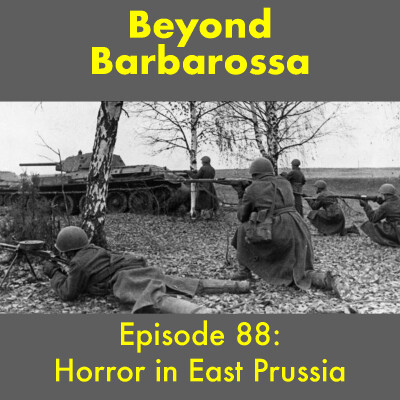
In October 1944, the Red Army entered East Prussia, the heart of German militarism. Horrific war crimes ensued.Map 1: The Red Army’s advances all across the broad front Map 2a: European Theatre, 1 October 1944 Map 2b: European Theatre, 1 November 1944 Map 3a: The Pacific Theatre, 1 October 1944 Map 3b: The Pacific Theatre, 1 November 1944 Map 4: The Gumbinnen Operation Historical photos Konigsberg Castle before World War 1 German officers find evidence of massacre at Nemmersdorf, East Prussia Civilians killed at Nemmersdorf, 1944Sources Antony Beevor, The Second World War. New York, NY, USA: Little, Brown and Company, 2012. Evan Mawdsley, Thunder in the East: The Nazi-Soviet War, 1941–1945. London: Bloomsbury Academic, 2016. Pat McTaggart, "Goldap Operation: Soviets in the Prussian Heartland,” in WWII History, vol. 14, No. 2, February 2015. Cited in Warfare History Network, February 2015 (https://warfarehistorynetwork.com/article/goldap-operation-soviets-in-the-prussian-heartland/), https://warfarehistorynetwork.com/article/goldap-operation-soviets-in-the-prussian-heartland/ Anthony Tucker-Jones, Slaughter on the Eastern Front: Hitler and Stalin’s War, 1941–1945. Stroud, Gloucestershire, UK: The History Press, 2017. Morse code by Thane Brown Music composed and recorded by Nicolas Bury Hosted on Acast. See acast.com/privacy (https://acast.com/privacy) for more information. Hosted on Ausha. See ausha.co/privacy-policy for more information.
32min | Published on November 24, 2025


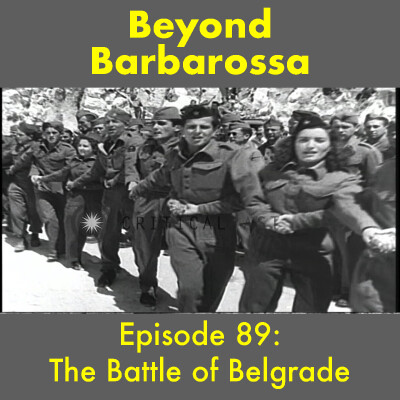
In the autumn of 1944, nation after nation abandons the cruel, insane Axis to join the Western Allies or USSR: Romania, Bulgaria, Slovkia … as Finland signs an armistice with the USSR. With the Red Army on the border of Germany itself, Hungary faces the choice: to fight on with, or against, the nazis. Map 1: The Red Army invades Slovakia The Dukla Pass is to the right. Map 2: The Battle of Debrecen Photos General (later Marshal) Rodion Malinovsky, 1944 General (later Marshal) Fyodor Tolbukhin, 1944 Marshal Ivan Konev, 1945 Milos Horthy, Regent of Hungary, 1944 Ferenc Szalisi, Leader of the Hungarian Nation, 1944 General Heinz Guderian, Inspector-General of the Army, 1944 Hosted on Acast. See acast.com/privacy (https://acast.com/privacy) for more information. Hosted on Ausha. See ausha.co/privacy-policy for more information.
35min | Published on November 10, 2025


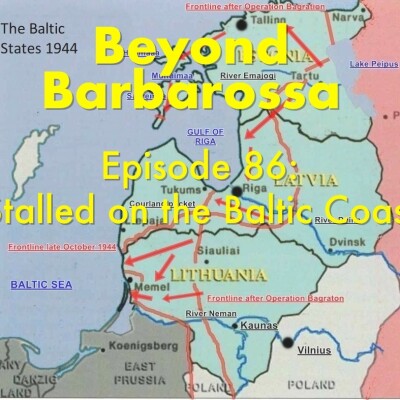
By the autumn of 1944, everyone could see which way the Second World War was going — even the Axis commanders. Still, they were able to hold the Red Army back in key locations like Courland and Memel. Map 1: The Courland and Memel pockets, to the end of 1944 Map 2: The Memel pocket, 1944 Image 1: Hovhannes Bagramyan in 1955 Image 2: Army of Worn Soles, volume 1 of the Eastern Front Trilogy (https://www.amazon.com/Army-Worn-Soles-Scott-Bury/dp/0987914197/) https://www.amazon.com/Army-Worn-Soles-Scott-Bury/dp/0987914197/ Image 3: Walking Out of War, volume 3 of the Eastern Front Trilogy (https://www.amazon.com/gp/product/1987846052) https://www.amazon.com/gp/product/1987846052 Sources Scott Bury, Army of Worn Soles: Volume 1 of The Eastern Front Trilogy. (https://www.amazon.com/Army-Worn-Soles-Scott-Bury/dp/0987914197/) Ottawa: The Written Word Publishing Co., 2014. Scott Bury, Walking Out of War: Volume 3 of The Eastern Front Trilogy (https://www.amazon.com/gp/product/1987846052). Ottawa: The Written Word Publishing Co., 2014. Prit Buttar, The Reckoning: The Defeat of Army Group South, 1944 . Okford, UK: Osprey Publishing, 2020. Evan Mawdsley, Thunder in the East: The Nazi-Soviet War, 1941–1945. London: Bloomsbury Academic, 2016. Morse code by Thane Brown Music composed and recorded by Nicolas Bury Hosted on Acast. See acast.com/privacy (https://acast.com/privacy) for more information. Hosted on Ausha. See ausha.co/privacy-policy for more information.
43min | Published on October 27, 2025


Describing the Eastern Front chronologically gets very difficult in the second half of 1944, because there’s so much happening everywhere, all at the same time. After the Warsaw Rising, as described in Episode 83, the Red Army surged past its borders into Finland, Estonia, Romania, Bulgaria, and farther. Meanwhile, the Western Allies are taking France, Belgium and Italy from Hitler. But there is still a lot of fighting and death to come. Map 1: The Gothic Line, Italy Map 2: The Continuation War ends, Finland Map 3: The advance of the Red Army, August 1943–December 1944 Maps 4A and 4B: Advances of the front lines, east and west 4A: 15 August 1944 4B: 1 October 1944 Sources Antony Beevor, The Second World War. London, UK: Little, Brown and Co., 2012. Evan Mawdsley, Thunder in the East: The Nazi-Soviet War, 1941–1945. London: Bloomsbury Academic, 2016. Anthony Tucker-Jones, Stalin’s Revenge: Operation Bagration and the Annihilation of Army Group Centre. Barnsley, South Yorkshire, UK: Pen and Sword Books, 2009. Morse code by Thane Brown Music composed and recorded by Nicolas Bury Hosted on Acast. See acast.com/privacy (https://acast.com/privacy) for more information. Hosted on Ausha. See ausha.co/privacy-policy for more information.
39min | Published on October 22, 2025


Today, Beyond Barbarossa fulfills a promised made at the start of this podcast: a meaningful donation to help refugees of Russia’s unjustifiable war of aggression against Ukraine, to the Ukraine Humanitarian Appeal. We’re joined by Valeriy Kostyuk, Executive Director of the Canada-Ukraine Foundation, which runs the appeal. Links Canada-Ukraine Foundation (https://cufoundation.ca/) Ukraine Humanitarian Appeal (https://www.cufoundation.ca/our-projects/#ukraine-humanitarian-appeal) Medical javelins Thornhill Medical and their MOVES SLC mobile life-support system. (https://thornhillmedical.com/moves-slc/) Hosted on Acast. See acast.com/privacy (https://acast.com/privacy) for more information. Hosted on Ausha. See ausha.co/privacy-policy for more information.
35min | Published on September 29, 2025


In August 1944, the Red Army steamrolled across eastern Europe. Yet when Warsaw rose up against the nazi occupiers, they found themselves alone. Historic photos Tadeusz Bor-Komorowski (right), Commander-in-Chief of the Polish Home Army AK fighter with flamethrower Home Army soldiers from Kolegium "A" of Kedyw (https://en.wikipedia.org/wiki/Kedyw) formation on Stawki Street in the Wola (https://en.wikipedia.org/wiki/Wola) District of Warsaw, September 1944. Source: Wikipedia Commons Jewish POWs freed by AK The remains of Warsaw after the Germans “withdrew.” Sources Antony Beevor, The Second World War. London, UK: Little, Brown and Co., 2012. Norman Davies, Rising ’44: The Battle for Warsaw. London, UK: Macmillan, 2004. Evan Mawdsley, Thunder in the East: The Nazi-Soviet War, 1941–1945. London: Bloomsbury Academic, 2016. Anthony Tucker-Jones,Slaughter on the Eastern Front: Hitler and Stalin’s War 1941–1945. Stroud, Gloucestershire, UK: The History Press, 2017. Music by Nicolas Bury. Morse code from Thane Brown. Hosted on Acast. See acast.com/privacy (https://acast.com/privacy) for more information. Hosted on Ausha. See ausha.co/privacy-policy for more information.
48min | Published on September 15, 2025


In summer 1944, "the Red Army’s seemingly unstoppable streamroller took Stanislav in the Carpathian foothills, Bialystok in northern Poland, Dvinsk in Latvia and the Siauliai (also spelt Shaulyai) rail junction between Riga and East Prussia.” — Anthony Tucker-Jones. Even so, the steamroller suffered ferocious mauling. If you can transcribe the morse code signal during “What else is happening in the war,” send an email to scott@beyondbarbarossa.ca (mailto:scott@beyondbarbarossa.ca,). If you’re correct, I will send you a free autographed copy of The Eastern Front Trilogy. Map 1a: The Eastern Front, July 1944 Map 1b: The front, August 1944 Map 2: The Lvov-Sandomierz Offensive, detail Map 3: The Narva Offensive Music by Nicolas Bury. Morse code from Thane Brown. Some sound effects from Zapsplat.com. Hosted on Acast. See acast.com/privacy (https://acast.com/privacy) for more information. Hosted on Ausha. See ausha.co/privacy-policy for more information.
23min | Published on August 25, 2025


Stalin’s one-two punch against Germany is the Lvov-Sandomierz offensive, hitting in Ukraine as Bagration smashes into Byelorussia. It also lays bare the brutality within the Red Army. Map 1: The Byelorussian Balcony Map 2: The Lvov-Sandomierz Operation Map 3: The Eastern Front, 15 June 1944 Map 4: The Eastern Front, 15 July 1944 Map 5: The Eastern Front, 15 August 1944 Ivan Konev, commander, 1st Ukrainian Front Lt. General Pavel Rybalko, commander, 3rd Guards Tank Army Josef Harpe, Commander, Army Group North Ukraine Sources: Antony Beevor, The Second World War. London, UK: Little, Brown and Co., 2012. Prit Buttar, Retribution: The Soviet Reconquest of Central Ukraine, 1943. Oxford, UK: Osprey Publishing, 2019. Evan Mawdsley, Thunder in the East: The Nazi-Soviet War, 1941–1945. London: Bloomsbury Academic, 2016. Anthony Tucker-Jones, Stalin’s Revenge: Operation Bagration and the Annihilation of Army Group Centre. Barnsley, South Yorkshire, UK: Pen and Sword Books, 2009. Hosted on Acast. See acast.com/privacy (https://acast.com/privacy) for more information. Hosted on Ausha. See ausha.co/privacy-policy for more information.
34min | Published on August 11, 2025
Description
Hosted on Acast. See acast.com/privacy for more information.
Hosted on Ausha. See ausha.co/privacy-policy for more information.
106 episodes
Season 4


"Budapest lay athwart the main entry route to Austria and Bohemia. It was the main railway hub of the region and also the largest Danubian port. The Red Army could not bypass it. This was the first time in the war that the Red Army had to lay siege to a major city." The Red Army assaults the capital of nazi Germany’s final remaining partner in the Second World War. The war appears to be almost lost—but that’s seen through hindsight. No one at the time knew that. Map 1: The Eastern Front, December 1944 Map 2: Germany’s eastern and western fronts, 1 December 1944 Map 3: The Petsamo-Kirkenes operation in northern Finland Map 4: The Red Army attacks BudapestOperation Konrad II People Mihai I, King of Romania, 1944–1947 Miklos Horthy, Regent of Hungary Miklos Horthy Jr. Ference Szalasi, nazi dictator of Hungary, 1944–1945 Edmund Veesenmayer, Hitler’s “Special Envoy” to Hungary, 1944–1945 SS-Obergruppenführer Karl Pfeffer-Wildenbruch, commander of IX SS Mountain Corps Historical photos: Fighting in Budapest Sources Antony Beevor, The Second World War. New York, NY, USA: Little, Brown and Company, 2012. Evan Mawdsley, Thunder in the East: The Nazi-Soviet War, 1941–1945. London: Bloomsbury Academic, 2016. Anthony Tucker-Jones, Slaughter on the Eastern Front: Hitler and Stalin’s War, 1941–1945. Stroud, Gloucestershire, UK: The History Press, 2017. Morse code by Thane Brown Music composed and recorded by Nicolas Bury Hosted on Acast. See acast.com/privacy (https://acast.com/privacy) for more information. Hosted on Ausha. See ausha.co/privacy-policy for more information.
38min | Published on December 22, 2025


There was a lot of action on the Eastern Front in the autumn of 1944. In late September, the Red Army and its new allies enter Yugoslavia and connect with communist Partisans led by a man called Tito. The results will echo across the decades. Map 1: The Balkan military theatre, September 1944–January 1945 Map 2: The Bulgarian incursion Map 3: The Battle of Belgrade Photos The Lockheed P-38 Lightning and the Focke-Wulf fw189 The Yakovlev Yak-9 in flight The Yakovlev Yak-9 in the Russian military museum Josip Broz, a.k.a. Tito, far right, with his staff.Sources Antony Beevor, The Second World War. New York, NY, USA: Little, Brown and Company, 2012. Evan Mawdsley, Thunder in the East: The Nazi-Soviet War, 1941–1945. London: Bloomsbury Academic, 2016. Giles Milton, The Stalin Affair: The impossible alliance that won the war. New York, NY, USA: Henry Holt and Company, 2022. Anthony Tucker-Jones, Slaughter on the Eastern Front: Hitler and Stalin’s War, 1941–1945. Stroud, Gloucestershire, UK: The History Press, 2017. Morse code by Thane Brown Music composed and recorded by Nicolas Bury Hosted on Acast. See acast.com/privacy (https://acast.com/privacy) for more information. Hosted on Ausha. See ausha.co/privacy-policy for more information.
40min | Published on December 8, 2025


In October 1944, the Red Army entered East Prussia, the heart of German militarism. Horrific war crimes ensued.Map 1: The Red Army’s advances all across the broad front Map 2a: European Theatre, 1 October 1944 Map 2b: European Theatre, 1 November 1944 Map 3a: The Pacific Theatre, 1 October 1944 Map 3b: The Pacific Theatre, 1 November 1944 Map 4: The Gumbinnen Operation Historical photos Konigsberg Castle before World War 1 German officers find evidence of massacre at Nemmersdorf, East Prussia Civilians killed at Nemmersdorf, 1944Sources Antony Beevor, The Second World War. New York, NY, USA: Little, Brown and Company, 2012. Evan Mawdsley, Thunder in the East: The Nazi-Soviet War, 1941–1945. London: Bloomsbury Academic, 2016. Pat McTaggart, "Goldap Operation: Soviets in the Prussian Heartland,” in WWII History, vol. 14, No. 2, February 2015. Cited in Warfare History Network, February 2015 (https://warfarehistorynetwork.com/article/goldap-operation-soviets-in-the-prussian-heartland/), https://warfarehistorynetwork.com/article/goldap-operation-soviets-in-the-prussian-heartland/ Anthony Tucker-Jones, Slaughter on the Eastern Front: Hitler and Stalin’s War, 1941–1945. Stroud, Gloucestershire, UK: The History Press, 2017. Morse code by Thane Brown Music composed and recorded by Nicolas Bury Hosted on Acast. See acast.com/privacy (https://acast.com/privacy) for more information. Hosted on Ausha. See ausha.co/privacy-policy for more information.
32min | Published on November 24, 2025


In the autumn of 1944, nation after nation abandons the cruel, insane Axis to join the Western Allies or USSR: Romania, Bulgaria, Slovkia … as Finland signs an armistice with the USSR. With the Red Army on the border of Germany itself, Hungary faces the choice: to fight on with, or against, the nazis. Map 1: The Red Army invades Slovakia The Dukla Pass is to the right. Map 2: The Battle of Debrecen Photos General (later Marshal) Rodion Malinovsky, 1944 General (later Marshal) Fyodor Tolbukhin, 1944 Marshal Ivan Konev, 1945 Milos Horthy, Regent of Hungary, 1944 Ferenc Szalisi, Leader of the Hungarian Nation, 1944 General Heinz Guderian, Inspector-General of the Army, 1944 Hosted on Acast. See acast.com/privacy (https://acast.com/privacy) for more information. Hosted on Ausha. See ausha.co/privacy-policy for more information.
35min | Published on November 10, 2025


By the autumn of 1944, everyone could see which way the Second World War was going — even the Axis commanders. Still, they were able to hold the Red Army back in key locations like Courland and Memel. Map 1: The Courland and Memel pockets, to the end of 1944 Map 2: The Memel pocket, 1944 Image 1: Hovhannes Bagramyan in 1955 Image 2: Army of Worn Soles, volume 1 of the Eastern Front Trilogy (https://www.amazon.com/Army-Worn-Soles-Scott-Bury/dp/0987914197/) https://www.amazon.com/Army-Worn-Soles-Scott-Bury/dp/0987914197/ Image 3: Walking Out of War, volume 3 of the Eastern Front Trilogy (https://www.amazon.com/gp/product/1987846052) https://www.amazon.com/gp/product/1987846052 Sources Scott Bury, Army of Worn Soles: Volume 1 of The Eastern Front Trilogy. (https://www.amazon.com/Army-Worn-Soles-Scott-Bury/dp/0987914197/) Ottawa: The Written Word Publishing Co., 2014. Scott Bury, Walking Out of War: Volume 3 of The Eastern Front Trilogy (https://www.amazon.com/gp/product/1987846052). Ottawa: The Written Word Publishing Co., 2014. Prit Buttar, The Reckoning: The Defeat of Army Group South, 1944 . Okford, UK: Osprey Publishing, 2020. Evan Mawdsley, Thunder in the East: The Nazi-Soviet War, 1941–1945. London: Bloomsbury Academic, 2016. Morse code by Thane Brown Music composed and recorded by Nicolas Bury Hosted on Acast. See acast.com/privacy (https://acast.com/privacy) for more information. Hosted on Ausha. See ausha.co/privacy-policy for more information.
43min | Published on October 27, 2025


Describing the Eastern Front chronologically gets very difficult in the second half of 1944, because there’s so much happening everywhere, all at the same time. After the Warsaw Rising, as described in Episode 83, the Red Army surged past its borders into Finland, Estonia, Romania, Bulgaria, and farther. Meanwhile, the Western Allies are taking France, Belgium and Italy from Hitler. But there is still a lot of fighting and death to come. Map 1: The Gothic Line, Italy Map 2: The Continuation War ends, Finland Map 3: The advance of the Red Army, August 1943–December 1944 Maps 4A and 4B: Advances of the front lines, east and west 4A: 15 August 1944 4B: 1 October 1944 Sources Antony Beevor, The Second World War. London, UK: Little, Brown and Co., 2012. Evan Mawdsley, Thunder in the East: The Nazi-Soviet War, 1941–1945. London: Bloomsbury Academic, 2016. Anthony Tucker-Jones, Stalin’s Revenge: Operation Bagration and the Annihilation of Army Group Centre. Barnsley, South Yorkshire, UK: Pen and Sword Books, 2009. Morse code by Thane Brown Music composed and recorded by Nicolas Bury Hosted on Acast. See acast.com/privacy (https://acast.com/privacy) for more information. Hosted on Ausha. See ausha.co/privacy-policy for more information.
39min | Published on October 22, 2025


Today, Beyond Barbarossa fulfills a promised made at the start of this podcast: a meaningful donation to help refugees of Russia’s unjustifiable war of aggression against Ukraine, to the Ukraine Humanitarian Appeal. We’re joined by Valeriy Kostyuk, Executive Director of the Canada-Ukraine Foundation, which runs the appeal. Links Canada-Ukraine Foundation (https://cufoundation.ca/) Ukraine Humanitarian Appeal (https://www.cufoundation.ca/our-projects/#ukraine-humanitarian-appeal) Medical javelins Thornhill Medical and their MOVES SLC mobile life-support system. (https://thornhillmedical.com/moves-slc/) Hosted on Acast. See acast.com/privacy (https://acast.com/privacy) for more information. Hosted on Ausha. See ausha.co/privacy-policy for more information.
35min | Published on September 29, 2025


In August 1944, the Red Army steamrolled across eastern Europe. Yet when Warsaw rose up against the nazi occupiers, they found themselves alone. Historic photos Tadeusz Bor-Komorowski (right), Commander-in-Chief of the Polish Home Army AK fighter with flamethrower Home Army soldiers from Kolegium "A" of Kedyw (https://en.wikipedia.org/wiki/Kedyw) formation on Stawki Street in the Wola (https://en.wikipedia.org/wiki/Wola) District of Warsaw, September 1944. Source: Wikipedia Commons Jewish POWs freed by AK The remains of Warsaw after the Germans “withdrew.” Sources Antony Beevor, The Second World War. London, UK: Little, Brown and Co., 2012. Norman Davies, Rising ’44: The Battle for Warsaw. London, UK: Macmillan, 2004. Evan Mawdsley, Thunder in the East: The Nazi-Soviet War, 1941–1945. London: Bloomsbury Academic, 2016. Anthony Tucker-Jones,Slaughter on the Eastern Front: Hitler and Stalin’s War 1941–1945. Stroud, Gloucestershire, UK: The History Press, 2017. Music by Nicolas Bury. Morse code from Thane Brown. Hosted on Acast. See acast.com/privacy (https://acast.com/privacy) for more information. Hosted on Ausha. See ausha.co/privacy-policy for more information.
48min | Published on September 15, 2025


In summer 1944, "the Red Army’s seemingly unstoppable streamroller took Stanislav in the Carpathian foothills, Bialystok in northern Poland, Dvinsk in Latvia and the Siauliai (also spelt Shaulyai) rail junction between Riga and East Prussia.” — Anthony Tucker-Jones. Even so, the steamroller suffered ferocious mauling. If you can transcribe the morse code signal during “What else is happening in the war,” send an email to scott@beyondbarbarossa.ca (mailto:scott@beyondbarbarossa.ca,). If you’re correct, I will send you a free autographed copy of The Eastern Front Trilogy. Map 1a: The Eastern Front, July 1944 Map 1b: The front, August 1944 Map 2: The Lvov-Sandomierz Offensive, detail Map 3: The Narva Offensive Music by Nicolas Bury. Morse code from Thane Brown. Some sound effects from Zapsplat.com. Hosted on Acast. See acast.com/privacy (https://acast.com/privacy) for more information. Hosted on Ausha. See ausha.co/privacy-policy for more information.
23min | Published on August 25, 2025


Stalin’s one-two punch against Germany is the Lvov-Sandomierz offensive, hitting in Ukraine as Bagration smashes into Byelorussia. It also lays bare the brutality within the Red Army. Map 1: The Byelorussian Balcony Map 2: The Lvov-Sandomierz Operation Map 3: The Eastern Front, 15 June 1944 Map 4: The Eastern Front, 15 July 1944 Map 5: The Eastern Front, 15 August 1944 Ivan Konev, commander, 1st Ukrainian Front Lt. General Pavel Rybalko, commander, 3rd Guards Tank Army Josef Harpe, Commander, Army Group North Ukraine Sources: Antony Beevor, The Second World War. London, UK: Little, Brown and Co., 2012. Prit Buttar, Retribution: The Soviet Reconquest of Central Ukraine, 1943. Oxford, UK: Osprey Publishing, 2019. Evan Mawdsley, Thunder in the East: The Nazi-Soviet War, 1941–1945. London: Bloomsbury Academic, 2016. Anthony Tucker-Jones, Stalin’s Revenge: Operation Bagration and the Annihilation of Army Group Centre. Barnsley, South Yorkshire, UK: Pen and Sword Books, 2009. Hosted on Acast. See acast.com/privacy (https://acast.com/privacy) for more information. Hosted on Ausha. See ausha.co/privacy-policy for more information.
34min | Published on August 11, 2025