Description
Hosted on Acast. See acast.com/privacy for more information.
Hosted on Ausha. See ausha.co/privacy-policy for more information.


Description
Hosted on Acast. See acast.com/privacy for more information.
Hosted on Ausha. See ausha.co/privacy-policy for more information.
106 episodes
Season 3


Did the Lend-Lease program save the Soviet Union? For the Season 3 finale, Angus Wallace of the World War 2 podcast joins to offer a nuanced interpretation. Angus Wallace, host and producer of The World War 2 podcast (https://podcasts.apple.com/ca/podcast/the-ww2-podcast/id982003188) The Lend-Lease Act British Valentine tanks to be sent to USSR under Lend-Lease, 1942. The Bell P-39 Aircobra, one of the fighters the U.S. sent to the Soviet Union under Lend-Lease. A Hawker Hurricane fighter sent for the Red Air Force. Fleets of Studebaker, Ford and Chevrolet trucks sent to the Soviet Union under Lend-Lease. U.S. jeeps sent to the Soviet Union under Lend-Lease made Life magazine. The Western Allies sent millions of tons of food aid to the Soviet Union during World War 2. The Red Army moved tanks to the front by rail, on flatcars, with locomotives often supplied by the U.S. Much of the rail was also supplied by the U.S. The “Big Three,” Churchill, Roosevelt and Stalin, at the Yalta Conference in 1945. Roosevelt was clearly unwell by this point. This conference decided the post-war division of Europe between West and East, meaning USSR.Maps Map 1: Lend-Lease shipping routes Lend-Lease shipping literally spanned the globe. Map 2: The Arctic route (polar projection) Map 3: The Persian Corridor. Ships arrived in Persian Gulf ports, then goods were transshipped by train through Iran to be loaded onto ships again at the Caspian Sea. Map 4: The Pacific route. Note the proximity to Japan as ships approach Vladivostok in the Russian Far East. Hosted on Acast. See acast.com/privacy (https://acast.com/privacy) for more information. Hosted on Ausha. See ausha.co/privacy-policy for more information.
55min | Published on July 7, 2025


The USSR’s answer to D-Day in June 1944 takes the Germans by surprise—and annihilates a whole army group. Map 1: The Vyborg-Petrozavodsk Offensive, the end of the Continuation War against Finland Map 2: The "Byelorussian Balcony” Map 3: Attack on Vitebsk Map 4: Rokossovsky’s attack on Bobruisk Map 5: Attack on Minsk Photos Minsk, July 1944 Destroyed German armour on road to Minsk German POWs in Moscow, July 1944 Soviet and Polish Home Army (AK) soldiers together in Vilnius, July 1944. The AK soldiers were then arrested by the NKVD and sent to Gulags. Hosted on Acast. See acast.com/privacy (https://acast.com/privacy) for more information. Hosted on Ausha. See ausha.co/privacy-policy for more information.
44min | Published on June 22, 2025


Author Craig W.H. Luther joins us to compare two anniversaries on the same date, 22 June, three years apart: Operations Barbarossa in 1941, and Operation Bagration in 1944. Craig W.H. Luther The First Day on the Eastern Front: Germany Invades the Soviet Union, June 22, 1941 Barbarossa Unleashed: The German Blitzkrieg through Central Russia to the Gates of Moscow, June–December 1941 Guderian’s Panzers: From Triumph to Defeat on the Eastern Front, 1941 Map 1: Operation Barbarossa, 22 June 1941 Map 2: The Byelorussian balcony, June 1944 Map 3: Operation Blue, summer 1942 Craig W.H. Luther Archive: https://www.barbarossa1941.com/ Hosted on Acast. See acast.com/privacy (https://acast.com/privacy) for more information. Hosted on Ausha. See ausha.co/privacy-policy for more information.
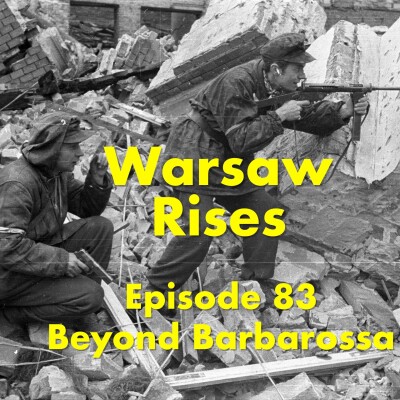
46min | Published on June 9, 2025


A major army, 400,000 strong, made a major difference in World War 2. Yet it doesn’t get enough attention in the West (nor, unfortunately, on this podcast). It’s the Armia Krajowa, the Polish Home Army. From exposing the Holocaust, to breaking the German Enigma Code, to helping destroy V-2 rockets, the AK bridged the Eastern and Western Fronts of the Second World War. Map 1: German invasion of Poland, September 1939 Map 2: Soviet invasion of Poland, September 1939 Historic photos Flag of the Armia Krajowa, Polish Home Army Gen. Michal Tadeusz Tokarzewski-Karaszewicz second-in-command of the Army of Warsaw Wladyslaw Sikorski, Prime Minister of Polish Government-in-Exile Elzbieta Zawacka, “Agent Zo" Elzbieta Zawacka’s story, Agent Zo by Clare Mulley (https://claremulley.com/books/agent-zo/) Jewish resistance fighters in the Warsaw Ghetto uprising, 1943 SS burns the Warsaw Ghetto, 1943 SS transports Jewish survivors of the Warsaw Ghetto to extermination camps AK fighters Polish Boy Scouts in AK, 1944 Women members of AK Enigma, the German coding machine The three Polish cryptologists who broke the German Enigma code: left to right, Marian Rejewski, Jerzy Rozycki, and Henryk Zygalski Sources: Antony Beevor, The Second World War. London, UK: Little, Brown and Co., 2012. Richard Lukas, The Forgotten Holocaust. New York: Hippocrene Books, 1986, and University of Kentucky Press, 1986. Home Army Museum/Muzeum Armii Krajowej, https://muzeum-ak.pl/ Wikipedia, various pages. Hosted on Acast. See acast.com/privacy (https://acast.com/privacy) for more information. Hosted on Ausha. See ausha.co/privacy-policy for more information.
38min | Published on May 26, 2025


It’s been a year of stunning, swift change on the Eastern Front of World War 2. And momentous events are coming soon — so it’s high time for a recap of the past year.Links Episode 50: Looking back, taking stock (https://beyondbarbarossa.podbean.com/e/looking-back-taking-stock-episode-50/)https://beyondbarbarossa.podbean.com/e/looking-back-taking-stock-episode-50/ The Battle(s) of Kursk Episode 51: Summer 1943 plans (https://beyondbarbarossa.podbean.com/e/summer-1943-plans-season-3-opener-episdoe-51/)https://beyondbarbarossa.podbean.com/e/summer-1943-plans-season-3-opener-episdoe-51/ Episode 52: Zitadelle, the Battle of Kursk, Part 2 (https://beyondbarbarossa.podbean.com/e/zitadelle%E2%80%94the-battle-of-kursk-part-2-episode-52/)https://beyondbarbarossa.podbean.com/e/zitadelle—the-battle-of-kursk-part-2-episode-52/ (https://beyondbarbarossa.podbean.com/e/zitadelle%E2%80%94the-battle-of-kursk-part-2-episode-52/) Episode 53: The Battle of Kursk, part 3 (https://beyondbarbarossa.podbean.com/e/the-battle-of-kursk-part-3-episode-53/)https://beyondbarbarossa.podbean.com/e/the-battle-of-kursk-part-3-episode-53/ Episode 67: The Red Army has the momentum (https://beyondbarbarossa.podbean.com/e/the-red-army-has-the-momentum-episode-67/)https://beyondbarbarossa.podbean.com/e/the-red-army-has-the-momentum-episode-67/ Friedrich Paulus, commander of the German 6th Army in 1942, the only German Field Marshal ever to surrender Maps Map 1: The Axis’ high-water mark, Europe Map 2: Axis’ high-water mark, Asia-Pacific Map 3: North Africa, summer 1942 Map 4: Germans advance to the Volga Map 5: Operation Winter Storm Map 6: 4th Battle of Kharkiv Map 7: Battle of Kursk Map 8: Operation Little Saturn Map 9: Rzhev Salient Map 10: Korsun/Cherkassy pocket Map 11: Crushing blows: the front lines in the Eastern Front, April 1944 Hosted on Acast. See acast.com/privacy (https://acast.com/privacy) for more information. Hosted on Ausha. See ausha.co/privacy-policy for more information.
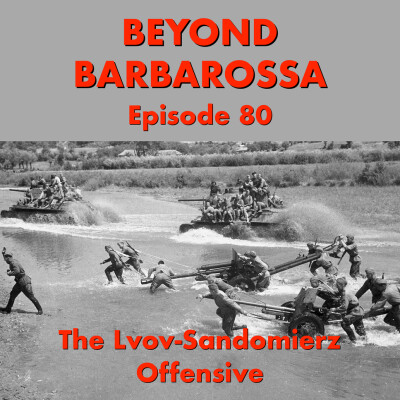
28min | Published on May 12, 2025


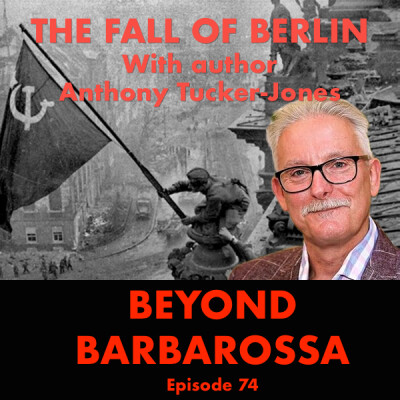
On 2 May 1945, Red Army soldiers raised the Soviet Red Banner with hammer and sickle on the cupola of the Reichstag in Berlin. For the 80th anniversary of that famous photograph, Anthony Tucker-Jones joins the ‘cast to discuss the Fall of Berlin. “Raising a Flag over the Reichstag” shows Red Army soldier Aleksei Kovalev hoisting the Red Banner over the cupola of the Reichstag. This was staged on 2 May 1945, after the Red Army had taken full control of the building. (https://atuckerjones.com/) Historian and author Anthony Tucker-Jones (https://atuckerjones.com/) (https://atuckerjones.com/) (https://atuckerjones.com/) Two of his books Learn more about Anthony Tucker-Jones on his website (https://atuckerjones.com/). Map 1: Three Red Army Fronts advance on Berlin Map 2: The final battle for Berlin Movies cited: Downfall, in German with subtitlesCome and See, in Russian Hosted on Acast. See acast.com/privacy (https://acast.com/privacy) for more information. Hosted on Ausha. See ausha.co/privacy-policy for more information.

30min | Published on May 2, 2025


This episode, we jump forward for the 80th anniversary of the end of the Second World War in Europe. To guide us through the battles for Berlin, we are joined by the author of The Fall of Berlin: The Final Days of Hitler’s Evil Regime. Author Anthony Tucker-Jones (https://atuckerjones.com/world-war-ii.html) (https://atuckerjones.com/world-war-ii.html) His website (https://atuckerjones.com/) and books: https://atuckerjones.com/ Maps Map 1: The front lines, 15 April 1945 Map 2: The front lines, 1 May 1945 Map 3: Final operations, April-May 1945 Map 4: The Red Army’s Vistula-Oder offensive Map 5: 1st Belorussian Front’s drive through the Seelow Heights to Berlin Map 6: The battles for Berlin at the end of April 1945 Books (https://atuckerjones.com/world-war-ii.html) Hosted on Acast. See acast.com/privacy (https://acast.com/privacy) for more information. Hosted on Ausha. See ausha.co/privacy-policy for more information.
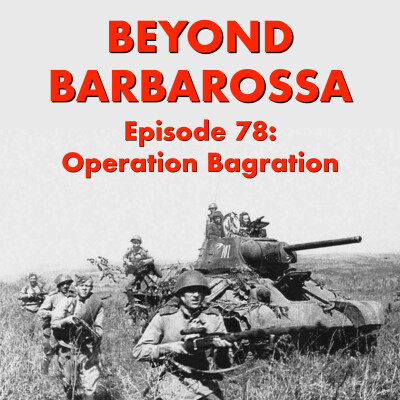
40min | Published on April 28, 2025


In 1944, the Red Army delivers its third crushing blow on the Axis forces in eastern Europe: two major offensives to recapture the rest of Ukraine, and the Crimean peninsula. Map 1: Northern Black Sea coast and southern Ukraine The range where the two mighty blows were delivered. Ploesti, Romania is to the far left of the map, just north of Bucharest. Map 2: Map by Scott Bury Map 3: The Red Army’s Crimean offensive, 1944 Image 1: Issa Pliyev, Commander, Cavalry-Mechanized Group The Red Army, 4th Guards Cavalry Corps advancing across southern Ukraine, 1944 Miklós Horthy, Regent of Hungary, with Adolf Hitler in Budapest, 1938 The Red Army marches into “liberated” Odesa, 1944 Note the women soldiers in the ranks. Sources: Prit Buttar, The Reckoning: The Defeat of Army Group South, 1944. Oxford, UK: Osprey Publishing, 2020. Evan Mawdsley, Thunder in the East: The Nazi-Soviet War, 1941–1945. London: Bloomsbury Academic, 2016. Anthony Tucker-Jones, Slaughter on the Eastern Front: Hitler and Stalin’s War 1941–1945. Stroud, Gloucestershire, UK, The History Press, 2017. Wikipedia: The Crimean Offensive https://en.wikipedia.org/wiki/Crimean_offensive — The Odesa Offensive https://en.wikipedia.org/wiki/Odessa_Offensive Hosted on Acast. See acast.com/privacy (https://acast.com/privacy) for more information. Hosted on Ausha. See ausha.co/privacy-policy for more information.
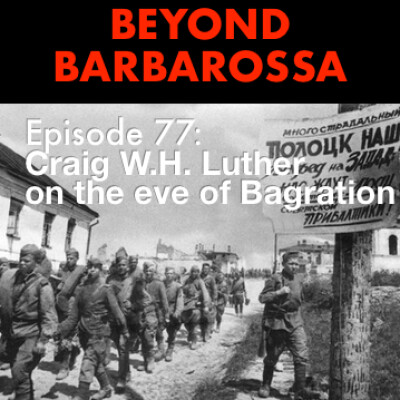
48min | Published on April 14, 2025


From the beginning of Russia’s illegal and brutal assault on sovereign Ukraine, Ukraine: The Latest has covered the war every week day. Francis Dearnley, Executive Editor for Audio for Ukraine: The Latest, joins the podcast to look at the historical links and parallels with the Eastern Front of World War 2. Francis Dearnley, Executive Editor for Audio, Ukraine: The Latest, from The Telegraph Ukraine: The Latest, daily podcast from The Telegraph David Knowles, creator of the Ukraine: The Latest podcast Links Ukraine: The Latest on Apple (https://podcasts.apple.com/ca/podcast/ukraine-the-latest/id1612424182) https://podcasts.apple.com/ca/podcast/ukraine-the-latest/id1612424182 and available on all major podcast platforms. Francis Dearnley’s interview with Ukrainian President Volodymyr Zelenskyy (https://podcasts.apple.com/ca/podcast/ukraine-the-latest/id1612424182?i=1000697448951) Winston Churchill’s World War II memoirs (https://www.harpercollins.com/products/memoirs-of-the-second-world-war-winston-s-churchill?variant=39939195895842) (https://www.harpercollins.com/products/memoirs-of-the-second-world-war-winston-s-churchill?variant=39939195895842) Guy Sajer’s The Forgotten Soldier (https://www.orionbooks.co.uk/titles/guy-sajer/the-forgotten-soldier/9780304352401/) (https://www.orionbooks.co.uk/titles/guy-sajer/the-forgotten-soldier/9780304352401/) Antony Beevor’s Berlin 1945 Hosted on Acast. See acast.com/privacy (https://acast.com/privacy) for more information. Hosted on Ausha. See ausha.co/privacy-policy for more information.
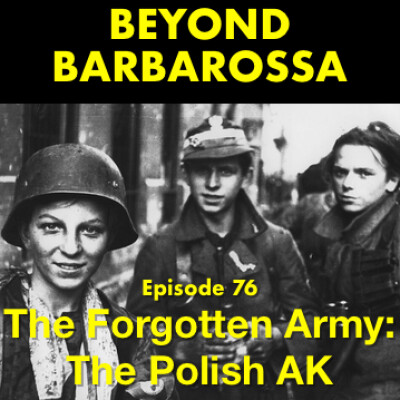
57min | Published on March 31, 2025


Episode 63: at the end of 1943, the situation for nazi Germany and communist USSR on the Eastern Front is radically different from the end of 1942. Plus, the Cairo and Tehran Conferences promise to reshape the geo-political world. Map 1: The Red Army advances to, and past the Wotan Line Map 2: The front lines, 15 November 1943 Map 3: The front lines, 31 December 1943 Historical photos: The German Panther (Panzer V) vs. the Soviet T-34-85 Soviet photo loading artillery at Nikopol bridgehead Sources: Antony Beevor, The Second World War. London, UK: Little, Brown and Co., 2012. Prit Buttar, Retribution: The Soviet Reconquest of Central Ukraine, 1943. Oxford, UK: Osprey Publishing, 2019. Evan Mawdsley, Thunder in the East: The Nazi-Soviet War, 1941–1945. London: Bloomsbury Academic, 2016. Hosted on Acast. See acast.com/privacy (https://acast.com/privacy) for more information. Hosted on Ausha. See ausha.co/privacy-policy for more information.
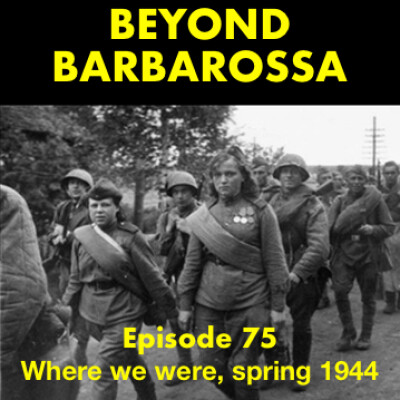
45min | Published on March 28, 2025
Description
Hosted on Acast. See acast.com/privacy for more information.
Hosted on Ausha. See ausha.co/privacy-policy for more information.
106 episodes
Season 3


Did the Lend-Lease program save the Soviet Union? For the Season 3 finale, Angus Wallace of the World War 2 podcast joins to offer a nuanced interpretation. Angus Wallace, host and producer of The World War 2 podcast (https://podcasts.apple.com/ca/podcast/the-ww2-podcast/id982003188) The Lend-Lease Act British Valentine tanks to be sent to USSR under Lend-Lease, 1942. The Bell P-39 Aircobra, one of the fighters the U.S. sent to the Soviet Union under Lend-Lease. A Hawker Hurricane fighter sent for the Red Air Force. Fleets of Studebaker, Ford and Chevrolet trucks sent to the Soviet Union under Lend-Lease. U.S. jeeps sent to the Soviet Union under Lend-Lease made Life magazine. The Western Allies sent millions of tons of food aid to the Soviet Union during World War 2. The Red Army moved tanks to the front by rail, on flatcars, with locomotives often supplied by the U.S. Much of the rail was also supplied by the U.S. The “Big Three,” Churchill, Roosevelt and Stalin, at the Yalta Conference in 1945. Roosevelt was clearly unwell by this point. This conference decided the post-war division of Europe between West and East, meaning USSR.Maps Map 1: Lend-Lease shipping routes Lend-Lease shipping literally spanned the globe. Map 2: The Arctic route (polar projection) Map 3: The Persian Corridor. Ships arrived in Persian Gulf ports, then goods were transshipped by train through Iran to be loaded onto ships again at the Caspian Sea. Map 4: The Pacific route. Note the proximity to Japan as ships approach Vladivostok in the Russian Far East. Hosted on Acast. See acast.com/privacy (https://acast.com/privacy) for more information. Hosted on Ausha. See ausha.co/privacy-policy for more information.
55min | Published on July 7, 2025


The USSR’s answer to D-Day in June 1944 takes the Germans by surprise—and annihilates a whole army group. Map 1: The Vyborg-Petrozavodsk Offensive, the end of the Continuation War against Finland Map 2: The "Byelorussian Balcony” Map 3: Attack on Vitebsk Map 4: Rokossovsky’s attack on Bobruisk Map 5: Attack on Minsk Photos Minsk, July 1944 Destroyed German armour on road to Minsk German POWs in Moscow, July 1944 Soviet and Polish Home Army (AK) soldiers together in Vilnius, July 1944. The AK soldiers were then arrested by the NKVD and sent to Gulags. Hosted on Acast. See acast.com/privacy (https://acast.com/privacy) for more information. Hosted on Ausha. See ausha.co/privacy-policy for more information.
44min | Published on June 22, 2025


Author Craig W.H. Luther joins us to compare two anniversaries on the same date, 22 June, three years apart: Operations Barbarossa in 1941, and Operation Bagration in 1944. Craig W.H. Luther The First Day on the Eastern Front: Germany Invades the Soviet Union, June 22, 1941 Barbarossa Unleashed: The German Blitzkrieg through Central Russia to the Gates of Moscow, June–December 1941 Guderian’s Panzers: From Triumph to Defeat on the Eastern Front, 1941 Map 1: Operation Barbarossa, 22 June 1941 Map 2: The Byelorussian balcony, June 1944 Map 3: Operation Blue, summer 1942 Craig W.H. Luther Archive: https://www.barbarossa1941.com/ Hosted on Acast. See acast.com/privacy (https://acast.com/privacy) for more information. Hosted on Ausha. See ausha.co/privacy-policy for more information.
46min | Published on June 9, 2025


A major army, 400,000 strong, made a major difference in World War 2. Yet it doesn’t get enough attention in the West (nor, unfortunately, on this podcast). It’s the Armia Krajowa, the Polish Home Army. From exposing the Holocaust, to breaking the German Enigma Code, to helping destroy V-2 rockets, the AK bridged the Eastern and Western Fronts of the Second World War. Map 1: German invasion of Poland, September 1939 Map 2: Soviet invasion of Poland, September 1939 Historic photos Flag of the Armia Krajowa, Polish Home Army Gen. Michal Tadeusz Tokarzewski-Karaszewicz second-in-command of the Army of Warsaw Wladyslaw Sikorski, Prime Minister of Polish Government-in-Exile Elzbieta Zawacka, “Agent Zo" Elzbieta Zawacka’s story, Agent Zo by Clare Mulley (https://claremulley.com/books/agent-zo/) Jewish resistance fighters in the Warsaw Ghetto uprising, 1943 SS burns the Warsaw Ghetto, 1943 SS transports Jewish survivors of the Warsaw Ghetto to extermination camps AK fighters Polish Boy Scouts in AK, 1944 Women members of AK Enigma, the German coding machine The three Polish cryptologists who broke the German Enigma code: left to right, Marian Rejewski, Jerzy Rozycki, and Henryk Zygalski Sources: Antony Beevor, The Second World War. London, UK: Little, Brown and Co., 2012. Richard Lukas, The Forgotten Holocaust. New York: Hippocrene Books, 1986, and University of Kentucky Press, 1986. Home Army Museum/Muzeum Armii Krajowej, https://muzeum-ak.pl/ Wikipedia, various pages. Hosted on Acast. See acast.com/privacy (https://acast.com/privacy) for more information. Hosted on Ausha. See ausha.co/privacy-policy for more information.
38min | Published on May 26, 2025


It’s been a year of stunning, swift change on the Eastern Front of World War 2. And momentous events are coming soon — so it’s high time for a recap of the past year.Links Episode 50: Looking back, taking stock (https://beyondbarbarossa.podbean.com/e/looking-back-taking-stock-episode-50/)https://beyondbarbarossa.podbean.com/e/looking-back-taking-stock-episode-50/ The Battle(s) of Kursk Episode 51: Summer 1943 plans (https://beyondbarbarossa.podbean.com/e/summer-1943-plans-season-3-opener-episdoe-51/)https://beyondbarbarossa.podbean.com/e/summer-1943-plans-season-3-opener-episdoe-51/ Episode 52: Zitadelle, the Battle of Kursk, Part 2 (https://beyondbarbarossa.podbean.com/e/zitadelle%E2%80%94the-battle-of-kursk-part-2-episode-52/)https://beyondbarbarossa.podbean.com/e/zitadelle—the-battle-of-kursk-part-2-episode-52/ (https://beyondbarbarossa.podbean.com/e/zitadelle%E2%80%94the-battle-of-kursk-part-2-episode-52/) Episode 53: The Battle of Kursk, part 3 (https://beyondbarbarossa.podbean.com/e/the-battle-of-kursk-part-3-episode-53/)https://beyondbarbarossa.podbean.com/e/the-battle-of-kursk-part-3-episode-53/ Episode 67: The Red Army has the momentum (https://beyondbarbarossa.podbean.com/e/the-red-army-has-the-momentum-episode-67/)https://beyondbarbarossa.podbean.com/e/the-red-army-has-the-momentum-episode-67/ Friedrich Paulus, commander of the German 6th Army in 1942, the only German Field Marshal ever to surrender Maps Map 1: The Axis’ high-water mark, Europe Map 2: Axis’ high-water mark, Asia-Pacific Map 3: North Africa, summer 1942 Map 4: Germans advance to the Volga Map 5: Operation Winter Storm Map 6: 4th Battle of Kharkiv Map 7: Battle of Kursk Map 8: Operation Little Saturn Map 9: Rzhev Salient Map 10: Korsun/Cherkassy pocket Map 11: Crushing blows: the front lines in the Eastern Front, April 1944 Hosted on Acast. See acast.com/privacy (https://acast.com/privacy) for more information. Hosted on Ausha. See ausha.co/privacy-policy for more information.
28min | Published on May 12, 2025


On 2 May 1945, Red Army soldiers raised the Soviet Red Banner with hammer and sickle on the cupola of the Reichstag in Berlin. For the 80th anniversary of that famous photograph, Anthony Tucker-Jones joins the ‘cast to discuss the Fall of Berlin. “Raising a Flag over the Reichstag” shows Red Army soldier Aleksei Kovalev hoisting the Red Banner over the cupola of the Reichstag. This was staged on 2 May 1945, after the Red Army had taken full control of the building. (https://atuckerjones.com/) Historian and author Anthony Tucker-Jones (https://atuckerjones.com/) (https://atuckerjones.com/) (https://atuckerjones.com/) Two of his books Learn more about Anthony Tucker-Jones on his website (https://atuckerjones.com/). Map 1: Three Red Army Fronts advance on Berlin Map 2: The final battle for Berlin Movies cited: Downfall, in German with subtitlesCome and See, in Russian Hosted on Acast. See acast.com/privacy (https://acast.com/privacy) for more information. Hosted on Ausha. See ausha.co/privacy-policy for more information.
30min | Published on May 2, 2025


This episode, we jump forward for the 80th anniversary of the end of the Second World War in Europe. To guide us through the battles for Berlin, we are joined by the author of The Fall of Berlin: The Final Days of Hitler’s Evil Regime. Author Anthony Tucker-Jones (https://atuckerjones.com/world-war-ii.html) (https://atuckerjones.com/world-war-ii.html) His website (https://atuckerjones.com/) and books: https://atuckerjones.com/ Maps Map 1: The front lines, 15 April 1945 Map 2: The front lines, 1 May 1945 Map 3: Final operations, April-May 1945 Map 4: The Red Army’s Vistula-Oder offensive Map 5: 1st Belorussian Front’s drive through the Seelow Heights to Berlin Map 6: The battles for Berlin at the end of April 1945 Books (https://atuckerjones.com/world-war-ii.html) Hosted on Acast. See acast.com/privacy (https://acast.com/privacy) for more information. Hosted on Ausha. See ausha.co/privacy-policy for more information.
40min | Published on April 28, 2025


In 1944, the Red Army delivers its third crushing blow on the Axis forces in eastern Europe: two major offensives to recapture the rest of Ukraine, and the Crimean peninsula. Map 1: Northern Black Sea coast and southern Ukraine The range where the two mighty blows were delivered. Ploesti, Romania is to the far left of the map, just north of Bucharest. Map 2: Map by Scott Bury Map 3: The Red Army’s Crimean offensive, 1944 Image 1: Issa Pliyev, Commander, Cavalry-Mechanized Group The Red Army, 4th Guards Cavalry Corps advancing across southern Ukraine, 1944 Miklós Horthy, Regent of Hungary, with Adolf Hitler in Budapest, 1938 The Red Army marches into “liberated” Odesa, 1944 Note the women soldiers in the ranks. Sources: Prit Buttar, The Reckoning: The Defeat of Army Group South, 1944. Oxford, UK: Osprey Publishing, 2020. Evan Mawdsley, Thunder in the East: The Nazi-Soviet War, 1941–1945. London: Bloomsbury Academic, 2016. Anthony Tucker-Jones, Slaughter on the Eastern Front: Hitler and Stalin’s War 1941–1945. Stroud, Gloucestershire, UK, The History Press, 2017. Wikipedia: The Crimean Offensive https://en.wikipedia.org/wiki/Crimean_offensive — The Odesa Offensive https://en.wikipedia.org/wiki/Odessa_Offensive Hosted on Acast. See acast.com/privacy (https://acast.com/privacy) for more information. Hosted on Ausha. See ausha.co/privacy-policy for more information.
48min | Published on April 14, 2025


From the beginning of Russia’s illegal and brutal assault on sovereign Ukraine, Ukraine: The Latest has covered the war every week day. Francis Dearnley, Executive Editor for Audio for Ukraine: The Latest, joins the podcast to look at the historical links and parallels with the Eastern Front of World War 2. Francis Dearnley, Executive Editor for Audio, Ukraine: The Latest, from The Telegraph Ukraine: The Latest, daily podcast from The Telegraph David Knowles, creator of the Ukraine: The Latest podcast Links Ukraine: The Latest on Apple (https://podcasts.apple.com/ca/podcast/ukraine-the-latest/id1612424182) https://podcasts.apple.com/ca/podcast/ukraine-the-latest/id1612424182 and available on all major podcast platforms. Francis Dearnley’s interview with Ukrainian President Volodymyr Zelenskyy (https://podcasts.apple.com/ca/podcast/ukraine-the-latest/id1612424182?i=1000697448951) Winston Churchill’s World War II memoirs (https://www.harpercollins.com/products/memoirs-of-the-second-world-war-winston-s-churchill?variant=39939195895842) (https://www.harpercollins.com/products/memoirs-of-the-second-world-war-winston-s-churchill?variant=39939195895842) Guy Sajer’s The Forgotten Soldier (https://www.orionbooks.co.uk/titles/guy-sajer/the-forgotten-soldier/9780304352401/) (https://www.orionbooks.co.uk/titles/guy-sajer/the-forgotten-soldier/9780304352401/) Antony Beevor’s Berlin 1945 Hosted on Acast. See acast.com/privacy (https://acast.com/privacy) for more information. Hosted on Ausha. See ausha.co/privacy-policy for more information.
57min | Published on March 31, 2025


Episode 63: at the end of 1943, the situation for nazi Germany and communist USSR on the Eastern Front is radically different from the end of 1942. Plus, the Cairo and Tehran Conferences promise to reshape the geo-political world. Map 1: The Red Army advances to, and past the Wotan Line Map 2: The front lines, 15 November 1943 Map 3: The front lines, 31 December 1943 Historical photos: The German Panther (Panzer V) vs. the Soviet T-34-85 Soviet photo loading artillery at Nikopol bridgehead Sources: Antony Beevor, The Second World War. London, UK: Little, Brown and Co., 2012. Prit Buttar, Retribution: The Soviet Reconquest of Central Ukraine, 1943. Oxford, UK: Osprey Publishing, 2019. Evan Mawdsley, Thunder in the East: The Nazi-Soviet War, 1941–1945. London: Bloomsbury Academic, 2016. Hosted on Acast. See acast.com/privacy (https://acast.com/privacy) for more information. Hosted on Ausha. See ausha.co/privacy-policy for more information.
45min | Published on March 28, 2025