Description
Hosted on Acast. See acast.com/privacy for more information.
Hosted on Ausha. See ausha.co/privacy-policy for more information.


Description
Hosted on Acast. See acast.com/privacy for more information.
Hosted on Ausha. See ausha.co/privacy-policy for more information.
106 episodes
Season 3


The iconic battle on the Kursk salient in July 1943 builds into the greatest confrontation between armoured forces ever — and a four-part series on Beyond Barbarossa. Map 1: The Kursk salient, 5 to 11 July 1943 Map 2: The northern sector Source: OnWar.com (https://onwar.com/) Map 3: The southern sector Sources: Ian Baxter, Kursk 1943: Last German Offensive in the East. Haverstown, PA, USA: Casemate Publishers (US), 2019. Antony Beevor, The Second World War. London, UK: Little, Brown and Co., 2012. Robin Cook, Citadel: The Battle of Kursk. London, UK: Lume Books, 2018. Evan Mawdsley, Thunder in the East: The Nazi-Soviet War, 1941–1945. London: Bloomsbury Academic, 2016. Anthony Tucker-Jones, Slaughter on the Eastern Front: Hitler and Stalin’s War 1941–1945. Stroud, Gloucestershire, UK: The History Press, 2017 Wikipedia: The Battle of Kursk (https://en.wikipedia.org/wiki/Panther_tank). Hosted on Acast. See acast.com/privacy (https://acast.com/privacy) for more information. Hosted on Ausha. See ausha.co/privacy-policy for more information.
38min | Published on July 22, 2024


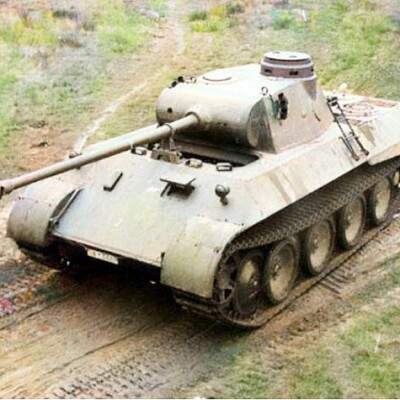
(Originally posted 22 June 2024) Three seasons! 51 episodes! This season begins with a catch-up on the Eastern Front, and the planning that led to the biggest battle in the history of warfare: Operation Zitadelle and the Battle of Kursk. Map: The Kursk salient, spring 1943 Source: Wikipedia (https://en.wikipedia.org/wiki/Battle_of_Kursk) Production and loss tables Table 1: Comparative armaments production, January 1941 – December 1942 1941 1942 GermanyUSSRGermany USSRRifles1,359.0002,421,0001,370,0004,049,000Machine guns96,000149,000117,000356,000Artillery3,80041,00041,000128,000Tanks + self-propelled guns8,4006,6006,20024,700Combat aircraft 12,40011,60021,700 German and Soviet war production. 1942–1944 (thousands of units) 1942 1943 1944 GermanyUSSRGermanyUSSRGermanyUSSRRIfles + submachine guns1,6024,6192,5094,8013,0853,006Machine guns117356263458509439Artillery4112874130148122Tanks + self-propelled guns62411241829Combat aircraft122219303433 Soviet tank and self-propelled gun losses 19411942194319441945Tanks and self-propelled guns available28,20035,70047,90059,10048,900Losses Heavy tanks9001,2001,300900900Medium tanks2,3006,60014,70013,8007,500Light tanks17,3007,2006,4002,300300Self-propelled guns01001,1006,8005,000 Source: Mawdsley, Thunder in the East, 2016 Images: The German Tiger tank,Panzerkampfwagen VI Tiger Ausf. E Tiger tank in Kharkiv, 1943 The German Panther tank, Panzerkampfwagen V Panther Source: Wikipedia. Sources: Antony Beevor, The Second World War. London, UK: Little, Brown and Co., 2012. Evan Mawdsley, Thunder in the East: The Nazi-Soviet War, 1941–1945. London: Bloomsbury Academic, 2016. Anthony Tucker-Jones, Slaughter on the Eastern Front: Hitler and Stalin’s War 1941–1945. Stroud, Gloucestershire, UK: The History Press, 2017 Wikipedia: The Battle of Kursk (https://en.wikipedia.org/wiki/Panther_tank). Hosted on Acast. See acast.com/privacy (https://acast.com/privacy) for more information. Hosted on Ausha. See ausha.co/privacy-policy for more information.
45min | Published on July 18, 2024
Season 2


For this special episode, a special treat for listeners: new theme music by composer Nicolas Bury. At the mid-point of the fighting on the Eastern Front of World War II, it's a good time to take a look back at what's happened in the USSR and around the world. Map 1: Operation Barbarossa to Operation Typhoon Map 2: Operation Blue Hosted on Acast. See acast.com/privacy (https://acast.com/privacy) for more information. Hosted on Ausha. See ausha.co/privacy-policy for more information.
40min | Published on May 21, 2024


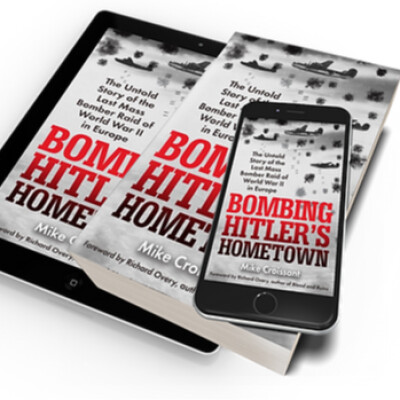
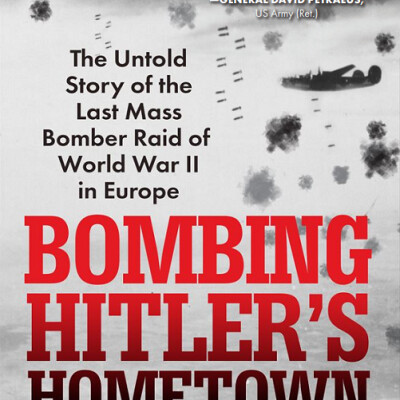
On 25 April 1945, 700 bombers and fighters of the U.S. 15th Air Force raided Linz, Germany, the town where Adolf Hitler grew up. Although neither the air crews nor the people of Linz could know it, it would be the last major Allied air raid of the Second World War. And one of the costliest in terms of U.S. casualties. Mike Croissant's uncle Ellsworth Croissant was one of the bombardiers on that air raid. That connection led the retired CIA analyst to write a book about it: Bombing Hitler's Hometown: The Untold Story of the Last Mass Bomber Raid of World War II in Europe. It's a very personal story that brings the reader onto the airplanes. Author Mike Croissant tells us about the raid, its aftermath, the people there, and how he came to write it. You can read my review of the book on my blog, https://writtenword.ca/2024/04/the-last-major-air-raid-of-world-war-ii/. You can get the book in electronic and hardcover formats from Kensington Books (https://www.kensingtonbooks.com/9780806543024/bombing-hitlers-hometown/). Hosted on Acast. See acast.com/privacy (https://acast.com/privacy) for more information. Hosted on Ausha. See ausha.co/privacy-policy for more information.
33min | Published on May 6, 2024


Author Mike Croissant describes the family connection that inspired his research into the last mass bombing raid of the Second World War in Europe. His book, Bombing HItler's Hometown: The Untold Story of the Last Mass Bomber Raid of World War II in Europe, was published in March. It's available in better bookstores and through online e-tailers through Kensington Publishing (https://www.kensingtonbooks.com/9780806543024/bombing-hitlers-hometown/). Hosted on Acast. See acast.com/privacy (https://acast.com/privacy) for more information. Hosted on Ausha. See ausha.co/privacy-policy for more information.
27min | Published on April 8, 2024


Mussolini was not happy about being in the Axis by 1943. And Stalin refused to attend the Casablanca Conference with Churchill and Roosevelt. Meetings of the summit and other senior leaders of the Axis and Allied powers through the war show the evolution of each side's war aims between 1939 and 1945. Map: The Kursk salient, spring 1943 Image 1: Roosevelt and Churchill aboard the HMS Prince of Wales at the Argentia Conference, August 1941. Seated: President Franklin D. Roosevelt (left) and Prime Minister Winston Churchill. Standing directly behind them: Admiral Ernest J. King, USN; General George C. Marshall, U.S. Army; General Sir John Dill, British Army; Admiral Harold R. Stark, USN; and Admiral Sir Dudley Pound, RN. At rear: Harry Hopkins talking with W. Averell Harriman. Source: Wikimedia Commons. Image 2: The Second Moscow Conference, August 1942 Left to right: UK Prime Minister Winston Churchill, USSR Premier Josef Stalin, and W. Averrell Harriman, representing President Franklin D. Roosevelt. Office of War Information Photograph (Wikimedia Commons). Sources: Antony Beevor, The Second World War. London, UK: Little, Brown and Co., 2012. Evan Mawdsley, Thunder in the East: The Nazi-Soviet War 1941–1945. London: Bloomsbury Academic, 2016. Sean McMeekin, Stalin's War. New York: Basic Books, 2021. Anthony Tucker-Jones, Slaughter on the Eastern Front: Hitler and Stalin’s War 1941–1945. Stroud, Gloucestershire, UK: The History Press, 2017 Wikipedia: various pages. Sound effects by Zapsplat (https://www.zapsplat.com/). Hosted on Acast. See acast.com/privacy (https://acast.com/privacy) for more information. Hosted on Ausha. See ausha.co/privacy-policy for more information.
37min | Published on April 8, 2024


In April 1943, Jewish people forced into the grossly overcrowded ghetto in Warsaw rose up against the nazis, killing hundreds of SS soldiers. The Warsaw Ghetto Uprising failed, but its memory lives on. SS members force Jewish people out of shelters for deportation to death camps, spring, 1943. Source: Wikimedia Commons. A map of the Warsaw Ghetto, the area nazi oppressors forced Jewish people to remain in. SS-Brigadeführer Jürgen Stroop (center), commanded of the SS brigade that destroyed the Warsaw Ghetto. In April and May, the SS systematically destroyed every building in the Warsaw Ghetto. SS soldiers continuing to destroy the Warsaw Ghetto, May 1943. Image source: Wikimedia Commons. "Waves of stone, crushed bricks, a sea of brick. There isn’t a single wall intact — the beast’s anger was terrible." — Soviet journalist Vasily Grossman, Warsaw, 1945. Hosted on Acast. See acast.com/privacy (https://acast.com/privacy) for more information. Hosted on Ausha. See ausha.co/privacy-policy for more information.
37min | Published on March 25, 2024


After their stunning, bloody defeat at Stalingrad, the Germans withdrew west to the Donets River in Ukraine, and the Red Army swept ahead as much as 800 km. But the Germans were still a potent force, and in March 1943, were ready to retake Kharkiv. Map 1: The counter-attack in the Donbas Map 2: The advances on Kharkiv Map 3: Withdrawal from the Rzhev salient Maps 4 and 5: The front in March 1943 Hosted on Acast. See acast.com/privacy (https://acast.com/privacy) for more information. Hosted on Ausha. See ausha.co/privacy-policy for more information.
36min | Published on March 11, 2024


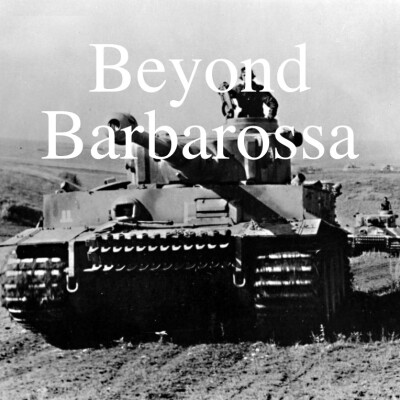
After the 6th Army's surrender at Stalingrad, rapid, far-ranging mobility returns to the war on the Eastern Front, as German and Soviet forces advance and retreat hundreds of kilometres. Map 1: The Kuban Bridgehead Map 2: Operation Star Map 3: Von Manstein's counter-offensive A Tiger tank near Kharkiv, 1943 Source: Pinterest. Hosted on Acast. See acast.com/privacy (https://acast.com/privacy) for more information. Hosted on Ausha. See ausha.co/privacy-policy for more information.
29min | Published on February 26, 2024


The Red Army finally scores two major victories in January 1943 — in the two cities where it mattered most. The surrender of the Sixth Army: https://stalingrad.net/german-hq/surrender/surrender.htm Map 1: End of the battle of Stalingrad Map 2: Operation Iskra Source: Wikipedia Photos: The surrender at Stalingrad Left to right: Field Marshal F. Paulus, C-in-C, 6th Army; Gen. W. Schmidt, Chief of Staff; Col. Adam, Paulus' adjutant. General Konstantin Rokossovsky, commander of the Don Front that captured the 6th Army in Stalingrad. The aftermath in Stalingrad. Source: Wikimedia Commons. Hosted on Acast. See acast.com/privacy (https://acast.com/privacy) for more information. Hosted on Ausha. See ausha.co/privacy-policy for more information.
52min | Published on February 12, 2024
Description
Hosted on Acast. See acast.com/privacy for more information.
Hosted on Ausha. See ausha.co/privacy-policy for more information.
106 episodes
Season 3


The iconic battle on the Kursk salient in July 1943 builds into the greatest confrontation between armoured forces ever — and a four-part series on Beyond Barbarossa. Map 1: The Kursk salient, 5 to 11 July 1943 Map 2: The northern sector Source: OnWar.com (https://onwar.com/) Map 3: The southern sector Sources: Ian Baxter, Kursk 1943: Last German Offensive in the East. Haverstown, PA, USA: Casemate Publishers (US), 2019. Antony Beevor, The Second World War. London, UK: Little, Brown and Co., 2012. Robin Cook, Citadel: The Battle of Kursk. London, UK: Lume Books, 2018. Evan Mawdsley, Thunder in the East: The Nazi-Soviet War, 1941–1945. London: Bloomsbury Academic, 2016. Anthony Tucker-Jones, Slaughter on the Eastern Front: Hitler and Stalin’s War 1941–1945. Stroud, Gloucestershire, UK: The History Press, 2017 Wikipedia: The Battle of Kursk (https://en.wikipedia.org/wiki/Panther_tank). Hosted on Acast. See acast.com/privacy (https://acast.com/privacy) for more information. Hosted on Ausha. See ausha.co/privacy-policy for more information.
38min | Published on July 22, 2024


(Originally posted 22 June 2024) Three seasons! 51 episodes! This season begins with a catch-up on the Eastern Front, and the planning that led to the biggest battle in the history of warfare: Operation Zitadelle and the Battle of Kursk. Map: The Kursk salient, spring 1943 Source: Wikipedia (https://en.wikipedia.org/wiki/Battle_of_Kursk) Production and loss tables Table 1: Comparative armaments production, January 1941 – December 1942 1941 1942 GermanyUSSRGermany USSRRifles1,359.0002,421,0001,370,0004,049,000Machine guns96,000149,000117,000356,000Artillery3,80041,00041,000128,000Tanks + self-propelled guns8,4006,6006,20024,700Combat aircraft 12,40011,60021,700 German and Soviet war production. 1942–1944 (thousands of units) 1942 1943 1944 GermanyUSSRGermanyUSSRGermanyUSSRRIfles + submachine guns1,6024,6192,5094,8013,0853,006Machine guns117356263458509439Artillery4112874130148122Tanks + self-propelled guns62411241829Combat aircraft122219303433 Soviet tank and self-propelled gun losses 19411942194319441945Tanks and self-propelled guns available28,20035,70047,90059,10048,900Losses Heavy tanks9001,2001,300900900Medium tanks2,3006,60014,70013,8007,500Light tanks17,3007,2006,4002,300300Self-propelled guns01001,1006,8005,000 Source: Mawdsley, Thunder in the East, 2016 Images: The German Tiger tank,Panzerkampfwagen VI Tiger Ausf. E Tiger tank in Kharkiv, 1943 The German Panther tank, Panzerkampfwagen V Panther Source: Wikipedia. Sources: Antony Beevor, The Second World War. London, UK: Little, Brown and Co., 2012. Evan Mawdsley, Thunder in the East: The Nazi-Soviet War, 1941–1945. London: Bloomsbury Academic, 2016. Anthony Tucker-Jones, Slaughter on the Eastern Front: Hitler and Stalin’s War 1941–1945. Stroud, Gloucestershire, UK: The History Press, 2017 Wikipedia: The Battle of Kursk (https://en.wikipedia.org/wiki/Panther_tank). Hosted on Acast. See acast.com/privacy (https://acast.com/privacy) for more information. Hosted on Ausha. See ausha.co/privacy-policy for more information.
45min | Published on July 18, 2024
Season 2


For this special episode, a special treat for listeners: new theme music by composer Nicolas Bury. At the mid-point of the fighting on the Eastern Front of World War II, it's a good time to take a look back at what's happened in the USSR and around the world. Map 1: Operation Barbarossa to Operation Typhoon Map 2: Operation Blue Hosted on Acast. See acast.com/privacy (https://acast.com/privacy) for more information. Hosted on Ausha. See ausha.co/privacy-policy for more information.
40min | Published on May 21, 2024


On 25 April 1945, 700 bombers and fighters of the U.S. 15th Air Force raided Linz, Germany, the town where Adolf Hitler grew up. Although neither the air crews nor the people of Linz could know it, it would be the last major Allied air raid of the Second World War. And one of the costliest in terms of U.S. casualties. Mike Croissant's uncle Ellsworth Croissant was one of the bombardiers on that air raid. That connection led the retired CIA analyst to write a book about it: Bombing Hitler's Hometown: The Untold Story of the Last Mass Bomber Raid of World War II in Europe. It's a very personal story that brings the reader onto the airplanes. Author Mike Croissant tells us about the raid, its aftermath, the people there, and how he came to write it. You can read my review of the book on my blog, https://writtenword.ca/2024/04/the-last-major-air-raid-of-world-war-ii/. You can get the book in electronic and hardcover formats from Kensington Books (https://www.kensingtonbooks.com/9780806543024/bombing-hitlers-hometown/). Hosted on Acast. See acast.com/privacy (https://acast.com/privacy) for more information. Hosted on Ausha. See ausha.co/privacy-policy for more information.
33min | Published on May 6, 2024


Author Mike Croissant describes the family connection that inspired his research into the last mass bombing raid of the Second World War in Europe. His book, Bombing HItler's Hometown: The Untold Story of the Last Mass Bomber Raid of World War II in Europe, was published in March. It's available in better bookstores and through online e-tailers through Kensington Publishing (https://www.kensingtonbooks.com/9780806543024/bombing-hitlers-hometown/). Hosted on Acast. See acast.com/privacy (https://acast.com/privacy) for more information. Hosted on Ausha. See ausha.co/privacy-policy for more information.
27min | Published on April 8, 2024


Mussolini was not happy about being in the Axis by 1943. And Stalin refused to attend the Casablanca Conference with Churchill and Roosevelt. Meetings of the summit and other senior leaders of the Axis and Allied powers through the war show the evolution of each side's war aims between 1939 and 1945. Map: The Kursk salient, spring 1943 Image 1: Roosevelt and Churchill aboard the HMS Prince of Wales at the Argentia Conference, August 1941. Seated: President Franklin D. Roosevelt (left) and Prime Minister Winston Churchill. Standing directly behind them: Admiral Ernest J. King, USN; General George C. Marshall, U.S. Army; General Sir John Dill, British Army; Admiral Harold R. Stark, USN; and Admiral Sir Dudley Pound, RN. At rear: Harry Hopkins talking with W. Averell Harriman. Source: Wikimedia Commons. Image 2: The Second Moscow Conference, August 1942 Left to right: UK Prime Minister Winston Churchill, USSR Premier Josef Stalin, and W. Averrell Harriman, representing President Franklin D. Roosevelt. Office of War Information Photograph (Wikimedia Commons). Sources: Antony Beevor, The Second World War. London, UK: Little, Brown and Co., 2012. Evan Mawdsley, Thunder in the East: The Nazi-Soviet War 1941–1945. London: Bloomsbury Academic, 2016. Sean McMeekin, Stalin's War. New York: Basic Books, 2021. Anthony Tucker-Jones, Slaughter on the Eastern Front: Hitler and Stalin’s War 1941–1945. Stroud, Gloucestershire, UK: The History Press, 2017 Wikipedia: various pages. Sound effects by Zapsplat (https://www.zapsplat.com/). Hosted on Acast. See acast.com/privacy (https://acast.com/privacy) for more information. Hosted on Ausha. See ausha.co/privacy-policy for more information.
37min | Published on April 8, 2024


In April 1943, Jewish people forced into the grossly overcrowded ghetto in Warsaw rose up against the nazis, killing hundreds of SS soldiers. The Warsaw Ghetto Uprising failed, but its memory lives on. SS members force Jewish people out of shelters for deportation to death camps, spring, 1943. Source: Wikimedia Commons. A map of the Warsaw Ghetto, the area nazi oppressors forced Jewish people to remain in. SS-Brigadeführer Jürgen Stroop (center), commanded of the SS brigade that destroyed the Warsaw Ghetto. In April and May, the SS systematically destroyed every building in the Warsaw Ghetto. SS soldiers continuing to destroy the Warsaw Ghetto, May 1943. Image source: Wikimedia Commons. "Waves of stone, crushed bricks, a sea of brick. There isn’t a single wall intact — the beast’s anger was terrible." — Soviet journalist Vasily Grossman, Warsaw, 1945. Hosted on Acast. See acast.com/privacy (https://acast.com/privacy) for more information. Hosted on Ausha. See ausha.co/privacy-policy for more information.
37min | Published on March 25, 2024


After their stunning, bloody defeat at Stalingrad, the Germans withdrew west to the Donets River in Ukraine, and the Red Army swept ahead as much as 800 km. But the Germans were still a potent force, and in March 1943, were ready to retake Kharkiv. Map 1: The counter-attack in the Donbas Map 2: The advances on Kharkiv Map 3: Withdrawal from the Rzhev salient Maps 4 and 5: The front in March 1943 Hosted on Acast. See acast.com/privacy (https://acast.com/privacy) for more information. Hosted on Ausha. See ausha.co/privacy-policy for more information.
36min | Published on March 11, 2024


After the 6th Army's surrender at Stalingrad, rapid, far-ranging mobility returns to the war on the Eastern Front, as German and Soviet forces advance and retreat hundreds of kilometres. Map 1: The Kuban Bridgehead Map 2: Operation Star Map 3: Von Manstein's counter-offensive A Tiger tank near Kharkiv, 1943 Source: Pinterest. Hosted on Acast. See acast.com/privacy (https://acast.com/privacy) for more information. Hosted on Ausha. See ausha.co/privacy-policy for more information.
29min | Published on February 26, 2024


The Red Army finally scores two major victories in January 1943 — in the two cities where it mattered most. The surrender of the Sixth Army: https://stalingrad.net/german-hq/surrender/surrender.htm Map 1: End of the battle of Stalingrad Map 2: Operation Iskra Source: Wikipedia Photos: The surrender at Stalingrad Left to right: Field Marshal F. Paulus, C-in-C, 6th Army; Gen. W. Schmidt, Chief of Staff; Col. Adam, Paulus' adjutant. General Konstantin Rokossovsky, commander of the Don Front that captured the 6th Army in Stalingrad. The aftermath in Stalingrad. Source: Wikimedia Commons. Hosted on Acast. See acast.com/privacy (https://acast.com/privacy) for more information. Hosted on Ausha. See ausha.co/privacy-policy for more information.
52min | Published on February 12, 2024