- Gary
Welcome to Searching for the Brighter Pod. I'm your host, Gary Little, and with me is North Carolina Peanut Extension Specialist, Dr. David Jordan. David, how are you this week?
- David
I'm doing well, Gary. How about yourself?
- Gary
I'm doing good. So tell me, are we there yet? You know,
- David
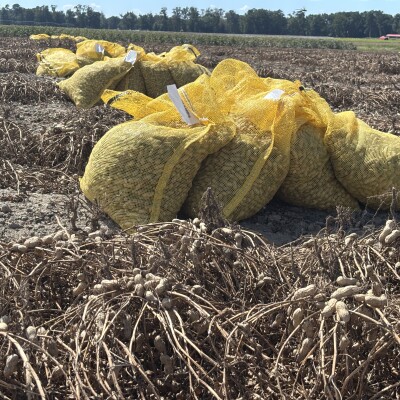
that's a great question. And we've all heard that question and probably said it ourselves as we were driving down the road. But we're we're almost there. We've heard that answer as well. But we have just a really just a handful of peanuts left in the field. I talked to a couple of people, certainly county agents and so forth, but some in the shelling industry. And we feel like we're. at 95% or more of the crop completely out of the field. So we've had a good fall to make progress on the crop and we are pretty close to being there.
- Gary
Okay. What are you hearing across the industry this year?
- David
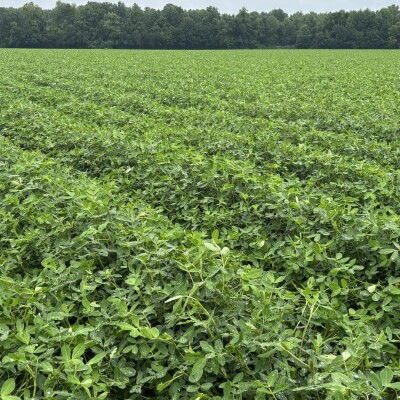
Yes, so that's a really important... question to address. So when I've talked to people over the last couple of weeks, especially the last week, I'm hearing that peanut yields are going to be certainly below average is what I'm getting and gathering from people. Just where that will land is always hard to know until all the tonnage reports come out and everything is reported. My new estimate is right around two tons, 4,000 pounds. I might actually even over the next week or so lower that a little bit, maybe to 39.50 or so. I think just we had a lot of dry weather and some complications there that have caused us to have some of the lower yields. So if we were to go back in time, it's not only the dry weather late that affected it, but we really had some some hot days in June and into July and also some dry conditions then. And we know with a crop like peanuts, if it's really warm or hot, high elevated temperatures, you can have some flowering that doesn't occur and you'll lose some of those early pegs. So we think some of that's been going on. We also know that as we lack for water later in the season, our pod fill is less than ideal. And that ties into even earlier calcium nutrition. If it's really dry or quite dry, it's hard to get enough calcium into those developing kernels during that time of year. So a lot of things in many ways were stacked against us. We had a really good fall to get the crop out, but we just didn't have quite the crop I think that we would have liked to have had.
- Gary
Okay. In your research this summer, do you have any preliminary results you would like to share?
- David
Well, thanks for asking that, Gary. So as you know, with my position, I'm mostly extension, which is, you know, education programs and trying to provide information and problem solve. But when we make recommendations, we we need to have that based on as good a science as we can. And so we do a lot of trials. on stations, but also a lot of on-farm tests with our county extension agents. A couple of things that we found this year, and again, this is some preliminary data. I've got yield data, but certainly the market grade characteristics will take a little while to gather as those are being processed. And we have a great cooperation with the NCDA. They analyze a lot of our samples for us and they certainly charge us, but they... They are very reasonable, and that really helps us get the market grade information that helps us with our recommendations. Just a couple of things that I've noticed. So we had 11 trials that were, I call them large plot trials across the state, that compared Bailey 2, Emory, NC20, and NC21 in large plots. And 10 out of those 11 trials were with farmers. One of the trials was at the North. not the Northeast Research Station. That was another lifetime ago when I worked in rice. Everything is running together today. But that was up at the Peanut Belt Station. And so. What we found this year is in maybe eight out of the 11 trials, seven or eight, I forget the exact number now, the yield between Bailey 2, Emory, NC20, and NC21 was essentially the same. Now, what we have learned in the past is they may separate a bit more once we get market grades in and then we calculate the financial return. Based on last year, Bailey 2 was at the top. Emory would have probably fallen in number two, and then we had NC21s that did pretty well, and then NC20s dropped off. This year, it looks like the 20s and 21s have held on a bit better than they did last year, especially the 20s. But in the trials where we had differences among our varieties, it tended to be either Bailey 2 or Emory doing somewhat better than NC20 or NC21. And this year, one thing that sort of stood out in a couple of trials is Emory's did better than Bailey 2. And last year, we would have found that Bailey 2 was clearly the best variety across the board. That variety's been around a while, has served us really well, and it just performs under a lot of environments. This year, the Emory's have surprised me a little bit in terms of yielding as well as they did in some circumstances. and not dropping off in some other trials that we had. But again, we'll talk maybe more about this later in the year once we get some market grades in and really kind of fine-tune recommendations based on what we knew this year. I'd say there's one other experiment that I'd like to mention, and it's one of those where the reason we do the work is because sometimes what we think will occur doesn't always occur. And so we have to put the trials out and then follow those through with yields and so forth. So one question that I got from a student in one of my classes a couple of years ago is, well, with peanuts, do we need to rip and bed or would we be okay with just bedding? And we know that peanuts don't respond to deep tillage like some of our other crops do. If I'm on a... Typical coastal plain soil in North Carolina, I'm going to usually get a response to subsoiling or ripping for both cotton and corn. It can vary some, but those crops tend to respond well to ripping or subsoiling. Peanuts, we've always known that they're not a crop that responds to the deep tillage. But we didn't have an answer to that question when I went back and looked at trials. And I haven't found... And maybe there's some out there, not all the research gets published that is accessible to us. But I couldn't find any information on ripping and bedding versus bedding without the ripper. So this year and the year before, we did some large plot trials and we found that there was a trend for the yields to be lower where we ripped and bedded compared to just bedding. And that was surprising. I thought that it would be, you know, just a wash between the two. I didn't expect to see a positive response to ripping, but I certainly didn't expect the ripping to have a decrease. So that's one of those things where I really would like to figure out what's going on with that and get an understanding of what the mechanism of that is. And certainly repeat that trial several more times before we make some broad recommendations. I can see how that response would be out there for sure, in part because if we look at what people do across the state in our surveys, there are just as many people that bed without ripping as ripping and bedding. So we know that just from that type of information, that there's a lot of people that are very successful without ripping. Now, one of the challenges is if you're... set up with a ripper bedder for all of your other crops. Maybe you just go ahead and rip and bed peanut ground as well. It's a little tricky now that I know that we've had some pretty clear examples for the last two years with large plot trials where the yields were several hundred pounds lower where we ripped and bedded compared to bedding. So I got to figure that one out. But that's an example of how when we. When we start getting questions from people, whether it's in the classroom or farmers or somebody in ag business or extension, we're able to put trials in. And we can, you know, sometimes we can do that even within the year that we get the question. But putting those trials in, trying to come up with those answers is a real important part of what we do. And those were just a couple of examples of some of the preliminary findings we've had. I look forward to digging into all the data deeper. And then that will inform our recommendations that we'll present on the portal in some of these podcasts, but also in our extension meetings and publications as well. Thanks for the question, Gary.
- Gary
Well, we'll look forward to hearing more about those studies. It's November 4th as we record this. Anything to look forward to next week?
- David
So I think one, that's a great question. So you're kind of putting me on the spot in terms of looking forward to something. So if I think about the peanut world right now, we, you know, folks are going to wrap things up. I think our weather this week is pretty good. We've got a... chance of rain, but I'm looking out the window now and it's sunny again. I think just wrapping everything up will be an important thing to do. And then folks will continue to get market grades back and that will inform us on some of the things that we might need to address. But yeah, just I think we're getting the crop almost behind us and then folks can look forward to many other things this fall and winter, other than... then that long season of planting peanuts, growing peanuts, and then that fall, which can be pretty long. But we got the crop harvested quicker this year than we have in most years.
- Gary
Okay, thank you. And thank you for listening. This has been Searching for the Brighter Pod. You can contact us at brighterpod at gmail.com or on the web at go. ncsu.edu slash writer pod. Thank you.