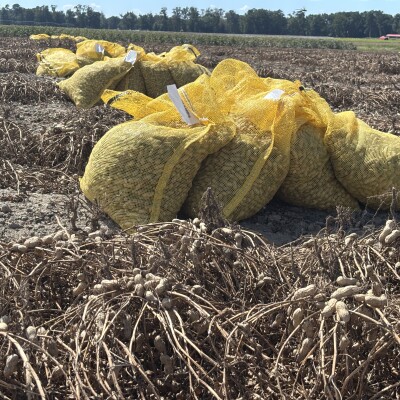
DavidWell, thank you, Gary. It's good to see you this afternoon. Most peanut growers are probably waiting to get some payments from their labors from this past year. But just because they've got the peanuts out of the field doesn't mean they've gotten all their crops out of the field. So one thing that if you drive the countryside now, you'll probably still see a significant amount of cotton in the field. So probably... Not every peanut farmer, but most peanut farmers in North Carolina probably have some cotton in their rotation somewhere. And there are certainly some growers that their particular, their major rotation with peanuts is cotton. So there's still some cotton to be gotten out. I think people have been successful in moving along on that, but that would be one thing they're doing. Another thing is they're... quite a few peanut growers that will plant small grains or primarily wheat after their peanut harvest. So we did have really good conditions earlier in the fall for people to harvest peanuts and then prepare the land in whichever way they wanted to for small grain planting. But I've seen quite a few fields that already have stands established. So if you are a peanut grower that grows wheat, for example. and you've got that wheat that's already come up or certainly trying to come up under the conditions we have, you're making some plans for growing that winter crop. So those farmers are pretty busy. Also, farmers, when they get the crop out, the peanut crop out there, looking at their equipment, they're getting in a good shape for storage. And, of course, we know that spring of 2027 is right around the corner. So... Uh, they're making, you know, when you're, if you're a peanut grower, one thing that you're very cognizant of is your rotation histories and how you need to set up those fields from a, from that perspective. So growers are taking a look at the yields they've had from this year. They're considering what their realistic yield potential is in all their fields, and they're setting up rotations and making those plans. And one thing that growers will do, uh, not right now, but as they move into Thank you. The winter and early spring, they'll be making some contract arrangements with the shellers in the region for growing peanuts next year. So there's still crops to be harvested. There's plans to be made for the 2027 cropping cycle. There's maintenance on equipment. Every year, farmers spend a lot of time in the field with their equipment. And then when the season's over, whatever they had to. piece and patch together. They'll probably look at that in more detail to make sure everything's in good operation order for next year.
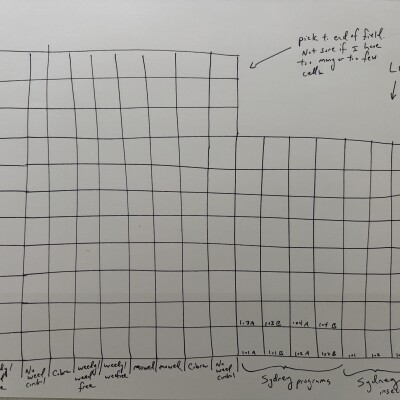
DavidWe're doing some of the same things. So if you think about a research program or even an extension program that does applied research. We've got equipment. We've gotten the crop out for us. We're trying to store everything and get everything going through some maintenance so that it's in good shape for next year, whether it's our spray equipment or our combines or for us, our way wagon with our scales for the on-farm testing. So we're doing that type of maintenance. One thing that I'm doing and one thing I failed to mention for many of the growers is there, we're... taking some soil samples for nutrient analysis so we'll know what to apply in the in the spring or even in the winter if we get some openings there from a lime standpoint to adjust ph but also just what are the basic fertility levels so we've got i've got a couple days of soil sampling to do between now and and when we get into the early spring so that we can make some decisions on that and what to do in those fields and and growers are doing the same thing they're They probably have already, either themselves or people they hire, their consultants, have already sampled a lot of fields. But there are probably still some fields that will be sampled, especially after cotton is harvested and those stalks are mowed. So a lot of soil sampling to do. So that's one thing we're doing. Another thing that we do is so we, you know, you can look at our jobs in a couple of different ways. But one is we work in the field. We get our results from our trials. And for us, that's only half the battle. what we do. So we take those numbers, whatever they happen to be, whether it's our rating scales that we use for different pests or a series of measurements on the crop itself, whether it's maturity or plant heights or biomass, whatever it happens to be, certainly pod yield and then market grade characteristics that we run through the NCDA. And we'll take that information. And Many people know that our trials, we have replication, which means we... Might be comparing different varieties, but we're going to have those varieties spaced out in that field four times or three times, whatever we can get. And then we get that information back and we analyze that with different statistical programs. We show that type of information at production meetings and sometimes we get that look like, I don't know, I see 300 pounds up there. And that's you're saying that that's really not different from something else. And I... completely understand that thought, but when we make a recommendation, what we want to happen is we want our recommendation to hold up in the future when somebody makes a decision on what to do. And one thing that I often think of is that we might do trials to compare different things, varieties, for example, or other inputs, and we might do that on two acres or 10 acres or maybe even 20 acres if you combine everything together. But the results from those trials are going to be recommended on tens of thousands of acres. And they could get adopted on if some of our practices work really well, we might have 100,000 acres of peanuts that would have a particular type of practice. So we do stats or statistics to help us know whether or not our results are, quote, real. Or what's the probability of our results being something that's just a random chance? So that's a real important thing. So we take our data and we run that through different programs. We get the results from that. We just try to figure out exactly what the results mean in terms of interpreting what they are so that we can make an informed recommendation to farmers. Sometimes we have recommendations based on many years of data. Others are maybe we looked at something for the first time this past year, so we're a bit more cautious about making a firm recommendation, but nonetheless, it may be the only information or set of data on a certain set of practices that we are. So we will share that information, but we always have the caveats of maybe this was one location in one year. Maybe it was one year, but four locations, whatever it happens to be, and that really is helpful. and informative. But we're working through that information. We're formulating anything we can do to improve our recommendations to farmers that's based on scientific research. And as I look at the next, maybe the next couple of months real quick, we do have some certified crop advisor trainings coming up in December. The peanut group is very active in that. When we move into January, One thing that goes on. for peanuts is we have, we call it agent training programs. And so Guy Collins and myself will have a day along with the other specialists in our respective crops. We'll have a day where county agents that are involved with cotton or peanuts come together. It'll be a formal meeting where we talk about results from 2026. We talk about some of our recommendations. We get a sense of what's going on in counties. what was successful, what wasn't so successful, and that's really good interaction with the county agents. Those meetings, that meeting in particular, also allows the specialists like me to decide what we're going to cover at the county meetings, which occurs in February. So when we live into February in North Carolina from a peanut perspective, there's in the month of February on a Monday, Wednesday, Friday. There's more than likely a farmer peanut meeting going on somewhere in the state. And we certainly on our portal, we. We include the dates for all those. We have migrated to having those meetings from 1 to 3 p.m. There's usually a lunch before that. One reason why we have two hours of credit or two hours of, say, there's that slip there. One reason why we have two hours on the program is because farmers often need two hours of credit for different components of their licensing for pesticide applications. We want to make sure. If they go to a peanut meeting, they can get all the credit they want. But we'll plan those meetings out. Hopefully we can have things prepared so that growers can get the information they need. And those meetings are open to everyone. And we encourage people to ask all the questions they have at those particular meetings. And so once we get past February, we're also in that process of planning for 2027. We're going through the process of requesting land on the research stations. We work closely with our county agents on what on-farm tests they may want to do in their county. So there's still a lot going on. So from my perspective as a person at a university, what often happens is when the semester ends, I'll have people that don't know anything really about NC State or what goes on in ag research. They'll say, well, you finished the semester. you What are you going to do this summer? And my answer is, well, I'm going to be busier in the summer than I was during the semester. But that's always an interesting discussion with folks that really don't quite understand what we do. And the other thing is, I've experienced this too, is we conduct the research. The folks on the station or on farm really help us do that. We get all that information in, we harvest. And then I think a lot of folks. You know, they're especially if you're more production oriented or if you're on farm, you may not realize that that's for that's only half of what we have to do in order to come up with good recommendations. We've got to take that information and figure out what to do with it. And that can take if if you have a lot of trials, a lot of time. So just for my program, in cooperation with other folks and with extension agents, we have about 65 trials every year. Some of them are large plots, some are small plot. And once that information comes in, we try to get it analyzed and figure out what it means and then see how it might infiltrate, for lack of a better word, into our recommendations that we would make to farmers. So there's plenty to do this time of year.
DavidYes, indeed, Gary. So, so I'll, I'll, Gary, we're, we're coming off of, uh, Jeff Dunne's excellent performance on our podcast last week. Um, and so we're, uh, you know, it's just back to me and you today. So you could tell maybe a little bit of a lull in the excitement, but, um, I think hopefully we've given some people a perspective on, on what we do and what farmers are doing at this point in the season.