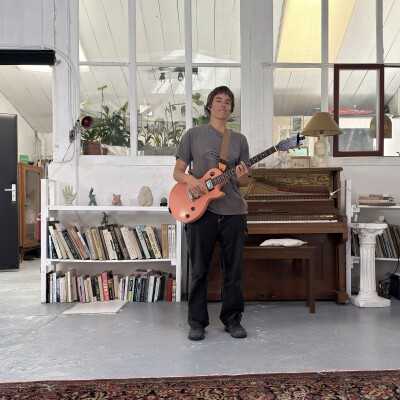
- Daz
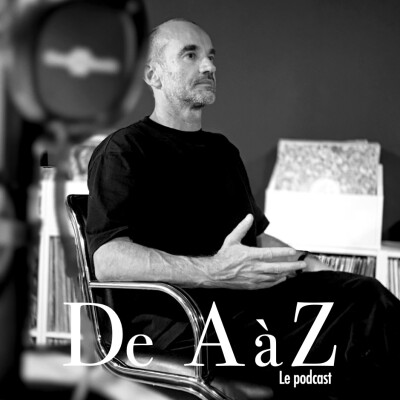
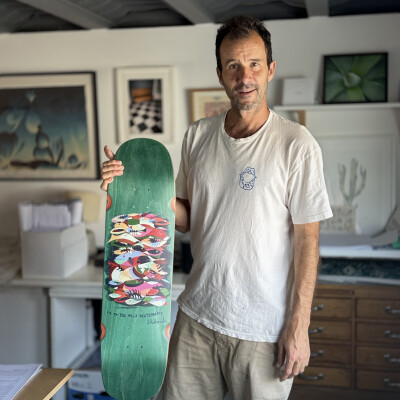
Smooth, timeless, stylish. He lives like he skates. He paints like he lives. My guest today grew up by the ocean, but only discovered surfing a few years ago. His first wave was made of concrete, and from that very first ride, he became one of the most talented skateboarders to come out of Europe. His creativity goes far beyond the board. It now takes shape through photography, collage, books, and more recently, painting. With him, We will explore how skateboarding becomes an art form and how art is created from it. He is the smoothest cat in the room. Welcome to the AZ studio, Javier Mendizabal. Bienvenido, Javi.
- Javier
Gracias, Ash. Wow.
- Daz
So, let's start with skateboarding. You grew up near a small city called Algorta. And that's where you discovered skateboarding. So can you tell us all you did and when you started skateboarding?
- Javier
Yeah, I was born in Bilbao. But I think I was one year old when my family moved to Lelloa. Lelloa is like a very, well, not so very, not so small anymore. But it's like a next town next to Algorta. where Lacantera is and where pretty much everything started as a skate scene. And Alcorta and Sopedana was and is like a surf and skate town. And it was because, I mean, there was an older generation. They were like, it was a mix of surfers and skaters. 70s, 80s, and because of them they were like asking and going to the city hall and asking for a skate park and that's how La Cantera was built in 1988 1989 It wasn't the very first skate park because the very first one was in Catalunya and then disappeared like a few years later and then the one in Madrid and actually La Cantera was a copy, well you half copy because it was not a... Anyway, it was a copy of the one in Madrid. Yeah, I was just like 11, 12 years old, just like a normal kid, riding my bicycle, playing soccer, like just doing all the activities that a normal kid does. And it was because of this, there was like this family where there were three brothers, they were surfers, but they were skating. more like as I say they were surfers so they were not really skaters but they were like skating in front of my house and that just caught my eye you know I was like whoa I was I already tried skating but it was just like something whatever but just seeing these guys just like the way they were doing it I was like wow that's so cool that's what I want to do and pretty much from there I just start skating every day until today and so
- Daz
The location and especially the skate park influenced the way you started skateboarding and the way you've been skateboarding your whole life. I mean, more transition.
- Javier
I mean, it has a lot of influence because, as I say, there was all these, all the guys that they were like, some of them, they're surfers, that they were skating and some of them were more like skaters, that they were surfing a little bit. like the whole The whole scene was influenced by surfing. So the way that I grew up watching these guys, it was kind of scary that it was still on me. And like many people, many people told me many times, oh, you surf, you surf. Now I do better. For many, many years I didn't. And it was because of these guys. Because, you know, like the way... I was 12, I was 13, 14, and there was all these guys just skating, like Anteira, just doing these grinds and front sides. And I didn't know, but it was pretty surfy. And you got influenced. I mean, not these days, but back in the days, you got influenced by the people around you. So yeah, it definitely has a lot to tell in the way I skate.
- Daz
You started really getting into surfing a little bit more than 10 years ago now, right? How come you didn't start it earlier, living that close to the ocean?
- Javier
I tried surfing when I was like a teenager, 15, 16, when I was living there. But it was just like skateboarding, which just like, it hit me so hard. I was like, all I wanted to do was just like skate and surfing. surf i mean surfers were like i don't know like all these it was in the 80s all these like flashy colors and blonde hair like i i was not into that you know like we weren't punk rockers and that's that's what skateboarding was to me and so i tried a few times but you know trying like surfing takes time yeah and uh so i was like okay this is not for me and then i moved to barcelona and then i started traveling pretty much non-stop so So. But in the back of my head, I always, I knew I was going to try it. I was going to surf, but it was just not the right time. I was so much into skateboarding. All I wanted to do was that. And then the traveling, and then I just, you know, it was actually when I moved here to France, like 12 years ago, that also my kind of skateboarding career or whatever, it was coming to an end, and it was like, okay, this is the time. It's now, surfing.
- Daz
You mentioned your skateboarding career. You actually had a pretty long one.
- Javier
Yes, yes.
- Daz
You're an example of longevity in this field. When did you turn pro?
- Javier
Yeah, I became pro kind of late. I think I was 24, maybe, around 24, 25. I'm pretty bad with years and time and so on. when I get confused many times in this conversation. But yeah, I started riding for Pizzeria in 1999, I think. And I don't know, it was just something very natural. I was not really planning or thinking about it. I was just skating. My relationship with Jeremy was always really good. Like, they really let me go my way. And I was actually, I remember I was in Greece on an island, like, pretty, you know, I used to have a Greek girlfriend and I was with her. But really kind of far away from skateboarding. I was just taking a break and that's where I got the news. Jeremy, he text me or call me. He's like, hey, you're getting a pro model. Which is funny because it's not the first time it has happened to me that some of the biggest and best news in my skateboarding career came when I was on some kind of break from skateboarding.
- Daz
That's interesting. Yeah. So it's like destiny, it's coming back to you when you expected the least.
- Javier
I wanted to quit from the beginning, they just didn't let me go.
- Daz
So you turned pro around 23. You haven't planned it yet. So why you were just skateboarding? You were doing something else on the side, like studying or walking until you turned pro?
- Javier
Yeah, I moved to Barcelona because I just wanted to move out of my little village. You know, it's a beautiful place to live and I love it. But it's, you know, I was a teenager and I just wanted to go to a big city and meet some other people. people and discover. So I moved to Barcelona before Barcelona became the place to be.
- Daz
The maker of skateboarding?
- Javier
Yeah, yeah. So I went to study, but to be honest, it was just an excuse. I couldn't go to my parents and say, oh, I'm just going to move to Barcelona and just, you know. So I found a school and I moved there and I went to school for almost three years.
- Daz
And what were you supposed to do?
- Javier
to study i was studying i was going to school so what was it it was a restoration furniture okay I always like to do things with my hands, you know, like working and creating. And I found this school. I did the year before I was in the university in Bilbao, but just because I didn't really know what to do with my life. So I just follow the, you know, the current. And so I found this little course of, what is it called in English, like good carving. you know like carving that's how it's called i don't know what it's called the wood carving yeah like carving uh like making furniture and making like uh designs and so anyway i did that and um i kind of enjoyed and then i found this school in barcelona so i was just like that was the excuse and uh and i went to barcelona i moved there and then three years later it became the place to be for the skater and definitely made things easier you know i started meeting pros and skaters and start going on trips and start getting coverage from magazines and yeah on and on and how long you've been living in barcelona and total i think it was like 14 years 14 yeah oh that's long i didn't realize yeah but probably spent like two months a year yeah it
- Daz
You were travelling the rest of the year?
- Javier
I was travelling non-stop. At one point it was too much. I mean, not too much, but it was like pretty gnarly. It's like, yeah, I, you know, like sometimes the sponsors were asking me to go on this trip, on that trip. And then if I didn't have any place to go or any tour or anything, I was just like going on my own or just organising my own trips. But I always liked to travel. So I... I traveled as much as I could.
- Daz
So you traveled as much as you could. You were based in Barcelona, but somehow you ended up owning a bar there. That was on the last years you were based in Barcelona.
- Javier
Yeah, that was not planned at all. It was just a good friend of mine, a skater, who was, yeah, he was from, it's funny because... Before I moved to Barcelona, I went on a little escape trip with a couple of friends, and we ended up staying at this guy's house. Anyway, he was just like a local Barcelona guy, and then he left, and then he came back, and then he offered it to me. He made it really easy. Put it on the table. I have the price. These are the numbers. take care of the bar. You don't have to work. And it was not a lot of money. It was like two other guys involved. And I was like, why not? So we did it for three years. It was fun.
- Daz
What was the name?
- Javier
La Lola. Bar La Lola, yeah.
- Daz
Did you work in there or you were just partners?
- Javier
No, you know, marketing and relationships.
- Daz
So offering beers and cruising around?
- Javier
Around the corner from my house. So I was there pretty much every night. So yeah, not the most healthy experience, but it was really fun.
- Daz
And what was it kind of like a scene for like the skateboard, a place for the skateboard scene over there where like all the skaters from Barcelona going?
- Javier
A little bit in the beginning because the four... uh partners we were all skaters so it was funny because the the main guy who was running the bar patrick he's really into flamenco so it was like a flamenco bar but uh in spain there's this uh you know there's a lot of skaters that are into flamenco too so on the beginning there were like a lot of skaters but slowly uh slowly you start having your mmm Own clients, new clients, that they're not coming because of you and your friends that they were coming because of you. They, you know, they come one, two, five, ten times and then just go back to the place where they were going before. And then you start building your clients. So it was kind of the skaters bars from the beginning, but then not so much. It was more like a flamenco bar.
- Daz
yeah oh it's funny i think i was one night maybe going to your place or maybe i mix it up But I ended up being in a backstage of a bar, like a former theater or something, with Javier Sarmiento and Arne Le Bon and all those guys playing guitar and smoking and drinking beers. How come there's this strong connection between flamenco and this skateboard scene?
- Javier
Honestly, I don't know where it's coming from. Obviously, flamenco is... Very popular and it's coming from Spain. And one of my best friends, Julian, is an incredible singer and guitar player. He was a pro skater too.
- Daz
And he's a painter now too?
- Javier
He's a painter too. But I don't really know where it's coming from.
- Daz
Okay.
- Javier
I don't know because I think one of the very first guys that I heard that he was like into flamenco is... Patrick, the guy that I opened the bar with. And he's from, he's half from Barcelona, half from Granada. And his family is coming from flamenco. So he was into flamenco. And that was the first guy that I heard of that he was being a skater. And he was into flamenco too. But I don't know if it's coming from him or it's just like a natural thing. Or I have no idea.
- Daz
Okay. You mentioned cliché. You spent pretty much your whole professional skateboard career with Cliché. Can you tell us a little bit more about what Cliché means for you?
- Javier
Yeah, I was, I don't know if I was lucky or it was just, but I stayed with Cliché and Quicksilver my whole career. I switched to a sponsor a couple of times, but I think that was... that, you know, creates like a long-term relationship. And it really changed the way I was just doing it. You know, like they really, I never been into contests. I never really liked to go on contests. And there was another thing too. Sorry, I'm not replying to your question. I will later. But, There was one moment where I started getting paid because, I mean, late 90s, beginning like early 2000s, there was no money in Europe. Like there were the pros in America, in California mainly, and they were making the money. But in Europe, there was not many people and it was very, very little money. For me, it was just like skateboarding, as I say, in the beginning. It was just like my passion. It's like a fun thing to do with my friends. And I never, never really thought that I was, you know, become a pro skater and make a career. So that happened because of Cliché and Quicksilver mainly. And after like a year, I was... I was confused. I don't know if it was, I was just like, I don't know, because I don't know if this, I wanted, I want to do this, you know, like being paid and just like having obligations and doing that. I don't know. It was really weird because it seems like it's like the dream come true. But I don't know. It got me confused and I decided to quit.
- Daz
Really?
- Javier
Yeah.
- Daz
I didn't know that.
- Javier
Yeah. I mean, it was not that I quit, but I called Quicksilver and I called. I don't know if Klitschek was paying me at the time because first it was Quicksilver and then Klitschek. But I told them that at the same time, there was another thing happening too, that I was going on a trip, on a very special trip that I was planning for a very long time. Because my friend, one of my biggest influence, my friend Fernando Elvira. was traveling he was photographer he was an artist skater and and i was getting this is before emails uh or maybe there was emails already but anyway i was getting these uh letters with like this and he was always doing collage and and he was making these envelopes really colorful and exotic and i was getting a lot he was spending a lot of time in hawaii And he was sending me all these letters from Hawaii. And I was just like, I don't know. I got this. idea of Hawaii on my mind and I wanted to go there. So I was planning this trip. And I was looking at this trip as like, I just wanted to be like completely free. I was going to spend some time with Fernando and then he was going to leave and I was going to stay on my own. And I didn't want to have that thing spinning on my brain. So I called Quicksilver and I called Quicksilver and I said, I'm going on a trip. I don't know for how long. I just want to disconnect. I want to be on my own. And that changed the whole thing. Since then, they never put any pressure on me. I did whatever I wanted to do for the whole time. When I came back, I stayed for like almost four months. And then I came back and I didn't even call them. And I started skating again in Barcelona. Sorry, I started skating again in Barcelona. And then someone found out that I was back and they called me. the air. We know you're back in Barcelona, you're skating, and we just want to let you know that we want to support you the way you want to do it. And I was like, okay. So we started again, and it was my way.
- Daz
Nice. So when was that, like early 2000?
- Javier
2001, I would say.
- Daz
Okay.
- Javier
All these dates. Yeah, yeah, roughly.
- Daz
So basically, like what you're talking about, it's pretty powerful, actually. I figure today it's... we all talk about like mental health and respecting your own space and learning to say no and it seems like you got it straight away back then in a completely intuitively yeah yeah it's i don't know it was inside me it was very natural it was just like that's what i just did what i wanted to do wow yeah and um so being turning pro at that moment and being especially on European brand, like Cliché, did you, that was a big shift in the skateboard scene, especially like the European scene was becoming stronger and stronger. Did you feel you were part of something?
- Javier
I remember because it was, I was sponsored by a Spanish distribution guy who was doing bots. some of the biggest and like most of the skate brands at the time. And it was cool. But yeah, we actually, me and Alain, we flew to San Francisco, spent like a month with Deluxe and Alain Goycotea. And they were sending us boards like through the distribution in Madrid. But I kind of knew that that was going to be it. He was not going to go somewhere else. And then I went to Barcelona. I met Alexis Stavialov, who was a French photographer. And he was already, when I got there, he was already there for like a year. So he knew a lot of spots. He had a car. He was taking photos. And I spent like a year with him pretty much every day. And he was really close to Jeremy. And he was, you know, traveling with the... with the Kitsay guy. So it was just like, it's like, Javi, it's like, I mean, you don't know it. You're pretty much on Kitsay already. So I remember calling the guy in Madrid and like some of my friends when I told them I'm going to start running for Kitsay. And Kitsay was European, but it was, to us, it was pretty French company, you know? I said, what are you doing? He's like, you're already in the looks. They're like kind of floating. They're sending you boards and... are you going to start writing for a French brand? I was like, man, for me, it's more important to have like a real contact, you know, and feel part of something than just to be a guy really far away where I send a couple of boards a month. And then no one knew, but then really, really fast, Clitze became stronger in Europe. And then the first video came out in Europe. And I remember when it came out. A couple of months later, I went to San Francisco on a trip.
- Daz
Was it Bon Appetit, the first one?
- Javier
No, the first one was Europe.
- Daz
Ah, yeah. Yeah. Okay. And Bon Appetit was like the second one, which was pretty big deal. Yeah,
- Javier
that was like, we was friends first. We did it too. Europe was the first one, so not that many people knew Clitze at that time. When Bon Appetit came out, it was already like a pre-established brand. But I remember I went to San Francisco and we went to... art show, like a skate art show, and some people recognize me. from the cliché video and I was like, what? I didn't know that it made it to the States you know,
- Daz
the video because back then it was VHS tapes so that means like they crossed the Atlantic wow
- Javier
I mean, I remember we got a review in Slap Magazine with the first video, Europa video so that probably made some people interested and want to watch it so, yeah It was fun.
- Daz
You mentioned a name I wanted to bring. French Fred, Fred Mortagne. You've been working with him for quite a long time, I realized.
- Javier
Bon Appetit. I met him there, just filming for Bon Appetit. And then since then, I mean, we became really good friends and we have a lot of things in common. And yeah, we work on Cliché and many other videos and then some other personal projects. And we're just good friends.
- Daz
What can you tell us for the people who don't know who is French Fred?
- Javier
Well, French Fred, when he did Bon Appetit, he was coming from doing Manic Mati and Flip Video. Sorry. So he was like, he went from being a filmmaker in Lyon to suddenly have the opportunity. to do the S video, Manic Mati, and then straight away he did the Sorry video and he was just like the biggest and well, like most known filmmaker in Skate world. So, but he, that means that he spent like three, four years traveling, living in America and he just wanted to come back to France and Lyon, you know, and that's where Kitsay, yeah. Plichet was still based in Lyon, and so they knew, like, Jeremy and Fred, they know each other since they were, like, kids. So it was pretty natural that Jeremy, I don't know which way it went, if it was Jeremy asking Fred or Fred, or I don't know, but it was just like Fred was back in Lyon, and Jeremy was already planning the second video, so I was like, okay, so Fred made it.
- Daz
And one of the... Main project you've been working on is this movie directed, movie project directed by Thomas Campbell, Cuatro Sueños Pequeños, which is, I don't know if it's for you, but for me it's a very special project because first I got the privilege to help producing it and to work with one of... to me, most influential artist in the board sports scene, who's Thomas Campbell. And I remember how you brought that project to us back then. I think it was 2012 or something. Can you tell us more about this project and about your relationship with Thomas? Because Thomas came to you for this project, right?
- Javier
Thomas came to me, yeah. I met Thomas when I was... 16 years old, I think, back in Malgorta. I was already good friends with Fernando Elvira and Tomas and Fernando, they knew each other and Tomas came to Spain to do an article for Transworld about Spain. So we spent a couple of days just shooting some photos. I didn't really speak any English and Tomas... still doesn't speak much Spanish. But we spent a couple of days together. We shot some photos. And that's funny because that's how I actually got my very first sponsor because at that time I was just like a completely almost unknown little guy in the Yoha. And then through Fernando and then I met Thomas. And then anyway, these couple of photos came out and transwalled on this article. all the guys having a photo in this article were like the well-known guys in Spain, Manuel Palacios, Alain, Alex Castaneda, all these guys. And suddenly it was this guy that no one knew. Anyway, the guy in Madrid who was doing the distribution for Deluxe called me and that's how I got my very first sponsor through these photos with Thomas. Then we didn't have any connection. I think maybe one letter. I think because he came, Thomas came back some years later to Algorta for a couple of days. And I was in the hospital for, I broke my ankle and I was just like in an operation. So we didn't see each other. And he left like a little note for me with some drawings.
- Daz
Alas, Thomas style.
- Javier
Yeah. So that was it. We didn't really have any connection for many, many years. And then I was in Barcelona. You say which year? When did this happen?
- Daz
If I remember, but with dates as well. But I'm quite sure it came out in 2013.
- Javier
So I would say 2011, 2012. my phone ring, make a number on the screen. I pick up and it was like, hey, Javi, what's up? This is Thomas. We were able to speak the same language for the first time. So we spent like an hour over the phone, you know, just talking about life. And he told me, he's like, I've been following your career, like through all the cliche videos. He told me that he was, because I didn't know, I was not following surfing at all. And he told me, yeah, I've been doing all these surf movies for the last 10 years. Because many people know Thomas because of his art and because of the surf movies. But not many people know that Thomas comes from skateboarding. And he was the first guy to do the, he did the very first Supreme video. I was about to bring that, yeah. I mean, many things. He was the first guy to bring skaters in like really exotic destinations. You know, back in the days, you were having on the cover of Transworld like Japan, Australia, you know, places like this. And Thomas was the first guy to start taking skaters to Vietnam, Morocco. I can go on and on, but he was, I mean, he's coming from a skateboarder.
- Daz
He is a true innovator. in his creative process.
- Javier
Yeah. So he told me, he's like, yeah, I've been doing all these surf movies and I want to do a skate movie. I don't want to do another surf movie. I want to get back into skateboarding. And I like what you do. I don't even know if I want to have you involved as a skater or I want to have you, I want to have you involved as a creative, but I want to do it with you. And I was like, man, I'm actually going to LA next week because I was going on a cliche trip to LA. It's like, okay, you have to come to see me. You have to, we have to spend some time together. So I went on this trip and then with cliche and then I went to see Thomas and we spent like, I don't know, three, four days at his house and just first talking about life because we knew each other, but we didn't know each other. Nah. And then start talking about the movie. He already have the idea of the dreams. And then, I mean, he already have many, many things. He have direction for many, many things on the movie. But anyway, we start shaping together. I bring like my friends who did the music. And he asked me about Fred. He's like, I really, I never met Fred, but I really like what he does. Do you think that he will? He would like to get involved and help us. And I was like, yeah, man, 100% sure. And I called Fred and he said no.
- Daz
Was it the moment he wanted to build his house or something like that?
- Javier
They bought an apartment and he did a full renovation. And he stopped everything. He stopped working and just renovating his house. So he said no. And then... And I called Thomas, like, okay. He said, no, sorry. And then he called me the next day, and he was like, man, I couldn't sleep. And I don't know how, but I'm 100% in. I'm going to do it. And that's pretty similar to you. I don't know if you remember. Actually. Okay. So when I went to you, I went to Quicksilver, and I was like, guys, I have this project with Thomas. There was already involved Fred and then Madars, who was already, he was on Quicksilver too.
- Daz
Yeah. Did you bring Madars or was it Thomas?
- Javier
Yeah, no. Fuck, I can't remember. I think you, I think it was my idea. And I think Thomas didn't know about Madars, but he stayed away. He liked it because he was like kind of opposite to me, like blowing her. I was, you know, like. I have like the Spanish look and he has like all this and like Scandinavian look.
- Daz
So Madhouse is the oldest skateboarder in this movie.
- Javier
Yeah. And we agreed that it was good to have like two skaters instead of one. It was going to be... too much pressure too but uh it was gonna be more dynamic and better for the movie to have two skaters and i i think i suggest mothers and thomas like it a lot so anyway i went to uh to quick silver and i present you the project and obviously you loved it but it was not the best time at quick and you thought i remember you tell me like javi i know this is a great opportunity and this is like doing project but I cannot I can't like it's not the right timing it's like and I couldn't believe it I was I remember driving back to my parents place in Alcorta one hour and a half drive and I was like I couldn't believe it it's like yeah and then something as a friend did you call me I think you sent me a message I wake up in the morning I look on my phone and it was just like I couldn't sleep I don't know where I'm going to get the money from, but we're doing this.
- Daz
To tell you the story, I don't know if you remember. I don't even know if I told you this. So back then, there was a change in the direction of Quicksilver. There was a new CEO. This guy was coming from Disney. And one of the first decisions those new guys made was like, um, Quicksilver is 100% surfing and snowboarding. And skateboarding. DC skateboarding, so there's no overlap, whatever. They didn't understand it was different. They didn't understand the subtlety.
- Javier
If I'm correct, I think that happened a little bit later.
- Daz
That happened a bit later.
- Javier
And it was already on the conversation.
- Daz
It was somehow we knew some changes would come. And we knew the budget would be super tight. So basically, I took the decision to produce this movie completely under the radar. Like, honestly, I think nobody except a few guys like Gibus and maybe a couple of other guys. Not even Pianas, not even my boss. Back then, I was hiding it from anyone.
- Javier
And it was not a small money.
- Daz
And it was like a hundred something thousand euros budget with Thomas, like adding more because... At that time, he was shooting everything in 16mm. I remember. And I remember, like, we were already over budget. And he called us, like, I want to get this shot in a helicopter to get a forest shot.
- Javier
It was me going to the office to tell you because he was, I think the original buyout, it was, like, under 100. And then we start going up at the buyout. And we were, like, you were, like, getting angry. It's like, Javi, it's enough. There is no more money. And then I have Thomas. I have you. I need this helicopter shot. It's just, like, I don't know, five. 10k I was like man there's no more money it's like there's no movie without this shot so I was going to the office like that I'm very sorry
- Daz
I need more money for this shot it was you can it's really hard to say no to Thomas he's super persuasive but his artistic vision is so strong that you he knows what he wants he knows how he wants it and he's gonna get it yeah and I remember at the time I was like I was at the point, if I get fired for this, I'm fine. I'm fine with it. And then I remember we saw, then the news came like, okay, Quicksilver is getting out of skateboarding. And it was a pretty big thing because there was a huge team and there was some huge international names, like starting with Tony Hawk. And so we, I don't know if you remember, we did a premiere that Quicksilver paid for. Not knowing it somehow, like completely under the radar. And we didn't put any Quicksilver logo on it.
- Javier
Yeah, yeah.
- Daz
And we did that in Barcelona.
- Javier
You told me about it and it's like, it has to go to DC. And I told Tom, I was like, no, I made a movie for Quicksilver, not for DC. No, like, I don't want to have any DC logo or anything to do with DC. So you guys pretty much give us the movie. It's like, okay, this is your movie. Yeah, like, no, no. You guys pay for it, but...
- Daz
Yeah.
- Javier
And we couldn't, like Quicksilver couldn't really take any credit.
- Daz
No.
- Javier
Pretty much.
- Daz
No, I don't think there's any logo on it. Like maybe in the book, like we have the book next to us. Like we'll check. But yeah, that was, I mean, that was a very special time. And it was a very special project. I mean, it's kind of rare in a career to work with a profile like, high profile like Thomas. you know just seeing him work and his vision and i remember like when you guys came with the chihuahua so the the band
- Javier
in the in the studio and or he directed that it was the whole process was amazing it's funny that it's it's about the it's called cuatro soños pequeños like four little dreams and it's there's like some kind of like dreamy a scenario in there and but it's funny because for me it was it was a dream come true just to be able to work with thomas with fred with my friends so the team was making the music it's like everything everything is like It doesn't get any better than that for me.
- Daz
And the fact that it's shot in 16mm instead of digital, because it's pretty much the moment where everyone starts shooting with red cameras.
- Javier
That's where I would say 60%, 70% of the buy-in just went there in the films. In the film. Yeah,
- Daz
definitely.
- Javier
In the process, like developing, and it's just so expensive.
- Daz
Yeah. So, talking about Thomas, in every episode of the AZ podcast, there's a...
- thomas Campbell
a guest asking a question hey javi and das uh this is thomas campbell so javi um as i've asked before and as i'm always intrigued about can you express how you were being a skier of the jumping skier variety at an early age influenced your approach to skateboarding, your approach to life. That would be question number one. And question number two would be, what kind of insights have you got from being a painter and what qualities are growing or getting stronger as you become a more experienced painter? I'm interested to know what your journey is like. Yeah, man. I love you. I hope you both are great. Talk to you soon. Bye.
- Daz
So that's two big questions. Let's start with the first one. Actually, you told me that story, why we went on the splitboard mission in the Spanish Pyrenees. I don't know if you remember that one. I do. Yeah. And... And so what was this about? Yeah,
- Javier
not many people know about this. It's not something that I'm trying to hide. But when I was, I was already skating, but I was pretty young. I think I was 13. It was the very beginning of skating. So anyway, one of my good friends at the school started ski jumping. Ski jumping in Spain is hard to speak. It's hard to explain, but it doesn't exist. It's just like these guys from Jamaica doing the...
- Daz
Box leg.
- Javier
Box leg. It's pretty much the same story.
- Daz
Is there any jump in... There is one in Molina. Okay, so close to Barcelona.
- Javier
Yeah, but I went like a month ago, and there is like a pine tree. In New York? A pine tree in the middle of the...
- Daz
The landing?
- Javier
Yeah, also on the landing, but also on the...
- Daz
On the jump?
- Javier
On the jump. So there is a pine tree there. So not many people have been using it. And there's another one in Stun, but that has been abandoned for many, many years.
- Daz
So it's not that popular in the sky? No,
- Javier
it's not at all. But anyway, this really good friend of mine started with the Basque Federation, and he was going on the weekends, and then he was coming on Monday back at the school. He was telling me about it. I was like... Fuck, I want to do it. So I started doing it. And then a few months later, I was a Spanish champion because we were like five people. We were not that many. And then I got into the Spanish national team. We were like maybe seven, eight guys. And I spent a couple of years. And we were training in La Molina. We went to like a few European championships. with no pressure because we were going to get the last ones. There was no chance we were going to make it better than that. But yeah, I did ski jumping for a couple of years. Then I started getting more into skateboarding and some of the things that come with skateboarding when you are a teenager. So I got fired from the Spanish national team.
- Daz
And did this influence skateboarding?
- Javier
Yeah, I mean, I think so, because that's when I started doing, like, huge gaps. When I was 15, 16, I was really into jumping from buildings, pretty much. I was really into it. That's when I met Thomas. I remember only this gap that is close to my parents' place. Now when I go visit them, I go by and I see that it's still really big. Anyway, yeah, I was doing a lot of big gaps and maybe it has something to do with the ski jumping.
- Daz
What was your personal record? 77 meters. Okay.
- Javier
Which is maybe sounds a lot, but like as soon as you get there, you go. I mean, ski jumping is like you have jumps of 50 meters, 80 meters, 120, 180. If you go on like a 90 meters jump, no matter. while you do it, you're going to end up doing 70 meters easy.
- Daz
Okay.
- Javier
So, anyway, I don't want to take... Yeah. Yeah,
- Daz
70...
- Javier
Any credit. Yeah,
- Daz
yeah. And do you fall a lot? I don't realize.
- Javier
Oh, yeah, you can fall and you can fall hard. Yeah, because also we were doing some training in the summer. In the summer, you don't even need the snow. You jump on some kind of plastic that they water like maybe five... 10 minutes or whatever. But if you fall in the plastic, it's pretty... And you can get out of the truck too and then get into it. Oh, really? Which happened to me and I lost my helmet and I got unconscious once off my parents.
- Daz
Nice. Yeah. I may have loved it.
- Javier
Yeah.
- Daz
That's when you quit?
- Javier
No, no, I didn't quit. They fired me because I was doing some other activities.
- Daz
Okay, so that was Thomas' first question.
- Javier
Yeah.
- Daz
And I propose you to keep the second question for a little bit later. So about the, you remember one about the painting?
- Javier
Yeah, he was asking me about my insights and it's like, yeah, my artist practice.
- Daz
Yeah, so because it is going to make the perfect transition for the, let's say this other part of you. Before talking about... painting um i want i want to um i want you to tell me about this uh book project that you released in 2015 if i remember well called la cantera um which is pretty much the story of the skate park where you started skateboarding how did this project come to life well
- Javier
I was living in Barcelona with my, I mean, we moved together to Barcelona and we lived for the first three years together. Then we were hanging out together, but we were not living, we were not staying in the same apartment. But my really good friend, John Amiano, who is one of the guys who made the music for Cuatro Sueños Pequeños, too. He's like a really good friend. He's a really talented guy. everything. Anyway, so we we were just we used to go to this Basque bar in Barcelona, just to feel more Basque. And it was John's idea. He he just mentioned it. He's just like, we should do a we should do a book about La Cantera. And I was like, that's a great idea. And then we spent two months. drinking beers and talking about making a book about La Cantera. And then at one point I was like, man, let's do it. And at the time I got a sponsor. I switched from Ethnys, no, from Gravis to Converse. And so anyway, I told Converse about the idea and they liked it. They liked the project and they decided to... to help to put the money pretty much and so it was from the beginning it was me and and john and then months later we call fernando in fernando vida and it's just i don't know it's a it's it's a very special place for for us who grow up there and for many other people who who haven't grown up there but they know the place is a very special place in this european i would say european sky scene and pretty much in the world it's very well known and and sometimes I feel like you kind of have to go far away to realize about how cool or how special is where you come from. And that's kind of what happened to us, like moving to Barcelona and living there and then me traveling too with skating. And then you realize about, OK, that place and what was happening there, not just the place itself, obviously, just like the whole scene. It was... And it is really, really special. So we thought that there was a lot of potential to do a really cool book. And it was going to have a great... I mean, we did it for ourselves. We didn't make money making books these days. So we went to Algorta. And I rented an office in the center of Algorta for a month. And I call everyone and I told everyone, it's like, we're going to be here for one month. Start bringing your photos, your posters, your everything. Like start writing because we didn't, I didn't want to write. I didn't want to tell the story of La Cantera. I want everyone to talk. This is actually, I think it's only the very, just the intro that it was us who wrote it. But the rest is just like a... We wanted to have everyone, not only the best skaters. That's why the book is so big. And so, yeah, we spent like a month there and people started to show up with like soup boxes full of photos and everything. It was amazing. We got so much stuff.
- Daz
And you did what? You recorded interviews or you were writing or people were writing?
- Javier
Yeah, people were writing. I mean, I was... asking people to write and I was just like completely no direction total freedom I was just like just write whatever you feel like you know like if you want to tell about what La Cantera means to you in your life or if you want to tell about that afternoon that uh you know like funny story about whatever and then uh obviously that the local people and then we have like some like uh big names also like uh John Cardiel and Thomas and Pontus, like, writing about Pau's La Cantera for them, too. So, very special project, too. I think it's probably the one that I feel more proud of. Like, even, like, every time I, you know, it's at my parents' place, and it's in my house, too, but every time I look at it, I'm just like, I know it's going to be forever. Like for the rest of my life, I'm going to look at that book and I'm going to be like, whoa, we did it and we did it good, I think.
- Daz
Yeah. I think a book lasts even longer than a movie.
- Javier
Yeah.
- Daz
Because, yeah, you can pass it on. I think the weight of the legacy of it, it's heavier. And, yeah, it's a pretty heavy book, actually. It's heavy,
- Javier
yeah.
- Daz
Can we find it somewhere still or it's sold out?
- Javier
It's so loud. I mean, I think I have 10 left and I'm not giving them away. It has to be a very special occasion. Yeah. We made a thousand copies and they are all gone.
- Daz
Okay. And who did what in the process between the three of you? Jon is more of a graphic designer. He has a graphic designer background, right?
- Javier
Yeah. He has a graphic designer. He went to school and... he's really good at it and so young was more like uh laying out the whole thing and i was doing a little bit of everything i found the money and then i was contacting pretty much everyone like making sure that everyone was part of the book and all the international guys too And then Fernando was more doing like a little bit of the Instagram too. And he was all the photo credits, which is really important. And I think he made like he made the book like Fernando is a very special person and he's really smart and sharp. And he did it really, really well. So, yeah, that was. We were doing pretty much everything together. But yeah, if I have to tell, like, you know, John was more like in charge of the graphic design. I was just more in charge of kind of relation, international relationships and everything, putting together everything. I was scanning, taking things to the lab, scanning. And Fernando was maybe more creative, writing.
- Daz
So it's a photo book. Are there some photos you did in the book, you made?
- Javier
No. No, I have a few photos skating myself. But no, I don't have any photos taken by me. No.
- Daz
But you did a lot of...
- Javier
photography at some point in your life yeah yeah it was actually Fernando who gave me my very first camera an Econ FM2 when I was 15 15 16 years old and I started shooting photos but never really getting to like a scale photography you know like more like I was traveling to show just taking photos of people and nature and whatever but not much into a scale for a little bit but not much. And I did that for many, many years. It was just, it's really easy when you travel a lot and you're in a different place every two weeks. It's just, you know, you just want to. And also when you travel skating, you travel with some other skaters, sometimes you go to a spot that you don't, maybe you don't really. You don't feel like skating, like, especially when you get old, you don't want to jump on the stairs or on the rail, or at least myself. And then you know you're going to be there for two hours or three hours, one guy trying a trick or whatever. So I was just grabbing my camera. I was like, okay, just call me when you guys are done. And I was just walking around in a city that I've never been, just taking photos.
- Daz
You never got attracted to shoot proper skateboarding?
- Javier
No, no.
- Daz
Why is that?
- Javier
I don't know. I think escape, I mean, this is how I am in general. I'm like more like, I like to skate. The act of skating, you know, I never understood the people that they were coming to the skate park and they were just hanging out at the skate park. It's good, you know, which is totally fine. But I'm like, I'm more like a guy that likes to do. to skate, you know, and the act of skating. So I found like, I don't know.
- Daz
It's not your cup of tea.
- Javier
It's not my cup of tea or coffee. It's like painting too now. It's like, obviously there is connections with skateboarding, but it's just like, for me, skating, and it's a creative activity, you know. And, but... It's not that I want to keep it separate, but it's just like, it's how it goes for me.
- Daz
You say you want to keep it separate. You mean skateboarding and...
- Javier
And photography or art or...
- Daz
But you ended up, I mean, you started at some point to do, and there's one of your last pro model of cliché when the artwork is made by you. When you started to use those grips thing to do some collage and make some art of it?
- Javier
I started doing photography when I was 15 and I did it for many, many years. And then all this because influenced by Fernando and Thomas, who are like the two guys that influence me the most. And start playing around a little bit with collage. Because of all the traveling, painting requires time. and a place and I didn't have a place to do it I mean you if like when you travel most of the time you come back to your house for three days or four days you don't want to set up a studio in your living room and paint for you know you want to see your friends in Barcelona which was my city at the time and uh so I didn't I didn't have a studio and I didn't have like the the time and uh It was photography and Colassi was just more easy to do, you know, more simple. And that's what I did until I got here to France. And I knew it was something that I was going to do when traveling started to slow down.
- Daz
Yeah. And I think at some point I remember you were traveling. You were always kind of like drawing on, always had notebooks, right? Yeah. And you were doing always a bit of drawing.
- Javier
Yeah, yeah. Also because of influence by these guys because they were doing it. So I was having my, I have them. And it's something amazing because you go, like I did last week, you go back into, I go back into my diaries from when I was 16 and I was writing a lot more than, in the beginning I was writing more than drawing. And you, I was reading what was in my head when I was 16. I was like, wow.
- Daz
Is it good?
- Javier
It's good. It's good.
- Daz
Is it disturbing?
- Javier
A little bit. Sometimes it's like, whoa, that is normal. You know, I was 16. But I think it's something really cool to have, you know, like all these thoughts and drawings and books. Yeah. And so, yeah, I was doing it a lot. I was drawing. I was writing a little bit of. collage photos that was for like me like pretty much my whole skateboarding thing in barcelona days i was doing that and it was more when i get here to france that i got like a more established uh lifestyle
- Daz
uh i mean not so much traveling yeah and more time uh when i start painting and surfing painting was always in the back of your mind when you started Or it just appeared like this? Or you started painting like this? No. It was natural?
- Javier
I did paint a little bit here and there. And I was painting, I was using some acrylic and some little paints and all my books, all my little books, but no masks. I was more drawing. But it's something that I wanted to do. But it needs time. And it was when I got here, as I say. France, that suddenly I didn't have such a big social life. And I have more time and yeah, I started doing the things that I wanted to do and I didn't have the time.
- Daz
Do you consider yourself right now as a full-time painter, artist and skateboard is your hobby?
- Javier
Yes, I do.
- Daz
And do you?
- Javier
I like to.
- Daz
Do you still or do you want to connect painting and skateboarding?
- Javier
It's a good question. And it's always kind of a, I would say, internal fight inside me because I've been trying to keep it separate as much as possible. And I've been offered to do graphics, skate graphics for brands, and I say no. pretty much 90% of the time. Now people get tired of being saying no. But anyway, yeah, I'm still a skater. I still skate. I still love skateboarding, and it's inside me. And even like sometimes, even when I like my paintings are pretty connected to nature and human body, but I see also the way I skate, but I see the connection. like sometimes the lines and my understanding of skateboarding.
- Daz
Yeah, I think your painting is very, there's a lot of transition, there's a lot of curves, it's not like straight things. Yeah. The way you skateboard is very fluid. Yeah, in fact,
- Javier
fluid is organic. Yes. Because this is who I am.
- Daz
I was asking you this question because I feel like there's a lot of former pro skateboarders who use their name to try to come into the art world and do skateboarding in a way that, well, they're not that legit, but they have just a big name in skateboarding, so they manage to do a bit of it. I think you have tried.
- Javier
to have a different approach yeah i have to make yourself a name as a painter i have tried to don't have them connect i just wanna because also it's it's not it's funny that you're saying this because i never really made the connection but i i'm painting because of the same reason of i that i started skating i'm painting because because i have to kind of because i this is what i want to do this. Like, I want to wake up in the morning and go to the studio. That's what I want to do. And that's exactly what I wanted to do when I was a teenager. I wanted to wake up and go escape. And this is what I'm painting. And so when I started, I was not thinking about a career. It's not that I planned. It's like, okay, I want to make my career as a painter on a different way, like not connected to my skateboarding. I didn't plan that, but it's like I don't, I, like, when things start to happen, like when I get contact back to do, like, collaborations, and I was just like, no. No, I don't want to do that. I just want to... And for a few... Not for a few years. For some years, I was just painting for myself. It was a hobby. Like skateboarding in the beginning, too. And then suddenly, slowly, and it's not that I'm on any big league or anything like this, still on the way, but it started to happen and I was like, okay, cool. But, yeah, I don't... I didn't and I don't want to take any, what do you say? Meaning if you can fuck around it? Also.
- Daz
And he created that being a skateboarder and using it to make yourself a name in painting. Yeah. Do you make a living of painting right now?
- Javier
Yes, yes, I do now. Like, but it's literally, it's been the last, I would say, not even the last year, almost the last year that it's been, there's more consistency. There's things happening pretty much every month because before it was very inconsistent, you know, like there was a couple of months that they were really good and then a couple of months was nothing. And that was just not.
- Daz
Is it scary?
- Javier
Yeah, it is.
- Daz
Compared to?
- Javier
I think it was probably the scariest time of my life. Because of my age, because I have a family, because there is no go back, pretty much. And it's been scary.
- Daz
So you, at the point of your life, where you have the responsibility towards your family, because you're also a father now.
- Javier
Yeah.
- Daz
And at the same time, you must...
- Javier
financially risky position somehow exactly exactly i mean luckily i have um i have uh kareen my my my wife uh and she's doing well but i'm not a guy that i'm gonna let that happen you know just like okay i'm just gonna play to be an artist and uh let's see so she She poured me, she gave me her, you know, her trust, and it's like, okay. But then I tried, and then it was working, and then it was slow, and then I was like, okay, this is, I cannot do this.
- Daz
And do you have any objective? Like, you tell yourself, like, I would love to be in a museum or to get a solo exhibition somewhere, or is it still early?
- Javier
Why not? I would love to do an exhibition in Bilbao in the Guilherme Museum one day. But I'm more focused on developing my practice. That's where my mind is, to get better and to try new paths and have some evolution as an artist.
- Daz
You're painting every day right now.
- Javier
Pretty much, pretty much.
- Daz
Except when there's waves?
- Javier
Well, today I paint from 8.30 to 9.30, then I surf a couple hours, one hour and a half, and then I paint a couple hours before I came here. That was my day today.
- Daz
So to get back to Thomas' question, you remember his question?
- thomas Campbell
What kind of insights have you got from being a painter, and what... Qualities are growing or getting stronger as you become a more experienced painter. I'm interested to know what your journey is like.
- Javier
So, all right, Thomas, I'm going to try to answer your question. As you know, I mean, you are... One of the main reasons why I'm an artist is this. I already told you this many times. Anyway, it's funny because it's not probably the same for everyone, but to me... uh normally when someone starts painting uh it's um it's just something fun to do and it's uh and you are normally more free and you are because you are not so worried about about like a final uh result and then the more you do it you're getting maybe more technical or more yeah But it wasn't like this for me. I don't know why. I was like, on the beginning, I was just like kind of scared of the canvas. You know, everything was planned. Like before I even put any paint on the canvas, I kind of knew what I was going to do. And I didn't have that freedom from the beginning. I didn't let me be that free. probably because of my personality, I don't know. But that's how it was. And the more I painted, then I started understanding more the practice, all my practice, and I started to be more free and let me try new things. So I don't know. I don't know if my progress has been kind of the opposite direction of like the rest of the people. people but I feel in the last couple years I feel more free and I've been trying to move on because it's easy to get into this loop of like kind of repeating the same palette color or kind of this kind of painting and I just don't like that feeling so I the last couple years I've been playing around and I let me try and explore and and that's where I am right now and I mean also I think it's uh it's important to don't be too happy with your painting and your practice and this is how it is for me uh you have to have every once in a while a painting that you look at and you feel okay with it But for me, most of the time, I'm like, I'm secure. And I think it's a good thing to keep exploring, to keep just having some evolution. But it's not always easy. I mean, the most important thing at the end is just to enjoy the day by day. You know, it's just I'm happy to go to the studio and just being at it and doing it. There's these moments of like, okay, I'm just repeating myself, blah, And then every once in a while, there's a painting that is like opens a gate to a new world. And that's my answer to you, Tomás. I don't know if it's answering your question. I hope yes.
- Daz
Do you study any techniques?
- Javier
No, I don't. But I have. Thomas is one of them. But I have some really good friends that they are incredible artists, especially Julian and Julian, two different guys, Julian, Spanish Julian from the States, but he lives in Mallorca. And we talk a lot. Both of them, they went to school for arts, and they have all the technique and everything. So we talk, especially with Juli, pretty much once a week. And we talk about the practice and being an artist and the studio live and everything quite a lot. So when I have questions or I see things or I'm in a moment where I don't know where to go, we talk about all that. So I didn't go to school, but I have amazing teachers.
- Daz
That's a nice formula. What does influence your painting? You very...
- Javier
connected to nature is it one of your the main influence in your painting always there even when i was taking photos i told you before like yeah it was uh it's funny because i'm i'm as scared you grow up on concrete and when you travel you go to big cities but uh i've been always having this connection and with nature even when i was in barcelona i was hmm Not for the whole time, but for a few years, I was renting a really isolated house in the mountains, one hour away. And I was coming from... big cities, skating, and I was going into this little house to get closer to nature. So he's been always there. In my photos, he was like Mani's big influence, and in my paintings, definitely. In their brands and shapes and the ocean, the waves, everything.
- Daz
So there's a tradition in this podcast. I like to offer books from my own collections. And recently I've been like emptying the family house and I found some like old art books. So I wanted to give you couples.
- Javier
Oh, wow. Amazing.
- Daz
So there's one about Chagall and one about Miro. Oh. I guess you don't need any introduction. Any painter you're getting influenced by openly? Or consciously?
- Javier
I mean, Miró is lately not that much, but Miró was one guy that I was looking at. I remember just going to this exhibition in Mallorca and I got really inspired by him and I was looking at him for a moment. But I would say it's kind of the same with skateboarding again. I mean, I can see artists and painters that they are amazing. And I see them on Instagram and I love what they do. But I always get more influenced by the people next to me, people that I know. Like, for example, these two guys that I told you, Juliana and Julian and even Thomas and Fernando. And I don't know, people that are the... that I know well and I can talk to them. And for me, it's easier to get inspired by these people.
- Daz
So there's a sense of transmission.
- Javier
Yeah.
- Daz
Connection.
- Javier
Yeah. And it can happen that I see some other artists that maybe visually what they work is amazing. And I feel like it's like, whoa, this. But yeah, to be fully inspired, I need to have this kind of... personal connection with the artist. I don't know if you make sense or not.
- Daz
Totally, totally. You said earlier that you disconnected your painting from skateboarding, but you did a little exception recently with the Ray Barbie album cover. And I think you did a board as well, or did this project happen. And who is Ray Barbie? For the people listening to us who don't know Nestle, Ray Barbie.
- Javier
Ray Barbie is probably the coolest person on the planet. And I'm not the only one saying this, but if you ever met him, you will agree with me.
- Daz
I agree with you.
- Javier
The nicest guy I've met, I think. Plus, he's a scale legend. He's one of the street pioneers with, obviously, Tommy Guerrero and Marlon Gonzalez and Natas Kaupes. I suppose he came. with like a very unique approach to street skating. One of the first black guys to an amazing musician since ever, but now he's more well known for his music too. Still skating, and I met him through Thomas the first time, and we went on a couple of trips together. We became friends. And we follow each other on Instagram. We talk every once in a while. I mean, now more often since the album. So he just texts me, sends me a message on Instagram. He's like, Javi, I'm finishing my newest album. And it's funny because all his previous albums, the covers, are done by Thomas Campbell.
- Daz
Oh.
- Javier
All of them. And this was the first one that was not made by Thomas. And he was kind of scared of, like, asking me to do it and not asking Thomas. So for a while he was like...
- Daz
He was scared of Thomas' reaction.
- Javier
Yeah. Yeah, he was just like, don't tell Thomas.
- Daz
Really?
- Javier
Yeah.
- Daz
Like you wouldn't...
- Javier
But he was like, the way he was saying it, he was like, yeah, let's don't tell Thomas as a surprise. But I think he was more like... Please don't tell Thomas because he is gonna... I don't know what his reaction is gonna be. And at one point, I keep the secret for a while, but then I told Ray, I'm gonna have to tell him because I told Thomas quite a lot. And this for me was addicted. It was like, I mean, it's another dream come true. You know, like just going up in the past country in the 80s, Ray Barbie is just like, I don't know. I'm trying to find like a, I don't know. I don't find like a comparison to a musician. I don't know. But anyway, so I end up telling Thomas. And he was completely fine. And he laughed because he laughed when I told him, I think, I think Ray is a bit scared of telling you. No, he was totally fine. He was happy for me too. So he just, he follows me and he sees what I do and he likes, he likes my paintings, my style. And he's like, I want you to do the cover. So we have like... He went back and forth for a while and I sent him a few, you start sending ideas and yeah. And then when we already have the cover, before it came out, he came with the idea. It's like he, because he's writing for a crooked deluxe, Mara González, a brand, skate brand. And he's like, yeah, I think we should do a, because. Crockett does this artist Gaspard, whatever. So yeah, it all made sense. So I was just like yes, please. I was already happy with the cover, but just having a board with it, it was incredible.
- Daz
It's very jazzy look and feel. Both the artwork and the music.
- Javier
Yeah. Yeah, I mean... For me, as I say, it was a big deal just to be able to do this cover for Ray. And I was like, because sometimes I have the feeling that in some of the collaborations I have done, more on clothing and a few other ball graphics that I have done, like by the time it came out, then I'm not so happy about it. And with this one, I'm still happy. And I think I'm going to be happy with it for forever. for a while.
- Daz
So it's a big milestone in your career.
- Javier
Yeah.
- Daz
That makes me think about one question. Do you listen to music when you're painting or what is your creative process when you're painting?
- Javier
Sometimes I, yeah, most of the time I would say I listen to music, but sometimes I like silence too. And like this last residency I did in Bilbao where I spent a month in the house. And I was waking up, I don't know why, I was waking up really early.
- Daz
So you were staying there?
- Javier
Yeah, I was with my friend Julián. It was both of us staying for almost a month.
- Daz
Wow.
- Javier
Just with the only occupation of painting. It was incredible. Especially now that I have a family and dog and just like forget about all these responsibilities and just being just focused on only painting. It was, yeah, amazing. So I was waking up really early, like way before the others, like seven, sometimes even before. And I was going in the studio even before having breakfast. And it was a really nice experience, just like waking up, going in the studio, having silence and sunrise and even before breakfast. And yeah.
- Daz
It's almost like meditation.
- Javier
Yeah. Yeah, it's really cool. Sounds like. It's really cool. I, since then I tried, it's not that I try, I enjoy it. I sometimes paint in silence too. Okay.
- Daz
You mentioned a few times you're from the Basque country. Does the Basque culture have an influence in your art, in your painting?
- Javier
That's a question that I've never asked myself. and no one has asked me to before.
- Daz
Before you answer, I ask you this because in some of your color palettes, I see it.
- Javier
Yeah, I started seeing this. I was trying to find something. I was like, maybe on the color palette, yeah. I mean, now, lately, my color palette is more soft. But before, yeah, maybe. I don't know. I don't know. There has to be. I mean, the nature is definitely... You know, there's always a lot of mountains and plants. I mean, there's mountains and plants all over the world. I think my connection to nature comes from where I grew up. It's just been because I didn't grow up in the mountains, but I grew up by the ocean and it was pretty. Pretty green and mountain. So I think that it's in there.
- Daz
But it's completely subconscious. Yeah. Okay. Yeah. That's interesting. Going back to your shift from being a skateboarder. Okay. I have to put that. You were a super famous skateboarder, one of the most recognized in Europe with international career. Becoming an unknown artist, painter, how do you manage that? Was it scary? Was it like, what was the ego in there?
- Javier
It was, I mean, not only the art, the unknown artist, it was many things happened. It was like a huge gap transfer, the biggest one of my career. Because I... It came from a lot of traveling, a lot of people, social life, living in Barcelona, having my own bar. And then from there, I went to, I moved to France, where I didn't speak the language. And I didn't know that many people. I mean, luckily, they have like all the Quicksilver people. And, you know, I knew a little bit of people, but not that many. So I went from, Being in Barcelona, skater, traveling to move to France and not having that social life and not much traveling. Also, I started surfing, which was really cool because, you know, like probably doesn't happen to everyone, but normally at the end of the skate thing, the last years can be a little bit complicated because you start feeling the pressure from the youngest. So you push harder and then you get hurt. And then you get angry. And then I start surfing. And then I start seeing this surfer. I was like the hippie happiest guy just looking at the sky and the birds. And then I was seeing all these surfers getting angry because they were not getting the waves or the tones that they wanted to get. And I was like, whoa.
- Daz
What do you think? is the most frustrating? Surfing or skateboarding?
- Javier
Well, I think both of them can be really frustrating. I mean, when you try a skate trick for the whole afternoon, three, four hours, and you don't get it, and you get back home, you get back home very frustrated. But also when you are in the water and... Just the waves don't get to you or you just fall or there's someone on the way. And it's like, I mean, surfing can be really, really frustrating, especially in the beginning, obviously. But I think at the end it's more about the approach, your approach. What do you, why do you skate or why do you surf? And I mean, we all start because it's fun. We, I mean. I think pretty much every single surfer or skater starts surfing or skating because it's just like a fun thing to do. And then you try to keep it like this, and then obviously there are some days better than others. But I don't think there is one more frustrating than the other. It's just more like your own approach to it. Also, with skateboarding, with skating, That was right when they built the skate park in front of the Quicksilver office in San Juan de Luz. And I started going there quite a lot by myself. Because now there is like a kind of amazing scene in Biarritz with like Lucas and Sam and Phil and like, I mean, many, many other skaters.
- Daz
Lucas Puig and Sam Bartek.
- Javier
Yeah. So, but before there was not many people. And at the beginning, I mean, there was like some. Victor and some of the local guys that they like from there and
- Daz
But I spent a couple of years just skating pretty much by myself and for myself. I came from trying to get a photo, trying to get more footage, and it was more complicated because I was trying to push the limits higher, and it was more and more difficult getting photos and footage at the level that I wanted to be. So, once again, frustrating. and then i went i was just me at the skateboard and skating just for fun and uh it was it was it was a really good feeling sometimes i remember just being in the winter like really cold and just no one not even one person looking it was just me and me sweating and just skating i had my 200 and it was a great feeling i
- Javier
think i remember seeing you once now you're telling this like I was parked next to next to the skate park and it was coming out of the office or something and you were it was like minus two degrees or something like that and you are wearing gloves and you are the only guy in the skate park it has happened and you are looking happy yeah yeah no that that a few years it was like a kind of necessary for me you know like after like you
- Daz
know like as i say Not enjoying that much the last couple of years as a pro skater, maybe. I was just like, OK, I just want to skate again for fun, you know, and I did. And I was like, sometimes I was still getting invited to some contests or events. I was like, no. And someone was like, let's film this trick or let's get a photo. I was like, no. Like two or three years, like no photos, no video, no anything, just skating. And that was really cool.
- Javier
Was it scary to stop all your contracts and jump into the unknown?
- Daz
It didn't really happen to me because Quicksilver gave me the opportunity to keep working with them. And for like seven years, I was working with you and with the creative team of Quicksilver. And that gave me some security money-wise. So I didn't really have to worry. about that. That came later.
- Javier
Yeah. But it happened.
- Daz
It happened. It happened because it happened when I was older, which is more scary. And when painting was starting to work a little bit, so I was like, oh, maybe I can make it happen. But then he's like, okay, the net, security net that you have had for the last 25 years is gone. And that was... We talked about it before. That was scary.
- Javier
What have you learned from skateboarding?
- Daz
I have learned to deal with fear, I think. That's probably the most important thing, just to have learned to understand that it's normal to be scared of trying something new, but try it anyway. and probably fall, but get back on your feet and try it again. That's probably the biggest lesson you learn from skateboarding. And then also to be passionate about something, just to find something that you fall in love with and have something, just have a passion in your life. I think it's so, so important. and share that with friends and travel and meet some other people to share that love. And yeah, I would say that's the two more important things that I have learned about skateboarding.
- Javier
Do you need to be fearless to be a good skateboarder?
- Daz
I think fear can be your worst enemy in general, but it's also an important thing to have because... also at the same time it makes things more exciting it's just i think it's it's kind of good to be scared of doing something trying something but uh try it anyway and do it and then and then that's it's like an incredible feeling you know it's like when it's when it's like a bigger day and you paddle out you're scared but you paddle out and then you get a few waves and this is like that feeling it comes from from getting over your fear and doing it so it can be it can be a bad thing it can be an enemy Because it can stop you of trying things or slow you down. But at the same time, it's what makes things exciting, I think. So it's just, you have to learn how to deal with it.
- Javier
You've known a certain period in the skateboard industry where it was pretty decent money. I mean, right now it's quite... difficult to tell. If you were 18 or 20 right now, what would you do? Would you try to live off skateboarding?
- Daz
I would surf.
- Javier
Oh,
- Daz
yeah? No, just joking. I don't know. You know what? I'm quite disconnected from skateboarding. I mean, I watch... We can talk about surfing. and about the world tour and whatever.
- Javier
Are you watching the comms and stuff?
- Daz
Yeah, I was having dinner a few months ago with Leo Fiorvanti and he called and was like, what, you know the tour better than me.
- Javier
Really?
- Daz
Yeah, yeah.
- Javier
That's funny, I didn't know you were watching, you were super into it. Were you reading stuff every day?
- Daz
No, no, I don't read, but I watch the tour. not all the stops but i i watched the tour and i watched more surfing than skating and i don't i know it's it has changed a lot and i know it's very hard there's few guys making quite a lot of money and most of the pros are like struggling big time yeah so i don't know this is like just do it for fun if i have to give an advice and i don't want to but you're forcing me just don't worry Don't worry. I think that was my, if I have to enlighten something from my career, it's just that I didn't, I don't know. I mean, I said before, money was never a drive for me. Maybe it was easier because it was not part of the equation from the beginning, you know. Now I think kids, they grow up from, now it's insane. There's coach, there's national team, there's schools, which is okay. I'm not saying that it's bad, but it's just like, it's quite the opposite from what I experienced when I was a kid. You know, it was freedom and it was punk rock and it was fun.
- Javier
It was a counterculture.
- Daz
Yeah.
- Javier
It wasn't in the Olympics.
- Daz
Probably it's very fun for the kids now, going in the contests and doing what they do, you know. But it's quite different from what I experienced. And yeah, I mean, there is money, but there is not for everyone. And I would advise to just do it for fun.
- Javier
If your daughter tells you in 10 years from now that she wants to turn pro skateboarder, Or do you react?
- Daz
It's like, I mean, if it would be my daughter, I don't know. But it's like, if someone comes to me and is like, I want to be a pro skateboarder, it's like, why? It's like, you mean you want to skate? Because it's like, I don't know. As I said before, it's like, I like to skate. I like the art of skating. But all the things around it. It's not that I don't like them, but that comes later.
- Javier
So all your pro career was a consequence of you being on the ball pretty much.
- Daz
Yeah, 100%. 100%.
- Javier
That's a pretty good life lesson, actually. Yeah.
- Daz
Yeah. And my daughter, yeah, it's like... She does a little bit? She does a little bit, yeah. Like maybe once in a while. I mean, it really depends. Like sometimes... Sometimes it's like we go to the skate park like three, four times in like two weeks. And then for like a month, it's like, it depends. I never put any pressure. It's like when she's like, hey, let's go to the skate park.
- Javier
Oh, nice.
- Daz
Yeah.
- Javier
Do you bring it in water, surfing?
- Daz
Yeah, a few times in Sopelana. Not here. Because I have my friends in Sopelana running the Coco. Right. My friend Coco that you know. the surf school so they borrow me with a shovel and softball and everything but she's swimming but surviving mode okay so hopefully this summer is gonna i mean now there is a holy like holidays She's going to do some swimming classes, preparing her for the summer, for surfing.
- Javier
Nice. So Coco was part of this band called the Chiwoks that was created to make the soundtrack of the Cuatro Sueños Pequeños. We will put the link in the description of the podcast. We'll listen to it. Actually, I found them on Apple Music. So you can actually listen to the soundtrack of this movie.
- Daz
Oh, wow.
- Javier
Yeah.
- Daz
Exotic Destination. Hopefully not too crowded and good conditions.
- Javier
Good luck with the not too crowded. It's getting difficult nowadays. Well, thanks a lot, Javi. It was a real pleasure to get this conversation with you. We'll put all the information about what we've been talking about, the book, some video section. Also, you can find on YouTube and the soundtrack of the T-Walks and obviously the Instagram where we can see your paintings.
- Daz
Amazing.
- Javier
Eskeri Kasko, thank you.
- Daz
Thank you very much. Merci beaucoup.
- Javier
A bientot.
- Daz
A bientot.