Description
Hosted on Ausha. See ausha.co/privacy-policy for more information.
Description
Hosted on Ausha. See ausha.co/privacy-policy for more information.
Transcription
Welcome to FinTrends, the podcast series where we explore the hot trends and news in the financial and tech sector with experts. And today I am happy to welcome Andrew Steadman, Chief Product Officer at SBS, and Hani Hagras, Chief Science Officer and Global Head of Artificial Intelligence at SBS. So it's big news. At SBS, we have made the decision to accelerate our use of AI, both in the way we build our products and in how our teams work every day. And this decision hasn't been made to keep up with the pace of change, but really to lead it. So today, we will talk about why is now the right moment for this acceleration and what it means for our colleagues and how our clients' expectations are evolving. So, Hani, Andrew, can you please, each of you, tell us a bit about yourself and what you do at SBS?
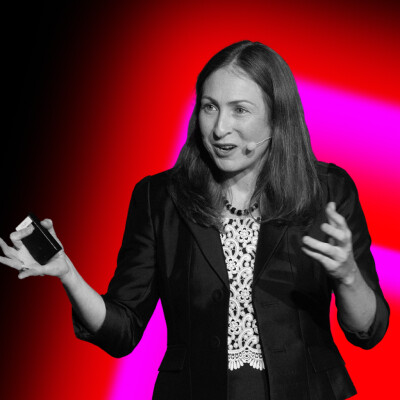
Thanks for the introduction. So, I have been working in the area of artificial intelligence for 25 years now. I'm a professor in artificial intelligence, published more than 500 papers in this area, achieved most of the world recognitions, IEEE fellow, IET fellow. a fellow of the European Academy of Sciences. I was also awarded the Pioneer Award from the IEEE for my contributions in explainable artificial intelligence. Back in 2012, I co-founded a company called Logical Glue, which basically developed the first explainable AI platform in the whole world. This was acquired in Taminos in 2019, and then I became the chief science officer and head of the artificial intelligence business unit within Taminos and spent there six years. building their kind of AI systems for explainable artificial intelligence within the different kind of banking operations, as well as their generative AI capabilities. And then I moved to SPS in July last year, and I'm currently serving as the Chief Science Officer and the Global Head of Artificial Intelligence within SPS.
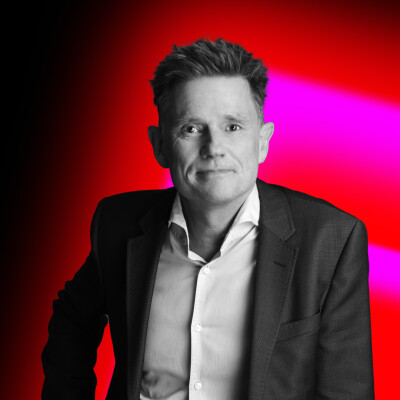
Thank you for the welcome. So I'm Andrew Steadman, Chief Product Officer. So my role. within the business is really to look at our product portfolio and think about strategically where we need to go. Hany and I have known each other for quite some time. I know we don't look old enough, but we have known each other for quite some years. And it was very important for us to really get the right people in the business to really drive forward our strategy around artificial intelligence. And so it was great to see Hany willing to come and join us and lead the charge.
I'm really happy to have you both on the set to talk about this AI transformation, and especially given your role at the intersection of AI, science, and product. So I would love to hear your insights on how AI is affecting the day-to-day work today and also in the future, and also how has it helped you access knowledge or solve problems?
Well I think it's a tool it's a new tool that we've got to to work with and it's a very powerful tool but I think that's to me the thing that people need to remember it's still a tool and so it is it enabling massive increases in productivity access to huge amounts of knowledge very quickly but again you still need somebody to use that tool and I think that's one of the things we're learning. is how best to use these new tools. And I think, you know, it's a big jump, certainly, but we've had introductions of new tools all through our lifetimes, and we have to learn how to use them. You know, the mobile phone, which, of course, now we couldn't survive without, was a new tool, and we learned what we could do with it and how to use it best. And I think we're going through that process now with artificial intelligence. It's just... happening much more quickly than perhaps makes people feel comfortable because we it feels like we don't have time to to just think about it and pause it's all moving quickly so I think that's that's probably the big impact that we're seeing but um
you know people are embracing it people want to learn how to use it and I think that's exciting what about you what do you think well I think um just follow up on what Andrew has mentioned it is a tool And it is one of the industrial revolutions we have witnessed for humanity, for all of the age of the human mankind. It's the same as the invention of the steam engine, electricity, computers and the internet. And I'm just going to give you a small example. Can you remember the time of booking a holiday before there was no computers and no internet? You had to go to... travel agencies close take a look at a lot of glossy brochures about holidays shop around you'll invest maybe a month till you make your mind and then you go sit in front of someone who's going to say yeah i'm going to book you a ticket and then you have to come in after one week to collect the ticket and then you don't know what you are going to see you don't know if this is actually going to be a good holiday or somebody's conning you into this kind of holiday or you don't know what's going to happen. Now our lives have completely changed and we don't realize life without computers, without the internet, doing different things for us. For holidaying, for buying stuff, for university education, for healthcare, for everything in our life. AI is another powerful tool which needs to be used in the same way that we have dealt with different kinds of technologies. should be used to maximize our own comfort, protect our own safety, and realize better value, and enable us to move forward in terms of the human evolution, enable us to focus on things which matter more, while allowing AI as another tool to help us with everyday activities. This is going to completely change the way of accessing knowledge. Again, if you remember the time where basically you had to go to the library, to read everything that has been happening in a given domain to understand how the knowledge has been evolving. Now you just sit down and you go to ChatGPT or Gemini to ask about something and it can summarize to you exactly what needs to do and it actually begin engaging with you in conversation. The way to acquire knowledge, the way to provide services will completely change from now on.
I'm curious, what is one task? that you would never want to go back doing without AI?
I guess for me, the one thing I found that it really makes a difference to is when I'm thinking through a topic, where often, perhaps in the past, you'd find somebody to sit down and talk it through with and prod and probe. Now I can do that without having to find somebody else, which, I mean, sounds horrible, but it's more about... from a productivity point of view. I can do it whenever I feel like it. So having somebody to almost work with and bounce ideas off and pick up something and follow that route, I think it's incredibly valuable for that. And the speed with which you then formulate your own thoughts, your own ideas, and get to an end point becomes much quicker as a result.
Yeah, true.
I'm biased. So what do you expect? So I will just reverse the question to you. Which task you would like to do without a computer or a mobile phone or with no internet?
Me?
Yeah.
Okay. I write interviews with colleagues that are later published on the blog. And each time I interview someone, I make sure I record the interviews so that I don't miss any single insight. And The magic thing is today the recording provides a transcription, which saves me a lot of time because before there was any transcription, I used to write it down, which was really time consuming, given that the transcription often are about 25 pages.
So if you just basically go one step back and you can just go at the time that there was no computer for you to record the conversation. There was no word processing for you to put stuff in. This is exactly what we are speaking about. All of the different kind of tasks which we are currently doing can find AI as an enabler for education, for knowledge acquisition, for our improvement of our work every day, for computer coding, for everything really. So I think going forward, it is like. leap that we have taken as humans and it's quite impressive that this leap actually 20 years ago there was no internet, there was no mobile phones Now you cannot imagine life without mobile phones that you navigate in a city like Paris with paper maps. Everybody uses Google Maps. And if there's no Google Maps, they really panic. AI would be exactly the same. It's going to be part of our everyday life for different activities. And this kind of new generation that we have got, young kids will grow in a world that they cannot actually imagine how life was without AI before.
True. That's very true. So if we step back, if we look beyond your own rules, what skills become more important for humans now that AI is doing more?
I guess from my perspective, I think it introduces this need to be more inquisitive, right? Whereas you have to use to really get the best out of these tools, you have to keep probing them and testing them. And you have to be inquisitive. It's not something that you just ask a question, get an answer back. That's not where the value comes from. And so I think it sort of changes the way you have to think about doing things and, you know, prodding, poking, you know, just getting your mind going more. And I think that is where you then start really getting the value back from them in a way that perhaps just asking simple questions. Yes, it's easy. It's convenient. But it's, you know, that. to me is the big change so i think as humans we we just really need to dial up on on the way in which we're inquisitive experimental and and you're not going to get it right every time but that's fine because the pace at which you can keep experimenting has accelerated and so you know whereas in the old days it would you know i'd build something it'd be months to see the answer i almost get an instantaneous answer and so you know i think that is the shift for me is that inquisitive, probing, keep going type nature.
Follow up on what Andrew has mentioned. It's a tool. So the first thing that you do when you have got a new tool is to make sure that this kind of tool is worth buying. So you need to make sure it is realizing value to you as a human being. It is secure. It is able to do whatever you have procured it to, to improve your productivity, give you return investment, realize new services. uh make sure it's secure and it is under your full control i think this is where human beings are going to focus in the future the same happened with the invention of the internet internet did not come if internet existed by itself it will not be of value what allowed it of value is exactly what we are speaking about ai you had uber you had ebay you had amazon you had a different kind of apps and technologies that were built on this kind of technology to realize the value, make our lives better, realize new services while making sure that we are completely protected. The same will happen exactly here. And this is the role of human beings. Now you have got a huge fleet of workers, the AI workers, enabling you to do all of this kind of manual work back to the travel agency stuff rather than you having to go and speak to a human being and get brochures. all of this is done can be done by AI now. It can automate all of this while you just focus on the service, the value, and what it can do for us in the human domain.
So AI and generative AI has been around already for a few years now. So why now is the right moment for SBS to accelerate the use of this tool?
So I think there's a couple of things. firstly I think the tools are far more accessible than they have been right I think as Hany said in his introduction he's been working in this world for 25 years but it was a specialist domain I think it's become democratized and that means that we all can start using these tools in a way that we could never before so I think that that is the first thing I think secondly Bye. there's been so much change over the last six months, 12 months, particularly the last six, I think, that it's been quite a disruptive thing, but from a fear point of view. There was a lot of people were worried about it. And I think what we've also seen is a shift of over the past few months, people have got a better understanding of it. And back to Hany's points about control. security, protection. I think people, there's been lots of experimenting. um and we we attended a pair of us we attended a conference in paris at the end of last year an ai conference and one of the key topics was the banks talking about what they discovered experimenting in their early days that meant they had to restart and i think we've gone through that first cycle of experimentation and this learnings have come out and that's now the point to say we understand how to approach this now's the time to move forward
So are we accelerating because our clients aren't ready to use it or because we are not ready to use it and we don't have any fears?
I think both. I think both. I think we see our clients much more comfortable with the idea of using it. We have a particular client in the UK who has been experiencing AI for 12 months. Now they're ready to put it into production because they've got. a better understanding of the impact it has on the organization, not only on the people and the customers, but also just the organizational management control. And I think for us as well as SBS, we now better understand it. We've got knowledge in the building, it's a honey here, that we didn't have before. So we have a much better understanding of what the tool enables us to do. And I think that that's the point now we're comfortable moving forward. at a much more rapid pace. It's not that we've been ignoring it. It's just that now we're at the point to say, you know, we're ready to just rush forward.
Yes, the technology had been there, but it is the same for electricity, which existed with no guardrails, with no insulations, with no safety. Yeah, it existed, but people were fearful of using it. Now people have experimented with the technology. Now there are a lot of guardrails, a lot of safety, and the quality that you are getting... for example from generative AI encoding is fantastic now that it can help us internally within SPS within the different kind of sectors legal HR marketing engineering to fast track our own pace and basically move very quickly in our different kind of everyday operations and it is also great to begin having this and offering this to our own customers to make sure that we realize the value and the outputs which customers are expecting.
So what is it going to change for SBS as a software provider?
Well, I think, I mean, as an internal tool, increasing productivity. It gives us an opportunity to increase our productivity in the speed within which we can deliver the software that we build. which ultimately impacts our clients by us being able to deliver new capabilities much more quickly. And so I think that becomes quite transformative. I think the other thing from a product capability point of view, thinking of my role, we can do things that we could never do before. And therefore, can I put capabilities in our product portfolio that enable us to deliver value to our clients? that I just, it wasn't an option 12 months ago. And I think that for me is the most exciting part, is what could we do with it? I find it interesting, you know, when you look in the media that AI is the answer to everything, right? And I always think back to the old adage, we have an expression in England that if the only tool you have is a hammer, everything looks like a nail, right? And I think if you're not careful, AI can become that hammer. It is just another tool in a... in our toolbox. And so I think that's where it drives value. It enables us to do things we couldn't do before, deliver capabilities we couldn't do before, and enhance our products to deliver more value than we could before. But it doesn't necessarily mean we're replacing everything with AI because it's not suitable for everything.
Do you have an example of the capabilities that you were mentioning before?
I guess a really simple one, right? You know, fine man an account manager in a branch let's say and i've got an appointment you're coming in to see me and i want to talk to you about your financial situation right um perhaps in the old days i'd have got a list of your accounts i'd have got perhaps multiple systems i've had would have acquired data from um i'd have had to read through that i'd have had to look at transactions of your account perhaps to understand if you got loans with other institutions all these sorts of things and in the same way that you talked about summarizing the notes or the recording the same thing could i have that on a single page so here are the three questions that i need to ask when you come in where should i focus now it doesn't necessarily mean that we're we're having any less of a customer relationship but it means that my preparation time to have that good strong value relationship with you is massively reduced and i can focus on the things that i know will matter to you i think that to me is a really good example of of where it becomes a really powerful tool to improve the service that a bank delivers.
Interesting. I'm wondering, what does it mean for SBS to be an AI-native organization? What are SBS plans to enable our products with AI? And how will this affect our competitive advantage?
AI is going to be an integral part of our everyday productivity for the different kind of sectors and employees within. the company and within the group. So I think we should be very proud that we have got a very effective steering committee at the group level, which have established a very nice AI policy, which makes sure that we have got AI as an enabler, as a secure tool that enables us to produce more while making sure that we protect the company. And also there is a very good training and onboarding. program which is in place now, which is enabling the different colleagues to begin upscaling in AI as a technology. So this is all internally to make sure that AI enables us as Andrew has mentioned to develop fast, to move quickly with different everyday productivity within SPS but also for our own customers. This means that our product will start to be AI enabled. And this is a very important point because everybody now is used to going to go ahead to chat GPT, ask a question and get an answer. But as Andrew has mentioned, if you are in a bank and you are a product manager and you would like to ask, who are your most profitable customers? You have to go through a process which starts by you raising a ticket that will go to somebody that understands what you are speaking about, a business analyst. This will go to somebody else that says, OK, fine. which kind of tables I need to get from the core banking data. Somebody else was going to write an SQL query. Somebody else is going to get the results of this, put it in a BI tool. And then basically you are going to get numbers that you need to analyze. And this process can take anything between five days up to a month in a big organization. And if you'd like to ask a follow-up question, so for this profitable customer, what can I offer them? You have to wait. This is not acceptable now. In this kind of age, this is not acceptable. So we need to make sure that our products are going to enable our own customers to manage the risk in a better way, control the kind of fraud, hyper-personalize the different kind of products, and offer new financial services which are fit for the age of AI. So if with enabling AI to be a trusted entity in our own products, we will enable our own customers to maximize the return on investment, offer new services, hyper-personalize their kind of product, control the risk, manage their kind of fraud, and enable them to go in a way that enables the banking to be suiting the age of AI, where the services, the different kind of products are going to be hyper-personalized. they offer new services that are fit for the age that we're living in.
Okay, so from your perspective, how are client expectations evolving when it comes to AI?
I think they're looking to leverage it to drive value to their business, but they're looking to us particularly to help them use it safely. And I think, to me, this is one of the key elements. We see all the time... questions about data being leaked to the large language models. We, given the role we play in the IT landscape of a bank, have a critical role to play, and that is protecting that information that lives within our systems. And we need to protect it in two ways. We need to protect it to ensure that it's used correctly, and we also need to protect it to make sure it's not being leaked outside. And so we very much look at... how we can build a fortress, if you like, around the data that lives in our systems to enable it to be used by AI, but also protecting it against AI. So if I've got agents, from externally coming in, how do I ensure that they're the correct agents, that they have the right permissions, that the data that they're asking for, I can give to them, all of those sorts of things. We see fundamentally our role is to help our clients organize around that problem. And that's a key focus of ours, because we are in the center of their IT landscapes. It's the nature of being a core provider, whether that's our lending platforms. or our core banking platforms. But it's building that protection and them trusting us to build that protection gives them confidence that we can actually support them in using AI in the institution. As Hattie said, we've learned internally by using it and understand it, and we can apply that knowledge to the way we enable our products as well. And so moving forward, they look to us to... guide them through how they can use it as i said a lot have been experimenting but we have that critical role to play because we're core of their business um and it's really they are working as a partner with them and guiding them through that journey and working with them and i think that's that's the opportunity that we have to bring our expertise into that domain but also Thank you. enabling them to start messing with AI in the way they want to.
So you talked about protection of data. How do you talk about AI with clients that are cautious versus... Sorry, I'm going to start again. So you talked about data protection. How do you talk about AI with clients who are excited versus... clients who feels cautious?
Yeah, so fundamentally, we're a regulated industry, and there is so much constraint because of that. And we've got the EU AI Act coming into play as well to add additional complexity. So I think generally, financial institutions are cautious. By the very nature of doing things wrong, it can be hugely impactful. So I think inherently that they're cautious number of clients as i said who've been experimenting with ai they've either been using it in what i think of back office to increase productivity of workers or if it's in the channel interacting with a client it's perhaps just a chat bot so or perhaps general information rather than specific and so they're sort of ready to to mature that moving forward um and I think it then is a question of giving them the comfort that it's actually safe to do. I mean, Hanny's talked a number of times, it's this issue of safety. And we have a role to play in helping them understand it can be used safely so that they're not going to put their business at risk, their customers at risk. But it's something that if they don't do, then they get left behind a bit and the industry is moving at a pace. So I think overall as an industry, we're probably behind some other industries, but I think we can use it very productively. We keep using that word productivity. We can use it in a very positive way to deliver higher quality services, potentially higher quality products, but in that safe environment, which I think is critical for financial services.
So what do you think clients will expect from SBS products? in the short and longer term?
Well, I think two key things. One thing that we have seen consistently and we hear from banks consistently is that when they start messing with AI, they realize the quality of their data or the lack of quality of their data. So a key thing that we are working on is making sure that our data can be accessed in a way that ensures its quality and lineage. And I think that is a foundational element. Secondly, it's then building that protection, right? Building the mechanisms and environment that are secure, safe way of accessing through AI the information that exists within the systems and that becomes critical. And then back to, I mean, this is where I hand the rest of the question to Hani, I think. It's the question of explainability, and it's an area you've been working on for years. So I'll let you chime in on that bit.
Yeah. So I think, as Andrew has mentioned, the first point is making sure that the customer data is in good shape.
So data will be always in silos. And I think we have got a fantastic product as a data platform, which enables us to get all of the customer information, put different kind of governance, security, cleansing abilities for it to be used by AI. What we need to realize to our customers in the short and the long term is the most important thing for any kind of tool, return on investment. We need to make sure that the AI solution is going to realize value to the customer that is... worth the investment they are going to put into this, not going to be something nice and shiny. It enables them to increase the productivity, manage risk, manage fraud, enable them to have new services. As Andrew has mentioned, enabling us to build what's called the sovereign fortress, which enables the customer to deploy AI under their kind of choice on SaaS, on the cloud, or even on-premise on their data centers if they wanted to. using the different kind of large language model and AI technologies they prefer, specifically in the current geopolitical situation that the whole world is facing now. The other thing which is quite important, as Andrew has mentioned, is explainability. Humans trust what they can understand. So trust is a very important thing for the regulated industry, because there are regulators, there are laws like the EUI Act, and there is a human aspect of trying to explain things. Security and security and security is the most important key for the banking industry. Security and privacy and making sure that things are going to be under their customer full control. And the ability for us to handle the different kind of AI use cases from generative AI to agentic AI to machine learning and prediction, which are needed for different kind of use case.
So bouncing back on that topic, security, how will AI affect how we... support our clients beyond the products?
So I think we look at AI, again, as a tool, right? And it's where it can bring value to us as a business. Anybody who's gone through core conversion, right, will understand the complexity of those types of projects and the length of them. And we see great opportunity for AI tools to accelerate that ability, right? provide a mechanism that enables a bank to move from an older platform to a new platform, which drive value to the business. Because if a project is going to take 18 months, two years, the business often stalls during that period. And if you look through the industry, you see reluctance to move because of the scale of the work. I think when you add AI tools in there, you can accelerate that. Data conversion activities become very different things when you introduce AI tools. So I think, again, it's all about what the tool enables us to do. It'll enable us to be more agile, deliver value faster. And I think it's going to reduce some of those traditional industry barriers to adopting new versions of software. I think that's a real opportunity because, you know, myself and my peers in other companies. doing similar things, right? They'll tell you there's a lot of older versions of software out there because it's difficult to come up to the new version. And so enabling that, so if I think of the AI tools can accelerate the adoption of AI-based software, it's a win all round.
Okay. Annie, does AI push SBS closer to clients or risk creating more distance?
Of course, again, I'm biased. Of course it will. It will allow us to get closer to our own customers because, as I mentioned, AI now is used in everyday life. You cannot just basically leave banking behind this kind of AI trend, not enabling different kinds of operations within banks, which cry for AI. As I have just given you an idea about the operational... inefficiency which currently involve you answering a simple question which is important for your operations for your risk for your fraud with more ai the level of fraud and anti-money laundering which includes huge amount of human operations and it includes huge amount of um uh fraud uh real hits which cause billions of dollars of fines and and issues all of this can be mitigated with EI all of the risk and the risk profile and liquidity prediction and so on, all of this can be sold to this AI, enabling the bank customers to have new services that allows them not to wait for... a week or two to get a mortgage offered or a loan approved or a credit card limit increased allowing them to get new services that are in additional that are going to completely convert the banking app to the banking app that converts everything in your life banking apps get everything about you and now if with the current technologies of ai can look into your social media profile to your different other aspects of your own life and it can begin planning things for you so the concept of a bank that we go to and we go and see a human being to do x or y or z can completely be transformed as a future so a bank will be 24 7 trusted partner that works with you every day that plans everything in your life it It enables you to plan your university fees if needed. It enables you to plan your holidays. It enables you to plan your business loans while taking care of all of this in a seamless and interactive and profitable way to you. So with this, we get closer to our customers, to their needs. And with the global reach of SBS and our commitment to sovereignty. will be able to produce new IP and new technologies, which enable us to offer what Andrew has mentioned, a sovereign fortress, which basically serves all the AI needs of the given customer. And it satisfies their kind of sovereignty needs, whether on the cloud, on premise, and according to their kind of regulations.
So what builds trust when AI is involved in banking software?
I think for us, one of the two key elements is the explainability and the train of thought of the language model. How did it get to the answer that it gave me and being able to prove that? So if I have an example where a loan is declined, how do I explain to the individual who sat in front of me why the bank said no? That is critical, right? If it becomes a black box, trust is lost. I may not like why you declined me, but at least I understand it. And that, I think, is a real element, a key element of trust. The other aspect of it is, again, building that fortress. It's being able to show your customers that they are protecting you against these agents that are out there in the world. If you read the media, agents are going to do everything for us, right? Yes, they are, but I only want them to do the things for me that I want them to do. And therefore, I expect protection against that. Again, having that fortress perimeter that is controlled, my bank can say, don't worry, because if I don't trust that agent coming in, it's not getting anywhere near your information. That gives me comfort, right? I need that. proven to me and and we saw this you know it's not new we saw this with open banking right the idea of of customers saying you can go and get the information from my bank and use it right we saw that decade ago now or whatever it was it's the same sort of model and so i think customers understand that there are times by sharing things they get more value I just need my bank to show me that they're doing it in a safe and secure way.
So how transparent do we need to be with clients about how AI is used?
So there is a legal obligation from the AI Act that we have to be very transparent and we have actually to give to the customer complete details of any kind of AI that we employ within our own processes or within the product. As Andrew has mentioned, the choice of AI that we have chosen to use as an organization is explainable artificial intelligence, which is very important. So back to my own example where basically you raise a ticket and you get the answer back. You don't know what happened behind the scenes. Even in this kind of human process, some mistakes can happen. And because you don't have full transparency and full explainability, something can happen and you don't see it. with explainable AI. you have got even a better service. You are able to understand this is exactly how information has been processed. This is how a given decision has been made. And this is how AI is going to be employed. So I think we are employing explainability at a different level from explaining it to the customer. We have got an AI policy for the whole group about this. And also for our embedded AI, which is going to be embedded in our product, it's going to be explainable, transparent. deal.
I think, to me, it's back to human nature, right? When people try to hide things, we naturally distrust them. Think of a politician answering a question in an interview. When politicians evade answering a question, our natural assumption is they're hiding something, right? We don't trust people when they're not open. And so I think, as we think about AI tools, explainability and openness about what they're actually doing is fundamental to satisfy just a normal human nature in order to build trust otherwise we won't trust much like politicians yeah good example so um a
few last questions to conclude this podcast um what excites you most about uh where ai could take sbs i think for me it's
probably that which we don't know yet because it's capable of so much I think it's it's there's going to be opportunity there that we haven't quite uncovered yet you know the next couple of years is just going to be really interesting it's going to be a roller coaster I'm sure as people doing research come up with new things I think it's it's going to be a very exciting period for our industry with lots of opportunity. There will be failures along the way. We will do things, I'm sure, that won't work in the way we thought. And we just, I think that's the other thing. We'll just have to start learning to fail fast. But overall, I think a very exciting period that will allow us to create value for our customers in ways that we just haven't been able to before.
So is there one that you enjoyed already? Which one is the one that you enjoyed most?
Well, for me, the one thing that's been relatively simple, I say relatively simple because, you know, it looks very simple from a user's perspective, is putting a generative AI interface over the data in our core so I can just ask questions and it gives me an answer. I mean, having been in this industry for a number of decades where we've gone through that whole period of data warehouses and management reporting and trying to get information out is really hard and after hanny and the guys build this generative ai interface over the data platform and i can just start asking it questions and it gives me the information it's transformative in the way i start thinking about using that data it feels like a very simple example and I say simple and easy But I know there's an awful lot of work behind it. But I think that's how it can be impactful. And that to me is probably a really nice example, just because I've lived the pain of not having it for so long.
What about you, Hani?
I think following what Andrew has mentioned and given the company progression to be an AI-native organization, I think we have got a very ambitious plan. This will start by the AI platform, which Andrew hinted to. the generative AI part of it, which we hope to enable all of our products with. And this is a great thing because we just built it once, and then we are able to pass it to all of our products to get all of this kind of benefits on top of all of our products to be Gen AI enabled. And then we'll add the additional step of getting them to be agentic enabled, to enable agents to begin serving the customers. the first part is just doing generative AI, being a reporting agent. You ask a question, you got an answer. Second part, after you have understood your data quite well and you understand the pipeline, you can begin automating things. And then the last part is machine learning, which is enabling the customer to learn from that kind of data to predict future events. By doing this, we will really enable the customers to enhance the different kind of workflows and different operations within their own banking sector to be enriched with AI for the banking-owned operations and for the customer-owned operations at a later stage.
And from your experience, what's one piece of advice about AI you'd like to share with us?
It is what we started with. It's a tool, okay? So don't assume it is a hammer that can hit every kind of nail. Before using AI, you have to go back to the normal business. value of things what what kind of business problem you are going to serve ai with how much it's going to cost you and how much revenue you are going to get out of this making sure that the business case is going to be there at the beginning to make sure that we don't fall into the trap that others did go into which is called the poc trap you do stuff it looks flashy but you cannot productize it because you lose more money than what you gained so making sure that you apply ai where there is evident value evident safety for the customer you don't want to expose customers for anything which is prohibited in by the ui act or something that is going to put that kind of data in into trouble specifically ai it's still having a lot of challenges like hallucinations like security and safety issues making sure that all of this is going to be well protected um and making sure that explainability is going to be weaved into your own ai and this is another trap that people would fall into you go ahead you deploy a machine learning model for example to predict a customer attrition or default and it gives you a result where it comes from you don't know based on what you don't know and in this case it gets the trust and the model to be in complete so it's going to be going back to the main human values what value have i got is it secure is it safe is it helping me can i understand it. If we go from there and treat it as another tool, things will go in the right direction.
What about you?
I think there's one thing for me. AI will never tell you it's wrong.
Yeah.
It will always try and answer your question, give you an answer, and will never say I'm wrong. And we've probably all got friends who are like that once you're down the path, right? But you need to understand that because if you don't understand that, and you assume it is correct 100% of the time, you will have a problem, whether it's hallucinations or model drift or whatever. So it's about using the tool and understanding the tool, which is where you can derive the value. So for me, being really clear about what it does very well and what it can't do and where its limitations are, if you don't quite understand those, I think you... could be in a world of trouble.
You're right, because every time I challenge Chad GPT, it always says, you're right. And then he adds something to his previous answer.
So as Andrew has mentioned, it's a very important point for different critics to understand. There is nothing called an AI model with 100% accuracy. This does not exist. If anybody is telling you this, they are. telling you something which is not true okay and you have to understand ai is going to make makes mistakes like human beings it does not always get things right and understanding um the different kind of um guardrails and understanding the limits of this kind of technology is very important for you when you use don't always trust it 100 because there is nothing called 100% accurate AI model.
And, you know, building on what you said before relative to the explainability, if I've got an explanation of having got to that answer, I can see that it might be wrong.
Yeah, true.
Which is really quite important. And, you know, it takes me back to when I think I was 16 doing my maths O-level as it was at the time. They would always tell you to show your working. Because if you got the answer wrong but your workings were correct, you'd get the points for it. And it's the same thing. The answer may not be the correct answer, but if you understand the workings, you can understand why the answer wasn't right. And so it's not a new principle. It's a principle that's been there for years. But you need to understand, don't believe it all the time.
Which is a very important concept, human in the loop. The human needs always to analyze what the AI is producing and making sure it's always involved in the final decision, one way or the other.
Thank you so much for being with us and sharing your insights.
Thank you very much.
Thank you.
Description
Hosted on Ausha. See ausha.co/privacy-policy for more information.
Transcription
Welcome to FinTrends, the podcast series where we explore the hot trends and news in the financial and tech sector with experts. And today I am happy to welcome Andrew Steadman, Chief Product Officer at SBS, and Hani Hagras, Chief Science Officer and Global Head of Artificial Intelligence at SBS. So it's big news. At SBS, we have made the decision to accelerate our use of AI, both in the way we build our products and in how our teams work every day. And this decision hasn't been made to keep up with the pace of change, but really to lead it. So today, we will talk about why is now the right moment for this acceleration and what it means for our colleagues and how our clients' expectations are evolving. So, Hani, Andrew, can you please, each of you, tell us a bit about yourself and what you do at SBS?
Thanks for the introduction. So, I have been working in the area of artificial intelligence for 25 years now. I'm a professor in artificial intelligence, published more than 500 papers in this area, achieved most of the world recognitions, IEEE fellow, IET fellow. a fellow of the European Academy of Sciences. I was also awarded the Pioneer Award from the IEEE for my contributions in explainable artificial intelligence. Back in 2012, I co-founded a company called Logical Glue, which basically developed the first explainable AI platform in the whole world. This was acquired in Taminos in 2019, and then I became the chief science officer and head of the artificial intelligence business unit within Taminos and spent there six years. building their kind of AI systems for explainable artificial intelligence within the different kind of banking operations, as well as their generative AI capabilities. And then I moved to SPS in July last year, and I'm currently serving as the Chief Science Officer and the Global Head of Artificial Intelligence within SPS.
Thank you for the welcome. So I'm Andrew Steadman, Chief Product Officer. So my role. within the business is really to look at our product portfolio and think about strategically where we need to go. Hany and I have known each other for quite some time. I know we don't look old enough, but we have known each other for quite some years. And it was very important for us to really get the right people in the business to really drive forward our strategy around artificial intelligence. And so it was great to see Hany willing to come and join us and lead the charge.
I'm really happy to have you both on the set to talk about this AI transformation, and especially given your role at the intersection of AI, science, and product. So I would love to hear your insights on how AI is affecting the day-to-day work today and also in the future, and also how has it helped you access knowledge or solve problems?
Well I think it's a tool it's a new tool that we've got to to work with and it's a very powerful tool but I think that's to me the thing that people need to remember it's still a tool and so it is it enabling massive increases in productivity access to huge amounts of knowledge very quickly but again you still need somebody to use that tool and I think that's one of the things we're learning. is how best to use these new tools. And I think, you know, it's a big jump, certainly, but we've had introductions of new tools all through our lifetimes, and we have to learn how to use them. You know, the mobile phone, which, of course, now we couldn't survive without, was a new tool, and we learned what we could do with it and how to use it best. And I think we're going through that process now with artificial intelligence. It's just... happening much more quickly than perhaps makes people feel comfortable because we it feels like we don't have time to to just think about it and pause it's all moving quickly so I think that's that's probably the big impact that we're seeing but um
you know people are embracing it people want to learn how to use it and I think that's exciting what about you what do you think well I think um just follow up on what Andrew has mentioned it is a tool And it is one of the industrial revolutions we have witnessed for humanity, for all of the age of the human mankind. It's the same as the invention of the steam engine, electricity, computers and the internet. And I'm just going to give you a small example. Can you remember the time of booking a holiday before there was no computers and no internet? You had to go to... travel agencies close take a look at a lot of glossy brochures about holidays shop around you'll invest maybe a month till you make your mind and then you go sit in front of someone who's going to say yeah i'm going to book you a ticket and then you have to come in after one week to collect the ticket and then you don't know what you are going to see you don't know if this is actually going to be a good holiday or somebody's conning you into this kind of holiday or you don't know what's going to happen. Now our lives have completely changed and we don't realize life without computers, without the internet, doing different things for us. For holidaying, for buying stuff, for university education, for healthcare, for everything in our life. AI is another powerful tool which needs to be used in the same way that we have dealt with different kinds of technologies. should be used to maximize our own comfort, protect our own safety, and realize better value, and enable us to move forward in terms of the human evolution, enable us to focus on things which matter more, while allowing AI as another tool to help us with everyday activities. This is going to completely change the way of accessing knowledge. Again, if you remember the time where basically you had to go to the library, to read everything that has been happening in a given domain to understand how the knowledge has been evolving. Now you just sit down and you go to ChatGPT or Gemini to ask about something and it can summarize to you exactly what needs to do and it actually begin engaging with you in conversation. The way to acquire knowledge, the way to provide services will completely change from now on.
I'm curious, what is one task? that you would never want to go back doing without AI?
I guess for me, the one thing I found that it really makes a difference to is when I'm thinking through a topic, where often, perhaps in the past, you'd find somebody to sit down and talk it through with and prod and probe. Now I can do that without having to find somebody else, which, I mean, sounds horrible, but it's more about... from a productivity point of view. I can do it whenever I feel like it. So having somebody to almost work with and bounce ideas off and pick up something and follow that route, I think it's incredibly valuable for that. And the speed with which you then formulate your own thoughts, your own ideas, and get to an end point becomes much quicker as a result.
Yeah, true.
I'm biased. So what do you expect? So I will just reverse the question to you. Which task you would like to do without a computer or a mobile phone or with no internet?
Me?
Yeah.
Okay. I write interviews with colleagues that are later published on the blog. And each time I interview someone, I make sure I record the interviews so that I don't miss any single insight. And The magic thing is today the recording provides a transcription, which saves me a lot of time because before there was any transcription, I used to write it down, which was really time consuming, given that the transcription often are about 25 pages.
So if you just basically go one step back and you can just go at the time that there was no computer for you to record the conversation. There was no word processing for you to put stuff in. This is exactly what we are speaking about. All of the different kind of tasks which we are currently doing can find AI as an enabler for education, for knowledge acquisition, for our improvement of our work every day, for computer coding, for everything really. So I think going forward, it is like. leap that we have taken as humans and it's quite impressive that this leap actually 20 years ago there was no internet, there was no mobile phones Now you cannot imagine life without mobile phones that you navigate in a city like Paris with paper maps. Everybody uses Google Maps. And if there's no Google Maps, they really panic. AI would be exactly the same. It's going to be part of our everyday life for different activities. And this kind of new generation that we have got, young kids will grow in a world that they cannot actually imagine how life was without AI before.
True. That's very true. So if we step back, if we look beyond your own rules, what skills become more important for humans now that AI is doing more?
I guess from my perspective, I think it introduces this need to be more inquisitive, right? Whereas you have to use to really get the best out of these tools, you have to keep probing them and testing them. And you have to be inquisitive. It's not something that you just ask a question, get an answer back. That's not where the value comes from. And so I think it sort of changes the way you have to think about doing things and, you know, prodding, poking, you know, just getting your mind going more. And I think that is where you then start really getting the value back from them in a way that perhaps just asking simple questions. Yes, it's easy. It's convenient. But it's, you know, that. to me is the big change so i think as humans we we just really need to dial up on on the way in which we're inquisitive experimental and and you're not going to get it right every time but that's fine because the pace at which you can keep experimenting has accelerated and so you know whereas in the old days it would you know i'd build something it'd be months to see the answer i almost get an instantaneous answer and so you know i think that is the shift for me is that inquisitive, probing, keep going type nature.
Follow up on what Andrew has mentioned. It's a tool. So the first thing that you do when you have got a new tool is to make sure that this kind of tool is worth buying. So you need to make sure it is realizing value to you as a human being. It is secure. It is able to do whatever you have procured it to, to improve your productivity, give you return investment, realize new services. uh make sure it's secure and it is under your full control i think this is where human beings are going to focus in the future the same happened with the invention of the internet internet did not come if internet existed by itself it will not be of value what allowed it of value is exactly what we are speaking about ai you had uber you had ebay you had amazon you had a different kind of apps and technologies that were built on this kind of technology to realize the value, make our lives better, realize new services while making sure that we are completely protected. The same will happen exactly here. And this is the role of human beings. Now you have got a huge fleet of workers, the AI workers, enabling you to do all of this kind of manual work back to the travel agency stuff rather than you having to go and speak to a human being and get brochures. all of this is done can be done by AI now. It can automate all of this while you just focus on the service, the value, and what it can do for us in the human domain.
So AI and generative AI has been around already for a few years now. So why now is the right moment for SBS to accelerate the use of this tool?
So I think there's a couple of things. firstly I think the tools are far more accessible than they have been right I think as Hany said in his introduction he's been working in this world for 25 years but it was a specialist domain I think it's become democratized and that means that we all can start using these tools in a way that we could never before so I think that that is the first thing I think secondly Bye. there's been so much change over the last six months, 12 months, particularly the last six, I think, that it's been quite a disruptive thing, but from a fear point of view. There was a lot of people were worried about it. And I think what we've also seen is a shift of over the past few months, people have got a better understanding of it. And back to Hany's points about control. security, protection. I think people, there's been lots of experimenting. um and we we attended a pair of us we attended a conference in paris at the end of last year an ai conference and one of the key topics was the banks talking about what they discovered experimenting in their early days that meant they had to restart and i think we've gone through that first cycle of experimentation and this learnings have come out and that's now the point to say we understand how to approach this now's the time to move forward
So are we accelerating because our clients aren't ready to use it or because we are not ready to use it and we don't have any fears?
I think both. I think both. I think we see our clients much more comfortable with the idea of using it. We have a particular client in the UK who has been experiencing AI for 12 months. Now they're ready to put it into production because they've got. a better understanding of the impact it has on the organization, not only on the people and the customers, but also just the organizational management control. And I think for us as well as SBS, we now better understand it. We've got knowledge in the building, it's a honey here, that we didn't have before. So we have a much better understanding of what the tool enables us to do. And I think that that's the point now we're comfortable moving forward. at a much more rapid pace. It's not that we've been ignoring it. It's just that now we're at the point to say, you know, we're ready to just rush forward.
Yes, the technology had been there, but it is the same for electricity, which existed with no guardrails, with no insulations, with no safety. Yeah, it existed, but people were fearful of using it. Now people have experimented with the technology. Now there are a lot of guardrails, a lot of safety, and the quality that you are getting... for example from generative AI encoding is fantastic now that it can help us internally within SPS within the different kind of sectors legal HR marketing engineering to fast track our own pace and basically move very quickly in our different kind of everyday operations and it is also great to begin having this and offering this to our own customers to make sure that we realize the value and the outputs which customers are expecting.
So what is it going to change for SBS as a software provider?
Well, I think, I mean, as an internal tool, increasing productivity. It gives us an opportunity to increase our productivity in the speed within which we can deliver the software that we build. which ultimately impacts our clients by us being able to deliver new capabilities much more quickly. And so I think that becomes quite transformative. I think the other thing from a product capability point of view, thinking of my role, we can do things that we could never do before. And therefore, can I put capabilities in our product portfolio that enable us to deliver value to our clients? that I just, it wasn't an option 12 months ago. And I think that for me is the most exciting part, is what could we do with it? I find it interesting, you know, when you look in the media that AI is the answer to everything, right? And I always think back to the old adage, we have an expression in England that if the only tool you have is a hammer, everything looks like a nail, right? And I think if you're not careful, AI can become that hammer. It is just another tool in a... in our toolbox. And so I think that's where it drives value. It enables us to do things we couldn't do before, deliver capabilities we couldn't do before, and enhance our products to deliver more value than we could before. But it doesn't necessarily mean we're replacing everything with AI because it's not suitable for everything.
Do you have an example of the capabilities that you were mentioning before?
I guess a really simple one, right? You know, fine man an account manager in a branch let's say and i've got an appointment you're coming in to see me and i want to talk to you about your financial situation right um perhaps in the old days i'd have got a list of your accounts i'd have got perhaps multiple systems i've had would have acquired data from um i'd have had to read through that i'd have had to look at transactions of your account perhaps to understand if you got loans with other institutions all these sorts of things and in the same way that you talked about summarizing the notes or the recording the same thing could i have that on a single page so here are the three questions that i need to ask when you come in where should i focus now it doesn't necessarily mean that we're we're having any less of a customer relationship but it means that my preparation time to have that good strong value relationship with you is massively reduced and i can focus on the things that i know will matter to you i think that to me is a really good example of of where it becomes a really powerful tool to improve the service that a bank delivers.
Interesting. I'm wondering, what does it mean for SBS to be an AI-native organization? What are SBS plans to enable our products with AI? And how will this affect our competitive advantage?
AI is going to be an integral part of our everyday productivity for the different kind of sectors and employees within. the company and within the group. So I think we should be very proud that we have got a very effective steering committee at the group level, which have established a very nice AI policy, which makes sure that we have got AI as an enabler, as a secure tool that enables us to produce more while making sure that we protect the company. And also there is a very good training and onboarding. program which is in place now, which is enabling the different colleagues to begin upscaling in AI as a technology. So this is all internally to make sure that AI enables us as Andrew has mentioned to develop fast, to move quickly with different everyday productivity within SPS but also for our own customers. This means that our product will start to be AI enabled. And this is a very important point because everybody now is used to going to go ahead to chat GPT, ask a question and get an answer. But as Andrew has mentioned, if you are in a bank and you are a product manager and you would like to ask, who are your most profitable customers? You have to go through a process which starts by you raising a ticket that will go to somebody that understands what you are speaking about, a business analyst. This will go to somebody else that says, OK, fine. which kind of tables I need to get from the core banking data. Somebody else was going to write an SQL query. Somebody else is going to get the results of this, put it in a BI tool. And then basically you are going to get numbers that you need to analyze. And this process can take anything between five days up to a month in a big organization. And if you'd like to ask a follow-up question, so for this profitable customer, what can I offer them? You have to wait. This is not acceptable now. In this kind of age, this is not acceptable. So we need to make sure that our products are going to enable our own customers to manage the risk in a better way, control the kind of fraud, hyper-personalize the different kind of products, and offer new financial services which are fit for the age of AI. So if with enabling AI to be a trusted entity in our own products, we will enable our own customers to maximize the return on investment, offer new services, hyper-personalize their kind of product, control the risk, manage their kind of fraud, and enable them to go in a way that enables the banking to be suiting the age of AI, where the services, the different kind of products are going to be hyper-personalized. they offer new services that are fit for the age that we're living in.
Okay, so from your perspective, how are client expectations evolving when it comes to AI?
I think they're looking to leverage it to drive value to their business, but they're looking to us particularly to help them use it safely. And I think, to me, this is one of the key elements. We see all the time... questions about data being leaked to the large language models. We, given the role we play in the IT landscape of a bank, have a critical role to play, and that is protecting that information that lives within our systems. And we need to protect it in two ways. We need to protect it to ensure that it's used correctly, and we also need to protect it to make sure it's not being leaked outside. And so we very much look at... how we can build a fortress, if you like, around the data that lives in our systems to enable it to be used by AI, but also protecting it against AI. So if I've got agents, from externally coming in, how do I ensure that they're the correct agents, that they have the right permissions, that the data that they're asking for, I can give to them, all of those sorts of things. We see fundamentally our role is to help our clients organize around that problem. And that's a key focus of ours, because we are in the center of their IT landscapes. It's the nature of being a core provider, whether that's our lending platforms. or our core banking platforms. But it's building that protection and them trusting us to build that protection gives them confidence that we can actually support them in using AI in the institution. As Hattie said, we've learned internally by using it and understand it, and we can apply that knowledge to the way we enable our products as well. And so moving forward, they look to us to... guide them through how they can use it as i said a lot have been experimenting but we have that critical role to play because we're core of their business um and it's really they are working as a partner with them and guiding them through that journey and working with them and i think that's that's the opportunity that we have to bring our expertise into that domain but also Thank you. enabling them to start messing with AI in the way they want to.
So you talked about protection of data. How do you talk about AI with clients that are cautious versus... Sorry, I'm going to start again. So you talked about data protection. How do you talk about AI with clients who are excited versus... clients who feels cautious?
Yeah, so fundamentally, we're a regulated industry, and there is so much constraint because of that. And we've got the EU AI Act coming into play as well to add additional complexity. So I think generally, financial institutions are cautious. By the very nature of doing things wrong, it can be hugely impactful. So I think inherently that they're cautious number of clients as i said who've been experimenting with ai they've either been using it in what i think of back office to increase productivity of workers or if it's in the channel interacting with a client it's perhaps just a chat bot so or perhaps general information rather than specific and so they're sort of ready to to mature that moving forward um and I think it then is a question of giving them the comfort that it's actually safe to do. I mean, Hanny's talked a number of times, it's this issue of safety. And we have a role to play in helping them understand it can be used safely so that they're not going to put their business at risk, their customers at risk. But it's something that if they don't do, then they get left behind a bit and the industry is moving at a pace. So I think overall as an industry, we're probably behind some other industries, but I think we can use it very productively. We keep using that word productivity. We can use it in a very positive way to deliver higher quality services, potentially higher quality products, but in that safe environment, which I think is critical for financial services.
So what do you think clients will expect from SBS products? in the short and longer term?
Well, I think two key things. One thing that we have seen consistently and we hear from banks consistently is that when they start messing with AI, they realize the quality of their data or the lack of quality of their data. So a key thing that we are working on is making sure that our data can be accessed in a way that ensures its quality and lineage. And I think that is a foundational element. Secondly, it's then building that protection, right? Building the mechanisms and environment that are secure, safe way of accessing through AI the information that exists within the systems and that becomes critical. And then back to, I mean, this is where I hand the rest of the question to Hani, I think. It's the question of explainability, and it's an area you've been working on for years. So I'll let you chime in on that bit.
Yeah. So I think, as Andrew has mentioned, the first point is making sure that the customer data is in good shape.
So data will be always in silos. And I think we have got a fantastic product as a data platform, which enables us to get all of the customer information, put different kind of governance, security, cleansing abilities for it to be used by AI. What we need to realize to our customers in the short and the long term is the most important thing for any kind of tool, return on investment. We need to make sure that the AI solution is going to realize value to the customer that is... worth the investment they are going to put into this, not going to be something nice and shiny. It enables them to increase the productivity, manage risk, manage fraud, enable them to have new services. As Andrew has mentioned, enabling us to build what's called the sovereign fortress, which enables the customer to deploy AI under their kind of choice on SaaS, on the cloud, or even on-premise on their data centers if they wanted to. using the different kind of large language model and AI technologies they prefer, specifically in the current geopolitical situation that the whole world is facing now. The other thing which is quite important, as Andrew has mentioned, is explainability. Humans trust what they can understand. So trust is a very important thing for the regulated industry, because there are regulators, there are laws like the EUI Act, and there is a human aspect of trying to explain things. Security and security and security is the most important key for the banking industry. Security and privacy and making sure that things are going to be under their customer full control. And the ability for us to handle the different kind of AI use cases from generative AI to agentic AI to machine learning and prediction, which are needed for different kind of use case.
So bouncing back on that topic, security, how will AI affect how we... support our clients beyond the products?
So I think we look at AI, again, as a tool, right? And it's where it can bring value to us as a business. Anybody who's gone through core conversion, right, will understand the complexity of those types of projects and the length of them. And we see great opportunity for AI tools to accelerate that ability, right? provide a mechanism that enables a bank to move from an older platform to a new platform, which drive value to the business. Because if a project is going to take 18 months, two years, the business often stalls during that period. And if you look through the industry, you see reluctance to move because of the scale of the work. I think when you add AI tools in there, you can accelerate that. Data conversion activities become very different things when you introduce AI tools. So I think, again, it's all about what the tool enables us to do. It'll enable us to be more agile, deliver value faster. And I think it's going to reduce some of those traditional industry barriers to adopting new versions of software. I think that's a real opportunity because, you know, myself and my peers in other companies. doing similar things, right? They'll tell you there's a lot of older versions of software out there because it's difficult to come up to the new version. And so enabling that, so if I think of the AI tools can accelerate the adoption of AI-based software, it's a win all round.
Okay. Annie, does AI push SBS closer to clients or risk creating more distance?
Of course, again, I'm biased. Of course it will. It will allow us to get closer to our own customers because, as I mentioned, AI now is used in everyday life. You cannot just basically leave banking behind this kind of AI trend, not enabling different kinds of operations within banks, which cry for AI. As I have just given you an idea about the operational... inefficiency which currently involve you answering a simple question which is important for your operations for your risk for your fraud with more ai the level of fraud and anti-money laundering which includes huge amount of human operations and it includes huge amount of um uh fraud uh real hits which cause billions of dollars of fines and and issues all of this can be mitigated with EI all of the risk and the risk profile and liquidity prediction and so on, all of this can be sold to this AI, enabling the bank customers to have new services that allows them not to wait for... a week or two to get a mortgage offered or a loan approved or a credit card limit increased allowing them to get new services that are in additional that are going to completely convert the banking app to the banking app that converts everything in your life banking apps get everything about you and now if with the current technologies of ai can look into your social media profile to your different other aspects of your own life and it can begin planning things for you so the concept of a bank that we go to and we go and see a human being to do x or y or z can completely be transformed as a future so a bank will be 24 7 trusted partner that works with you every day that plans everything in your life it It enables you to plan your university fees if needed. It enables you to plan your holidays. It enables you to plan your business loans while taking care of all of this in a seamless and interactive and profitable way to you. So with this, we get closer to our customers, to their needs. And with the global reach of SBS and our commitment to sovereignty. will be able to produce new IP and new technologies, which enable us to offer what Andrew has mentioned, a sovereign fortress, which basically serves all the AI needs of the given customer. And it satisfies their kind of sovereignty needs, whether on the cloud, on premise, and according to their kind of regulations.
So what builds trust when AI is involved in banking software?
I think for us, one of the two key elements is the explainability and the train of thought of the language model. How did it get to the answer that it gave me and being able to prove that? So if I have an example where a loan is declined, how do I explain to the individual who sat in front of me why the bank said no? That is critical, right? If it becomes a black box, trust is lost. I may not like why you declined me, but at least I understand it. And that, I think, is a real element, a key element of trust. The other aspect of it is, again, building that fortress. It's being able to show your customers that they are protecting you against these agents that are out there in the world. If you read the media, agents are going to do everything for us, right? Yes, they are, but I only want them to do the things for me that I want them to do. And therefore, I expect protection against that. Again, having that fortress perimeter that is controlled, my bank can say, don't worry, because if I don't trust that agent coming in, it's not getting anywhere near your information. That gives me comfort, right? I need that. proven to me and and we saw this you know it's not new we saw this with open banking right the idea of of customers saying you can go and get the information from my bank and use it right we saw that decade ago now or whatever it was it's the same sort of model and so i think customers understand that there are times by sharing things they get more value I just need my bank to show me that they're doing it in a safe and secure way.
So how transparent do we need to be with clients about how AI is used?
So there is a legal obligation from the AI Act that we have to be very transparent and we have actually to give to the customer complete details of any kind of AI that we employ within our own processes or within the product. As Andrew has mentioned, the choice of AI that we have chosen to use as an organization is explainable artificial intelligence, which is very important. So back to my own example where basically you raise a ticket and you get the answer back. You don't know what happened behind the scenes. Even in this kind of human process, some mistakes can happen. And because you don't have full transparency and full explainability, something can happen and you don't see it. with explainable AI. you have got even a better service. You are able to understand this is exactly how information has been processed. This is how a given decision has been made. And this is how AI is going to be employed. So I think we are employing explainability at a different level from explaining it to the customer. We have got an AI policy for the whole group about this. And also for our embedded AI, which is going to be embedded in our product, it's going to be explainable, transparent. deal.
I think, to me, it's back to human nature, right? When people try to hide things, we naturally distrust them. Think of a politician answering a question in an interview. When politicians evade answering a question, our natural assumption is they're hiding something, right? We don't trust people when they're not open. And so I think, as we think about AI tools, explainability and openness about what they're actually doing is fundamental to satisfy just a normal human nature in order to build trust otherwise we won't trust much like politicians yeah good example so um a
few last questions to conclude this podcast um what excites you most about uh where ai could take sbs i think for me it's
probably that which we don't know yet because it's capable of so much I think it's it's there's going to be opportunity there that we haven't quite uncovered yet you know the next couple of years is just going to be really interesting it's going to be a roller coaster I'm sure as people doing research come up with new things I think it's it's going to be a very exciting period for our industry with lots of opportunity. There will be failures along the way. We will do things, I'm sure, that won't work in the way we thought. And we just, I think that's the other thing. We'll just have to start learning to fail fast. But overall, I think a very exciting period that will allow us to create value for our customers in ways that we just haven't been able to before.
So is there one that you enjoyed already? Which one is the one that you enjoyed most?
Well, for me, the one thing that's been relatively simple, I say relatively simple because, you know, it looks very simple from a user's perspective, is putting a generative AI interface over the data in our core so I can just ask questions and it gives me an answer. I mean, having been in this industry for a number of decades where we've gone through that whole period of data warehouses and management reporting and trying to get information out is really hard and after hanny and the guys build this generative ai interface over the data platform and i can just start asking it questions and it gives me the information it's transformative in the way i start thinking about using that data it feels like a very simple example and I say simple and easy But I know there's an awful lot of work behind it. But I think that's how it can be impactful. And that to me is probably a really nice example, just because I've lived the pain of not having it for so long.
What about you, Hani?
I think following what Andrew has mentioned and given the company progression to be an AI-native organization, I think we have got a very ambitious plan. This will start by the AI platform, which Andrew hinted to. the generative AI part of it, which we hope to enable all of our products with. And this is a great thing because we just built it once, and then we are able to pass it to all of our products to get all of this kind of benefits on top of all of our products to be Gen AI enabled. And then we'll add the additional step of getting them to be agentic enabled, to enable agents to begin serving the customers. the first part is just doing generative AI, being a reporting agent. You ask a question, you got an answer. Second part, after you have understood your data quite well and you understand the pipeline, you can begin automating things. And then the last part is machine learning, which is enabling the customer to learn from that kind of data to predict future events. By doing this, we will really enable the customers to enhance the different kind of workflows and different operations within their own banking sector to be enriched with AI for the banking-owned operations and for the customer-owned operations at a later stage.
And from your experience, what's one piece of advice about AI you'd like to share with us?
It is what we started with. It's a tool, okay? So don't assume it is a hammer that can hit every kind of nail. Before using AI, you have to go back to the normal business. value of things what what kind of business problem you are going to serve ai with how much it's going to cost you and how much revenue you are going to get out of this making sure that the business case is going to be there at the beginning to make sure that we don't fall into the trap that others did go into which is called the poc trap you do stuff it looks flashy but you cannot productize it because you lose more money than what you gained so making sure that you apply ai where there is evident value evident safety for the customer you don't want to expose customers for anything which is prohibited in by the ui act or something that is going to put that kind of data in into trouble specifically ai it's still having a lot of challenges like hallucinations like security and safety issues making sure that all of this is going to be well protected um and making sure that explainability is going to be weaved into your own ai and this is another trap that people would fall into you go ahead you deploy a machine learning model for example to predict a customer attrition or default and it gives you a result where it comes from you don't know based on what you don't know and in this case it gets the trust and the model to be in complete so it's going to be going back to the main human values what value have i got is it secure is it safe is it helping me can i understand it. If we go from there and treat it as another tool, things will go in the right direction.
What about you?
I think there's one thing for me. AI will never tell you it's wrong.
Yeah.
It will always try and answer your question, give you an answer, and will never say I'm wrong. And we've probably all got friends who are like that once you're down the path, right? But you need to understand that because if you don't understand that, and you assume it is correct 100% of the time, you will have a problem, whether it's hallucinations or model drift or whatever. So it's about using the tool and understanding the tool, which is where you can derive the value. So for me, being really clear about what it does very well and what it can't do and where its limitations are, if you don't quite understand those, I think you... could be in a world of trouble.
You're right, because every time I challenge Chad GPT, it always says, you're right. And then he adds something to his previous answer.
So as Andrew has mentioned, it's a very important point for different critics to understand. There is nothing called an AI model with 100% accuracy. This does not exist. If anybody is telling you this, they are. telling you something which is not true okay and you have to understand ai is going to make makes mistakes like human beings it does not always get things right and understanding um the different kind of um guardrails and understanding the limits of this kind of technology is very important for you when you use don't always trust it 100 because there is nothing called 100% accurate AI model.
And, you know, building on what you said before relative to the explainability, if I've got an explanation of having got to that answer, I can see that it might be wrong.
Yeah, true.
Which is really quite important. And, you know, it takes me back to when I think I was 16 doing my maths O-level as it was at the time. They would always tell you to show your working. Because if you got the answer wrong but your workings were correct, you'd get the points for it. And it's the same thing. The answer may not be the correct answer, but if you understand the workings, you can understand why the answer wasn't right. And so it's not a new principle. It's a principle that's been there for years. But you need to understand, don't believe it all the time.
Which is a very important concept, human in the loop. The human needs always to analyze what the AI is producing and making sure it's always involved in the final decision, one way or the other.
Thank you so much for being with us and sharing your insights.
Thank you very much.
Thank you.
Share
Embed
You may also like
Description
Hosted on Ausha. See ausha.co/privacy-policy for more information.
Transcription
Welcome to FinTrends, the podcast series where we explore the hot trends and news in the financial and tech sector with experts. And today I am happy to welcome Andrew Steadman, Chief Product Officer at SBS, and Hani Hagras, Chief Science Officer and Global Head of Artificial Intelligence at SBS. So it's big news. At SBS, we have made the decision to accelerate our use of AI, both in the way we build our products and in how our teams work every day. And this decision hasn't been made to keep up with the pace of change, but really to lead it. So today, we will talk about why is now the right moment for this acceleration and what it means for our colleagues and how our clients' expectations are evolving. So, Hani, Andrew, can you please, each of you, tell us a bit about yourself and what you do at SBS?
Thanks for the introduction. So, I have been working in the area of artificial intelligence for 25 years now. I'm a professor in artificial intelligence, published more than 500 papers in this area, achieved most of the world recognitions, IEEE fellow, IET fellow. a fellow of the European Academy of Sciences. I was also awarded the Pioneer Award from the IEEE for my contributions in explainable artificial intelligence. Back in 2012, I co-founded a company called Logical Glue, which basically developed the first explainable AI platform in the whole world. This was acquired in Taminos in 2019, and then I became the chief science officer and head of the artificial intelligence business unit within Taminos and spent there six years. building their kind of AI systems for explainable artificial intelligence within the different kind of banking operations, as well as their generative AI capabilities. And then I moved to SPS in July last year, and I'm currently serving as the Chief Science Officer and the Global Head of Artificial Intelligence within SPS.
Thank you for the welcome. So I'm Andrew Steadman, Chief Product Officer. So my role. within the business is really to look at our product portfolio and think about strategically where we need to go. Hany and I have known each other for quite some time. I know we don't look old enough, but we have known each other for quite some years. And it was very important for us to really get the right people in the business to really drive forward our strategy around artificial intelligence. And so it was great to see Hany willing to come and join us and lead the charge.
I'm really happy to have you both on the set to talk about this AI transformation, and especially given your role at the intersection of AI, science, and product. So I would love to hear your insights on how AI is affecting the day-to-day work today and also in the future, and also how has it helped you access knowledge or solve problems?
Well I think it's a tool it's a new tool that we've got to to work with and it's a very powerful tool but I think that's to me the thing that people need to remember it's still a tool and so it is it enabling massive increases in productivity access to huge amounts of knowledge very quickly but again you still need somebody to use that tool and I think that's one of the things we're learning. is how best to use these new tools. And I think, you know, it's a big jump, certainly, but we've had introductions of new tools all through our lifetimes, and we have to learn how to use them. You know, the mobile phone, which, of course, now we couldn't survive without, was a new tool, and we learned what we could do with it and how to use it best. And I think we're going through that process now with artificial intelligence. It's just... happening much more quickly than perhaps makes people feel comfortable because we it feels like we don't have time to to just think about it and pause it's all moving quickly so I think that's that's probably the big impact that we're seeing but um
you know people are embracing it people want to learn how to use it and I think that's exciting what about you what do you think well I think um just follow up on what Andrew has mentioned it is a tool And it is one of the industrial revolutions we have witnessed for humanity, for all of the age of the human mankind. It's the same as the invention of the steam engine, electricity, computers and the internet. And I'm just going to give you a small example. Can you remember the time of booking a holiday before there was no computers and no internet? You had to go to... travel agencies close take a look at a lot of glossy brochures about holidays shop around you'll invest maybe a month till you make your mind and then you go sit in front of someone who's going to say yeah i'm going to book you a ticket and then you have to come in after one week to collect the ticket and then you don't know what you are going to see you don't know if this is actually going to be a good holiday or somebody's conning you into this kind of holiday or you don't know what's going to happen. Now our lives have completely changed and we don't realize life without computers, without the internet, doing different things for us. For holidaying, for buying stuff, for university education, for healthcare, for everything in our life. AI is another powerful tool which needs to be used in the same way that we have dealt with different kinds of technologies. should be used to maximize our own comfort, protect our own safety, and realize better value, and enable us to move forward in terms of the human evolution, enable us to focus on things which matter more, while allowing AI as another tool to help us with everyday activities. This is going to completely change the way of accessing knowledge. Again, if you remember the time where basically you had to go to the library, to read everything that has been happening in a given domain to understand how the knowledge has been evolving. Now you just sit down and you go to ChatGPT or Gemini to ask about something and it can summarize to you exactly what needs to do and it actually begin engaging with you in conversation. The way to acquire knowledge, the way to provide services will completely change from now on.
I'm curious, what is one task? that you would never want to go back doing without AI?
I guess for me, the one thing I found that it really makes a difference to is when I'm thinking through a topic, where often, perhaps in the past, you'd find somebody to sit down and talk it through with and prod and probe. Now I can do that without having to find somebody else, which, I mean, sounds horrible, but it's more about... from a productivity point of view. I can do it whenever I feel like it. So having somebody to almost work with and bounce ideas off and pick up something and follow that route, I think it's incredibly valuable for that. And the speed with which you then formulate your own thoughts, your own ideas, and get to an end point becomes much quicker as a result.
Yeah, true.
I'm biased. So what do you expect? So I will just reverse the question to you. Which task you would like to do without a computer or a mobile phone or with no internet?
Me?
Yeah.
Okay. I write interviews with colleagues that are later published on the blog. And each time I interview someone, I make sure I record the interviews so that I don't miss any single insight. And The magic thing is today the recording provides a transcription, which saves me a lot of time because before there was any transcription, I used to write it down, which was really time consuming, given that the transcription often are about 25 pages.
So if you just basically go one step back and you can just go at the time that there was no computer for you to record the conversation. There was no word processing for you to put stuff in. This is exactly what we are speaking about. All of the different kind of tasks which we are currently doing can find AI as an enabler for education, for knowledge acquisition, for our improvement of our work every day, for computer coding, for everything really. So I think going forward, it is like. leap that we have taken as humans and it's quite impressive that this leap actually 20 years ago there was no internet, there was no mobile phones Now you cannot imagine life without mobile phones that you navigate in a city like Paris with paper maps. Everybody uses Google Maps. And if there's no Google Maps, they really panic. AI would be exactly the same. It's going to be part of our everyday life for different activities. And this kind of new generation that we have got, young kids will grow in a world that they cannot actually imagine how life was without AI before.
True. That's very true. So if we step back, if we look beyond your own rules, what skills become more important for humans now that AI is doing more?
I guess from my perspective, I think it introduces this need to be more inquisitive, right? Whereas you have to use to really get the best out of these tools, you have to keep probing them and testing them. And you have to be inquisitive. It's not something that you just ask a question, get an answer back. That's not where the value comes from. And so I think it sort of changes the way you have to think about doing things and, you know, prodding, poking, you know, just getting your mind going more. And I think that is where you then start really getting the value back from them in a way that perhaps just asking simple questions. Yes, it's easy. It's convenient. But it's, you know, that. to me is the big change so i think as humans we we just really need to dial up on on the way in which we're inquisitive experimental and and you're not going to get it right every time but that's fine because the pace at which you can keep experimenting has accelerated and so you know whereas in the old days it would you know i'd build something it'd be months to see the answer i almost get an instantaneous answer and so you know i think that is the shift for me is that inquisitive, probing, keep going type nature.
Follow up on what Andrew has mentioned. It's a tool. So the first thing that you do when you have got a new tool is to make sure that this kind of tool is worth buying. So you need to make sure it is realizing value to you as a human being. It is secure. It is able to do whatever you have procured it to, to improve your productivity, give you return investment, realize new services. uh make sure it's secure and it is under your full control i think this is where human beings are going to focus in the future the same happened with the invention of the internet internet did not come if internet existed by itself it will not be of value what allowed it of value is exactly what we are speaking about ai you had uber you had ebay you had amazon you had a different kind of apps and technologies that were built on this kind of technology to realize the value, make our lives better, realize new services while making sure that we are completely protected. The same will happen exactly here. And this is the role of human beings. Now you have got a huge fleet of workers, the AI workers, enabling you to do all of this kind of manual work back to the travel agency stuff rather than you having to go and speak to a human being and get brochures. all of this is done can be done by AI now. It can automate all of this while you just focus on the service, the value, and what it can do for us in the human domain.
So AI and generative AI has been around already for a few years now. So why now is the right moment for SBS to accelerate the use of this tool?
So I think there's a couple of things. firstly I think the tools are far more accessible than they have been right I think as Hany said in his introduction he's been working in this world for 25 years but it was a specialist domain I think it's become democratized and that means that we all can start using these tools in a way that we could never before so I think that that is the first thing I think secondly Bye. there's been so much change over the last six months, 12 months, particularly the last six, I think, that it's been quite a disruptive thing, but from a fear point of view. There was a lot of people were worried about it. And I think what we've also seen is a shift of over the past few months, people have got a better understanding of it. And back to Hany's points about control. security, protection. I think people, there's been lots of experimenting. um and we we attended a pair of us we attended a conference in paris at the end of last year an ai conference and one of the key topics was the banks talking about what they discovered experimenting in their early days that meant they had to restart and i think we've gone through that first cycle of experimentation and this learnings have come out and that's now the point to say we understand how to approach this now's the time to move forward
So are we accelerating because our clients aren't ready to use it or because we are not ready to use it and we don't have any fears?
I think both. I think both. I think we see our clients much more comfortable with the idea of using it. We have a particular client in the UK who has been experiencing AI for 12 months. Now they're ready to put it into production because they've got. a better understanding of the impact it has on the organization, not only on the people and the customers, but also just the organizational management control. And I think for us as well as SBS, we now better understand it. We've got knowledge in the building, it's a honey here, that we didn't have before. So we have a much better understanding of what the tool enables us to do. And I think that that's the point now we're comfortable moving forward. at a much more rapid pace. It's not that we've been ignoring it. It's just that now we're at the point to say, you know, we're ready to just rush forward.
Yes, the technology had been there, but it is the same for electricity, which existed with no guardrails, with no insulations, with no safety. Yeah, it existed, but people were fearful of using it. Now people have experimented with the technology. Now there are a lot of guardrails, a lot of safety, and the quality that you are getting... for example from generative AI encoding is fantastic now that it can help us internally within SPS within the different kind of sectors legal HR marketing engineering to fast track our own pace and basically move very quickly in our different kind of everyday operations and it is also great to begin having this and offering this to our own customers to make sure that we realize the value and the outputs which customers are expecting.
So what is it going to change for SBS as a software provider?
Well, I think, I mean, as an internal tool, increasing productivity. It gives us an opportunity to increase our productivity in the speed within which we can deliver the software that we build. which ultimately impacts our clients by us being able to deliver new capabilities much more quickly. And so I think that becomes quite transformative. I think the other thing from a product capability point of view, thinking of my role, we can do things that we could never do before. And therefore, can I put capabilities in our product portfolio that enable us to deliver value to our clients? that I just, it wasn't an option 12 months ago. And I think that for me is the most exciting part, is what could we do with it? I find it interesting, you know, when you look in the media that AI is the answer to everything, right? And I always think back to the old adage, we have an expression in England that if the only tool you have is a hammer, everything looks like a nail, right? And I think if you're not careful, AI can become that hammer. It is just another tool in a... in our toolbox. And so I think that's where it drives value. It enables us to do things we couldn't do before, deliver capabilities we couldn't do before, and enhance our products to deliver more value than we could before. But it doesn't necessarily mean we're replacing everything with AI because it's not suitable for everything.
Do you have an example of the capabilities that you were mentioning before?
I guess a really simple one, right? You know, fine man an account manager in a branch let's say and i've got an appointment you're coming in to see me and i want to talk to you about your financial situation right um perhaps in the old days i'd have got a list of your accounts i'd have got perhaps multiple systems i've had would have acquired data from um i'd have had to read through that i'd have had to look at transactions of your account perhaps to understand if you got loans with other institutions all these sorts of things and in the same way that you talked about summarizing the notes or the recording the same thing could i have that on a single page so here are the three questions that i need to ask when you come in where should i focus now it doesn't necessarily mean that we're we're having any less of a customer relationship but it means that my preparation time to have that good strong value relationship with you is massively reduced and i can focus on the things that i know will matter to you i think that to me is a really good example of of where it becomes a really powerful tool to improve the service that a bank delivers.
Interesting. I'm wondering, what does it mean for SBS to be an AI-native organization? What are SBS plans to enable our products with AI? And how will this affect our competitive advantage?
AI is going to be an integral part of our everyday productivity for the different kind of sectors and employees within. the company and within the group. So I think we should be very proud that we have got a very effective steering committee at the group level, which have established a very nice AI policy, which makes sure that we have got AI as an enabler, as a secure tool that enables us to produce more while making sure that we protect the company. And also there is a very good training and onboarding. program which is in place now, which is enabling the different colleagues to begin upscaling in AI as a technology. So this is all internally to make sure that AI enables us as Andrew has mentioned to develop fast, to move quickly with different everyday productivity within SPS but also for our own customers. This means that our product will start to be AI enabled. And this is a very important point because everybody now is used to going to go ahead to chat GPT, ask a question and get an answer. But as Andrew has mentioned, if you are in a bank and you are a product manager and you would like to ask, who are your most profitable customers? You have to go through a process which starts by you raising a ticket that will go to somebody that understands what you are speaking about, a business analyst. This will go to somebody else that says, OK, fine. which kind of tables I need to get from the core banking data. Somebody else was going to write an SQL query. Somebody else is going to get the results of this, put it in a BI tool. And then basically you are going to get numbers that you need to analyze. And this process can take anything between five days up to a month in a big organization. And if you'd like to ask a follow-up question, so for this profitable customer, what can I offer them? You have to wait. This is not acceptable now. In this kind of age, this is not acceptable. So we need to make sure that our products are going to enable our own customers to manage the risk in a better way, control the kind of fraud, hyper-personalize the different kind of products, and offer new financial services which are fit for the age of AI. So if with enabling AI to be a trusted entity in our own products, we will enable our own customers to maximize the return on investment, offer new services, hyper-personalize their kind of product, control the risk, manage their kind of fraud, and enable them to go in a way that enables the banking to be suiting the age of AI, where the services, the different kind of products are going to be hyper-personalized. they offer new services that are fit for the age that we're living in.
Okay, so from your perspective, how are client expectations evolving when it comes to AI?
I think they're looking to leverage it to drive value to their business, but they're looking to us particularly to help them use it safely. And I think, to me, this is one of the key elements. We see all the time... questions about data being leaked to the large language models. We, given the role we play in the IT landscape of a bank, have a critical role to play, and that is protecting that information that lives within our systems. And we need to protect it in two ways. We need to protect it to ensure that it's used correctly, and we also need to protect it to make sure it's not being leaked outside. And so we very much look at... how we can build a fortress, if you like, around the data that lives in our systems to enable it to be used by AI, but also protecting it against AI. So if I've got agents, from externally coming in, how do I ensure that they're the correct agents, that they have the right permissions, that the data that they're asking for, I can give to them, all of those sorts of things. We see fundamentally our role is to help our clients organize around that problem. And that's a key focus of ours, because we are in the center of their IT landscapes. It's the nature of being a core provider, whether that's our lending platforms. or our core banking platforms. But it's building that protection and them trusting us to build that protection gives them confidence that we can actually support them in using AI in the institution. As Hattie said, we've learned internally by using it and understand it, and we can apply that knowledge to the way we enable our products as well. And so moving forward, they look to us to... guide them through how they can use it as i said a lot have been experimenting but we have that critical role to play because we're core of their business um and it's really they are working as a partner with them and guiding them through that journey and working with them and i think that's that's the opportunity that we have to bring our expertise into that domain but also Thank you. enabling them to start messing with AI in the way they want to.
So you talked about protection of data. How do you talk about AI with clients that are cautious versus... Sorry, I'm going to start again. So you talked about data protection. How do you talk about AI with clients who are excited versus... clients who feels cautious?
Yeah, so fundamentally, we're a regulated industry, and there is so much constraint because of that. And we've got the EU AI Act coming into play as well to add additional complexity. So I think generally, financial institutions are cautious. By the very nature of doing things wrong, it can be hugely impactful. So I think inherently that they're cautious number of clients as i said who've been experimenting with ai they've either been using it in what i think of back office to increase productivity of workers or if it's in the channel interacting with a client it's perhaps just a chat bot so or perhaps general information rather than specific and so they're sort of ready to to mature that moving forward um and I think it then is a question of giving them the comfort that it's actually safe to do. I mean, Hanny's talked a number of times, it's this issue of safety. And we have a role to play in helping them understand it can be used safely so that they're not going to put their business at risk, their customers at risk. But it's something that if they don't do, then they get left behind a bit and the industry is moving at a pace. So I think overall as an industry, we're probably behind some other industries, but I think we can use it very productively. We keep using that word productivity. We can use it in a very positive way to deliver higher quality services, potentially higher quality products, but in that safe environment, which I think is critical for financial services.
So what do you think clients will expect from SBS products? in the short and longer term?
Well, I think two key things. One thing that we have seen consistently and we hear from banks consistently is that when they start messing with AI, they realize the quality of their data or the lack of quality of their data. So a key thing that we are working on is making sure that our data can be accessed in a way that ensures its quality and lineage. And I think that is a foundational element. Secondly, it's then building that protection, right? Building the mechanisms and environment that are secure, safe way of accessing through AI the information that exists within the systems and that becomes critical. And then back to, I mean, this is where I hand the rest of the question to Hani, I think. It's the question of explainability, and it's an area you've been working on for years. So I'll let you chime in on that bit.
Yeah. So I think, as Andrew has mentioned, the first point is making sure that the customer data is in good shape.
So data will be always in silos. And I think we have got a fantastic product as a data platform, which enables us to get all of the customer information, put different kind of governance, security, cleansing abilities for it to be used by AI. What we need to realize to our customers in the short and the long term is the most important thing for any kind of tool, return on investment. We need to make sure that the AI solution is going to realize value to the customer that is... worth the investment they are going to put into this, not going to be something nice and shiny. It enables them to increase the productivity, manage risk, manage fraud, enable them to have new services. As Andrew has mentioned, enabling us to build what's called the sovereign fortress, which enables the customer to deploy AI under their kind of choice on SaaS, on the cloud, or even on-premise on their data centers if they wanted to. using the different kind of large language model and AI technologies they prefer, specifically in the current geopolitical situation that the whole world is facing now. The other thing which is quite important, as Andrew has mentioned, is explainability. Humans trust what they can understand. So trust is a very important thing for the regulated industry, because there are regulators, there are laws like the EUI Act, and there is a human aspect of trying to explain things. Security and security and security is the most important key for the banking industry. Security and privacy and making sure that things are going to be under their customer full control. And the ability for us to handle the different kind of AI use cases from generative AI to agentic AI to machine learning and prediction, which are needed for different kind of use case.
So bouncing back on that topic, security, how will AI affect how we... support our clients beyond the products?
So I think we look at AI, again, as a tool, right? And it's where it can bring value to us as a business. Anybody who's gone through core conversion, right, will understand the complexity of those types of projects and the length of them. And we see great opportunity for AI tools to accelerate that ability, right? provide a mechanism that enables a bank to move from an older platform to a new platform, which drive value to the business. Because if a project is going to take 18 months, two years, the business often stalls during that period. And if you look through the industry, you see reluctance to move because of the scale of the work. I think when you add AI tools in there, you can accelerate that. Data conversion activities become very different things when you introduce AI tools. So I think, again, it's all about what the tool enables us to do. It'll enable us to be more agile, deliver value faster. And I think it's going to reduce some of those traditional industry barriers to adopting new versions of software. I think that's a real opportunity because, you know, myself and my peers in other companies. doing similar things, right? They'll tell you there's a lot of older versions of software out there because it's difficult to come up to the new version. And so enabling that, so if I think of the AI tools can accelerate the adoption of AI-based software, it's a win all round.
Okay. Annie, does AI push SBS closer to clients or risk creating more distance?
Of course, again, I'm biased. Of course it will. It will allow us to get closer to our own customers because, as I mentioned, AI now is used in everyday life. You cannot just basically leave banking behind this kind of AI trend, not enabling different kinds of operations within banks, which cry for AI. As I have just given you an idea about the operational... inefficiency which currently involve you answering a simple question which is important for your operations for your risk for your fraud with more ai the level of fraud and anti-money laundering which includes huge amount of human operations and it includes huge amount of um uh fraud uh real hits which cause billions of dollars of fines and and issues all of this can be mitigated with EI all of the risk and the risk profile and liquidity prediction and so on, all of this can be sold to this AI, enabling the bank customers to have new services that allows them not to wait for... a week or two to get a mortgage offered or a loan approved or a credit card limit increased allowing them to get new services that are in additional that are going to completely convert the banking app to the banking app that converts everything in your life banking apps get everything about you and now if with the current technologies of ai can look into your social media profile to your different other aspects of your own life and it can begin planning things for you so the concept of a bank that we go to and we go and see a human being to do x or y or z can completely be transformed as a future so a bank will be 24 7 trusted partner that works with you every day that plans everything in your life it It enables you to plan your university fees if needed. It enables you to plan your holidays. It enables you to plan your business loans while taking care of all of this in a seamless and interactive and profitable way to you. So with this, we get closer to our customers, to their needs. And with the global reach of SBS and our commitment to sovereignty. will be able to produce new IP and new technologies, which enable us to offer what Andrew has mentioned, a sovereign fortress, which basically serves all the AI needs of the given customer. And it satisfies their kind of sovereignty needs, whether on the cloud, on premise, and according to their kind of regulations.
So what builds trust when AI is involved in banking software?
I think for us, one of the two key elements is the explainability and the train of thought of the language model. How did it get to the answer that it gave me and being able to prove that? So if I have an example where a loan is declined, how do I explain to the individual who sat in front of me why the bank said no? That is critical, right? If it becomes a black box, trust is lost. I may not like why you declined me, but at least I understand it. And that, I think, is a real element, a key element of trust. The other aspect of it is, again, building that fortress. It's being able to show your customers that they are protecting you against these agents that are out there in the world. If you read the media, agents are going to do everything for us, right? Yes, they are, but I only want them to do the things for me that I want them to do. And therefore, I expect protection against that. Again, having that fortress perimeter that is controlled, my bank can say, don't worry, because if I don't trust that agent coming in, it's not getting anywhere near your information. That gives me comfort, right? I need that. proven to me and and we saw this you know it's not new we saw this with open banking right the idea of of customers saying you can go and get the information from my bank and use it right we saw that decade ago now or whatever it was it's the same sort of model and so i think customers understand that there are times by sharing things they get more value I just need my bank to show me that they're doing it in a safe and secure way.
So how transparent do we need to be with clients about how AI is used?
So there is a legal obligation from the AI Act that we have to be very transparent and we have actually to give to the customer complete details of any kind of AI that we employ within our own processes or within the product. As Andrew has mentioned, the choice of AI that we have chosen to use as an organization is explainable artificial intelligence, which is very important. So back to my own example where basically you raise a ticket and you get the answer back. You don't know what happened behind the scenes. Even in this kind of human process, some mistakes can happen. And because you don't have full transparency and full explainability, something can happen and you don't see it. with explainable AI. you have got even a better service. You are able to understand this is exactly how information has been processed. This is how a given decision has been made. And this is how AI is going to be employed. So I think we are employing explainability at a different level from explaining it to the customer. We have got an AI policy for the whole group about this. And also for our embedded AI, which is going to be embedded in our product, it's going to be explainable, transparent. deal.
I think, to me, it's back to human nature, right? When people try to hide things, we naturally distrust them. Think of a politician answering a question in an interview. When politicians evade answering a question, our natural assumption is they're hiding something, right? We don't trust people when they're not open. And so I think, as we think about AI tools, explainability and openness about what they're actually doing is fundamental to satisfy just a normal human nature in order to build trust otherwise we won't trust much like politicians yeah good example so um a
few last questions to conclude this podcast um what excites you most about uh where ai could take sbs i think for me it's
probably that which we don't know yet because it's capable of so much I think it's it's there's going to be opportunity there that we haven't quite uncovered yet you know the next couple of years is just going to be really interesting it's going to be a roller coaster I'm sure as people doing research come up with new things I think it's it's going to be a very exciting period for our industry with lots of opportunity. There will be failures along the way. We will do things, I'm sure, that won't work in the way we thought. And we just, I think that's the other thing. We'll just have to start learning to fail fast. But overall, I think a very exciting period that will allow us to create value for our customers in ways that we just haven't been able to before.
So is there one that you enjoyed already? Which one is the one that you enjoyed most?
Well, for me, the one thing that's been relatively simple, I say relatively simple because, you know, it looks very simple from a user's perspective, is putting a generative AI interface over the data in our core so I can just ask questions and it gives me an answer. I mean, having been in this industry for a number of decades where we've gone through that whole period of data warehouses and management reporting and trying to get information out is really hard and after hanny and the guys build this generative ai interface over the data platform and i can just start asking it questions and it gives me the information it's transformative in the way i start thinking about using that data it feels like a very simple example and I say simple and easy But I know there's an awful lot of work behind it. But I think that's how it can be impactful. And that to me is probably a really nice example, just because I've lived the pain of not having it for so long.
What about you, Hani?
I think following what Andrew has mentioned and given the company progression to be an AI-native organization, I think we have got a very ambitious plan. This will start by the AI platform, which Andrew hinted to. the generative AI part of it, which we hope to enable all of our products with. And this is a great thing because we just built it once, and then we are able to pass it to all of our products to get all of this kind of benefits on top of all of our products to be Gen AI enabled. And then we'll add the additional step of getting them to be agentic enabled, to enable agents to begin serving the customers. the first part is just doing generative AI, being a reporting agent. You ask a question, you got an answer. Second part, after you have understood your data quite well and you understand the pipeline, you can begin automating things. And then the last part is machine learning, which is enabling the customer to learn from that kind of data to predict future events. By doing this, we will really enable the customers to enhance the different kind of workflows and different operations within their own banking sector to be enriched with AI for the banking-owned operations and for the customer-owned operations at a later stage.
And from your experience, what's one piece of advice about AI you'd like to share with us?
It is what we started with. It's a tool, okay? So don't assume it is a hammer that can hit every kind of nail. Before using AI, you have to go back to the normal business. value of things what what kind of business problem you are going to serve ai with how much it's going to cost you and how much revenue you are going to get out of this making sure that the business case is going to be there at the beginning to make sure that we don't fall into the trap that others did go into which is called the poc trap you do stuff it looks flashy but you cannot productize it because you lose more money than what you gained so making sure that you apply ai where there is evident value evident safety for the customer you don't want to expose customers for anything which is prohibited in by the ui act or something that is going to put that kind of data in into trouble specifically ai it's still having a lot of challenges like hallucinations like security and safety issues making sure that all of this is going to be well protected um and making sure that explainability is going to be weaved into your own ai and this is another trap that people would fall into you go ahead you deploy a machine learning model for example to predict a customer attrition or default and it gives you a result where it comes from you don't know based on what you don't know and in this case it gets the trust and the model to be in complete so it's going to be going back to the main human values what value have i got is it secure is it safe is it helping me can i understand it. If we go from there and treat it as another tool, things will go in the right direction.
What about you?
I think there's one thing for me. AI will never tell you it's wrong.
Yeah.
It will always try and answer your question, give you an answer, and will never say I'm wrong. And we've probably all got friends who are like that once you're down the path, right? But you need to understand that because if you don't understand that, and you assume it is correct 100% of the time, you will have a problem, whether it's hallucinations or model drift or whatever. So it's about using the tool and understanding the tool, which is where you can derive the value. So for me, being really clear about what it does very well and what it can't do and where its limitations are, if you don't quite understand those, I think you... could be in a world of trouble.
You're right, because every time I challenge Chad GPT, it always says, you're right. And then he adds something to his previous answer.
So as Andrew has mentioned, it's a very important point for different critics to understand. There is nothing called an AI model with 100% accuracy. This does not exist. If anybody is telling you this, they are. telling you something which is not true okay and you have to understand ai is going to make makes mistakes like human beings it does not always get things right and understanding um the different kind of um guardrails and understanding the limits of this kind of technology is very important for you when you use don't always trust it 100 because there is nothing called 100% accurate AI model.
And, you know, building on what you said before relative to the explainability, if I've got an explanation of having got to that answer, I can see that it might be wrong.
Yeah, true.
Which is really quite important. And, you know, it takes me back to when I think I was 16 doing my maths O-level as it was at the time. They would always tell you to show your working. Because if you got the answer wrong but your workings were correct, you'd get the points for it. And it's the same thing. The answer may not be the correct answer, but if you understand the workings, you can understand why the answer wasn't right. And so it's not a new principle. It's a principle that's been there for years. But you need to understand, don't believe it all the time.
Which is a very important concept, human in the loop. The human needs always to analyze what the AI is producing and making sure it's always involved in the final decision, one way or the other.
Thank you so much for being with us and sharing your insights.
Thank you very much.
Thank you.
Description
Hosted on Ausha. See ausha.co/privacy-policy for more information.
Transcription
Welcome to FinTrends, the podcast series where we explore the hot trends and news in the financial and tech sector with experts. And today I am happy to welcome Andrew Steadman, Chief Product Officer at SBS, and Hani Hagras, Chief Science Officer and Global Head of Artificial Intelligence at SBS. So it's big news. At SBS, we have made the decision to accelerate our use of AI, both in the way we build our products and in how our teams work every day. And this decision hasn't been made to keep up with the pace of change, but really to lead it. So today, we will talk about why is now the right moment for this acceleration and what it means for our colleagues and how our clients' expectations are evolving. So, Hani, Andrew, can you please, each of you, tell us a bit about yourself and what you do at SBS?
Thanks for the introduction. So, I have been working in the area of artificial intelligence for 25 years now. I'm a professor in artificial intelligence, published more than 500 papers in this area, achieved most of the world recognitions, IEEE fellow, IET fellow. a fellow of the European Academy of Sciences. I was also awarded the Pioneer Award from the IEEE for my contributions in explainable artificial intelligence. Back in 2012, I co-founded a company called Logical Glue, which basically developed the first explainable AI platform in the whole world. This was acquired in Taminos in 2019, and then I became the chief science officer and head of the artificial intelligence business unit within Taminos and spent there six years. building their kind of AI systems for explainable artificial intelligence within the different kind of banking operations, as well as their generative AI capabilities. And then I moved to SPS in July last year, and I'm currently serving as the Chief Science Officer and the Global Head of Artificial Intelligence within SPS.
Thank you for the welcome. So I'm Andrew Steadman, Chief Product Officer. So my role. within the business is really to look at our product portfolio and think about strategically where we need to go. Hany and I have known each other for quite some time. I know we don't look old enough, but we have known each other for quite some years. And it was very important for us to really get the right people in the business to really drive forward our strategy around artificial intelligence. And so it was great to see Hany willing to come and join us and lead the charge.
I'm really happy to have you both on the set to talk about this AI transformation, and especially given your role at the intersection of AI, science, and product. So I would love to hear your insights on how AI is affecting the day-to-day work today and also in the future, and also how has it helped you access knowledge or solve problems?
Well I think it's a tool it's a new tool that we've got to to work with and it's a very powerful tool but I think that's to me the thing that people need to remember it's still a tool and so it is it enabling massive increases in productivity access to huge amounts of knowledge very quickly but again you still need somebody to use that tool and I think that's one of the things we're learning. is how best to use these new tools. And I think, you know, it's a big jump, certainly, but we've had introductions of new tools all through our lifetimes, and we have to learn how to use them. You know, the mobile phone, which, of course, now we couldn't survive without, was a new tool, and we learned what we could do with it and how to use it best. And I think we're going through that process now with artificial intelligence. It's just... happening much more quickly than perhaps makes people feel comfortable because we it feels like we don't have time to to just think about it and pause it's all moving quickly so I think that's that's probably the big impact that we're seeing but um
you know people are embracing it people want to learn how to use it and I think that's exciting what about you what do you think well I think um just follow up on what Andrew has mentioned it is a tool And it is one of the industrial revolutions we have witnessed for humanity, for all of the age of the human mankind. It's the same as the invention of the steam engine, electricity, computers and the internet. And I'm just going to give you a small example. Can you remember the time of booking a holiday before there was no computers and no internet? You had to go to... travel agencies close take a look at a lot of glossy brochures about holidays shop around you'll invest maybe a month till you make your mind and then you go sit in front of someone who's going to say yeah i'm going to book you a ticket and then you have to come in after one week to collect the ticket and then you don't know what you are going to see you don't know if this is actually going to be a good holiday or somebody's conning you into this kind of holiday or you don't know what's going to happen. Now our lives have completely changed and we don't realize life without computers, without the internet, doing different things for us. For holidaying, for buying stuff, for university education, for healthcare, for everything in our life. AI is another powerful tool which needs to be used in the same way that we have dealt with different kinds of technologies. should be used to maximize our own comfort, protect our own safety, and realize better value, and enable us to move forward in terms of the human evolution, enable us to focus on things which matter more, while allowing AI as another tool to help us with everyday activities. This is going to completely change the way of accessing knowledge. Again, if you remember the time where basically you had to go to the library, to read everything that has been happening in a given domain to understand how the knowledge has been evolving. Now you just sit down and you go to ChatGPT or Gemini to ask about something and it can summarize to you exactly what needs to do and it actually begin engaging with you in conversation. The way to acquire knowledge, the way to provide services will completely change from now on.
I'm curious, what is one task? that you would never want to go back doing without AI?
I guess for me, the one thing I found that it really makes a difference to is when I'm thinking through a topic, where often, perhaps in the past, you'd find somebody to sit down and talk it through with and prod and probe. Now I can do that without having to find somebody else, which, I mean, sounds horrible, but it's more about... from a productivity point of view. I can do it whenever I feel like it. So having somebody to almost work with and bounce ideas off and pick up something and follow that route, I think it's incredibly valuable for that. And the speed with which you then formulate your own thoughts, your own ideas, and get to an end point becomes much quicker as a result.
Yeah, true.
I'm biased. So what do you expect? So I will just reverse the question to you. Which task you would like to do without a computer or a mobile phone or with no internet?
Me?
Yeah.
Okay. I write interviews with colleagues that are later published on the blog. And each time I interview someone, I make sure I record the interviews so that I don't miss any single insight. And The magic thing is today the recording provides a transcription, which saves me a lot of time because before there was any transcription, I used to write it down, which was really time consuming, given that the transcription often are about 25 pages.
So if you just basically go one step back and you can just go at the time that there was no computer for you to record the conversation. There was no word processing for you to put stuff in. This is exactly what we are speaking about. All of the different kind of tasks which we are currently doing can find AI as an enabler for education, for knowledge acquisition, for our improvement of our work every day, for computer coding, for everything really. So I think going forward, it is like. leap that we have taken as humans and it's quite impressive that this leap actually 20 years ago there was no internet, there was no mobile phones Now you cannot imagine life without mobile phones that you navigate in a city like Paris with paper maps. Everybody uses Google Maps. And if there's no Google Maps, they really panic. AI would be exactly the same. It's going to be part of our everyday life for different activities. And this kind of new generation that we have got, young kids will grow in a world that they cannot actually imagine how life was without AI before.
True. That's very true. So if we step back, if we look beyond your own rules, what skills become more important for humans now that AI is doing more?
I guess from my perspective, I think it introduces this need to be more inquisitive, right? Whereas you have to use to really get the best out of these tools, you have to keep probing them and testing them. And you have to be inquisitive. It's not something that you just ask a question, get an answer back. That's not where the value comes from. And so I think it sort of changes the way you have to think about doing things and, you know, prodding, poking, you know, just getting your mind going more. And I think that is where you then start really getting the value back from them in a way that perhaps just asking simple questions. Yes, it's easy. It's convenient. But it's, you know, that. to me is the big change so i think as humans we we just really need to dial up on on the way in which we're inquisitive experimental and and you're not going to get it right every time but that's fine because the pace at which you can keep experimenting has accelerated and so you know whereas in the old days it would you know i'd build something it'd be months to see the answer i almost get an instantaneous answer and so you know i think that is the shift for me is that inquisitive, probing, keep going type nature.
Follow up on what Andrew has mentioned. It's a tool. So the first thing that you do when you have got a new tool is to make sure that this kind of tool is worth buying. So you need to make sure it is realizing value to you as a human being. It is secure. It is able to do whatever you have procured it to, to improve your productivity, give you return investment, realize new services. uh make sure it's secure and it is under your full control i think this is where human beings are going to focus in the future the same happened with the invention of the internet internet did not come if internet existed by itself it will not be of value what allowed it of value is exactly what we are speaking about ai you had uber you had ebay you had amazon you had a different kind of apps and technologies that were built on this kind of technology to realize the value, make our lives better, realize new services while making sure that we are completely protected. The same will happen exactly here. And this is the role of human beings. Now you have got a huge fleet of workers, the AI workers, enabling you to do all of this kind of manual work back to the travel agency stuff rather than you having to go and speak to a human being and get brochures. all of this is done can be done by AI now. It can automate all of this while you just focus on the service, the value, and what it can do for us in the human domain.
So AI and generative AI has been around already for a few years now. So why now is the right moment for SBS to accelerate the use of this tool?
So I think there's a couple of things. firstly I think the tools are far more accessible than they have been right I think as Hany said in his introduction he's been working in this world for 25 years but it was a specialist domain I think it's become democratized and that means that we all can start using these tools in a way that we could never before so I think that that is the first thing I think secondly Bye. there's been so much change over the last six months, 12 months, particularly the last six, I think, that it's been quite a disruptive thing, but from a fear point of view. There was a lot of people were worried about it. And I think what we've also seen is a shift of over the past few months, people have got a better understanding of it. And back to Hany's points about control. security, protection. I think people, there's been lots of experimenting. um and we we attended a pair of us we attended a conference in paris at the end of last year an ai conference and one of the key topics was the banks talking about what they discovered experimenting in their early days that meant they had to restart and i think we've gone through that first cycle of experimentation and this learnings have come out and that's now the point to say we understand how to approach this now's the time to move forward
So are we accelerating because our clients aren't ready to use it or because we are not ready to use it and we don't have any fears?
I think both. I think both. I think we see our clients much more comfortable with the idea of using it. We have a particular client in the UK who has been experiencing AI for 12 months. Now they're ready to put it into production because they've got. a better understanding of the impact it has on the organization, not only on the people and the customers, but also just the organizational management control. And I think for us as well as SBS, we now better understand it. We've got knowledge in the building, it's a honey here, that we didn't have before. So we have a much better understanding of what the tool enables us to do. And I think that that's the point now we're comfortable moving forward. at a much more rapid pace. It's not that we've been ignoring it. It's just that now we're at the point to say, you know, we're ready to just rush forward.
Yes, the technology had been there, but it is the same for electricity, which existed with no guardrails, with no insulations, with no safety. Yeah, it existed, but people were fearful of using it. Now people have experimented with the technology. Now there are a lot of guardrails, a lot of safety, and the quality that you are getting... for example from generative AI encoding is fantastic now that it can help us internally within SPS within the different kind of sectors legal HR marketing engineering to fast track our own pace and basically move very quickly in our different kind of everyday operations and it is also great to begin having this and offering this to our own customers to make sure that we realize the value and the outputs which customers are expecting.
So what is it going to change for SBS as a software provider?
Well, I think, I mean, as an internal tool, increasing productivity. It gives us an opportunity to increase our productivity in the speed within which we can deliver the software that we build. which ultimately impacts our clients by us being able to deliver new capabilities much more quickly. And so I think that becomes quite transformative. I think the other thing from a product capability point of view, thinking of my role, we can do things that we could never do before. And therefore, can I put capabilities in our product portfolio that enable us to deliver value to our clients? that I just, it wasn't an option 12 months ago. And I think that for me is the most exciting part, is what could we do with it? I find it interesting, you know, when you look in the media that AI is the answer to everything, right? And I always think back to the old adage, we have an expression in England that if the only tool you have is a hammer, everything looks like a nail, right? And I think if you're not careful, AI can become that hammer. It is just another tool in a... in our toolbox. And so I think that's where it drives value. It enables us to do things we couldn't do before, deliver capabilities we couldn't do before, and enhance our products to deliver more value than we could before. But it doesn't necessarily mean we're replacing everything with AI because it's not suitable for everything.
Do you have an example of the capabilities that you were mentioning before?
I guess a really simple one, right? You know, fine man an account manager in a branch let's say and i've got an appointment you're coming in to see me and i want to talk to you about your financial situation right um perhaps in the old days i'd have got a list of your accounts i'd have got perhaps multiple systems i've had would have acquired data from um i'd have had to read through that i'd have had to look at transactions of your account perhaps to understand if you got loans with other institutions all these sorts of things and in the same way that you talked about summarizing the notes or the recording the same thing could i have that on a single page so here are the three questions that i need to ask when you come in where should i focus now it doesn't necessarily mean that we're we're having any less of a customer relationship but it means that my preparation time to have that good strong value relationship with you is massively reduced and i can focus on the things that i know will matter to you i think that to me is a really good example of of where it becomes a really powerful tool to improve the service that a bank delivers.
Interesting. I'm wondering, what does it mean for SBS to be an AI-native organization? What are SBS plans to enable our products with AI? And how will this affect our competitive advantage?
AI is going to be an integral part of our everyday productivity for the different kind of sectors and employees within. the company and within the group. So I think we should be very proud that we have got a very effective steering committee at the group level, which have established a very nice AI policy, which makes sure that we have got AI as an enabler, as a secure tool that enables us to produce more while making sure that we protect the company. And also there is a very good training and onboarding. program which is in place now, which is enabling the different colleagues to begin upscaling in AI as a technology. So this is all internally to make sure that AI enables us as Andrew has mentioned to develop fast, to move quickly with different everyday productivity within SPS but also for our own customers. This means that our product will start to be AI enabled. And this is a very important point because everybody now is used to going to go ahead to chat GPT, ask a question and get an answer. But as Andrew has mentioned, if you are in a bank and you are a product manager and you would like to ask, who are your most profitable customers? You have to go through a process which starts by you raising a ticket that will go to somebody that understands what you are speaking about, a business analyst. This will go to somebody else that says, OK, fine. which kind of tables I need to get from the core banking data. Somebody else was going to write an SQL query. Somebody else is going to get the results of this, put it in a BI tool. And then basically you are going to get numbers that you need to analyze. And this process can take anything between five days up to a month in a big organization. And if you'd like to ask a follow-up question, so for this profitable customer, what can I offer them? You have to wait. This is not acceptable now. In this kind of age, this is not acceptable. So we need to make sure that our products are going to enable our own customers to manage the risk in a better way, control the kind of fraud, hyper-personalize the different kind of products, and offer new financial services which are fit for the age of AI. So if with enabling AI to be a trusted entity in our own products, we will enable our own customers to maximize the return on investment, offer new services, hyper-personalize their kind of product, control the risk, manage their kind of fraud, and enable them to go in a way that enables the banking to be suiting the age of AI, where the services, the different kind of products are going to be hyper-personalized. they offer new services that are fit for the age that we're living in.
Okay, so from your perspective, how are client expectations evolving when it comes to AI?
I think they're looking to leverage it to drive value to their business, but they're looking to us particularly to help them use it safely. And I think, to me, this is one of the key elements. We see all the time... questions about data being leaked to the large language models. We, given the role we play in the IT landscape of a bank, have a critical role to play, and that is protecting that information that lives within our systems. And we need to protect it in two ways. We need to protect it to ensure that it's used correctly, and we also need to protect it to make sure it's not being leaked outside. And so we very much look at... how we can build a fortress, if you like, around the data that lives in our systems to enable it to be used by AI, but also protecting it against AI. So if I've got agents, from externally coming in, how do I ensure that they're the correct agents, that they have the right permissions, that the data that they're asking for, I can give to them, all of those sorts of things. We see fundamentally our role is to help our clients organize around that problem. And that's a key focus of ours, because we are in the center of their IT landscapes. It's the nature of being a core provider, whether that's our lending platforms. or our core banking platforms. But it's building that protection and them trusting us to build that protection gives them confidence that we can actually support them in using AI in the institution. As Hattie said, we've learned internally by using it and understand it, and we can apply that knowledge to the way we enable our products as well. And so moving forward, they look to us to... guide them through how they can use it as i said a lot have been experimenting but we have that critical role to play because we're core of their business um and it's really they are working as a partner with them and guiding them through that journey and working with them and i think that's that's the opportunity that we have to bring our expertise into that domain but also Thank you. enabling them to start messing with AI in the way they want to.
So you talked about protection of data. How do you talk about AI with clients that are cautious versus... Sorry, I'm going to start again. So you talked about data protection. How do you talk about AI with clients who are excited versus... clients who feels cautious?
Yeah, so fundamentally, we're a regulated industry, and there is so much constraint because of that. And we've got the EU AI Act coming into play as well to add additional complexity. So I think generally, financial institutions are cautious. By the very nature of doing things wrong, it can be hugely impactful. So I think inherently that they're cautious number of clients as i said who've been experimenting with ai they've either been using it in what i think of back office to increase productivity of workers or if it's in the channel interacting with a client it's perhaps just a chat bot so or perhaps general information rather than specific and so they're sort of ready to to mature that moving forward um and I think it then is a question of giving them the comfort that it's actually safe to do. I mean, Hanny's talked a number of times, it's this issue of safety. And we have a role to play in helping them understand it can be used safely so that they're not going to put their business at risk, their customers at risk. But it's something that if they don't do, then they get left behind a bit and the industry is moving at a pace. So I think overall as an industry, we're probably behind some other industries, but I think we can use it very productively. We keep using that word productivity. We can use it in a very positive way to deliver higher quality services, potentially higher quality products, but in that safe environment, which I think is critical for financial services.
So what do you think clients will expect from SBS products? in the short and longer term?
Well, I think two key things. One thing that we have seen consistently and we hear from banks consistently is that when they start messing with AI, they realize the quality of their data or the lack of quality of their data. So a key thing that we are working on is making sure that our data can be accessed in a way that ensures its quality and lineage. And I think that is a foundational element. Secondly, it's then building that protection, right? Building the mechanisms and environment that are secure, safe way of accessing through AI the information that exists within the systems and that becomes critical. And then back to, I mean, this is where I hand the rest of the question to Hani, I think. It's the question of explainability, and it's an area you've been working on for years. So I'll let you chime in on that bit.
Yeah. So I think, as Andrew has mentioned, the first point is making sure that the customer data is in good shape.
So data will be always in silos. And I think we have got a fantastic product as a data platform, which enables us to get all of the customer information, put different kind of governance, security, cleansing abilities for it to be used by AI. What we need to realize to our customers in the short and the long term is the most important thing for any kind of tool, return on investment. We need to make sure that the AI solution is going to realize value to the customer that is... worth the investment they are going to put into this, not going to be something nice and shiny. It enables them to increase the productivity, manage risk, manage fraud, enable them to have new services. As Andrew has mentioned, enabling us to build what's called the sovereign fortress, which enables the customer to deploy AI under their kind of choice on SaaS, on the cloud, or even on-premise on their data centers if they wanted to. using the different kind of large language model and AI technologies they prefer, specifically in the current geopolitical situation that the whole world is facing now. The other thing which is quite important, as Andrew has mentioned, is explainability. Humans trust what they can understand. So trust is a very important thing for the regulated industry, because there are regulators, there are laws like the EUI Act, and there is a human aspect of trying to explain things. Security and security and security is the most important key for the banking industry. Security and privacy and making sure that things are going to be under their customer full control. And the ability for us to handle the different kind of AI use cases from generative AI to agentic AI to machine learning and prediction, which are needed for different kind of use case.
So bouncing back on that topic, security, how will AI affect how we... support our clients beyond the products?
So I think we look at AI, again, as a tool, right? And it's where it can bring value to us as a business. Anybody who's gone through core conversion, right, will understand the complexity of those types of projects and the length of them. And we see great opportunity for AI tools to accelerate that ability, right? provide a mechanism that enables a bank to move from an older platform to a new platform, which drive value to the business. Because if a project is going to take 18 months, two years, the business often stalls during that period. And if you look through the industry, you see reluctance to move because of the scale of the work. I think when you add AI tools in there, you can accelerate that. Data conversion activities become very different things when you introduce AI tools. So I think, again, it's all about what the tool enables us to do. It'll enable us to be more agile, deliver value faster. And I think it's going to reduce some of those traditional industry barriers to adopting new versions of software. I think that's a real opportunity because, you know, myself and my peers in other companies. doing similar things, right? They'll tell you there's a lot of older versions of software out there because it's difficult to come up to the new version. And so enabling that, so if I think of the AI tools can accelerate the adoption of AI-based software, it's a win all round.
Okay. Annie, does AI push SBS closer to clients or risk creating more distance?
Of course, again, I'm biased. Of course it will. It will allow us to get closer to our own customers because, as I mentioned, AI now is used in everyday life. You cannot just basically leave banking behind this kind of AI trend, not enabling different kinds of operations within banks, which cry for AI. As I have just given you an idea about the operational... inefficiency which currently involve you answering a simple question which is important for your operations for your risk for your fraud with more ai the level of fraud and anti-money laundering which includes huge amount of human operations and it includes huge amount of um uh fraud uh real hits which cause billions of dollars of fines and and issues all of this can be mitigated with EI all of the risk and the risk profile and liquidity prediction and so on, all of this can be sold to this AI, enabling the bank customers to have new services that allows them not to wait for... a week or two to get a mortgage offered or a loan approved or a credit card limit increased allowing them to get new services that are in additional that are going to completely convert the banking app to the banking app that converts everything in your life banking apps get everything about you and now if with the current technologies of ai can look into your social media profile to your different other aspects of your own life and it can begin planning things for you so the concept of a bank that we go to and we go and see a human being to do x or y or z can completely be transformed as a future so a bank will be 24 7 trusted partner that works with you every day that plans everything in your life it It enables you to plan your university fees if needed. It enables you to plan your holidays. It enables you to plan your business loans while taking care of all of this in a seamless and interactive and profitable way to you. So with this, we get closer to our customers, to their needs. And with the global reach of SBS and our commitment to sovereignty. will be able to produce new IP and new technologies, which enable us to offer what Andrew has mentioned, a sovereign fortress, which basically serves all the AI needs of the given customer. And it satisfies their kind of sovereignty needs, whether on the cloud, on premise, and according to their kind of regulations.
So what builds trust when AI is involved in banking software?
I think for us, one of the two key elements is the explainability and the train of thought of the language model. How did it get to the answer that it gave me and being able to prove that? So if I have an example where a loan is declined, how do I explain to the individual who sat in front of me why the bank said no? That is critical, right? If it becomes a black box, trust is lost. I may not like why you declined me, but at least I understand it. And that, I think, is a real element, a key element of trust. The other aspect of it is, again, building that fortress. It's being able to show your customers that they are protecting you against these agents that are out there in the world. If you read the media, agents are going to do everything for us, right? Yes, they are, but I only want them to do the things for me that I want them to do. And therefore, I expect protection against that. Again, having that fortress perimeter that is controlled, my bank can say, don't worry, because if I don't trust that agent coming in, it's not getting anywhere near your information. That gives me comfort, right? I need that. proven to me and and we saw this you know it's not new we saw this with open banking right the idea of of customers saying you can go and get the information from my bank and use it right we saw that decade ago now or whatever it was it's the same sort of model and so i think customers understand that there are times by sharing things they get more value I just need my bank to show me that they're doing it in a safe and secure way.
So how transparent do we need to be with clients about how AI is used?
So there is a legal obligation from the AI Act that we have to be very transparent and we have actually to give to the customer complete details of any kind of AI that we employ within our own processes or within the product. As Andrew has mentioned, the choice of AI that we have chosen to use as an organization is explainable artificial intelligence, which is very important. So back to my own example where basically you raise a ticket and you get the answer back. You don't know what happened behind the scenes. Even in this kind of human process, some mistakes can happen. And because you don't have full transparency and full explainability, something can happen and you don't see it. with explainable AI. you have got even a better service. You are able to understand this is exactly how information has been processed. This is how a given decision has been made. And this is how AI is going to be employed. So I think we are employing explainability at a different level from explaining it to the customer. We have got an AI policy for the whole group about this. And also for our embedded AI, which is going to be embedded in our product, it's going to be explainable, transparent. deal.
I think, to me, it's back to human nature, right? When people try to hide things, we naturally distrust them. Think of a politician answering a question in an interview. When politicians evade answering a question, our natural assumption is they're hiding something, right? We don't trust people when they're not open. And so I think, as we think about AI tools, explainability and openness about what they're actually doing is fundamental to satisfy just a normal human nature in order to build trust otherwise we won't trust much like politicians yeah good example so um a
few last questions to conclude this podcast um what excites you most about uh where ai could take sbs i think for me it's
probably that which we don't know yet because it's capable of so much I think it's it's there's going to be opportunity there that we haven't quite uncovered yet you know the next couple of years is just going to be really interesting it's going to be a roller coaster I'm sure as people doing research come up with new things I think it's it's going to be a very exciting period for our industry with lots of opportunity. There will be failures along the way. We will do things, I'm sure, that won't work in the way we thought. And we just, I think that's the other thing. We'll just have to start learning to fail fast. But overall, I think a very exciting period that will allow us to create value for our customers in ways that we just haven't been able to before.
So is there one that you enjoyed already? Which one is the one that you enjoyed most?
Well, for me, the one thing that's been relatively simple, I say relatively simple because, you know, it looks very simple from a user's perspective, is putting a generative AI interface over the data in our core so I can just ask questions and it gives me an answer. I mean, having been in this industry for a number of decades where we've gone through that whole period of data warehouses and management reporting and trying to get information out is really hard and after hanny and the guys build this generative ai interface over the data platform and i can just start asking it questions and it gives me the information it's transformative in the way i start thinking about using that data it feels like a very simple example and I say simple and easy But I know there's an awful lot of work behind it. But I think that's how it can be impactful. And that to me is probably a really nice example, just because I've lived the pain of not having it for so long.
What about you, Hani?
I think following what Andrew has mentioned and given the company progression to be an AI-native organization, I think we have got a very ambitious plan. This will start by the AI platform, which Andrew hinted to. the generative AI part of it, which we hope to enable all of our products with. And this is a great thing because we just built it once, and then we are able to pass it to all of our products to get all of this kind of benefits on top of all of our products to be Gen AI enabled. And then we'll add the additional step of getting them to be agentic enabled, to enable agents to begin serving the customers. the first part is just doing generative AI, being a reporting agent. You ask a question, you got an answer. Second part, after you have understood your data quite well and you understand the pipeline, you can begin automating things. And then the last part is machine learning, which is enabling the customer to learn from that kind of data to predict future events. By doing this, we will really enable the customers to enhance the different kind of workflows and different operations within their own banking sector to be enriched with AI for the banking-owned operations and for the customer-owned operations at a later stage.
And from your experience, what's one piece of advice about AI you'd like to share with us?
It is what we started with. It's a tool, okay? So don't assume it is a hammer that can hit every kind of nail. Before using AI, you have to go back to the normal business. value of things what what kind of business problem you are going to serve ai with how much it's going to cost you and how much revenue you are going to get out of this making sure that the business case is going to be there at the beginning to make sure that we don't fall into the trap that others did go into which is called the poc trap you do stuff it looks flashy but you cannot productize it because you lose more money than what you gained so making sure that you apply ai where there is evident value evident safety for the customer you don't want to expose customers for anything which is prohibited in by the ui act or something that is going to put that kind of data in into trouble specifically ai it's still having a lot of challenges like hallucinations like security and safety issues making sure that all of this is going to be well protected um and making sure that explainability is going to be weaved into your own ai and this is another trap that people would fall into you go ahead you deploy a machine learning model for example to predict a customer attrition or default and it gives you a result where it comes from you don't know based on what you don't know and in this case it gets the trust and the model to be in complete so it's going to be going back to the main human values what value have i got is it secure is it safe is it helping me can i understand it. If we go from there and treat it as another tool, things will go in the right direction.
What about you?
I think there's one thing for me. AI will never tell you it's wrong.
Yeah.
It will always try and answer your question, give you an answer, and will never say I'm wrong. And we've probably all got friends who are like that once you're down the path, right? But you need to understand that because if you don't understand that, and you assume it is correct 100% of the time, you will have a problem, whether it's hallucinations or model drift or whatever. So it's about using the tool and understanding the tool, which is where you can derive the value. So for me, being really clear about what it does very well and what it can't do and where its limitations are, if you don't quite understand those, I think you... could be in a world of trouble.
You're right, because every time I challenge Chad GPT, it always says, you're right. And then he adds something to his previous answer.
So as Andrew has mentioned, it's a very important point for different critics to understand. There is nothing called an AI model with 100% accuracy. This does not exist. If anybody is telling you this, they are. telling you something which is not true okay and you have to understand ai is going to make makes mistakes like human beings it does not always get things right and understanding um the different kind of um guardrails and understanding the limits of this kind of technology is very important for you when you use don't always trust it 100 because there is nothing called 100% accurate AI model.
And, you know, building on what you said before relative to the explainability, if I've got an explanation of having got to that answer, I can see that it might be wrong.
Yeah, true.
Which is really quite important. And, you know, it takes me back to when I think I was 16 doing my maths O-level as it was at the time. They would always tell you to show your working. Because if you got the answer wrong but your workings were correct, you'd get the points for it. And it's the same thing. The answer may not be the correct answer, but if you understand the workings, you can understand why the answer wasn't right. And so it's not a new principle. It's a principle that's been there for years. But you need to understand, don't believe it all the time.
Which is a very important concept, human in the loop. The human needs always to analyze what the AI is producing and making sure it's always involved in the final decision, one way or the other.
Thank you so much for being with us and sharing your insights.
Thank you very much.
Thank you.
Share
Embed
You may also like