- Speaker #0
Frictions.
- Speaker #1
So MIT admissions come out at 12-16 on the 12-16th, which is today. And it's my mom's birthday. So hopefully that's good luck. Yeah, I'm logging in right now. And my sister's on FaceTime right now. Ready?
- Speaker #2
Ready.
- Speaker #1
I got it What, what, what, what is that?
- Speaker #2
Oh yeah, it's the MIT Alpha Class Ready, ready, ready
- Speaker #3
Online. There are thousands of videos like this. High school seniors opening their college decisions in real time, often with their parents right next to them, filming the reaction. Maybe it can feel a little performative, but it still moves me, probably because I was the first in my family to go to university. I've always loved that scene in American teen movies. A teenager opens a college acceptance letter, and everything changes. changes. The idea That school could still be a way out and up. That college could open up your future. That one envelope, or today, one click, could change your life. For generations, scenes like this have come to embody a very American idea that education can still mean social mobility.
- Speaker #0
You want to have a happy and successful life? You go to college. If you want to be somebody, you go to college. If you want to fit in, you go to college.
- Speaker #3
But today, that idea is contested. Student debt is crushing, diversity and inclusion programs are being dismantled, and a degree no longer guarantees the chance to live better than your parents, or even just a decent job. And yet, education is never only about credentials. It is also about what a country passes on, or fails to. I wanted to talk about this with two people who know that tension intimately. Both carry a migration story. are raising children in multicultural families and are thinking about what it means to pass something on to students to children maybe even to the country itself in atlanta back in spring 2025 at the very end of my stay i met the head of a school unlike any other in the united states my name is elizabeth delango
- Speaker #4
I am the CEO and head of school at Global Village Project, the school for refugee girls just outside Atlanta, Georgia.
- Speaker #3
After weeks focused on Atlanta, I made a stop in New York, a city that has always been special to me, to sit down with a university professor at a time when the country's divisions are showing on campus.
- Speaker #5
My name is Amir Musavi. I'm an assistant professor at Rutgers University in Newark, New Jersey.
- Speaker #3
What's Left of the American Dream, an audio documentary by Walid Hajar Rachedi. Episode 4, Betting on Us.
- Speaker #4
I grew up in Cameroon, in Douala, which is a francophone city, but also a very lively international city. My parents had both gone to school in the U.S. So I had a lot of exposure to American culture. We had a lot of American things in our house. I remember when television came to Cameroon and when TVs were a thing, my mother bought one. So I grew up watching a lot of American movies. And there was an American school that we went to Bible study for every Wednesday growing up. So we would meet the ambassadors and the diplomats' children there. I remember one time. An American ship came to Induala and it had a library in it. I think it was called the USS Fairfax County. It had books in it. And I was a big reader as a child. I was just fascinated by the fact that the ship was traveling around the world with books and making it available to people.
- Speaker #5
I grew up in Milwaukee, about an hour and a half north of Chicago. I lived there from about zero to 18. My mom did, as did her mom. And my father ended up there in the late 1970s. after he left the Iranian Navy, which was training here in the United States. Yeah, it is an original story to an extent. It's not necessarily the most unique story of migration, but I do know that it was a leap for my mom to bring home to a very white, working-class American family in one of the most segregated cities of the United States a brown guy from a strange, probably exotic-sounding place. It was probably not what my grandparents would have expected of her. I don't think my father came here with the quote-unquote American dream in mind. By the time he arrived here, he had already proven himself in the ranks, so to speak, to deserve it. He spent time on ships in the Indian Ocean, in the UK, and then was transferred here. And so it wasn't, to my knowledge, something that he was aiming to do from the get-go, but fell into. And he left officially, I think, in late 77 or early 78. Yeah, before the revolution was taking place, no pun intended, jump ship and leave the military and stay here. Of course, he had already met my mother at that point, and having someone here to anchor him, who is from here, I think probably helped facilitate that decision.
- Speaker #4
I was 16 when I came to the U.S. My father is a retired college professor now. He went to school in the U.S. and had worked in the U.S. at that time for several years. He was teaching at the university where I ended up going. My older sister and two brothers had come before me. The expectation at the time was that when you finished high school, you went to college abroad, mostly in the U.S. especially since my parents had been here. I grew up with this curiosity about Africa. I was interested in going to Nigeria. I knew so many people who were going to university in Nigeria. My parents were like, absolutely not. So that decision was made for me. It wasn't even a question. I was very familiar with the concept that America was this land of endless opportunity, and I think that was part of the driver that my parents made the decision to bring us here. And I knew that when I got here, there would be almost no limit to what I'd be able to do, right? Even though I didn't know the term American Dream, I understood the concept well. And I think that's what ultimately me and my parents were striving for and going after.
- Speaker #5
My father was never one to jump on the bandwagon of forgetting his own identity and trying to embrace another one to fit in. He went through plenty of difficulties living where we lived. But he also had his community and was a very... friendly, outgoing person. Also was married to a white American and for the most part straddled the distance between those communities quite well. There was a Persian community there. It wasn't huge, but it's there because of Milwaukee's proximity to Chicago and also because there's a couple universities there as well. And that meant that there were Iranians who had studied either in Milwaukee or in Wisconsin or who had moved to Chicago or had family in Chicago. And so there was something like a... Persian cultural organization that had cultural events such as like Persian New Year's parties, Nowruz parties. And so I grew up with that around me and the community of people there at the time who were interested in maintaining a cultural identity, but it wasn't enough to have its own sort of self-standing supermarkets and cultural centers. Yeah, the stereotype of the Iranian diaspora, shahs of sunset, LA, Therangelists, a crowd. I think obviously that exists. Iranians are a diverse group. There are anti- religious ones, but there are religious ones, and there are Christian ones, and Baha'i ones, and Jewish ones, and totally non-religious ones. And my father as well also had a bit of a religious turn at the time, fell into a category of people who had faith, who identified as Muslim, for a short time attended a mosque in Milwaukee, and my father's friends who were Arabs and Muslims, that was never a source of tension or problem. In fact, it was something that he embraced.
- Speaker #4
My story is very American and very African, which I think is a typical immigrant story. You spend your whole life trying to find the balance between your home culture and the culture you are living in and adopting. And so even from the very beginnings, you know, the classes I took at school were African studies. And my university was in Kennesaw, Georgia, not the place that you would think of as very liberal or progressive in that way. But the school, for some reason, had brought in all of these African professors. My father was one of several who came at the time. I thought, wow, what is the vision here? We had this professor, he was a Congolese guy, and he was teaching Swahili. And so I got to learn Swahili in college, right? And then I went on and did this internship at the African Governance Program at the Carter Presidential Center. I went to Yale in 1997, went and studied African studies, and then have done most of my career have been in and out of Africa. And yet, so many of those opportunities would not have been possible if I was in Africa. So again, it's a very American story, and yet it's a very African story.
- Speaker #5
Part of my identity and my own upbringing was definitely one where I knew that I was from here, from the United States, and that I am American. But then I also had this other part to me, and that other part was this Iranian part, which was a definite other with a capital O. Everyone realizes that certain things call and speak to them and other things don't. And for me, I never felt attracted to a strict religious or strict secular identity either. It was just part of who I am. I neither fully embraced it nor rejected it. I see religion as something that informs who I am in a broader cultural context, but not something that dictates who I am in any real sense. In fact, I'm mostly appalled by most people who see the world and the society around them in strictly religious terms. Growing up culturally in a very homogeneously American white Christian space was not a huge hurdle, but it definitely presented difficulties at times. I wasn't like growing up in a place like New York or LA or even Chicago where you could find more very diverse communities. There's a large, for example, Hmong community. I occasionally had like a South Asian or Arab American classmate. Milwaukee is famous for this and unique in this. They bust in students from other parts of town to these better performing suburban schools. Of course, it didn't really help the segregation divide. I think it tokenized people. I don't know how a lot of Black American kids felt about that. I'd be curious to hear about their experiences. Certainly for me, what made me stand out first and foremost was my name. Where I grew up, it was a lot of Joes and Johns and Sarahs. my name stuck out like a sore thumb. And this is particularly true in terms of the political context of the 80s and 90s. My teenage years were totally dominated by punk rock, indie rock, and ska. I found my way to a straight edge punk rock scene that was able to accommodate the fact that I didn't drink or do drugs. And that was pro-vegetarian for almost a decade at that time. I also found a way through music to left-wing politics. And yeah, it was a way to bring an identity into an American alternative space. Also had a pretty profound effect on me in terms of my way of seeing the world and thinking. The entire American culture shifted after the first Gulf War that lead up to the Iraqi invasion of Kuwait and then Operation Desert Storm and such, where there was a full-scale demonization of Saddam Hussein and anything that he stood for, for people who have similar sounding names. happened to be Muslim, come from a certain part of the world, they all of a sudden felt like they had become the enemy number one. And that's a situation that sustained itself until it totally blew up after 9-11. Hossein, Muhammad, and then later on Osama, these very common names for Muslim contexts all of a sudden became very derogatory here. It was a kind of a latent sense of, oh, we have people from over there. were potentially dangerous.
- Speaker #3
When 9-11 happened, I had just turned 20. Manhattan suddenly stopped being a skyline from film and television. I remember feeling the shock of the Twin Towers collapse all the way into our living room in the Paris suburbs. And realizing that a global event doesn't stay global for long. It enters conversations. It enters politics. In France, a country that likes to see itself as colorblind, deeply resistant to the very idea of community, and uneasy with talk of religion, the Muslim community was suddenly summoned into public debate, and I found myself wondering who exactly people were talking about, and who was supposed to speak for it. In the United States, those categories have existed for so long, they can seem almost natural. For outsiders, that can feel strange, being asked to tick a box and answer to a history you did not arrive with.
- Speaker #4
Year 1993, I came to Atlanta for undergrad. Probably about 13 years now altogether. Becoming Black in America is what I call it, right? For Africans, it's a journey that nobody prepares you for. Obviously, we know that we're Black when we come to the U.S. and being in a society where for the first time there are expectations of who you are based on the color of your skin, how you behave, or just all of these things around you. For me, it has taken all my life, really. I think I'm only now beginning to understand blackness in America, beginning to embrace all the positives and the negatives that come with it and learning how to navigate it. Because I would say for the first few years that I lived in Atlanta, I was peripherally aware of the history, especially because I grew with a father who taught that and lived that. But I didn't understand it deeply. I didn't understand how it affected me leaving Atlanta, going to graduate school, going to work in the world, going back to Africa. And then coming back, and only in the last few years since 2020 that I came back from Ghana and I'm living in the U.S., that I'm really starting to take all of the data that I've been collecting about my experience in Africa, my experience as an African woman, the blackness of my skin, the friends I've made, especially African-American friends, their stories, all of that is only now beginning to congeal for me and inform in a very intentional way how I navigate society. I live right in the middle of Atlanta, just a stone's throw from Thank you. the Martin Luther King Center and all of, you know, the iconography and the history that embodies becoming black in America. I think for many Africans, there's a resistance to it. We are taught the narrative. Historically, it hasn't been a very positive one. So you come to America and you try to distance yourself from it. That's the social aspect of it. And then there's also the institutional aspect of it. I mentioned my parents went to school in the U.S. in the 60s. The Cold War was happening.
- Speaker #6
The Americans promised freedom and abundance. The Soviets, social justice and a five-year plan. The two opposing ideologies competed in every sector. The economy, sports, culture and even nuclear power. The goal? Prove the superiority of their system and export it to the rest of the world. During this conflict, it seemed almost impossible not to choose sides.
- Speaker #4
The Americans were trying to get these newly independent African countries to align themselves with the West and not with Russia and the Soviet Union. And yet the U.S. had the civil rights thing that was happening where everyone was saying, you're not treating the Black people in your country. Why would you want us to be aligned with you? My parents have told me they were encouraged. forced to wear their African clothes to be able to distinguish them from African Americans. There's a poem that one of my dad's classmates wrote. It's called The Ballad of Lovetalango, which is my father's name. It talks about a time when he and a group of white friends had gone to a swimming pool. The public there would not let him swim. His friends were trying to say, oh, but he's African. He's not African-American. As if that made a difference, right? Chimamanda Adichie talks about this, where she was just like, I came to America and all of a sudden I was told that I'm not supposed to like watermelon. And she's like, but I like watermelon. I think it takes a lifetime to collect and to curate, to be able to understand. And what we have as disadvantaged as Africans is that we're trying to learn this new information as adults. What African Americans have that's different is generations and generations of stories and experiences that they draw on to inform who they are and the decisions they make and how they navigate predominantly white spaces that we just feel lost in. It informs for me how my evolving identity and how... I am trying to find this balance of holding on to my African-ness and identifying as a Cameroonian, which box do I take in the form, but also coming to terms with and accepting and embracing the times when I have to identify as African-American, because that's the next best thing.
- Speaker #5
I did my undergraduate degree in Madison, which is a small college town about an hour away from Milwaukee. After that, I spent a year away out of the U.S., mostly teaching English. And when I came back in 2004, I moved directly to New York. to start a master's program here. It was not the first big city I'd lived in or visited, but the immediate places that I had spent time prior to coming here were Tehran and Cairo. And so my reference points were those, rather than LA or small-town America. I felt American in those places, but I also felt a closeness that perhaps some of my colleagues who had less cultural connections to that part of the world didn't have. And so for me, obviously going to Iran for the first time, spending most of the time in Tehran, there's a different connection there because I had grown up hearing about this place. I had family there. I had a clear cultural connection to it. Going to places prior to that, like Cairo or other places that I'd passed through, Istanbul, Beirut, I never felt strange in any of those places. I felt somehow at home, at ease, but all these places come with their own difficulties in navigating them. North Africa, the Middle East, Southeast Asia, the Balkans, the Bengal, and among diasporic or homegrown Muslim communities. If you're interested in speaking to people with a religious idiom, you might find some continuity between those spaces. Islam is a big part of that, but there are so many other cultural differences and nuances. Focusing on homogenizing obscures a lot of the local. distinctions rather than illuminates them.
- Speaker #4
One thing that's great about Atlanta, and this is not across the board, but for the most part, is that Atlanta is a city where you can see blackness as a whole spectrum, especially when it comes to economic spectrums. There's a lot of black wealth in Atlanta. There's a lot of black power in Atlanta. The mayors have consistently been black. We have all of these different industries where there's a dominance of black people and African-Americans and African, you know, just the whole diaspora. And I think that's a very healthy thing. For me, part of the reason why I stay here is that for my children, it's important for them to see that in America. They got to see that in Africa when they lived there. And it's important for them to see it everywhere. One of the things that I value the most for them is that we travel well, so that they don't grow up with a narrative that a good life is only reserved for a certain kind of person. I know that's a privilege. I hear the privilege in my voice when I'm saying it. But also, the idea of Black privilege, which I grew up with as a child, should be something that's normalized.
- Speaker #3
When Elizabeth speaks about Atlanta, I hear an echo of what Fahamu Peko told me in episode 1, the Black Mecca, a place where power and imagination come with a black face, across the whole social spectrum, not just as an idea, but as something visible in the city itself, a horizon of possibilities for her children. Cities like that do something to people. New York has always felt that way to me too, differently. but with the same intensity. A world city where everyone arrives with a story and somehow finds one stranger than their own.
- Speaker #5
I immediately fell in love with New York and I was living in Brooklyn at the time and it was exciting. I loved the fast-paced nature of the place, the always awake, the fact that you can meet people from all over the place, all the time, was something that I was immediately attracted to. So as somebody in his mid-twenties, going to school, the people who I was around were also people who were studying the Middle East, because it was a master's in Middle Eastern studies. Many of them had a background in that, not all, but many did. There were plenty of people who had no personal connection to the Middle East, were there simply because it was post-911, in the midst of the Iraq War and the occupation of Afghanistan. These were a part of why people had chosen to study this part of the world at that time. Some of those people have stuck with it and gone on to work for either NGOs, the government, or academia. That was the first bubble I was involved with. First, Obama's election in 2008 was amazing, especially, I think, looking at what we thought he would come with and the potential he had. The speech he gave in Cairo in 2009, it suddenly felt like in this post-Bush, post-9-11. in the midst of the global war on terror context that we had come to our senses in some ways and elected this guy. Many people saw him as a Black American candidate. I saw him more as a mixed-race candidate who had a name that nodded towards a name like my own.
- Speaker #4
I do remember when Barack Obama was elected. I was not as politically involved or aware at the time. My child was just a few months old, so I was in the throes of new motherhood. And I remember the night of the election. I remember going up the stairs with my baby in my hand and just trying to think about the import of that moment in America. As an African woman who grew up in Africa, I had seen over 54 different black men become president. So it's not to diminish the importance of the moment of Barack Obama in America, but also trying to marry this with a ton of black presidents all over the world. And I had grown up with. you know, Black people from presidents to pick up and everything in between. So what I was thinking was, yes, this is a great moment in America and in the world, but also this shouldn't be a moment. Optically, it was very important. Substantially, it was very impactful. But the idea that it would be a harbinger of some term unchangeable narrative about race in America was unreasonable. The expectations were too high of the Obama presidency.
- Speaker #5
By the second term that had largely faded away. Receiving the Nobel Prize felt kind of ridiculous. I still don't think we need to demonize him in any way. Many people on the left around me now do. He did do some really good things, and his presence was overall a good one.
- Speaker #4
When Donald Trump was elected the first time, I had just moved to Ghana from Little Rock, Arkansas, which is a very red state. We all had hope that progress would happen depending on who you are and that we would see a woman president. I had bought my suit and I was like, well, I'm going to wear the suit for the first time in however many years if this woman gets elected. I remember standing in my living room watching Hillary Clinton give her concession speech and being unsurprised by how everything had happened. I do still think that a lot of what's happening now is a reaction to the Obama presidency, and I think we've seen a reversal in many ways. The white lies that has been talked about so extensively and that we've seen politically in many years since, and maybe even affecting how the candidacy of women presidents has happened, what we're experiencing is a pushback against any remote possibility of that. America is very cyclical politically. It's like a pendulum, and you can't change the forces of physics. A lot of the same conversations about what my parents told me when they were here in the 60s my dad arrived in Washington, D.C. on the day before the March of Washington because he was going to go interview for his graduate school.
- Speaker #7
Freedom Now Movement, hear me. We are requesting all citizens to move into Washington, to go by plane, by car, bus, any way that you can get there. Walk if necessary. We are pushing for jobs, housing, desegregated schools. This is an urgent request. Please join. Go to Washington.
- Speaker #4
The things that he told me about his experience and my mother's experience in Rhode Island, a lot of the things that I see now, I think, oh, these are the things my children are going to experience still.
- Speaker #5
Eight years later, with Trump taking the White House, I don't know if it's because Obama didn't do enough or because the decor of this country is racist and bitter. I always thought that you could win. Hillary Clinton took for granted a lot of voters. Still, when it happened, it was a shock. At that point, I had left for Berlin earlier that year to take a postdoc for a little over a year. And so I wasn't in New York in the immediate aftermath of the election. For Americans living abroad, particularly where I was, there were a lot of liberal, left-leaning American folks who didn't always agree on everything, but certainly could agree that it seemed like a catastrophic move. Maybe I'm missing things, but I feel like the immigration debates that were taking place around 2015-16 were precursors to what would be taking place here in this country on the leave up to this last election.
- Speaker #8
The far-right-wing Nationalist Party in Germany, the Alternative für Deutschland, or AfD, was founded pretty recently, in 2013. Its platform then was Euroskeptic. But Angela Merkel's welcoming policy toward refugees, literally her Wir schaffen das remark, galvanized a very new political party and its base. Their platform quickly became vehemently anti-refugee.
- Speaker #3
There's a trend on social media now, people looking back at 2016 with a kind of nostalgia, as if it were the last moment before everything went wrong. But as Amir suggests, so much of what we are living through now was already taking shape back then. The fear of immigration, the fixation on borders, the language of threat. So was the disenchantment. In Europe, ideas once pushed to the fringes, the so-called Great Replacement among them, were starting to enter ordinary political language. To hear the same panic echo in the United States, a country shaped by immigration, felt surreal. Elisabeth resists that logic by grounding the conversation in the human experience, beginning with children.
- Speaker #4
From the vantage point I sit, I get to see refugees and immigrants and their experiences. I think it's important when people come into this country for them to have a sense of what the promise of America was when the founders established it and the sense that promise was made to everybody. I know there's different interpretations of that but in my own small way why I infused joy and possibility into everything is because those were some of the ingredients for me that has made my American dream possible. That sense of wonder, that sense of curiosity, that sense of being welcomed in spaces where I otherwise would not be seen to belong. And so I try to create those spaces for our students and for the people that I come across. Generally, children see the world with such wonder, right? And they see the world with very few limitations. I think becoming an adult is what puts limits on us. Children tend to just be limitless in their imagination. So that's one of the things I love about this job and this organization and the role that I play is that I'm around these children all the time. Our students come from tremendous difficulty, trauma. They've seen all kinds of things. And I think it's important that we create and help foster an environment where only good things happen. At times when we think about, oh my gosh, should we be walking them to lunch? Most of our students are in hijab. We can't make the decision to just keep them in the building all day. They have to go play their children. Maybe there's a risk in that, but... They need to live their lives, and we all need to live their lives. And so that's the kind of school that we try to create for them, and that's what they bring to the school, is everything's possible. But the same applies at the macro level of just society.
- Speaker #5
I finished my PhD in New York in 2015 and stuck around to the end of the school year. Did this postdoc in Berlin in 2016. Came back for a temporary job at Brown University in Rhode Island, living back and forth between New York and there. Did that for a year before taking my current position in Newark. I still have managed to live in a bit of a bubble by staying in New York. Of course, by teaching in a school that's very much dominated by a working class student body, I've been exposed to a different vibe that's taking place among a younger generation. The political debates around education right now are, I think, the combination of the demonization of higher education, and particularly around left-wing politics in higher education, and specifically around the question of Palestine, combined with other... processes that have been going on for a while. The rising tuition fees, student debt, not being able to pay off that student debt and live in a way that's better than their parents, all combining at this moment with a political administration that wants to smash any form of dissent in the universities right now. And they'll start with universities, but they'll go other places afterwards. The massacres and ethnic cleansing that everyone has been watching for the past year and a half, the gaslighting that's taking place, the students I teach, 100% get it. They know how to call a spade a spade and they know how to call a genocide a genocide. And they're not watching oftentimes mainstream news, but they are getting news from various sources.
- Speaker #0
They're seeing what's happening on the ground and they know how to call it what it is.
- Speaker #1
A large group of pro-Palestinian protesters are occupying a library on the campus of Columbia University in New York City. Public safety officers are on the scene and are communicating with the demonstrators.
- Speaker #0
Until recently, I haven't felt that this country is going in such a wrong direction that I have to leave. But Trump is, I think, taking us there. Our collective identity and being American, I mean, the potential is there, but it feels very distant right now. Even if I went to a 100,000 person protest yesterday against everything that Trump is doing, there are other people in other parts of the country, or in this part of the country as well, who are perfectly fine with everything that's going on and are happy to buy the narrative that's being sold from the White House. They don't just disagree over policy, but they totally see different realities. It seems quite hard to have one thing that we can all agree on. Maybe there's never been one thing that all Americans can agree on. That might be a false starting point. At what points do we all agree on something?
- Speaker #2
Predominantly, the American city is designed to be a car-navigated city, but also probably the biggest thing that gets in the way of Americans interacting and, you know, the silos that we have politically, socially, economically. Atlanta is trying to overcome that with new design, the Beltline and all of these things, and other cities are doing the same. But until those spaces are created for people to meet accidentally and interact, I think that... it is very, very hard because at work, we're not allowed to discuss anything, you know, social, political. Church in America is probably the most divided hour racially. So that's not a place for us to interact. So there's very few places besides a bar where everybody's drunk for people to really interact in that way. There's some things that rally and bring people together, sports probably being the biggest one, maybe music is another. But other than that. We sort of dance between spaces where we have a collective identity with others, and that's very, very infrequent and for short amounts of time. Therefore, we hold on to our individual identities. We stay with the communities where we're from and that we're known and comfortable with. We don't have opportunities to be around people who are different from us that we can learn from, that we can teach. That's a problem, but that's also a strength.
- Speaker #0
Since becoming a father, What's been more important to me is to transmit to the kids that this is where they came from, that the passports they have don't necessarily define their histories. Their histories are complex, and their histories of different migration, and they have different cultural aspects to their identity, and they need to understand those with time. I think if you give us that idea about how you would exactly pass on that heritage, that's something that you work in progress. Language is quite important for us. I think you can build an immediate cultural connection when you have a connection to a language. Even if they don't always respond in that language, our kids are exposed to Persian and they're exposed to Spanish as much as they're exposed to English. They're young, they're four and six. I think they know they have complex identities, but it takes time for them to understand what that will mean. New York is a great place. There is a complex person. They come out as New Yorkers who know that they come from different places and they are also welcome here. In the end, in every European country, I like to think that they have these core cultures. And you go to any large city at this point, you can find people from everywhere who are living in ways that are not quote-unquote Spanish or Dutch or Italian or French, but are a hybrid. Identity is something that they have to figure out. And they'll figure it out in their own way, here or there or wherever they are.
- Speaker #2
My children are mixed-race. Their father's white. They are 16 and almost 17. They've spent most of their lives with me. For five years, we lived in Africa. I've tried really hard in intentional and unintentional ways of really getting them to understand their African culture and to embrace their African Cameroonian, to be able to understand down to the village that I come from and to have that sense of place and identity. A lot of what I'm learning now is seeing the world through their eyes and seeing them as teenagers trying to create their own identity. They're funny things that my children use as references. So they call themselves Africans, they call themselves Camericans, an acronym of Cameroon and Americans that they've created. It tickles me and also really fascinates me to see how they're creating that very unique identity for themselves. One of the things that I feel very strongly about is that my children not be tied to any one geography. I want my children to be nomads in the way that I have been in my life. But always to know that in the end, if life really beats you down, there's a place you can call home and you can go to that place. So... I have really tried, especially when we lived in Ghana, which was not my heritage, but an African country, they got a sense of African culture. We listened to African music in the car. We called my parents every week. They have a very good sense of Africa as a place and what it's about, what it looks like, what it sounds like, what it feels like, smells like, all of it. We traveled to other African countries when they were there. They're very comfortable in Africa and with their African identities. The sad thing is I cannot get them to eat African food. As children, they just would not do it, which killed me because I was like, we're living in Africa, why are you eating hamburgers? But, you know, they also live in America and they have this American heritage and culture, which I think they're less familiar with, but also more familiar with because they live in it. It's going to be interesting to see how that evolves and takes shape as they become adults. I hope that a good part of it is an African identity, but also a consciousness of the world beyond Africa and beyond America.
- Speaker #3
No pure cultures, no fixed boxes, just people figuring it out, city by city, family by family. That vision resonates with me. In some ways, it is also what the American dream was supposed to make possible. A place where difference could coexist, where reinvention felt within reach. I first felt something like that as a teenager, in the Paris banlieue, where everyone seemed to carry at least two stories. Hybrid wasn't an idea. It was simply the air we breathed. Maybe I've been chasing that feeling ever since. In the cities where I stayed, in the worlds I moved through, in that strange harmony created by overlapping languages and lives. Places where you could lose yourself and at the same time feel more at home.
- Speaker #0
The one thing that the U.S. offered that I would maintain is the potential to tolerate one another and that potential to live and tolerate. other people's beliefs is quite high here. There's a high tolerance for different religious practices, different ways of living with one another through agreement or disagreement. I don't know if there's a personal definition of the American dream. For me, it was never important. It was never on my radar. But I think it's a concept that perhaps many immigrants from less well-off economic situations bring with them for their kids. When you live other places, you also see what is perceived as an American dream. This place offers the potential to improve your situation economically. For me, I would dream of an America that has health care for everyone, that spends less on defense and much more on education, that does not have school shootings. That's the type of America that I would like to dream of. But it's very hard to be optimistic about seeing.
- Speaker #2
There's been so much talk about the American dream is dead or is dying. I think from a socioeconomic perspective, it's easy to see that there's a lot of truth in that. You know, just people's abilities to access things that were the definition of the American dream, a house, a car, economic stability, retirement, vacation once in a while, food on the table. We're in a time when we're fighting over the price of eggs. That is something that was not even a subject of conversation in America because part of the American definition was bounty and abundance. And that is just not the case anymore. It was having access to upward mobility. That was the thing that was great about the American dream, that it was expansive, it was elastic. You could be on the spectrum. If you just want to get to the middle class and that's your dream, that's fine. If you want to be the top 1%, that's fine too. Now the expansiveness of the spectrum has shrunken. And the reasons why we're being told about why it's shrunken, right, all the things, oh, it's the immigrants, it's a this, it's that. I do think the American dream has become a struggle. And for many people now, it's unaccessible, it's unaffordable. Healthcare, all the things that we're talking about that are just basic rights are being eroded. And with it, I think the American dream. Unchecked capitalism, predatory capitalism. There has to be a limit to the ability of a system that is unchecked to just keep growing. The forces we're seeing are those trying to check the system, put checks and balances and limitations, and those who believe the system should be boundless in its ability. That's the political pendulum swinging back and forth, the social backlash and whitelash that we're seeing as a result of it. I hope the American dream is still alive. I think there's a lot of work that needs to be done to redefine the American dream, to revive the American dream, to make the American dream more accessible. And even the pathways to the American dream, which college used to be probably the biggest pathway to.
- Speaker #3
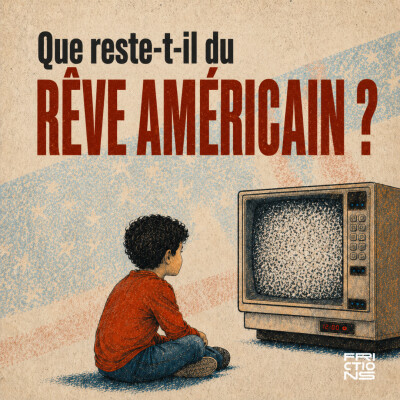
Well, this is the end, I guess. Thanks for staying with me all the way throughout this series. Most of the voices you heard came from people whose lives have been shaped by migration, race, or the search for belonging. People for whom the American dream has often meant a search for dignity, the possibility of upward mobility, or simply the hope of finally being seen for what they are worth. And for some, a promise that was never meant for them. I know this portrait is not exhaustive. It was never meant to be. It reflects a choice. to listen first to those whose place in America is still questioned, today more than ever, by history, by policy, or by the way the country imagines itself. A year after these conversations, I realized that also says something about my relationship to the United States. What I've always loved most was never just the place itself, but the idea of it. At a moment when America is at war with itself and abroad, so far from the story it once sold to the world, it would be easy to give in to pessimism, to tell the kid I used to be that he was blinded by the glow of television. But the people I met, not only the ones in this series, mainly in Atlanta, but so many others over the past 20 years since my first trip in the United States leave me with something else, not optimism exactly, but the sense that something better may still be possible and still worth fighting for. Because in a country built on triumphant individualism, I kept meeting people whose first instinct was to say us rather than me. Maybe the question is no longer what's left of the American dream, if there ever really was one. Maybe it's what's left to do. What's left of the American dream? An audio documentary by Walid Hajar Rachedi.
- Speaker #4
You've been listening to All Identities Combined, the podcast that explores our singular stories. Produced by Frictions. Find all our stories on our website,
- Speaker #1
frictions.co.