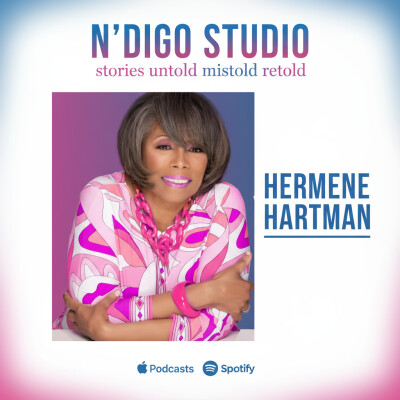
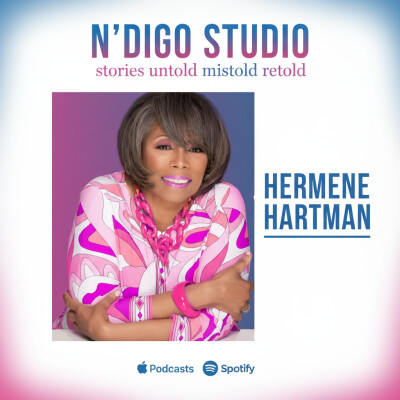
- Speaker #0
Hi, I'm Hermine Hartman with Indigo Studio, and today we are at Southern Chicago Restaurant. The last time we spoke with artist and social justice advocate Tamika Lewis. Johnson. We talked to her about a new project, Folded Map Project, and it had already captured national attention for showing how segregation shapes daily life in Chicago. What she did is she paired residents from the North and South sides sharing the same corresponding addresses, but in fact, they lived in very different worlds.
- Speaker #1
I started to think, you know, what if they met each other? What if Chicago could, like, fold itself so people could meet each other, fold itself into each other, fold it at its zero point so that we could touch?
- Speaker #0
Since then, Danika has continued turning art into action. Now she has a new project in Equity for Sale, and it exposes how predatory land sale contracts rob Black families of home ownership. The name of the book, Don't Go. She wrote the book with Dr. Maria Creyson, expanding that work into powerful personal stories.
- Speaker #1
I knew that I wanted my next project to help people understand how my neighborhood got here.
- Speaker #2
When we first got here, it was a beautiful place. They had everything up on 63rd. All the name brand stores and the neighborhood, everything was up there. It was a lot of mix in the neighborhood when we first came. You know, a lot of the whites and stuff were still in the neighborhood. Then over the years, things changed.
- Speaker #3
But how are we going to keep this neighborhood good? We don't want undesirables. We don't want land values to take a nosedive.
- Speaker #2
It was just nice in the neighborhood. Then everything just left. We took everything out the neighborhood.
- Speaker #1
I met people who were now close to 70 years old telling me, oh, no, I remember when I was little and my family moved in, in two weeks, all of the white people were gone. And so when you think about what funds a public school, home ownership, property taxes, when you're in a neighborhood that has been denied the opportunity to have high home ownership. That's how you end up with a neighborhood like Greater Inglewood.
- Speaker #0
Well, we caught up with Tanika, and today she is a MacArthur Genius Fellow, one of the highest honors that you can receive in the creative world. We welcome her back. We're going to talk to her about what that recognition means and how her art continues to influence our city. Tanika, welcome back to Indigo.
- Speaker #4
Thank you for having me.
- Speaker #0
So the last time we talked, you were just a great smart person.
- Speaker #5
And now you've come back in my 18 years.
- Speaker #0
I'm so glad to see you. Thank you. So life has changed a bit, huh? Yes.
- Speaker #1
So congratulations. Thank you.
- Speaker #0
Tell me about that experience. Oh,
- Speaker #1
my gosh. I'm still processing it. It's just been a few weeks since the announcement.
- Speaker #2
The MacArthur.
- Speaker #1
Yes. Genius. The MacArthur Genius Fellow. All right.
- Speaker #0
That's one of the best awards you possibly can get.
- Speaker #1
Yes, because it comes with just a little money. Just a little bit. A little, you know, a little 800K over five years.
- Speaker #4
All right.
- Speaker #1
To, you know, do something great, continue the work that I'm doing. So, yeah, I'm still processing. Like just the exposure that the announcement has brought me and the congratulations and people in Chicago being so proud and then thinking about, OK, I really have to plan how I'm going to, you know,
- Speaker #5
how do I manage this?
- Speaker #0
So because you are now a genius.
- Speaker #1
It sounds so funny, doesn't it? Yes,
- Speaker #0
it does. We're going to... look for some great things to happen. So tell me about some new projects.
- Speaker #1
I'm from Southside, Chicago, Englewood neighborhood. I'm sure the words you've heard to describe Englewood include black, dangerous, poor, gun violence. However, Englewood is where I grew up and still live. Before I tell you about Folded Map, I'd like you to think about how you came to live in the neighborhood that you grew up in. or where you live now?
- Speaker #5
What influenced your decision? Who did you talk to? And while you're thinking about that, I'm going to tell you how I came to live in Inglewood.
- Speaker #0
Folded map. You have taken it into a curriculum.
- Speaker #1
Yes.
- Speaker #0
And a film.
- Speaker #1
Yes.
- Speaker #0
All right. Tell me about that.
- Speaker #1
So one of the first things that I did after the project debuted as an art exhibit in 2018, I formalized it into a nonprofit. so that I could create expansions of it, like the curriculum, which is an amazing, beautifully designed curriculum, the teacher edition and student edition.
- Speaker #0
So you wanted to go into schools?
- Speaker #1
I wanted to be in all schools. It was designed for high schoolers, but it is very accessible for grammar school students as well as collegiate level. And so I really want to make it available to all educators and students. And it is centered around the Folded Map film. And the Folded Map film includes just a story about the actual project, but more important, the origin of the project.
- Speaker #6
It was my goal with Folded Map to help people understand residential segregation and systemic racism. But more importantly, how do those things play out in your personal life,
- Speaker #1
your everyday life? And what can you do to combat it?
- Speaker #6
Folded Map is an art project that was my way of combating social injustice to help people expand their understanding of Chicago's history of segregation. And the question I'd like for you to think about is, does Chicago's segregation truly reflect how we want to interact?
- Speaker #1
My Folded Map. project was created from my observations as a teenager on the red line train. And so I really want to help people how, help people learn that they are also a sociologist when they notice things on the train, how it goes from one race demographic to the next. And so I use art to help people understand history and sociology.
- Speaker #0
And demographics of the city.
- Speaker #1
Oh yes. And to understand why we're segregated, but more importantly, how we can disrupt it and what we should be doing.
- Speaker #0
All right, so now let's talk about new projects. What's on the drawing board? What's new?
- Speaker #1
Oh, my current project is Unblocked Inglewood. Tonika Johnson. Tonika Lewis Johnson,
- Speaker #5
a social justice artist. A new approach to bridging divides in Chicago. The Folded Map Project looks at gentrification and segregation.
- Speaker #7
This is such an important story.
- Speaker #5
Now a local artist is highlighting those injustices by working to revitalize vacant lots in Englewood. It's part of her latest project, Unblocked Englewood.
- Speaker #1
And this is my most audacious project yet. Unblocked Englewood. Unblocked Englewood. What's that like? So Unblocked Englewood, the past couple of projects, I'm using my art to help people understand. all of the ways in which Black homeowners have been denied home ownership, equity, wealth. But on Black Inglewood, I wanted to do a project to help solve some of these historic harms. So I applied for public art dollars through the city of Chicago. And it was public art dollars that was intended to be used for sculptures, you know, beautification, things like that. But I said, how about... we use the money to actually repair the homes of people who were impacted by the historic harms that I've talked about in my project.
- Speaker #0
So that's contract buying, contract buying, redlining, yes, redlining,
- Speaker #1
contract buying. The fact that it's, Englewood has a lot of older homeowners, so the fact that their property values are low. Federal government have put out the American Rescue Plan, which provided... funding to start to engage in recovery acts.
- Speaker #8
The thing that made Tanika's project stand out, and I think what we look for more than anything else, are artists that have show sort of a deep commitment to a particular community. Art promotes healing in that it gives us opportunities sort of to collectively work together towards furthering our goals and objectives.
- Speaker #9
Unblocked is ultimately arts redirecting into beautification of already standing structures like folks' homes.
- Speaker #1
So I wanted to do a project to demonstrate how you can help an entire block, you know, get dignity and equity that they've been denied. And so I have been awarded through the Chicago Community Trust $2 million to provide those home repairs. We've been doing it for two years now. It is over 70 people on this one block. All of them are over 60 years old. I call them my adopted grandparents and we've helped them get roof repairs, electrical repairs, new furnace. They're actually in the process now of getting porches, new porches done because a lot of them couldn't afford to get new porches. also because they're older, their mobility isn't the best, they need special kind of railings. So Unblock Inglewood is in partnership with Chicago Bungalow Association, and together we've, you know, helped renovate homes of close to 70 people.
- Speaker #0
Wow. Just that one block.
- Speaker #1
Just that one block. Just the one block.
- Speaker #0
Just straight from that one block. Yes. And hopefully we can move on.
- Speaker #1
We can study it. Another block. And we can move to another block. But most importantly, to show people what repair looks like. So in addition to the repairs, I've commissioned my artist friends to do murals. We've actually partnered with another MacArthur Genius Fellow, Amanda Williams, to use one of her projects to paint. One of the homes, a really beautiful blue color that she resurrected from George Washington Carver's recipe of paint. So we have a historic paint, blue paint that George Washington Carver invented that Amanda Williams resurrected. And we painted one of the homeowners homes that color.
- Speaker #6
Whether you're considering an electric vehicle at work or at home, making the switch may not be as complex or expensive as you think. The tools, resources, and rebates available at ComEd.com slash EV. Make transitioning to an electric vehicle easier and more cost effective than ever before. Charge into the future at ComEd.com slash EV.
- Speaker #7
I grew up on the South Side. I have friends that are barbers, drivers, musicians. They work on their own. Gigs where you don't have a big employer. It's not easy to get insured. At Get Covered Illinois, we're here to help. Across Illinois, 500,000 people access health care through Get Covered Illinois. That's why open enrollment at Get Covered Illinois is such an opportunity. But it all ends January 15th.
- Speaker #6
At ComEd, we understand a little help can really make someone's day. That's why we provide financial assistance and billing options to help you pay and manage your electric bill. Use the ComEd Smart Assistance Manager to discover bill assistance and savings options designed with you in mind.
- Speaker #7
It's not easy to get insurance. At Get Covered Illinois, we're here to help. It's one place where people can compare plans and prices and also get help with their premium. Get Covered Illinois, we're here to help.
- Speaker #0
Now tell me about another project, Inequities for Sale. Oh yes, Inequities for Sale.
- Speaker #1
That's the one that actually set the foundation for Unblocked Inglewood. So Inequities for Sale really highlights the... land sale contract scam that happened in Chicago that prevented over 3,000 Black people from becoming homeowners. And 600 of those homes are in greater Inglewood, which is why the home ownership rate is so low today. And so a lot of people don't know that history. And so I created landmarkers for 13 of those 600 homes to show people that this neighborhood isn't poor or bad Because the people are poor or bad. It's because we were stolen from. And this history needs to be brought to the light. So that's what those landmarkers are for. And so one of the landmarkers that I put up, because I included the people's name, that history for people to know the intersection between art and history and how it influences art, because Lorraine Hansberry, that's who I adore and love. And it was... Her family's issue with real estate that really encouraged her to want to write Raising in the Sun. And so one of the landmarkers that I put up was the parents of one of the older people on the block that I'm doing the home repair.
- Speaker #5
Now, you've also done a book.
- Speaker #0
Don't Go. I mean, I'm just trying to catch up. The output is crazy.
- Speaker #1
So Don't Go is about what? Yes. So Don't Go is. really a collection of Chicagoan stories, a lot of white Chicagoan stories about them being told what we all know, everyone gets told, don't go to the South side, don't go to the West side. And this is so prevalent that I wanted people to understand this is present day redlining. This is preventing people from going to businesses on the South side because they're told that, oh, they're going to get shot or. or robbed. And so I really wanted to do a project to kind of help people understand how this is a problematic thing to say, how it's also racist, even if you don't know it. And then more importantly, how to disrupt it. And so this book is a collection of those people who explain them being told that advice, how long it took them to actually go visit the South or the West Side, and then what they learned about themselves and race.
- Speaker #0
So you did 25 people.
- Speaker #1
Yes.
- Speaker #0
Is this families or just individuals?
- Speaker #1
Individuals. Some include families, but individual essays and stories and also people who are from don't go neighborhoods like myself that are explaining how they heard people were told to not come to their neighborhood.
- Speaker #0
So what kind of things are you hearing from them? So this is what you've really done is put. the stereotypes together or why I shouldn't go over there based on their racism, really.
- Speaker #1
Yeah. And then explain and allowing them to be honest about who gave them that advice, how long they believed it, and them learning that it was a lie. Ultimately, that is the conclusion of the book that so many people were told, one, not to go. And then they learned what this is, It's beautiful. Like, why are they telling me to not go? And then also people from don't go neighborhoods explaining how hurtful it is and how it's untrue. So it's really to break it all open.
- Speaker #0
How do you how do you see the world that we live in right now via federal administration of Donald Trump, where we thought the clock had gone forward?
- Speaker #1
Yeah.
- Speaker #0
And he is bringing the clock. backwards to segregation, where some of these stereotypes are personified more and again and all over again. How do you, how do you, what do you think about that?
- Speaker #1
I think that what we're going through now proves why policy and laws alone aren't what we should be focusing on.
- Speaker #0
Not enough.
- Speaker #1
It's not enough. And it's never because policy and laws haven't gotten us to where we want it to be. Chicago is still segregated. So it means that we have to do something more. We have to do something personal and we have to do things in between policies changing, laws not happening. And that thing is what Chicago does best, which is organizing, which is helping each other, which is telling these stories, because the stories are important. The stories is going to change. what policies should be. And so that's why this show, the work that I do is really important because it is uplifting stories that are sadly, you know, getting hidden and taken away from schools, museums. And so it is really important for us to uplift the history in more personal ways through books.
- Speaker #0
I call that erasure. We're trying to erase.
- Speaker #1
This is literally what is happening.
- Speaker #0
It's from the museum. So you you talk about art as impact.
- Speaker #1
Yeah.
- Speaker #0
Explain that to me.
- Speaker #1
I would like to allow people to look at the body of my work to see how art is impact, because sometimes you can't explain it. Like, how is this multimedia project impact? But once you engage with it and you feel validated by, oh, that is my experience or you learn something from it, then that is what impact is.
- Speaker #0
How would... Do you think from the work that you've done thus far, a non-segregated Chicago would look?
- Speaker #1
Oh, well, since I'm a creative in Chicago. You're going to create a new city. I'm going to actually show what the creative world in Chicago. has been experiencing to the rest of Chicago because the creative world has always been diverse. Me and my friends and the amazing creators before, they've always worked together. The artist community in Chicago has done amazing, impactful things. The creation of the DuSable Museum and Margaret Burroughs, that was a multi-racial movement. Even Fred Hampton, you know, That was a multiracial movement with Rainbow Push. And so I really think we have examples of what Chicago could be.
- Speaker #0
But how how does it transfer into our real estate?
- Speaker #1
Very easy. So if a neighborhood like Inglewood, where people are told to don't go, if we have art gathering, things that introduce and invite people to come to the neighborhood, then when they come, they'll see that it's worth. investing in. They'll see that it's not what they've been told. They'll consider maybe buying a building. They'll consider maybe starting a business or helping someone start a business there. So just something that simple can really be impactful in regards to community development.
- Speaker #6
Whether you're considering an electric vehicle at work or at home, the tools, resources, and rebates available at commed.com slash ev make transitioning to an electric vehicle easier than ever before.
- Speaker #10
Uninsured people worry, not so much about getting hurt, but when is someone going to ask for the insurance card that I don't have? That's why open enrollment at Get Covered Illinois is such an opportunity. 500,000 people across Illinois get health insurance through Get Covered Illinois. Most end up with a reduced premium, and that's why I do this. That's why I work for Get Covered Illinois.
- Speaker #6
At ComEd, we understand a little help can really make someone's day. That's why we provide financial assistance and billing options to help you pay and manage your electric bill.
- Speaker #7
It's not easy to get insurance. At Get Covered Illinois, we're here to help. It's one place where people can compare plans and prices and also get help with their premium. Get Covered Illinois, we're here to help.
- Speaker #0
How do you think segregation, as you have discovered it, affects education?
- Speaker #1
Oh, it is the reason that a neighborhood like mine has 18 closed schools. It is the only... A single one. Yeah, and all of the closed schools are in the very neighborhoods. that we're not allowed to have Black homeownership. And so the more people learn that property taxes is what contributes to funding Chicago public schools, then they'll understand why homeownership rates in certain neighborhoods are important. Then they'll understand why it's necessary to have homeowners. And so it's very important for people to understand real estate and politics if they care about public school education.
- Speaker #0
So do you think maybe after... You get all of the modeling done that you would like to do from Inglewood. Yeah. And it becomes a real model in more ways than one.
- Speaker #1
Yeah.
- Speaker #0
That it might be a model for other cities?
- Speaker #1
Yes. I think it can be a model for other cities, for sure. I've met so many people from different cities who know about one of my projects and they want to have it done. there in their city, specifically Folded Maps. So many people have mentioned that to me that I was like, I need to create a guidebook, like how to find the fold in your city. So yeah, I definitely think that not only my work, but what we do in Chicago overall, the organizing that we do, how everyone is connected and understand the importance of art, social justice. journalism. Like we're doing some amazing things, cultural production in Chicago. And I think Chicago overall is a good example for the rest of the country.
- Speaker #0
How does media fit?
- Speaker #1
Oh,
- Speaker #0
media makes you fit into your formula.
- Speaker #1
Oh my gosh. It's the reason why I adore you. Media is where Black people in Black neighborhoods have been getting bullied in. It is the reason that I do the work that I do to change the narrative and the horrible narrative about. Black neighborhoods is coming from the media. And so that's why what you do is so amazing. The trailblazers that do the actual reporting on stories of Black neighborhoods. beyond crime and poverty is really important because we have innovators and amazing business people in our neighborhoods and they would never know if they just paid attention to larger media outlets so no definitely it's still very important that we tell the most our story it's the most important authentically yeah from our point of view yes my art they might not go to art exhibit but you know everybody know about indigo like you know So it is. It's the most important. It's how information travels.
- Speaker #0
You ever thought about a podcast?
- Speaker #1
No.
- Speaker #0
I think a podcast might work. Really? Yeah. You think so? Yeah, I think so. We could take the book, Don't Go, and each chapter.
- Speaker #1
So we need to have a little business meeting.
- Speaker #0
It's a podcast. Oh, yeah. Let's think about that. I love it. It's... It's important. What you're doing is very important because it's fresh. It's new. A lot of times when you're bringing about social change, you've got to do it in such a way where it's non-threatening.
- Speaker #1
Oh, you have to do it that way.
- Speaker #0
And you're not threatening, you're explaining. Yeah. And it's exploratory and it's comfortable.
- Speaker #1
Yeah.
- Speaker #0
And you can do it. So yeah, I think a podcast would be...
- Speaker #1
Never see, look. I never thought about that. I never thought about that.
- Speaker #0
Got a friend, got a radio station, and she can do pipe.
- Speaker #1
You know, maybe we need to do that there. Okay. Sounds like the next project.
- Speaker #0
Another project. Congratulations. Thank you so much. Thank you for your work.
- Speaker #1
Thank you for supporting.
- Speaker #0
So we talked to you four years ago.
- Speaker #1
All right,
- Speaker #0
so I'm going to make a promise to you. Four years from now,
- Speaker #3
we'll catch up again and see where you are.
- Speaker #1
Yeah, four years from now. That will mean I'll have one more year left of the MacArthur fellowship funding. So we'll see what I've done with it. We'll see what you've done. I like that.
- Speaker #0
How do you intend to use it? Oh,
- Speaker #1
my gosh. Well, first off, I've wanted to expand my projects in a couple of ways that required money that I did not have. So now that I have it, I'm going to move forward with expanding my projects. But then also I have. Two kids who are college bound, definitely impacted by the pandemic and was not able to go away to school. So she's doing that now. So I'm really excited to be able to tell her she doesn't have to worry about school debt or anything.
- Speaker #0
Mama got her.
- Speaker #1
Yeah, I got her.
- Speaker #0
You got her. Tanika, thank you. Thank you for sharing. Thank you for updating and congratulations on being a genius. I hate to tell you, but I told yourself.
- Speaker #1
Thanks. Thank you so much.
- Speaker #0
Hi, I'm Hermine Hartman with Indigo Studio. We've been talking to a genius, Tameka Johnson from Inglewood.