- Speaker #0
Speaking about pharma talents, what I've seen is that in most of the cases, regardless of the function, regardless of the role, people are purpose-driven in the industry. The first thing that you think about when you wake up in the morning is how I make sure that the employees are safe wherever they are in the region. And second, how we deliver on the mission of the company in a responsible, compliant manner. These markets are... Hyper volatile, for sure. But the underlying trajectory is growth. Basically, the biggest risk is not to achieve your purpose. I think there is more risk in not trying anything than trying something.
- Speaker #1
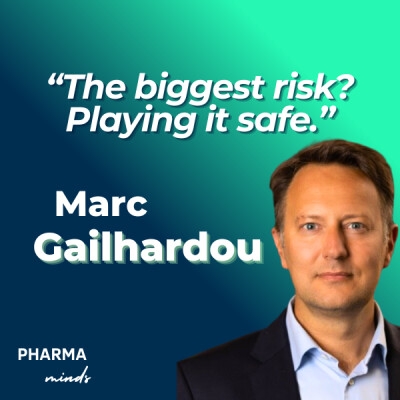
Welcome to PharmaMinds in a world where... Risks define the progress and also maybe not taking risks defines also sometimes, yes, the enemy of progress and sometimes comfort also defines the enemy of progress. I'm really happy of today's guest. I am with Marc Gailhardou. Hello, Marc.
- Speaker #0
Hi, Nathalie. Thanks for having me.
- Speaker #1
I'm very happy to have you here because I think your leadership career and the paths you've done into the pharma industry will help us to understand this move between the local and global and maybe understand a bit what's moving and how we can look at this changing world. I'm really happy to have you here.
- Speaker #0
Looking forward to the conversation and thanks for the nice framing.
- Speaker #1
Marc, you're responsible of the EEMEA zone for MSD today. And you're also part of the board of a startup named Resilience.
- Speaker #0
Exactly.
- Speaker #1
In oncology. You talk about, yes, local, global leadership, but also maybe finding a way to define new leaders in this world. I would like to start with you, Johnny. How you started, maybe you can try to... Explain how this alternating between local and global roles helps your leadership.
- Speaker #0
Thank you very much, Nathalie. And before starting, going into the weeds of my career, maybe just a few words to say that I think I'm pretty representative from your audience, meaning people driven to make an impact in making innovation accessible. So I think, and around that, I feel that pharma is clearly a good way, a career in pharma is really a good way to get there. And like I said, just one word will speak a lot about me, but my first consideration is that in everything we'll be saying, this is a team sport. This is a team sport. And so I take the opportunity to really thank. my colleagues, the team I've been working with, and all the ones who have been supporting my family, the close ones, the mentors. So I think this is important to say. So with regards to my to my career, maybe just one or two words about the region itself. So EMEA, so Eastern Europe, Middle East, Africa, this is something like 25% of the world population. This is Hyper diverse as a region because we have some of the poorest countries in the world to some of the wealthiest country in the world if we take the Gulf. This is a region very heterogeneous. This is a region that is volatile, that has some challenges when we think about all the wars that are going throughout the region. and Again, I would like to say a word for all the people who are going through that, because that's real challenges. But if we take the flip side of that, that's really a region that is fascinating, because this is a region that has a soul, I would say. If you consider all the greatest civilizations that have built this region, that has some amazing values in terms of generosity, hospitality. And there is a word that I'm not so fond of. We often speak about emerging markets. I would very much consider the region as a high growth market. Okay. And if we take it like that, I think then that creates some connection with the discussion we'll have about the ability to be. pretty bold from a strategic standpoint to be very focused on the execution. So there is a lot to do from addressing the needs. If we start to the purpose, there are a lot of needs, but also from a business standpoint. So yeah, this is about my current job. And I think I'm excited every day on it.
- Speaker #1
Yes. Yes. And okay, then I jump. I made the connection between your your president job, you were in the US. You were in... Okay. Couldn't be more different.
- Speaker #0
So yes, my previous job was to be in global oncology at headquarters in New Jersey. And then you give me the opportunity to address your question about global, local, local, global. There is a clear pattern in my career, which is that I kind of continuously made some switch from local responsibilities, global responsibilities, trying to build some breadth of experience here and there and some depth. So I started with GSK in France, actually, in the fundamental of pharma, account management, marketing. So that was for the local aspect, sales management. And then I went to Sanofi. which was my first global experience after an MBA, where I worked in vaccines. So speaking about depth, so that's the first kind of vertical where I did a deep dive. Then after that, I had my first P&L responsibilities in charge of the European mid-sized countries for vaccines. I pivoted to MSD, where I took my first general management role, managing director for Sweden. So that was kind of from global. to local, and then five years in the global in the oncology. So yeah, that's really the kind of the pattern. And to bridge to what you were just kind of saying, couldn't be more extreme. The contrast between these five years at global in oncology, and if you're a bit familiar with the journey, but this idea was that we had the opportunity, thanks to the resource and development work too. kind of a crack in immuno-oncology and to unfold what it could become. So I think that has been really kind of a journey of what it is to build a leader in oncology at the center of an organization. Whereas now I'm at the closest of local in marketing most of the cases that are much less mature than what I could have seen in the US.
- Speaker #1
Okay, then when you've built in, okay, at a global stage like... A leader in oncology bringing a lot of innovation. You've also maybe watched, seen the growth and seen the dynamics of the countries. And how did you look at this from a global point of view? How did you look at the world?
- Speaker #0
Wow. I think that from a pharmaceutical standpoint, the considerations are what is the time to access? So where can the innovation be accessible the fastest? So that's the first one. So clearly, then there is a first view at the US, Europe. And then after that, the questions are, what are the alternative means to make our innovation accessible throughout the world? So if your question is, do I look at it differently from five years ago? to now, obviously. But I think that's why the kind of the complementarity of experience makes a ton of sense. I think, yeah.
- Speaker #1
Yes, yes. And you have a job where you actually maybe more plan and try to find maybe, yes, to build the future of the company. And when you work local, you are into the real. Absolutely. Then you act through. for today and you act for the near future.
- Speaker #0
Absolutely. Absolutely. So I think you are touching what is the difference between local and global, why it makes sense to consider the two of these type of things. And you've said it. I think with regards to local, what I enjoy the most is probably two things. The connection, the connection to the customers up to the patient. I think there is no substitute to that. I think it's only being in a country that we will be basically facing this type of situation. The connection with the team. And that was my very first word. But when we speak about a leadership journey, it's all about that. It's all about creating this connection so that team can follow at some point. If it doesn't exist, nothing can happen. So this type of connection, it can only be at the local level that we learn this. The second aspect for local for me is. around accountability and direct accountability. There is something I've learned, I was said, and now I say to the managing directors, is in a market, if we deliver on the objectives, be it sales or others, then we can make a ton of storytelling and everyone will find it fascinating. If the objectives are not there, suddenly no one listens anymore. So I think this... This direct accountability of the day to day is something hyper important to develop. And I think it can only be achieved at the local level. And some people only love that. So that's why I think I'm touching another point, which is should everyone do local global? I'm not sure, because I think it should really connect to who you are, what you want to do.
- Speaker #1
OK.
- Speaker #0
And but in my case, so I like this. And at the same time, I've always been looking for something different and global. And what I would be looking for in global roles is on one side, the depth. And on the other hand, like you said, this ability to be or this opportunity to be. a drop in the projects that will shape the future of public health or the industry. So I think when I speak about depth, I had the opportunity to touch two areas. And I think that gives some good illustrations of what it can be. I touched vaccines and oncology. I think if you're interested in vaccine, you're better interested in manufacturing processes and biology and these kind of things. Because even being a marketer, That brings you into the weeds of the size of the reactor, the fermentation process, the purification and this kind of thing. So I think that's really an opportunity to touch something that you will never have in an affiliate where it's about basically medical, sales, marketing, market access, these type of things. On the other hand, when I went into oncology, it's all about science. And I think it takes some appetite, energy. to go into the weeds of science and to become relevant into science. So that's the type of driver. And to the second point I was making around touching the big topics, I've already mentioned one with this idea of, okay, being part of the journey of building a leader in oncology. If I go to a past life, I remember the time where it was about capacity building for polio eradication and how much vaccines we would need for that. I think just being part of that, it's once in life experiences. So I think it's very rewarding. But usually what you get, like I said, is that you're only a drop in the ocean. So this is why after for me, after a few years, I feel this need, OK, let me go back to my shop where I could maximize my kind of own team impact and this kind of thing. So. That's the way it is. That's the way I'm kind of driven in a way.
- Speaker #1
Yes, I would like to talk a bit more about how is it to work in high growth markets. But just yes, to conclude, it's really interesting what you said when you compare global and local and vaccine and oncology, because some of the people in the audience are also people not from the industry, but from the ecosystem, maybe some administrative people working in health care. And it's also, I think, interesting to have this point of view of how you act, how you impact.
- Speaker #0
Yeah.
- Speaker #1
What's your view on this world also.
- Speaker #0
And just to your word, I'm making an adjacent, but speaking about pharma, pharma talents, what they are driven by. and To be honest, what I've seen is that in most of the cases, regardless of the function, regardless of the role, people are purpose-driven in the industry. And I think this feeling of we contribute to something bigger, I've seen it in all the companies I've been into. Countries. Well, yeah, companies, countries, functions. I think that's the same. I'm sure that the admin in our department is part of this journey to address some of the need in our countries. and When it was about oncology, they've been part of the journey as well. So no doubt about that.
- Speaker #1
Yeah, okay. Yes, to go back to your zone, EMEA. Yes.
- Speaker #0
What it is to lead in a high-tech market.
- Speaker #1
And which are the powerful, yes, innovations, drivers in the zone? Why? Is it growing? Why can they, yes, accept innovation?
- Speaker #0
So I think I'm starting from the beginning about what it is to lead such an area. And let's not underestimate the geopolitical challenge and the situation of the people. And because, like I said, so in my region, I have Ukraine and Russia. I have the Middle East. So the first thing that... that you think about when you wake up in the morning is how I make sure that the employees are safe wherever they are in the region. And second, how we deliver on the mission of the company in a responsible, compliant manner. So I think it's hyper important to say it because that occupies a good part of the brain of the leader. And this is sometimes things that we take for granted in other areas of the world. And now if I go to your question about how do I maximize, how do I operate, I will be a bit kind of classical marketing in saying that, but it starts from understanding the needs. And when I say understanding the needs, the ranking of the priorities is not the same if you are a super wealthy country or if you start from the primary needs. And this is where you will have different approaches to prevention versus treatment, to affordable treatment versus super innovative. And this is our job to, on one side. with the priorities of our external stakeholders and at the same time to be hyper creative in what we bring in terms of solution. And I'm particularly proud of the teams with regards to that. But I think if I go one level further, what I find really interesting and might be a difference, coming back to some of your questions around Europe, US, etc. These markets are hyper volatile, for sure, but the underlying trajectory is growth. And I think if you take this type of hypothesis, then it all becomes, what do I do? What should we do to capture this growth and to maximize this growth? And I think that really gives some possibilities that you wouldn't find in more established markets in being very bold in terms of what. What are the partnerships we could do with the authorities? How we can plan for long term? And at the same time, how are we super disciplined so that we progress on a day-to-day basis? So I think I'm coming back to your question, probably more rooms to maneuver than in established environments.
- Speaker #1
Yes. Even if you don't have the stability with you, even if you don't maybe have the vision or less vision.
- Speaker #0
And this is why I think it's super interesting, super tricky from an execution standpoint, because it's on one side. It takes to be bold on the strategic aspect because this is what the environment wants.
- Speaker #1
Yes.
- Speaker #0
Because the stakeholders want to build their infrastructure. They want to raise their standard of care. It's not marginal improvement like in some other areas. So it has to be bold. but at the same time What are the guardrails that we put from a day-to-day basis to progress in that direction? So that's fascinating.
- Speaker #1
I can imagine. But if I look maybe to more developed market, more stable market, maybe, and maybe you have something in mind about this, but maybe they can get inspiration also about maybe this kind of way of thinking we've lost or we don't need. Like urgently, but it would be useful maybe. I'm sure.
- Speaker #0
So you bring me in the direction of how I look about mature markets or how I look at about Europe. And so allow me for a kind of a quick disclaimer. I think you are an expat as well. And so you live outside of the country. And I think it takes some grain of salt to speak because... I think being outside of the country creates a very kind of a special relation to look from the outside. And I think because there is this idea of, OK, I should be cautious. I don't belong completely anymore. And on the other hand, I think that creates an attachment to look from the outside. I think there is a bit of a Toma Pesce into that. Looking from above, but I don't know if it's the same for you, but when I look at France, when I look at Europe from the outside, you say, hey, it looks good. It looks good. And there are plenty of things that we should be proud of. So I think so. That's where I'm speaking from. I speak as a kind of a proud European. But to your question about what can we take from emerging markets? I would say two things. What can...
- Speaker #1
The spirit of growth in India.
- Speaker #0
About growth, exactly.
- Speaker #1
And maybe instability.
- Speaker #0
And yes, exactly. So let me give you a very concrete example. It was last week, I had a partner coming from Lebanon, and he was speaking about the business risk in Middle East and all of that. And he was using this quote, which is kind of a... Nice, but bittersweet. He was saying, you know what? People tell me to be cautious, but I've been cautious since I was born. And I think that says it all. I think what you will find into these markets is the appetite, the call to project in the future. Because today it's difficult, tomorrow it's going to be better. And we build the better. And I think this is sometimes that what... What we may have lost is this idea that tomorrow will be better and we should do tomorrow better than today. And that maybe there is more risk in maintaining than in trying something. So I think that there might. And this is not something I take from Europe. This is more something I take from the emerging markets where I see this continuous projection. The second element I would. take and it's probably a bit more aspirational, philosophical, but I'm coming back to this situation of war that my teams have been experiencing throughout the region. What I've been finding fascinating is how people go to the office and find their purpose while everything is going wrong around to be on the job. And to say to themselves, to say to each other, this is where we can do something. This is where we can be for good and basically occupying our day in the best manner. And I think that there is really something that sometimes when we take everything for granted, that we can be together with a given purpose, with some common values. for a kind of a greater good.
- Speaker #1
Interesting. It means that they don't go to work just to work. Clearly. It's maybe the best part of their day.
- Speaker #0
Exactly. Exactly. Exactly. Now it's pretty powerful. Yeah, yeah.
- Speaker #1
They will do their best and they will try to help the other also to do so.
- Speaker #0
Exactly. And that comes back to this kind of purpose-driven, to the mission of the industry. People go to work because they believe in what they do.
- Speaker #1
Yes. In this industry, it makes sense. Yeah. Really sense. Okay. And yeah, do you see other things? Yes. On this, from what you see in this kind of, maybe I'm just like thinking this together with you, but when you see also countries, yes, with geopolitics differences.
- Speaker #0
But like I said, let's not underestimate the role. that companies, that the enterprise can play in bringing people together. in challenging times. And by the way, this is something that we've seen at the time of COVID, where everyone was isolated. And the only thing that was bringing people together was to be behind the screen and kind of, and I think what I see around that is that regardless of all the differences of perspective that you would find in a region, what makes that people kind of Impact together, work together is the purpose, but also the values and the way of working that the company set.
- Speaker #1
Yes.
- Speaker #0
And because sometimes it looks like kind of things on a paper. But when you are in this kind of extreme situation, the respect means something and it becomes a common language. And then I've clearly experienced in my region, people kind of checking on each other wherever they are. from wherever side they are. And I think that's pretty strong.
- Speaker #1
And yes, it's maybe also something the government cannot give.
- Speaker #0
Oh, exactly. So that's why I think this enterprise should be a kind of a safe space. Yes,
- Speaker #1
not a family, but a second.
- Speaker #0
Exactly.
- Speaker #1
Second safe space. Okay. Yes, interesting. And yes, you've talked a lot about, yes. this zone. I would like to talk about your career. Unless you have something else. No, no, let's go there. But maybe about staying sharp in your career. Because you said yes, you've made bold moves and you didn't follow the I don't know, maybe the expected moves or the comfortable move or like the next step. You've made, like you said, like the two extremes.
- Speaker #0
Yeah, yeah. And I think... Maybe you don't sort your career like this, but... No, no, but what you're trying to touch is what drives the transition, how we build a career, these type of things. and um How much risk? I think this is where you're coming back to this notion of risk. So first thing to say is that a career should be looked from a long run perspective. So it's a marathon.
- Speaker #1
Yes, yes, yes.
- Speaker #0
It's a marathon.
- Speaker #1
It's not a sprint. Yes, it's interesting you say that risk is part of a marathon.
- Speaker #0
Exactly.
- Speaker #1
And can be part of it.
- Speaker #0
Exactly. So it should be looked from. a long-term perspective and if i don't know if it works with your marathon a kind of analogy but one should be clear about the fact that there are some times for acceleration but there are tons of time for kind of consolidation um yeah management passions resilience so i think that's the that's really the the way i take it with regards to the risk taking, because we are going there in the transition, podcast. So let me quote you a podcast, a recent one, Charles Pepin, I don't know, philosophy. He was speaking about, should we take risk about the risk? And he was kind of asking about what's the biggest risk in knife. And I think the He was describing that basically the biggest risk is not to achieve your purpose. And I think if you take it...
- Speaker #1
Not to lose something.
- Speaker #0
Exactly. Exactly. If you take it like that, I think there is more risk in not trying anything than trying something. And if you have this type of angle... From there, it doesn't look so risky to try some new things. So I think that's probably one angle I would like to take in looking at the transition. And the other one is probably something that is more in an internal DNA or not, which is how long to stay. In the game? In the game or just somewhere. And this is something that I deeply have in me, which is that at some point there is a necessary departure.
- Speaker #1
Okay, yeah.
- Speaker #0
And so it doesn't come from me, this one, but I think it's from Delphine Orvilleur. She speaks about that. And since I've heard that, this is something that is really deeply into me, is the fact that at some point you have to push yourself.
- Speaker #1
Nothing is forever.
- Speaker #0
Exactly, exactly, exactly. But again, it's personal and we should be very respectful.
- Speaker #1
Yes, yes. And you say, I go back to like going local and global. You said, okay, sometimes it's not made for everyone.
- Speaker #0
Yes.
- Speaker #1
Yes, but nothing is forever.
- Speaker #0
But I think this is where I'm going to this type of conclusion, which is that it's more positive to transition than not. Because if you take on one side that nothing is forever, and on top of that, that it's only by going forward that you go towards your purpose. I think there are more incentives to move.
- Speaker #1
But if you add, okay, I'm afraid of losing, I don't know, my status or whatever, my salary, my...
- Speaker #0
But that's the point. Is it the right thing? Is it the right thing to consider? Or is there something bigger? And I think there is something bigger. If we say, my goal is to maximize my impact, to make innovation. And if I just do it there where I could do it 10 times bigger, if I try something, then suddenly that gives an opportunity to project.
- Speaker #1
And then? What do you do? You just go in the direction of your goal?
- Speaker #0
But I think let's be honest about that. It never happens as planned.
- Speaker #1
Yes.
- Speaker #0
Never, never. Because I was speaking about it's a collective game, of course. It's a collective game with the family. It's a collective game with the opportunities. It's a collective game with the company. I had a boss who was saying a company is not a shopping mall. I fully agree with that. So I think it goes with this ability to, on one side, align a personal drive. with a company agenda, with a family agenda. And when the stars get aligned, it's about catching the opportunity. So, yeah, there is definitely, I think it goes back to my leadership in emerging markets. It takes some bold strategic vision, but also some opportunism to catch the right opportunities when they come. Okay,
- Speaker #1
and then your work maybe is also to have a clear vision and to...
- Speaker #0
yes have a clear purpose maybe and to tell it to explain it yes so obviously i think um so this notion of um what do i want to do the the my very first sentence opening sentence around what's my purpose this is something i i got since the beginning and then i think all the questions along that is how do i get closer to that so so that's the so for example can you
- Speaker #1
Can you tell us your purpose?
- Speaker #0
Well, but I've said it. For me, my purpose is all about kind of bringing innovation to patients. So it's all about that. And then from that, I started in health economics because I was believing in the power of market access into that. But then I've been into sales, and then I've been into this big corporate project, and now I'm maximizing my impact on a very large population in the world. So I think that's, so it's a kind of a balance between how do I get closer to my purpose, how I consider every opportunity. With this framework, how does it bring me closer? How does it create some options? How much does it close some options? And at the same time, to be realistic, like I said, with other considerations, which is the agenda of the family, of the company, what has to be done. And you navigate. Yes, yes, yes.
- Speaker #1
Maybe you have an example of this kind of challenging transformation.
- Speaker #0
So, but I can just speak about... My last five, six years and how I ended up into this role.
- Speaker #1
It was planned?
- Speaker #0
Yes and no. So let me elaborate on that for a second. So I was managing director and then the plan was, OK, Marc, you've never been into the MSD headquarters, you've never been in oncology, so let's do a rotation in oncology. So I started, I did this great job. in strategy. But then after that, it didn't happen like planned because there has been some management rotation. And then I had to do a second job in OCO, a third job in OCO. And then it really kind of tests your resilience, your ability to go deeper, to adjust your plans. And then after that, was it planned to take this region? Not necessarily. There were some ideas. But I think the reading is pretty clear for me. If it fits with a bigger plan, if the guts feel it, I think. And I think I'm touching a super important point, which is at the end, we can give whatever advice, but this is in the guts. So and if there is this click, then it's going to be good. Yes,
- Speaker #1
maybe.
- Speaker #0
Yeah.
- Speaker #1
Like the meeting with the right person,
- Speaker #0
the right people. Exactly. It's about connecting with the right people, with the right leaders. All the big connections have been associated for me with the right people that at some point you just look in the eyes and you say, OK, we go. And that happens.
- Speaker #1
Yes. But behind that, I think. And like I said,
- Speaker #0
so there is this kind of a sort of master plan.
- Speaker #1
Yes.
- Speaker #0
There's this sort of master plan. And even if the option, the proposition is not exactly the same with the one that was anticipated, it's all about how close. And I think one, something I would really advise to consider is when looking at a job, how much does it create options versus how much does it close option?
- Speaker #1
It's hard to say now.
- Speaker #0
Sorry?
- Speaker #1
It's hard to say now.
- Speaker #0
Wow. So... Something like, I'm just taking some very basic illustrations. Someone who has never done sales suddenly has the opportunity to do sales. That's a whole world of opportunities. Someone who has never lived their own country, suddenly it's a whole world of opportunities. So that's the type of things. Yes, yes. But yes, OK,
- Speaker #1
the second option can be a bit more, yes, challenging, as you say, sometimes because of the context. And OK, you feel more. Not comfortable, but you want to follow the family.
- Speaker #0
Yeah, of course.
- Speaker #1
Or you don't want to go to the place they ask you.
- Speaker #0
And I think I genuinely go back to that. It's not one fits for all. I think I have colleagues who tell me there is only one job in life. It's managing directors. I have others who tell me there is only one thing that matters. This is science. And it's okay. I think it's... It's about self-exploration as well.
- Speaker #1
Okay, and then if we go to your leadership, how did it evolve following these experiences? Because you learn.
- Speaker #0
So leadership is really a kind of a continuous journey. It's an everyday.
- Speaker #1
It goes with you,
- Speaker #0
yeah. It's an everyday journey for sure. on which we should be super humble. But yes, of course, the experience is, of course, the experience, it's being shaped by an inner self and the experience. And if I just take, if I just take a few illustrations, I have in me some kind of natural energy that's the kind of the foundation that I keep and that I pull. Whenever it's needed. I think I learned a ton when I was in Sweden speaking about kind of... more being more in the pool than in being in the push. I think that's really something I learned there that I used a ton when, when I was in at the global headquarters, because it's all about impact and influence. So I think there, there has been some, there has been some transition there. I learned a ton in the U S in terms of being clearer. I think this tendency that we have as French to start a sentence, comma, bracket, blah, No, I think I learned a ton in the US with regards to that. And I learned again and again with the diversity of situations I'm facing every day.
- Speaker #1
My question behind this is sometimes it's the fact of being too sure about yourself that close you opportunities or close you from. I don't know, maybe future growth.
- Speaker #0
Yeah.
- Speaker #1
I feel that you were very opened and you are very open into this kind of situation. How do you see that?
- Speaker #0
So then now you're touching another one of the few, you know, I have a few sentences that kind of count me. So that was the necessary departure. The other one is. Why should anyone be led by you? So this is the title of an article that I read 20 years ago. Rob Goffey.
- Speaker #1
But they already know it.
- Speaker #0
But I think it's really a super important question to ask ourselves every day. And I think if you frame the question like that, suddenly it's not anymore about yourself. And I think it becomes much less self-centric. Because if you consider that the role of the leader is to enable the team, the role of the leader is not to be kind, is not to be tough, is not to be inspirational. It's to be kind of intentional with regards to what has to be achieved. And because I've seen it 10 times. When there is an alchemy in the team, it's not because people like each other or whatever. It's because they succeed together. And I think if you take this as a kind of the goal, then suddenly your question becomes, what does the team need at a given point in time?
- Speaker #1
To succeed.
- Speaker #0
To succeed. So sometimes the team needs vision and inspiration. Sometimes it's about clarity, clarity of the rules. Sometimes it's about teaming, just creating the trust. Sometimes it's about support. And I think if your focus is about what does the team need instead of how should I be, suddenly it's completely, it's a complete different.
- Speaker #1
It was a connection with the others, but indeed it's the connection between the team.
- Speaker #0
Yes, absolutely. And I think if the role of the leader becomes to be this enabler, it's not the same. And you can have some different personalities. So I've been asked, are you more captain? Are you more coach? I think it doesn't matter in a way. So,
- Speaker #1
yeah. Yes, but I think this kind of discussion is interesting in this transforming world when we need to... Maybe invent new connections, invent new futures, invent new models of normalities. It's also something we need.
- Speaker #0
Absolutely. And I think you're absolutely, the more uncertain, the more complex, the more we need collective problem solving. And I think, yeah, so collective leadership is the way. Absolutely.
- Speaker #1
Okay.
- Speaker #0
Yeah.
- Speaker #1
Okay. You have some tips to share?
- Speaker #0
Wow. so I think, so there is one, there is one, there is one that I was given, but I think is listening.
- Speaker #1
Yes, I've seen it with you. Yeah.
- Speaker #0
Listening. Someone told me that it's a substitute for much more complicated skills that one would necessarily have. Listening is part of problem solving. Listening is part of decision making. Listening is the prerequisite to communicating. So at least starting with listening. is the first step. That would be my humble...
- Speaker #1
Active listening, yeah.
- Speaker #0
Yeah, that would be my humble answer to this one.
- Speaker #1
Okay, but yes, I would also like to have your idea about... Yes, because you are listening, but for example, you accept to come here and to listen to questions and to give also your vision, maybe not advice, but your vision and... to express yourself, which is also something you give to, yes, community or how do you, how do you, okay, how do you give value to that? Do you think it's important or do you think? Well,
- Speaker #0
I think it's critical. I think it's critical because learning can only be both ways. So And it takes to be generous to learn.
- Speaker #1
Yes.
- Speaker #0
So, and I'm going in a complete different direction, but it will address your point. I feel that one of the risks I was, or weakness I was kind of experiencing, particularly when I was in the US, is to be completely in a kind of... in my close pharma environment outside of the European ecosystem. And I felt the need to reconnect with the outside. And I think to get there, it really takes to pick the phone and go to people and to say, hey, how can I help? Could we have a conversation? How can I help? And that's the... That's the way it brought me to this fabulous experience with Resilience, meeting Jonathan Benhamou. And because I believe that if one come genuinely with this approach of, you know what, I'm not coming to you with the intent of ticking a box, but just to say, is there something I could share? Then there is always a ton. in return, even if it's not expected. And I think with our situation today, this is the same. You bring me out of my comfort zone. So I think this is a stretch. This is a learning experience. And I bet that after this conversation, I will have some conversation with many, many, many more people that at some point would be interested with the industry or would be interested to do this or to do that. So I think that's the way. Let's try sometimes to be a bit less short-term, a bit less transactional in what we do, and believe in the fact that there is just some value in exchanging and opening conversations.
- Speaker #1
Yes, collective intelligence gives a chance. Very interesting indeed. I definitely understand, and since the first day I started the podcast, to understand the value of sharing freely. what you really think and what did you learn when you started your experience with the startup resilience?
- Speaker #0
Yeah, I learned a ton. I learned a ton. So first of all, if we just speak about two seconds, because it's not about advertising, but what they do, this notion of digital health. why you can help digital health supporting the patients, it's kind of obvious that this is the way to go. And I think being part of this journey is really something and I'm very excited with what they do. But then to your point about comfort zone and these kind of things, what the pharma has done amazingly good is the ability to process complicated things. to set the guardrails and to set some clear roadmap to progression. However, when I meet with some terrific leaders like Jonathan Benhamou, who is the CEO. Sometimes we tend to lose this instinctive approach to opportunities and to things. This idea of I don't think about it, I do it. And I will take some very concrete example. When someone reaches out from the outside, it's very tempting to say, OK, let me connect my admin and we're going to speak in two weeks from now. I think when you speak with someone like Jonathan, he's... Can we speak tonight? And I think this idea of, OK, I pick my phone. We solve the problem in five minutes and we move to something else. This is something that is refreshing, that keep on the toes. And I think that everyone should have this type of opportunity of saying, OK.
- Speaker #1
In two weeks, you have the time to keep the pace. To get from 10 times.
- Speaker #0
Exactly. And I think there is probably something more rough in this environment with the funds, the investors. So same. that we are not always confronted to when we are in bigger companies. So I think I see a ton of benefits. And I think it both ways, by the way. Because I think the bigger organization have an ability to clarify, to prioritize that sometimes the smaller companies don't have. So there is a win-win. And I think it goes back to this, to your point, which is okay, let's create the conditions for porosity connections and learn from each other.
- Speaker #1
Yes, yes, because what you say is, okay, You go out of your comfort zone, but you also need some humility, respect on both sides to really understand. Exactly.
- Speaker #0
It takes some intelligence from both sides. It's really important.
- Speaker #1
To get the best of each other. Yes, time surprise. Yes, I would like to go maybe on a few more. No, just to conclude, to finish on this. And then this idea of, yes, to be open and to dare to ask, how can I help? Is for you a way to be a trusty leader in the pharma world for tomorrow? Who?
- Speaker #0
Yeah, I think.
- Speaker #1
In other way, I can say, OK, if I don't.
- Speaker #0
Yeah, no, no.
- Speaker #1
But personally, but how can how can pharma be more trusted in the future? Well. So,
- Speaker #0
but first of all, I think that pharma can be trusted and should be trusted for sure. But I see your point. There is to gain in showing some vulnerabilities. There is to gain in opening for the communication. Absolutely. So if this is where you're going.
- Speaker #1
Yes. and also I think um good I go back to the previous example, but also show the strength.
- Speaker #0
Yeah. Yeah, clearly, clearly, clearly. And I think it goes back to the definition of leadership that I was touching. It's not one trick pony. Sometimes it's about showing confidence. Sometimes it's about adding value. Sometimes it's about bringing some clarity. And so that's about what you were saying about showing strength. And sometimes it's about showing more vulnerability. So I think the answer is, as usual, it depends. It depends on what has to be done to succeed.
- Speaker #1
Yes. But in a changing world.
- Speaker #0
So in a changing world. In a changing world. It's more complex.
- Speaker #1
Yes.
- Speaker #0
It's more collective. And as you say,
- Speaker #1
maybe what you are developing in your relation with a startup is also maybe a way to be connected with reality.
- Speaker #0
Exactly. And what I see now, you're bringing me in a completely different space. But when I'm on the big topics of prevention agenda or whatever, it is clear that the answer is not with one stakeholder. The answer is multipolar. And so the ability to operate in an ecosystem, to operate in a coalition, obviously, this is a key success factor for the future.
- Speaker #1
Okay. And if I just try to summarize a bit and go maybe into more personal vulnerability, then the key factors for a leader tomorrow in this world, in the pharma world or maybe healthcare world, is this being opened so um i would say
- Speaker #0
clearly providing, let's not underestimate the fundamentals of leadership. The need to provide some clarity is probably more important than ever. So I think this idea of bringing some vision, bringing some clear priorities, I think... has been part of the leadership 1.0, it's going to be part big time of the future of leadership. And now, if we were just speaking about towards more collective leadership, I think it's going to be about considering leadership not as kind of one tool, but as a toolbox. So this idea of being probably more situational. to be very deliberate according to the situation. And at the same time, to keep, to develop this kind of authenticity so that the connection remains at the most is probably a way to go.
- Speaker #1
Okay. Okay. Yes. Separate both items. And if I maybe, yes, I have in mind, there's a situation where you need to... I understand the society also and societal needs. And you talked about clarity. Sometimes we can say, OK, it's not the job of the company to take into account these parameters of the society needs, of the limitations, because we want to act as a company outside of internal games. But how do you feel that? How do you look at that?
- Speaker #0
So I think a company is part of an ecosystem. So I don't see how we can operate in isolation of the ecosystem. I really don't see it. And at the same time, the objective is to stay focused on the mission. And I think this is something I experience every day. Regardless of the political consideration around, what I keep saying to our teams is, yes, it's challenging around. But at the same time, if we focus on our mission, which is to make our innovation accessible, then we are in the right.
- Speaker #1
Okay. In the end, we would win and we would contribute.
- Speaker #0
Exactly. More than winning is we impact, we're in the right. This is what brings us together. We've been doing that in the past. We'll be doing that in the future.
- Speaker #1
Okay. And yes, the help of partnerships or the help of...
- Speaker #0
Absolutely.
- Speaker #1
Can be something... Definitely.
- Speaker #0
Definitely. I think this is the future. Do you think?
- Speaker #1
Okay.
- Speaker #0
Yeah.
- Speaker #1
Okay. I would like to have one word maybe, because I have one way to define you is, yes, you have maybe a brutal honesty, but you respect. Yeah. And is it true? Is it something...
- Speaker #0
Well, so... Yeah, so this notion of to be brutally honest, this is something I've been... You go back to the risks. I've been using as words, but I prefer... So the notion of... No, if I go in the direction of risk, I prefer the notion of being bold. Bold is exciting. Okay. I prefer being bold than...
- Speaker #1
Okay, risk, risk,
- Speaker #0
risk of failure, whatever. So definitely, I think that's the first one. And I prefer the notion of clarity to brutally honest. I think and this is probably something that is being shaped over time with experience. When one has probably less confidence, there is a tendency to mix the two that you have to be tough to be strong. I don't believe in two. I think I'm distancing a little bit from that. And being clear is helpful. Yeah, and bold. Okay, okay,
- Speaker #1
okay. Okay, it's also, yes, a way to use the right words to help also, yes, to define themselves and to find a way to be able to transform, to change the lines, to push the lines, but still in... Yes, with respect.
- Speaker #0
No, because when you are brutal, you're on the people. When you are clear, you're on the task. And I think that's the very simple definition. Okay. Distinction.
- Speaker #1
Do you want to share some personal values?
- Speaker #0
Wow. Some personal values, curiosity, big time, generosity, and a certain will to do good, to have some positive impact. Definitely.
- Speaker #1
Cool. Thank you, Marc.
- Speaker #0
Thank you. Thank you, Natalie.
- Speaker #1
Thank you. It was, yes, for me, very interesting and intense to have your perspective. And yes, I think a bold way to define a former leader.
- Speaker #0
Yeah, pleasure. Thank you very much, Natalie. Thanks again for what you're doing and happy to keep supporting the journey.
- Speaker #1
Thank you for listening to this episode. It was great to share this story about connection, inspiration and creating a positive legacy. Don't forget to subscribe to stay updated on future episodes and talk to you soon. A bientôt.
![[EXTRAIT] Pourquoi la Chine accélère la recherche pharma comme jamais cover](https://image.ausha.co/8JsH0xOKIYCokaPJi3qnAL9RJj37H7Sfw49e7d4S_400x400.jpeg)
![[Insights] Executive search : les coulisses du recrutement de dirigeants dans la santé cover](https://image.ausha.co/Pu5Z6zfy7lAUZId5D60AcU9LpLvDuLBQTvkS7ARV_400x400.jpeg)
![[PREVIEW] The biggest career mistake you can make in Pharma cover](https://image.ausha.co/prIh5OEtaetqRMu4P1DbyuCQmoHMizKQD4pf7RjP_400x400.jpeg)