- Speaker #0
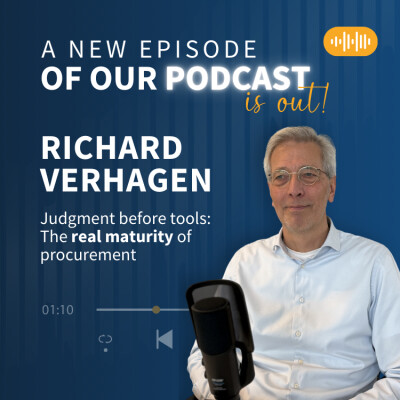
This podcast is hosted by Jean Aubrey, a senior business manager specializing in procurement.
- Speaker #1
Good morning, Richard Verhagen. Thank you for being with us today. It's really nice to have you. So first of all, I would like to point out that you are speaking on your behalf and not on the behalf of your company or former employers. So to begin with, I would like to hear a short resume of your career. So in two minutes, Richard, who are you?
- Speaker #2
Thank you. I'm Dutch by birth, father of four children, happily married and culturally formed by, of course, my Dutch upbringing, which in the Rotterdam area means action speed louder than words. Subsequently, a number of years in England, south of England.
- Speaker #1
Yeah.
- Speaker #2
Then nine years here in Terfuren. Belgium. So kind of, yeah, multicultural formed, I would say in that respect. Chemical engineer from background and that probably explains my chemical nature of the job we're going to be talking about later.
- Speaker #1
Yeah. Okay, great. So if we focus more on the personal part, so four children, okay. Are they grown up? Where are they now? What are they doing?
- Speaker #2
Yeah, they're all grown up. They've all left the house. The oldest one is a sommelier and restaurant owner.
- Speaker #1
Okay.
- Speaker #2
The second one has just finished his PhD in artificial intelligence. But the future.
- Speaker #1
Trending topic.
- Speaker #2
My third son is actually a lawyer. And my daughter, the youngest one, is actually a dog groomer.
- Speaker #1
Okay, okay. One of the groom, okay.
- Speaker #2
She's grooming dogs and basically trimming them. And she only does one race. She does the Pomeranian Dorm. Okay. Which is a kind of rather special breed when it comes to cutting and everything else.
- Speaker #1
Yes. Okay.
- Speaker #2
Yep.
- Speaker #1
Okay. Great. Thank you for this. So, Richard, if your friends and colleagues had to describe you in one sentence, what would they say?
- Speaker #2
The word that comes to my mind is easygoing.
- Speaker #1
Okay.
- Speaker #2
Yeah, it's two words, but okay, it is the one word.
- Speaker #1
Okay, easy go, okay. So it means that you are accessible, you are the kind of person that will leave the door of your office open or you work in an open space. How does this...
- Speaker #2
It's interesting that you mentioned that one because actually when I'm in the office in our UK-based headquarters, I deliberately... always sit down with the open office of my team. Whereas status-wise, my job level allows me to have an office.
- Speaker #1
Okay.
- Speaker #2
But I never feel at home in an office when I know my team is out there. So I'll be with them, period. And that's, I would say, throughout the last 15 years, whenever the open office experience kind of really blossomed and I got experience with it, I've always been kind of in the open office. That is in broad distance part of what my culture and view of leadership with the team is all about.
- Speaker #1
Yeah. Okay. Beyond the field and surrounded by the team. How are you in the office and how are you at home? Are you the same person or?
- Speaker #2
Well, no. The anecdote here is that I would arguably say that I'm impatient and wants. results and like said you know action speaks louder than words am i expecting activity i think that kind of describes me both at home as well as in the office um whereas in the office i would say all of that is kind of cultured way that i'm always going to be very patient with my people and my team so whatever is my patience, I don't necessarily radiate it over my health. Try to motivate the team as much as possible. And interestingly, my wife often says, you know, I wish you would always treat me as you do your colleagues. That sensitivity, I really appreciate. So it just says that at home, I tend to kind of let my guard down and the sensitivity towards my colleagues and how you treat your people and then as a leader, how you come across. At home, as a husband, I tend to kind of forget about it.
- Speaker #1
Okay. Okay. There you go. All right. Richard, I was told that you only take the ferry when you are going to the UK, so where the H2 of your company is based, rather than play. Why is that? That's a fun fact that we'd like to hear it out.
- Speaker #2
Yeah, it's pretty straightforward. Actually, cost analysis, because you're purchasing, so you do a total cost of ownership type of analysis.
- Speaker #0
Of course, that's the basis.
- Speaker #2
A ferry trip versus a plane trip is arguably around about 100 euros per trip cheaper. I do about 12 of these trips per year.
- Speaker #1
Okay.
- Speaker #2
So, you know, it adds up.
- Speaker #1
Yeah.
- Speaker #2
So that's one. And the other one is that whereas with a plane, you've got all that security stuff to worry about when you go through customs and all that stuff. And on the ferry, you know, it's literally a five minute thing and you can just bring anything in your car that you want.
- Speaker #1
Okay.
- Speaker #2
So I travel a lot lighter, easier.
- Speaker #1
of course with more stuff that comes with me then whenever i travel by plane and that's in the plus so it just feels relatively comfortable and like said cost effectiveness okay okay so i'm also a big fan of the shuttle when i'm going to the uk so rather than playing yeah yeah okay makes sense okay um so you just uh told us that you are a chemical engineer so why and how did you end up in purchasing.
- Speaker #2
Yep.
- Speaker #1
Because the two are not linked.
- Speaker #2
Well, you know, purchasing is also done in chemical factories and manufacturing. The Campbell Engineering schooling allowed me to start off as an engineer. At that moment in time, I figured out that this wasn't going to be my full career opportunity that I wanted to pursue. So I did a business administration degree in the evening hours. And once I got that degree, I would arguably say that the more commercial and business opportunities started opening up. So I've been a marketing manager, I've been a supply chain manager, then went back into manufacturing for engineering, site director, maintenance manager. Before and at that point in time in my career, the purchasing opportunity kind of came around.
- Speaker #1
Okay.
- Speaker #2
And the slot that came around was very straightforward actually and really fit for purpose for an engineer because it was industrial gases. energy co2 emissions which in it feel in that field is very much almost an engineering background is almost like a plus of course because you understand more what you're doing or buying it's a very technical type of expertise within the field of procurement yeah and that kind of really helps if you have an engineering background because you understand where it comes from what you need to look for the analysis the analytical parts etc it really is you a plus and a prey. So that's how I got in touch with procurement. And after about six, seven years, the procurement scope did grow and became part of things like raw materials.
- Speaker #1
Yeah.
- Speaker #2
And eventually, 2017, I became the director of a full-service, all-inclusive procurement team where all activities were purchased, be it supply chain services towards corporate services, everything that was in it. It's nowadays still done by the team that I'm looking after.
- Speaker #1
And how many persons in the path do you have to manage or is it your responsibility?
- Speaker #2
Yeah, it was when I started as the human director, putting my own team together, it was around about 25 people.
- Speaker #1
Okay, so a huge team. Okay.
- Speaker #2
Yeah.
- Speaker #1
With few direct reports, I believe, because you were not with the…
- Speaker #2
Yeah, no, no, I'm clear. It's actually a large… Of the 25, you could arguably say that around about 18 were centrally in the same office as where I was. And then we had site-based buyers that were sitting closer to the internal customer. Therefore, doing the body bonding and the better relationship building and understand what the requirements are for the sites. But they were also part of the team. So it was definitely delegated towards... I would say a category setup. So you got each category that you set up with a different leader and then reporting it to me.
- Speaker #1
Yeah, okay. How do you become the procurement leader, Richard, you are today? My question is more towards your work-life balance. You have four children. We know that it's time-consuming. I have only two and I'm comfortable saying today I'm just droney because they are... really young but how did you do to manage your career uh be a good husband um and be there with your kids because you were traveling a lot? What's the key? What's the secret?
- Speaker #2
The real secret is my wife, the family manager of the place. She was full-time and dedicated to this. Let's be honest, the four children were in the age of zero to six. So if you think about that group and what they're going through in their ages, it's a full-time job. I was able to work Long hours, my wife let me do that. But obviously, when it needed to be, I was there and doing my thing. Mind you, like I said earlier, I spent nine years here interviewed. During the week, I lived here. And then in the weekends, I would be home. So was it always ideal? It never was. But that's where the beauty of my wife's full-time family management role kind of came in. I mean, she's done an exceptional lot of the education and development of my children. more than I ever did. But I was always there when they were going to soccer, training, sports, whatever. I would always be there. I would always be driving them around and I would always be watching their matches. So you find a balance that kind of works at the end of the day. And my wife was excellent at what she did. And I think I was excellent at what I was trying to do. So the best of both worlds for each other.
- Speaker #1
Great. Okay.
- Speaker #0
Block one, Richard's professional DNA.
- Speaker #1
We switch now to your professional DNA. So to fully understand your future answers, we start by situating your background a little. So what shaped you in your relationship with purchasing? You have done a lot of positions. You have escalated the ladder to become who you are today. So what is it for you?
- Speaker #2
Like I said earlier, after the engineering degree, there was the bachelor business administration degree. Because I definitely wanted a wider growth as well as a growth within the organization at the same time. So experience with more fields to go into and then growth through the ranks kind of really, I think, shaped it up. Significant amount of leadership trainings. that I've been allowed to go on.
- Speaker #1
Ah, that's nice.
- Speaker #2
During my marketing manager role, I was clearly often going out with salespeople sitting on the other side of the procurement tables when you speak. So you would actually, very early on in my career, experience how the sales procurement process was going. And regularly as a marketing manager, then sitting at my desk, talking to the sales manager, you had to strategize, what are we going to do with a certain customer? So... Sitting on the other side of the fence and then kind of seeing that process kind of started helping in terms of that development. Like I said, you know, the trainings, leadership training, but that was very much more into the leadership roles. Yeah, and I would say a large part of my career at the end of the day always comes back to on the job, learning on the job, training on the job, getting on with it. And, you know, when I was asked to step into the field of procurement. which I earlier said was more industrial gases, technical oriented. It was my first step. So there's a learning curve to go through. I've mastered all those learning curves on the job as you go forward with it. And that's, I think, largely been the ride I've gone through. And the good part is with your manufacturing and engineering backgrounds, I know what the internal customer... in a chemical company in one time. Yeah,
- Speaker #1
of course, of course. So that's the biggest advantage.
- Speaker #2
I vividly remember when I was a site director, we were strategizing a procurement activity that had to be done for the site, a new service contract. And we knew that that industry was cartel. So we devised a strategy to get a procurement myself, how we go into the market, and we're going to make sure that we're going to break the cartel down.
- Speaker #1
Okay.
- Speaker #2
and we succeeded. We actually brought in to the Rotterdam area an Antwerp-based company that had been tendered simultaneously without the knowing of the cartel in Rotterdam. They did an excellent job, they delivered an excellent service and the price was down by about 15%. So we delivered what we expected we could deliver and we broke the cartel down. That was kind of one of those experiences that kind of helps you to see what the value can be of a procurement organization clues. Once you know your market, you know what's going on, you strategize, you prepare, and you really deliver exceptional results.
- Speaker #1
Those kind of things help. Okay, interesting. Okay. Have you had a mentor or a particular encounter that has marked your career?
- Speaker #2
The, as I would say, indicated earlier, my marketing manager role, which was UK based, very much kind of, I had a mentor manager there that really helped me and kind of gave me a lot of insights of management and how do you go about bringing a message. He himself was Italian, somewhat senior, but definitely seasoned and knowledgeable in, you know, how you go about managing the business and many other things. On the opposite side, so that's kind of like the good mentor. Then there is the bad mentor. I also was privy to a US VP based in the Netherlands who had and was taxed by birth and background. really helps you to get the accent well besides the accent he was he was definitely having that aggressive text and leadership style i would arguably say uh a bit like trumpian behavior okay now if you ever want to be demotivated you know that's the way to go okay so it was that style so you know great great experiences to kind of see both ends of the coin uh fortunately throughout my career. The majority of my leaders have been great mentors to me in terms of how you go about managing new teams.
- Speaker #1
Okay. You know by seeing this person, you don't want to be this person on the monster. And how did you manage to get rid of him? Or how did you manage to put him aside or to not be influenced or to resist? Or what was the...
- Speaker #2
Well, yeah. You know, fortunately, he was only two years in the Netherlands before I think they sent him back. It might well be that the company recognized that his leadership style, which he did not do that, was not necessarily catered for the needs that Europe was looking at for that moment in time as an organization. So I'm not mistaken to think after about two years, they kind of repatriated him back to the US. So you kind of survive for those three years. You get on with it.
- Speaker #1
Yeah. Okay. What are the principles you apply in all your procurement projects?
- Speaker #2
Teamwork, because you're not going to do it on your own. It's always going to be teamwork. So finding the right persons that can help you in the challenges on your plate. Preparation. What are you going to be doing? What are the facts? What do you know about the market? What do you know about your supplier? What do you know about the service or the product that you're going to be purchasing? Get your facts right, get your information okay, and then prepare. And as part of the preparation, I would say, assess alternatives. So in procurement terms, the BATNA.
- Speaker #1
Yeah, BATNA, okay.
- Speaker #2
Get your BATNA right, know what the alternatives are, and use it as part of your strategizing how you go about things.
- Speaker #1
Okay, okay, okay. So, but now it's best offer to...
- Speaker #2
Yeah, best alternative to negotiated agreements.
- Speaker #1
That's it. So, plan B or plan C or... Plan B or C. Absolutely. Of course. Just to know...
- Speaker #2
Throughout, I mean, throughout the career, I would say regularly or very frequently that has come back as a topic of, okay, now let's go for plan B. and move forward. But always achieving success at the end of the day.
- Speaker #1
Because you never know what's going to happen.
- Speaker #2
Well, you know, yeah, absolutely. And on two occasions, interestingly enough, when I look back, when you put the question forward to me, on two occasions, it's gone as far and as extreme as that the person opposite me, i.e. the seller of the vendor that you're trying to do business with, There was, the chemistry was not there. It wasn't working. We weren't getting through. And on those occasions, I actually literally went up in their organization and brought back those facts and said, you know, we've got this problem. It's individual based. It's a problem there. We can't get it resolved. You're going to lose the business if you don't do something about it. Guess what? Within two, three months, I had a new person sitting in front of me with whom I was negotiating. So. You know, it goes extreme as that in terms of even the chemistry. of the person opposite of you is very influential in getting your results. And when we weren't getting there, you know, we raised the flag and aspirated a solution from basically your supplier.
- Speaker #1
Yeah, to implicate them, of course.
- Speaker #2
And of course, this is all about, you know, relationship, leverage, what have you, what can you do, etc. It's all part of the bigger picture. And in those occasions, it was clear that we had a lot of leverage as a client in terms of relationship. and then business turnover and everything else. So we could do it.
- Speaker #1
Okay.
- Speaker #2
It was possible.
- Speaker #1
Okay. Block two, today's procurement. So we get to the heart of the podcast, your personal vision of the work. So what do you like about the job and what drives you on a daily basis with John?
- Speaker #2
What I like about the job is you're sitting on the fence. And what I mean with sitting on the fence is you've got one leg in the company and you've got one leg in the outside world. So you're one of those employees that is not fumbled within the company and its fence. But you're actually sitting on both sides of the fence, looking out to the world and looking into the company. And I love that. I've been in supply chain prior to procurement as well. Same concept. And that's wonderful because I think I would get bored if it's company only. Let's put it like that. This is just the dynamics of the outside world with the inside world and bringing those together. That is what part of the challenge is all about. And that also creates that agenda, which at the end of the day, it's never boring. It's repetitiveness. There is a bit of it, but there's also a lot of continuously new things happening, coming. sometimes surprises, of course, that create the ongoing dynamic of it's actually never dull, it's never boring. And I think that's kind of what gets the best out of me, to be honest, in terms of being energized and really going for it.
- Speaker #1
Yeah, doing new things, meeting new customers, new way of thinking, continuous improvement, plenty of things indeed to be done in procurement. What? annoys or worries you about the recent evolution of the function?
- Speaker #2
Yeah, the recent evolution of the function, you know, I think what still annoys me in general is the fact that purchasing procurement is often still undervalued in organizations. Whereas if you look at it, you know, we manage the wallet or we manage the credit cards. We're spending the big bucks. Sometimes everybody seems to think that they are a buyer or can do something commercially.
- Speaker #1
I can buy better than you.
- Speaker #2
They know somebody, they know a specification, they know what they're looking for. And you know, this is a great product. Well, who else has got that great product? It's not just one body that you want to do business with because chemistry works, etc. There might be more. So things like that really kind of keep me... It's still a trend that is out there, which I find. annoying to say the least because you know you hold the wallet you spend the money you're doing something equal to a sales manager that generates EBITDA and gets often the high praise whereas that praise doesn't necessarily come towards procurement whereas you're always doing a silly thing in that sense okay
- Speaker #1
okay and is this something that in your career you uh often uh experience some people trying to Not to buy fast, but coming with a solution, saying, okay, you need to buy from this person. Once you do, how do you react?
- Speaker #2
You know, that's a concept, of course. That's a practice that is out there. You know, rogue buying, as we can call it. And I have to admit, within my current company, executives happen to also be very good at that. But I've once had a chat with the CEO. I said, you know, when you have your management team meeting, you might just want to enlighten them that as a leader, they should set an example. So then my team frequently sees how your leadership directors are coming around with road buying activities that they know they can do better. So, you know, it's just an opportunity if you want to cast a shadow as a leader. of how things should be done in a company, you should start by not doing robot.
- Speaker #1
Of course, of course.
- Speaker #2
So that kind of discussion, I've regularly motivated my team saying, you know. If somebody comes forward and does that, just ignore them. If the dialogue doesn't help, because we try dialoguing regularly, that doesn't help. You know, just ignore them and say, you know, I'm taking on board that activity right now. And you're going to just sit there until they are stressed out and they really come to us in a different manner. So, you know, you try all kinds of actions and activities and see what happens. We've done some... I would arguably say internally company press releases in the past as well to try and see if you could motivate people.
- Speaker #1
Okay.
- Speaker #2
To say, you know, this is the way it works, et cetera, et cetera, et cetera, and see what you could bring along. Other one is, I would say, the procurement dashboard, the KPI benchmarks. If you're high level KPI benchmark, one of the benchmarks tends to be also how much of total spend goes through procurement.
- Speaker #1
Yeah. And the memory expense.
- Speaker #2
Yeah. Yeah. Yeah. How much of this spent are you really managing as a human team? And so that's a number I've rarely tried to highlight as well to management. Because, you know, so much money is not being managed by us. It's spent just for your awareness. And if you think about return on investment, this is what you could be getting out of the value if you would be done. So you try to kind of continuously bring messages back to the organization. you guys You as a leader have to do something for us because we can't necessarily do any more than we're doing at this stage. We need you as leaders to do something.
- Speaker #1
Okay, interesting.
- Speaker #2
And it wasn't always that, I have to be honest. Because like I said, you know, they have rogue buyers as well.
- Speaker #1
Of course.
- Speaker #2
So it did always work.
- Speaker #1
Depends also on the maturity of the organization you're working for. Depends on the C-levels, if they are, let's say, responsive to your messages. So there's plenty of... sometimes constraints about doing other roles. Is there a trend at the moment that you feel totally overrated?
- Speaker #2
Yeah, and I wouldn't necessarily call it a procurement trend, of course, at this stage, but it's very much around, well, probably two, I could say. The first of all is the AI bubble that they're in, of course. So much money that goes into that one right now is just mind-blowing. You know, how can you ever consider that that's going to be a return on investment that works out when you're talking about investments of $15 billion?
- Speaker #1
It's insane how it is happening currently. And we don't know when the bubble, if there is a bubble, when it will be exploding. Yeah,
- Speaker #2
no, we can't make that prediction. But one has to assume it has to because how can you ever return that type of investment back to your investors? It's crazy stuff. Now, I do believe in AI. That's something else. And I've seen example already in procurement supply chain where it's already being applied and being used. So I can really see a future in there because there's so much data richness out there that if you can really funnel that through the proper AI mechanisms, I think for procurement and supply chain organization, there's still a lot to learn and thereby a lot to improve. That's totally honest.
- Speaker #1
So
- Speaker #2
I can see that one. The second trend is sustainability.
- Speaker #1
Okay.
- Speaker #2
I'm talking from a company that has a sustainability procurement performance that is rated as being the top 1% of the world.
- Speaker #1
Wow.
- Speaker #2
Across about 100,000 companies that are being assessed. So, great stuff. But at the end of the day, if I translate all of our culture, our DNA, our maturity in that field, towards, so what am I truly contributing towards sustainability on the streets, in the environment, or whenever else? It isn't much yet. So is it thereby overrated? It sounds a bit like it to me with the experience I have right now. Now we are working on a number of good things to try and see if we can really go next level now towards saying, gosh, you know, what if we start doing business with clients that have a better carbon footprint than another supplier? But we didn't implement that yet at all. And we were thinking about it and starting to get into that type of dialogue internally and see what we could do with it. So some of that overrated. You kind of say, oh, net zero, sustainable, and all of these things. The bottom line is how much have you really done already?
- Speaker #1
No.
- Speaker #2
It gets a bit silent I think.
- Speaker #1
Okay. Yeah.
- Speaker #2
Okay. It's uh, we watched out that it doesn't get genuinely overrated.
- Speaker #1
Okay.
- Speaker #0
The results need to count at some stage and the action needs to show.
- Speaker #1
All right. And so do you think that today you must go further in terms of regulation, in terms of constraints to make sure that there is some more and more sustainability projects within procurement or other departments?
- Speaker #0
I don't mind Europe being a leader. Somebody in the world has to be a leader. Let's be honest. And if Europe pickups the role, you know, Fine with me, but then start to protect your business and your industries and everything around it. So create the barriers to entry when it comes to non-sustainable products or lower sustainable products that are being generated in Europe and put up some barriers. And that's not happening. So in my business, the Chinese imports products like crazy at prices that are... mind-blowing, but they don't have CO2 emissions to worry about. They don't have all kinds of environmental reporting liabilities to worry about. And that's tens of millions of dollars per year that we spend and burn in cash, and they don't spend and burn in cash. So they can, by default, lower the prices than we can.
- Speaker #1
Of course.
- Speaker #0
And that's kind of where you're kind of like, well, you know, measuring with two different targets and not protecting your business in Europe, whereas you have this vision of where you're heading is you're not on the right level playing field globally protecting us with all of our good efforts.
- Speaker #2
Yeah.
- Speaker #0
And that's what we really need. Proper printers.
- Speaker #1
Okay, of course. Because when you are not following the same rules, of course, some persons and companies can cheat. And we know, yes, of course, we know where this is leading. So it's the same that is happening with electric vehicles, for instance. So yeah, Europe is also here to protect the industry. Okay, interesting.
- Speaker #2
Block three, convictions versus reality on the ground.
- Speaker #1
So sometimes we have a strong convictions that the reality of the organizations comes to shake them up. Is there a practice that you defend and that your teams or colleagues often challenge?
- Speaker #0
Yeah, I come back to the earlier statement, which is road buying. It is a hobby that I... continues to persist in the organizations uh and um we keep fighting it like i said earlier with all kinds of examples that i mentioned earlier uh but it persists and and and it's uh it's hard to hard to deal with okay okay but it's that's that to me is the one that is generally speaking most frustrating also for the team um that's it yeah okay um
- Speaker #1
How do you build a RomDust procurement organization?
- Speaker #0
I did it back in 2017 when I put together the purchasing team that is kind of in place today in the practices. It is about having strong procedures that are flexible enough. As a fundamental, people need to know how and what and which way the work is to be executed. An ERP system that kind of governs the way in which to work across departments. So from a requisition to a purchase order, towards paying an invoice. Clear processes that really help describe how things happen, how the way of working is defined. Training and retention. There is no procurement school or hardly any procurement school. not only two but we'll get a thousand nobles you didn't agree maybe a Netherlands yeah well yeah there is but again we'll talk a bit further about that later on but so often training on the job bringing in youngsters that are kind of still green in procurement train them retain them and we've done many of those trajectories that are that work out excellent and you really got people well developed and trained on the job um strong internal customer orientation so you know i want to your customer know our internal customers might be engineering team it might be uh it might be uh customer services it might be supply chain uh hr finance know what they want know what the specifications are and collaborate with them and find them to understand what the needs are it's important and proof of Yeah, reporting your results. Get results out, make your organization aware of what it is you're delivering. And what, yeah, in procurement, I always calculate return on investment. So my team as a company, within the company, my team costs about $3 million a year. In terms of payroll, pensions, you know, all that stuff. Do we earn back our salaries? Yes or no? And if so, what's the multiplier? And those are the kind of things that I keep reporting on towards the organization. These are the results we're bringing in. Recognize our existence. We're not just a cost center. We're also a profit chamber.
- Speaker #1
Of course.
- Speaker #0
That's relaying that kind of message. And I've basically used that for building the organization. And then, yeah, of course, we talked about training, retention, recruit the right people, and making sure that they obviously want to stay. And that's been a challenge because we've had two massive waves that hit us. The first one was COVID. We used to have a fully Brussels-based procurement team, even though there wasn't any. And COVID came and basically my boss called me up and said, Richard, let go of your Brussels team. You now need to build it up in the UK. We want to reduce costs. We need to do this. Lay them off and rehire back in the UK. Get your team up and running. All of that happened within nine months of when COVID was out there. And now we're not.
- Speaker #1
Hard times, yes, COVID.
- Speaker #0
And yeah, the second one that was a big one was 2022-23. Financially, we were in very poor performance. And we had to actually go into US Chapter 11 type of insolvency.
- Speaker #1
Yes.
- Speaker #0
In order to financially short the company out. Probably about 75-80% of the team in the UK. And that moment in time, I left. And again, I had to start from scratch, bringing in a whole new team. But it's really the team, the chemistry amongst people and how a team comes together. It really does make a lot of difference. So the quality of what you hire, what you bring in, and how they then collaborate with each other as team players. That's a really valuable thing.
- Speaker #1
There's something interesting that you mentioned. Strong team. procedures, but flexible enough. How do you make sure that this works? How do you define? Where do you put the balance?
- Speaker #0
Well, I've always taught my team, I said, you know, the procedure is there to basically guide you from A to B and what you're supposed to be doing. But I do allow you to use your brain and if you think there's a smarter solution, I don't mind you considering that smarter solution. Use it, consider it, and do it. But it has to be for the better of the company. Anatomy is where you know you become flexible because you say, you know, if you use your brain, think about it. Easiest example, our policy says anything you purchase over $50,000, you have to go and get three tenders. Three feedbacks on the tenders.
- Speaker #1
Yeah, yeah, okay.
- Speaker #0
And then analyze the offer and take it from there. And I basically told him, you know, you don't have to. If you want a single source for a good reason. And you can justify that reason and explain it to me. I'll sign it straight away. That's where I'm going with flexible within a procedure. I do want you to continue to use your brain, your knowledge, your experience, and everything you have about the market or your suppliers, and then come up with the right negotiation or commercial service. And that's fine if you deviate.
- Speaker #1
Okay. Interesting. Is there a transformation you were leading and where you failed during your career?
- Speaker #0
Yeah, I think the word failed is probably slightly too strong in the example that I do have. Because in 2017, when the company was created through an IPO, basically the message was Richard, put together a procurement organization. And that was something that the company wasn't used to, because they used to be working under a shared service type of approach and would get piecemeal. procurement support. And all of a sudden they had their own dedicated procurement team. What are you going to do with that? So it was kind of a luxury problem almost for them. But at the same time, we had to prove our case because they had been underserved in history. So a lot of people were sitting there like, you know, it's going to be the same thing again. No, no, no. You now have a dedicated team that's there for you. So we developed something called Procurement Excellence. and really put in place the organization and made it sure that it was getting recognized. by the organizations in the world. It was interesting because within three, four months of being there as a dedicated organization to this, we got a challenge from the site director of Spain. What are you doing for me?
- Speaker #1
And how do you go about it? Why can't I do that myself? Yes, okay.
- Speaker #0
So, you know, straight away that challenge started. But hey. I didn't come as a surprise, so I was at least prepared. And again, like I said, you know, we developed purchasing excellence. We had a driven program focused on catering customers' need, internal customers' need, making sure the service was excellent and tip-top and really proved the point of why a procurement team, a professional procurement team, does bring value to the bottom line of the company and to the bottom line of your site and you as an architect. That was probably the one thing that stood out. Now, somewhere that got taken over around about 2019 by companies, sea leaders that developed a culture program. They said, we know we're going to add it for this culture. I'm going to go into this. This is how we're going to go forward. So some of the things that I was doing were kind of, yeah. Then at that moment, I was on the fall by the wayside, and we were moving more into the one culture type of development led by the C-suite folks in terms of how they wanted to move forward. So I don't think it necessarily meant it failed, but it meant it was getting tuned, bypassed slightly here and there, and then some new core values and things were added to what you were doing and making adaptions necessary as a result. But I can't say it failed in Dutch.
- Speaker #1
Yes. Okay. Okay. Okay. Which negotiation are you most proud of? Can be in terms of values or in terms of complexity, of challenge?
- Speaker #0
There's a few ones. If we're talking procurement, really, 2010, 2012. a negotiation for our Italian site in Tuscany to put in place a power steam cogeneration plant.
- Speaker #1
Okay.
- Speaker #0
Mind-breaking change for them because like, what are we doing here? But it was the best, most logical concept in terms of cost reduction and everything else around energy costs that they had.
- Speaker #1
It was running via... coal before or just electricity?
- Speaker #0
No, it was before that we were basically taking steam and electricity from the neighbor. But the charges were getting rather extortionate and it was obvious that a cogeneration on site was going to be the solution in terms of making a massive reduction in cost as a result. And it's proven itself, it worked. negotiated in 2010 to 2012 and it started up in december 2014 and it's basically been up and running ever since so that's that's definitely one that that stood out similar for the factory in rotterdam and we had to renegotiate around about 2012 a 15-year industrial gas supply My agreement.
- Speaker #1
Okay.
- Speaker #0
It was overhauled with a massive amount of new opportunities, improvements, and we already had a legacy for 15 years. So we knew what was the problem and we knew what had to improve. And at the end of the day, all of those improvements got negotiated into the new contract. Thereby, again, the return on investment of that new negotiated deal was significant and really contributed to the bottom line for the site. Those are the two ones that we do stand out.
- Speaker #1
I know, and we've been discussing about that you put a lot of energy into sustainability topics. How do you make sure that is not considered as greenwashing from your peers or from the outside world?
- Speaker #0
Yeah, that's where it gets down to substance. Because one thing that I couldn't live with myself is greenwash. I wouldn't want to be part of that one. Fortunately, I was working with a C-suite leader on sustainability that kind of really came from the same approach. This is not about greenwashing. This is about substance. This is about delivering truly components that are going to be outstanding and really make sense from the industry where we are, our future path forward. How do we decarbonize? How do we get, indeed, a better improvement when it comes to things like waste emissions, water usage? safety, social well-being for employees around the world, as well as, and then it goes to procurement, the suppliers. So the suppliers should become one with us in terms of their performance criteria and everything else. And it really meant we started a journey of educating suppliers. So, you know, convince suppliers of what we were doing. convince suppliers to come with us on this journey that was quite a part of efforts that we put in place and that to me is what really matters because then it is true substance you're not just screen washing the white washing whatever washing you're doing to kind of uh show to the outside world some figures and data that was really reaching out and saying guys you know we want to take you along with us come along uh won't be easy but but you'll get there and eventually if The supplier would consistently say no. Yeah, then there was a situation where we were going to say,
- Speaker #1
now we depart.
- Speaker #0
Now we have to depart. If that's our opportunity, we explain to you what we're doing for. You're not coming along with us. You're not playing the game. We're looking for what it is that we need. And then we'll go somewhere else.
- Speaker #1
Okay.
- Speaker #0
That to me is where it's substance. It's for real. You're looking for true improvements. Now again, I said earlier already in this podcast, like... The results haven't yet been delivered on that one as much as I would. That's where my patience comes back. The amount of effort, I'm expecting more as a result. That is not balanced at this stage. And the speed of it is not always that fast. It could be faster in my book. But again, everybody has his own pace in order to be ready for that journey as it goes. And my impatience gets tested. That's pretty. Okay.
- Speaker #1
Okay. How do you defend your projects when you disagree with your management?
- Speaker #0
I tend to stay fact-based. So basically financial analysis comes with a proposal. And I try to always bring it back to like return on investment. How much do we get in return for what we're doing? This is the proposal. These are the alternatives. Maintain a fact-based approach to your analysis and your considerations. Now, that's always easy for me to say because I don't know their agenda. So I don't know necessarily what they're kind of worried about. But I've had situations where, yeah, it didn't materialize what I proposed and what I kept on proposing, what was by default the best proposal. But at that moment in time. I was working with the CFO on an opportunity for the UK and it didn't, it didn't from his perspective work out given that he was looking at financial risks in a different way than I was. That's his job.
- Speaker #1
Yeah.
- Speaker #0
So at that moment in time, you continuously say, you know, we all know that this is the best thing within the procurement box, but if you didn't put your other things on top of it, yeah, I can appreciate your choices that you're making. And at that point in time, I can live with those choices that are being made because you understand the logic of it. And as long as that process takes place, you know, fine, we'll take the second best option, plan B, no problem. But again, I do keep going back to plan A, partner,
- Speaker #1
practice,
- Speaker #0
what does it come down to, and make a financial analysis as well as pluses and minuses that come with it. Okay.
- Speaker #2
Up next, the Q&A box presented by Neo, a fast, spontaneous format designed to explore our guests' personalities.
- Speaker #1
So, strategic sourcing or tactical sourcing?
- Speaker #0
Strategy sourcing.
- Speaker #1
Okay. Is the supplier relationship management about people or process?
- Speaker #0
No, it's people.
- Speaker #1
Do you focus more on value creation? Cost savings.
- Speaker #0
At the end of the day, it's value creation.
- Speaker #1
Value creation. We never mentioned savings during our talk. As far as I remember, yeah, you always talked about value. Okay. SAP or Coupa?
- Speaker #0
That I would have, our plan, because I only know SAP. Coupa is unfortunately an optimality of them.
- Speaker #1
Decentralized procurement or centralized procurement?
- Speaker #0
A centralized procurement.
- Speaker #1
Negotiation. Is that an art or a science?
- Speaker #0
There's a lot of science about it, you know. You can find all the books and everything else that comes with it. But it is an art as well. As an art as well.
- Speaker #1
I gave you a joker. You don't have to choose. So one joker is a... It's done. Data analytics or intuition in decision making?
- Speaker #0
Big analytical data analytics. I would go on you. But boy, you're putting a tough one on them.
- Speaker #1
Yeah. We talked about data a lot. There's factors in data.
- Speaker #0
I'm a very analytically oriented person. Probably my engineering background. Poking up. But I do keep going back to that is the fundamentals.
- Speaker #1
Okay. Sustainability is mostly compliance or opportunity?
- Speaker #0
It is opportunity.
- Speaker #1
Okay. Agile procurement or traditional waterfall approach? Agile procurement.
- Speaker #0
Yeah, no, agile procurement. Absolutely agile procurement in my book.
- Speaker #1
Procurement success monitored by KPIs or feedback?
- Speaker #0
KPIs. Okay. Again, very analytical person, so KPIs benchmarking is kind of what I use a lot.
- Speaker #2
Block four. Recruit, retain, develop.
- Speaker #1
What are the key skills you look for in the mind of today, Pritam?
- Speaker #0
It starts with being a team player. Somebody that is a self-starter, takes accountability, and is result-oriented. And that kind of thing.
- Speaker #1
capabilities combined with past experience in the commercial arena yeah kind of kind of put it all together okay and is there is one from uh that you prioritize from uh being a self-player to a self motivated
- Speaker #0
or a self-starter or uh what is the ranking what is the most important do we think like self-starting and accountability come very high because that that creates the drivers for people to really go at it, take ownership, and then start to make things happen and deliver. So those are the priorities.
- Speaker #1
Okay. So I guess that you're still recruiting at your level because you had to recreate some teams. How do you judge and challenge a good buyer in 45 minutes, an hour? What do you do? Practical cases?
- Speaker #0
Yeah. What I, what I... tend to do is provide them a case, very often a case out of my history. And I basically put it forward to them and say, you know, when you come along for your interview, I want you to present your way of how you go about this, how you tackle this, and what you do. So A, you get the insight of their thinking and the way they work. B, you see them present and during the presentation by probing, asking. You can also see how they react and respond. And those two combinations together really helped me in the decision making very much.
- Speaker #1
Okay. Okay. Did that happen to you? You were having a really good first interview. And then when it comes to the business case, you realize that the person was not sharp enough or meeting the expectations.
- Speaker #0
this kind of these kind of things that you yeah yeah yeah yeah now this that has happened um and Fortunately, it did because it meant that we were able to bring in the right candidate at the end of the day. But you see, it was still an opportunity where two candidates were available. And whereas the one individual was actually doing a significantly elaborate presentation with lots of details and a marvelous presentation. But it never stood up to the other one who, in this case, came across with a lesser presentation. But during the presentation and the probing, the quality of answers, the way they came back and explained things, it says, you know, it's a line item here, but basically behind it is this, that, the other one. You clearly start to recognize like, okay, you know your stuff. You really stand out. And so it helps. It really helps. It's proven successful.
- Speaker #1
Of course, of course. That's the whole idea of business cases. Okay. Do you consider... yourself a mentor to someone?
- Speaker #0
Yeah, not to someone specifically, I would say. I come from the cultural background of saying, you know, as a leader, what shadow do you cast? And they basically lead by example. And that's my way of going about it in terms of my team. I sit with the team, be close to them, but I lead by the way I work. the way I go about things and the way I come prepared and everything else and set a standard to what I'm expecting my team members to also deliver on at the same time.
- Speaker #1
Okay. And do you clearly set those expectations when you are having interviews with potential candidates?
- Speaker #0
No, no, not really at that stage. comes at the moment that your candidate has been selected and we basically have kind of like call it the first day in the office and the first day in the office I do spend time with them saying you know this is me this is how I work this is what you can expect and we already mentioned it earlier you know open door policy there are no dumb questions I'm Dutch I can be blunt but you know I'm also there to listen and have a dialogue with you. And really, you know, I'm a grown-up boy. There's no question you cannot ask. I'm totally fine. You can't set me off or piss me off or anything like that. Any question, feel free to ask it. So that's kind of what I tried to bring across straight away from day one after the selection process has resulted in the candidate being hired. Yeah.
- Speaker #1
Okay.
- Speaker #2
Block five. and tomorrow for what vision for the future of procurement.
- Speaker #1
Richard, I'll give you a magic wand. Which CEO are you going to see? And what are you going to say to him as appreciating the 5XR?
- Speaker #0
I would always say, you know, all these CEOs that are not necessarily allowing procurement to have a seat on the C-suite table.
- Speaker #1
Okay. Do you have a specific company in mind or something that you...
- Speaker #0
Not really, I think, because you often start thinking about those kind of CEOs, the ones that are known and everything else. Of course, there are many CEOs out there, many small company CEOs as well. But it's kind of like the type of CEO that basically kind of says, you know, procurement, I need it, it's a shared service, that's it. Yeah. I think that's quite a mistake is being made. And I'd rather talk to those CEOs and tell them, you know what? It shouldn't be a seat on the table under shared services somewhere. It should be on your C-suite that we should be sitting there and be present as well.
- Speaker #1
Because,
- Speaker #0
you know, we hold your wallet. We basically have your credit card. We spend all the money that you guys tell us to go out there and spend. You better challenge us. You better ask for our questions. Like you probably do challenge and often you see that the marketing sales team does have a seat on the table because they're creating net revenue.
- Speaker #1
Yeah.
- Speaker #0
And I'm like, you know, we're creating net cost. The difference, of course, is the cost we create is spread over all those budgets in the company. So everybody is a budget holder and we're spending his or her budget. That's great. Pull it together. What do you see at that moment in time? As part of that finance accounting way of working, where costs are being spread all over the place, it almost makes us look immaterial and less supported. Hey, we're spending it all. You better pay attention. That's kind of what I would like to really bring across and make clear to such a CEO.
- Speaker #1
Okay.
- Speaker #2
If you leave procurement tomorrow, What did you do?
- Speaker #0
For me, that's almost a real case. Because, you know, at this moment in time, the Belgium legal entity has gone into insolvency. The company at large has gone into administration. So we're governed by outsiders at the moment in time. And we call the shots. And that are basically selling the company piecemeal here, there, and left, right, and center. So my role as global director of procurement, it has evaporated. And as a Belgium employee until last week, I'm no longer a Belgium employee.
- Speaker #2
Okay.
- Speaker #0
But the administrators in England continue to hire me. And basically, I'm now working for my own private legal entity as a consultant for administrators in the UK. Still doing the same thing as I do. and helping them as we go through all the challenges we face over there. And I still have a small group of three people in my team that are working through the procurement issues that we need to deal with. Thereafter, the end is going to be near, working-wise, career-wise. And that's okay because next year is my retirement age as well.
- Speaker #2
Congratulations.
- Speaker #0
So probably retirement is going to be happening next year. golf gardening or uh uh golf isn't golf isn't my thing i've tried it several times it isn't my thing it's definitely going to be uh gardening because i do have a large garden to deal with so there's going to be gardening out there there's four children out there that uh that that do take uh skill to take care of and then then grandchildren start coming yeah so there's going to be a lot of that and i do want to do doing some travel to uh Lots of travel done, but it was always business travel. So I've been to all those countries, but more in the hotels and the business rooms.
- Speaker #2
Yeah, for all business.
- Speaker #0
And really enjoying it as a tourist.
- Speaker #2
Okay.
- Speaker #0
So I'd love to become a traveling tourist now as well at Senda.
- Speaker #2
Okay. And so what is the next country on the list?
- Speaker #0
You know, I think one that I haven't visited yet would be Japan. I've spent a few weeks in Japan. I think on the list would also be something like New Zealand.
- Speaker #2
Okay.
- Speaker #0
Two places, never been there, not even on business trips. Okay. Wouldn't mind going there.
- Speaker #2
Okay. If you needed to give one advice to the next generation of buyers, what would it be?
- Speaker #0
The theories, the theory about procurement, you know, it's all known. Many books are written about it. Whereas in Belgium, you don't necessarily have the education to go through. You could do international renowned trainings such as SIPS, SIPS UK. Generally recognizing one of the highest standards of education you can go through. It is something you're doing at home yourself, but you're being tested and examined robustly against specialists that really run those activities. They've got a program from junior buyer to seasoned managerial manager. So, you know, the trainings are out there. The theories can be captured and all of that stuff. But then you've got the knowledge. That's it. It then comes down to you as an individual that makes the difference. And I already mentioned a few of those virtues that I'm holding, like accountability, self-starting, initiative taker, dare to be bold. And dare to make mistakes. Yeah. Because only then you learn.
- Speaker #2
Of course.
- Speaker #0
And it's interesting as a mistake. 2023, you know, seasoned professional, been there, done that. Something goes wrong in Germany. And my boss, being the CFO, came back to me and said, Richard, what happened there? And basically. Be open. Provided root cause analysis. Say this is what happened. This is why it went wrong. This is what occurred. Yes, it happened on my watch. Could have done better. But you know, lessons learned. This is what I'm now doing differently and what I've since implemented as a result of that. And he said, love it. Thank you very much. Keep going. So it's learn from your mistakes. Be candid. Be open. And at the same time, when you've learned about it, do something about it.
- Speaker #2
Of course.
- Speaker #0
So it's not like, oh, yeah, learn this. No, no. Now you've got to self-start, action it, do it different. it won't ever be repeated.
- Speaker #2
Of course, of course.
- Speaker #0
That's where the you factor, the personal factor comes into the arena and says, you know, with all your knowledge, what do you learn on the job and what do you do with it? I think that's where I would arguably say next generation buyers, you know.
- Speaker #1
Do mistakes.
- Speaker #0
Yeah.
- Speaker #1
Fail,
- Speaker #2
but don't reproduce it. Yeah, you have to.
- Speaker #0
I was a site manager and one of the technicians operator in the field. You know, he did his routine job, taking a sample of a chemical XYZ. Yeah. And then that sample had to go to the laboratory for testing. Part of a routine activity. Did it. Guess what happened? He didn't close the sample point.
- Speaker #2
Okay.
- Speaker #0
So the tank kept flowing and basically the tank emptied itself completely in the abandoned area. Okay. And this was our most dangerous chemical on site.
- Speaker #2
Okay.
- Speaker #0
explosive, the whole nine yards and everything with it. It happened. I think it ended up being a cock-up that cost us around about $150,000 to solve it and clear it and everything else. Nothing unsafe happened, fortunately. That was the good part. No environmental problems either. Good as well. But one or two days later after the event, and maybe even a week later, I went to the guy and I said, you know, let's sit down. because he was shaken about it, because he was a very seasoned and experienced top technician. We talked about what happened. What did you experience? What happened? How could this... What went on in your mind? Why weren't you concentrated? All those kind of things.
- Speaker #2
Of course.
- Speaker #0
And we concluded at the end of the day, like, okay, you know what? Take this home. Do your own learning. Close it out. But share it with us. Share it with the team. Share it with your group. Discuss it and make sure that everybody understands it and knows it.
- Speaker #2
Of course.
- Speaker #0
It's a win opportunity for us all to learn about this. You're now invested in your training. Please don't do it ever again. Get on with it. So that is about making mistakes. They happen. We're human. They happen. Learn from it. Get better.
- Speaker #2
Yeah. Okay. We switch now to the signature questions. So to conclude. Three questions that we ask to all our guests. Complete this sentence. Good buyers are those who... And bad buyers are those who...
- Speaker #0
Good buyers are the ones that know their business. And what I mean with know their business is they know their category in which they are active. They know their supplier. They know the requirements internally in the organization. And... Combining that, they have a strategy and with those facts, the research they've done, they know how to enter into the market and make sure they get the best value for the company. Best value meaning total cost of ownership from end to end is being achieved and delivered. If we're talking about a bad buyer, a bad buyer is essentially someone that kind of sits there and waits for a purchase order to arrive and then... Arguably, I would say pick up the phone and find the first supplier that is able to deliver.
- Speaker #2
Okay.
- Speaker #0
And just say, you know what, I'm going to send you the order. Send me your price and I'll put it in the system and we're done. That to me is a bad one.
- Speaker #2
Yes.
- Speaker #0
You add no value. You basically a transactional kind of question.
- Speaker #2
Yeah, exactly.
- Speaker #0
And that's all you're doing. Okay. It's where you start adding your value, where you really make a difference.
- Speaker #2
Okay. What is the most unusual request?
- Speaker #0
you had received in your career yeah and that one that one did take a bit of thinking but it does go back to a situation where i was kind of more in the marketing manager role which again is kind of like you know supplier customer uh but i was now all god's kind of defense and there was a chemical distributor who uh we were in a market that was sold out yeah and get any product and he was desperate for product desperate for product so he basically offered me his wife And I said, you know, you can have my wife, but, you know, I need your product. Give me your product. So I think probably in all of those, that must have been the weirdest request I've ever came across. in that activity, to be honest.
- Speaker #2
Where was it coming from? It was in the UK. It happened in the UK. Unfortunately, we don't have any audience in the UK.
- Speaker #0
But you never know who listens to this podcast because that's a funny one. For sure.
- Speaker #2
Okay. Perfect. Thank you very much, Richard. You just left the procurement room, but your ideas will remain there.
- Speaker #0
Thank you.
- Speaker #1
A special thanks to Richard Verhagen for sharing their insights. Join us on April 7th for the next episode of The Procurement Room, hosted by The Mail Hoop.