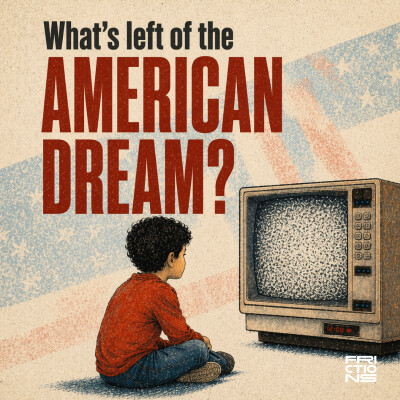
- Walid Hajar Rachedi
In the French suburbs in the 90s, that was the America that spoke to me the most, like a distant cousin. Not the Statue of Liberty, not Wall Street, but those black icons singing, dribbling, running faster than everyone else. Or knocking out injustice with words. On screen, Will Smith was not the funny sidekick. He was the hero, the main character. The fresh prince of Bel-Air, Independence Day. Always the outsider. who wins in the end.
- From the movie "Independence day"
Welcome to Earth.
- Walid Hajar Rachedi
Wins with style, cool, conscious. A struggle, a black struggle, turning into triumph. That's what the American dream looked like to me, in its most obvious and dazzling way. And then one day, years later, I crossed the Atlantic. And the picture did not match. The people I thought were at the center, I found them on the margins of their own country. Segregated neighborhoods, the hardest jobs, police bodies, second-class citizens.
- Barack Obama
This is your victory.
- Walid Hajar Rachedi
When Barack Obama was elected, I believed, like so many others, that things would finally change. And fast.
- Barack Obama
I know you didn't do this just to win an election.
- Walid Hajar Rachedi
Like, give it one more Beyonce album and we'd be there.
- Barack Obama
I know you didn't. Do it for me. You did it because you understand the enormity of the task that lies ahead.
- Walid Hajar Rachedi
But James Baldwin, Toni Morrison, and later, Ta-Nehisi Coates had already taught me something else. The American dream was never meant for everybody. It was designed for the first settlers, then slowly expanded, not without resistance, to newcomers, mostly from Europe, but not to those forcibly taken from Africa in chains who built this country. And who? after indigenous peoples have been in the US the longest. A white dream, deep down. And yet, black culture is what America sells to the world. So how do you live with that? How do you create the most globalized culture on earth and still get shut out of the dream you help fuel at home? That must drive you mad. These questions had been with me for years, but I'd never had the right frame to ask them. I knew how easy it was to walk in with my French projections and call it a question. Atlanta felt like the right place to try and to listen above all. Cradle of civil rights, capital of the new rap scene, a lab for every kind of cultural experiment and every success story. The black mecca. And the timing couldn't have been more charged. Trumpism 2.0, backlash against DEI, war over symbols. History written in bold... Red Marker. And Black America, once again, right in the eye of the storm. While I was there, I met those who shape, decode, and elevate the culture that once fascinated me from afar. Among them…
- T.K. Smith
TK Smith. I'm a 33-year-old curator, writer, and cultural historian based here in Atlanta, Georgia. Fahamu Paku, or Dr. Fahamu Paku. I'm a visual artist, scholar, curator.
- Fahamu Pècou
I'm the founder of the African Diaspora Art Museum of Atlanta. I am on the eve of my 50th birthday. I didn't even think I would live past 25, so here I am.
- Walid Hajar Rachedi
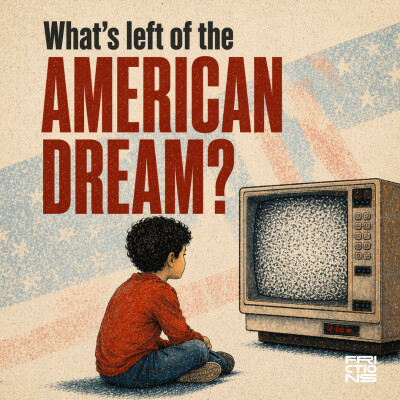
What's Left of the American Dream, an audio documentary by Walid Hajar Rachedi. Episode one, Black America. Becoming starts early in a family, a neighborhood. Sometimes it comes down to a name.
- Fahamu Pècou
Most people were so put off and overwhelmed by my name that they wouldn't even try to say it. Like, it was like, for what? Kids would tease me about my name, and I just wanted to have a normal name.
- T.K. Smith
I was born in Waterloo, Iowa. I am a product of the Great Migration. My family has roots in the American South, specifically Mississippi and Louisiana. When the Illinois Railroad Company went south to look for cheap labor, That's one of the first strands that brought my family north. Companies like Rath Meatpacking and John Deere desegregated and started taking in Black workers. And so we ended up in Iowa. And I was privileged enough to be raised with my great-grandparents, my grandparents, my aunts, my uncles, my cousins, my siblings.
- Fahamu Pècou
The reason I didn't grow up with my parents was my father was unfortunately diagnosed as a tephrenic too late. When I was four years old. He had a psychotic break and he actually ended up murdering my mother in the presence of me and my brothers and sisters. And so my mother lost her life, but my father lost his life, too, in a sense, in the fact that he was institutionalized for, you know, pretty much the rest of his life. When I was about seven or eight years old, I think it happened to be my birthday or something like that. And on a very rare occasion, it was not very common at all. My father was able to call and we're talking on the phone. And just before he hangs up, he says, do you know what your name means? And I was like, my name means something. And he was like, yeah, your name Fahamu. It's a Swahili word. It means understanding. So he began to like kind of talk to me a little bit about Africa and why they gave me my name. And my siblings also had names from the continent. Like we had very powerful names. But anyway, he was explaining this to me and it immediately like. piqued my interest, not just in my name, but in Africa, right? Like it wasn't something I thought about before. It wasn't a place I imagined. And as a kid growing up, one of my favorite things to do was read the encyclopedia. From that point on, I would just look up anything that had to do with Africa, African art, African culture, and I was just fascinated by it. So I say all that to say at my initial ideations around identity. were birthed out of discovering this side of myself through my name and realizing the place I was in because the community that I grew up in in South Carolina was a very small town. We were very poor. We lived in the projects. It was a very segregated place. From the time I started school until I got to middle school, all of my teachers were Black. All of the kids in my school were Black. Everybody who lived in my side of town was Black. We'd go to the store, everybody's black, right?
- T.K. Smith
Iowa is a very particular state. because historically it was never segregated, quote unquote, people self-segregated and found ways to separate themselves from other people. But because it has this kind of liberal history and because it's the site of the Iowa caucus, I've always kind of perceived my home as being very important, even as it is what they call a flyover state, flyover city. Around high school age, we moved to St. Louis. So I did my high schooling. my bachelor's and my first master's at St. Louis University. I was there during the Ferguson uprisings. I had actually worked and lived in Ferguson. Having moved to St. Louis, it's true, it did expand my mind. It was the first time I had a black teacher. It was the first time I had a male teacher. It was the first time I took public transit, but also the first time I dealt with this term white sprawl, this kind of investing from the city center and reinvesting in suburbs in urban renewal and... all of this. So it was a very expansive move for me. I think I wouldn't have gotten that experience if I stayed in Iowa.
- Walid Hajar Rachedi
And what about the American dream in all of this? When they watched TV, the same images I grew up on, but from inside the country, from home. What did it feel like?
- T.K. Smith
The American dream, to me, the exposure I had to it as a young boy was I didn't have any really. Of course, I must have heard the American dream sometime as a young child growing up in the United States, having access to things like radio and television. Being a descendant of chattel slavery and my family having been here for generations, some of my family members had been raised by people who lived through Reconstruction. And so there were all these efforts to educate people, to teach people to read, to galvanize people to vote. In the South, Reconstruction was the very delayed realization of the Emancipation Proclamation and federal structural efforts to prepare recently emancipated enslaved Africans for American citizenship. So it was a time that really attempted to undo the evils. It tried to equalize what was unequal. The issue was there was so much racial terror that it was a push and pool So much violence. This is when we see things like the Tulsa race riots, the race riots that happened here in Atlanta. And for my family, again, I'll say reconstruction was really disappointing. My family went from being enslaved to having to escape to the North for very unequal opportunities. I mean, it didn't grant us full citizenship. And so by the time we get to the 60s and there are riots happening, even in my hometown, a major riot that happened after a football game in 1968, there was a Wall Street Journal. article they said where are they riding in the cornfields and they were talking about my hometown
- Fahamu Pècou
This notion of an American dream, while I was aware of it, it was just as foreign an idea to me as traveling someplace, right? Like going to Paris or Nigeria, this idea of an American dream wasn't something that felt attainable. It was somebody else's thing. The American dream, the way it was presented to me was this sort of like, you know, white picket fence, a big house, a dog, two children. And everybody in that vision was white, right? Like the American dream wasn't an image of Black people to me. Image of Black people in media and television, again, more often than not, just felt like fantasy. Even seeing athletes, I was never good at sports, so that was never an aspiration that I had. But I identified often with the Black characters that did appear in television. And even though they were rare, I looked for them. In fact, my... aspirations for becoming an artist came from watching a show called Good Times. There was a character on there named JJ, who was a painter, and he was the first one that made me want to be an artist. Ironically, JJ is the only Black male figure in popular media that was a visual artist. I've never seen another Black man visual artist in a television show, in a movie, and this show was from the 70s.
- T.K. Smith
The United States was a series of colonies, not just one big English colony. There were actually free African peoples living in places like Missouri, Chicago, who owned land, who may have owned slaves themselves, who were able to participate in middle-class, higher-class society. Florida and Texas, where there's such a mix of people for so long. And then places like Philadelphia, like Boston, where free or recently emancipated people could actually start businesses. And because of segregation, black doctors Doctors were essential. Midwives were essential. These people were able to make enough money to support themselves and then support others. I am the first and not nearly the last. So many have come after me, but the first this high in my education in a humanities degree. So it's different. I would say in my hometown, we're still waiting for the rise of the black middle class.
- Walid Hajar Rachedi
What T.K. Smith is saying is relentlessly logical. Dated, documented. woven into the very history of his own family. And yet one image, in my memory, won't let go. In 1996, at the Olympics, Michael Johnson won two gold medals. I can still see it. Tears in his eyes. the anthem playing, him kissing the American flag. I remember telling myself, in the United States, you can be black and still feel that pride, that sense of belonging. At 15, it stayed with me. Of course, one burst of collective euphoria doesn't tell you the whole story. But in my head, African Americans were still TV super patriots, flawless soldiers. Badass FBI agents, idealistic politicians, like they'd been carved straight out of Lincoln's rib. So deep down, how do they define themselves? Black first, then American, or the other way around, or both?
- Fahamu Pècou
The way I identified throughout my youth was as a Black person and maybe even more largely, unfortunately, as somewhat of a victim of the society that I was living in. There was... Very little representation of Black bodies, especially Black male bodies, that were not shown in some degree of trauma or lack. Black people on TV were often imaged as poor, struggling, or trying to get out of a struggle. When I turned 18, the summer before I left the town that I grew up in in South Carolina to move to Atlanta, I saw the movie Minister Society. At 18, I was... Very excited to see this film. At that time, it was like one movie a year that was kind of made and geared towards a hip hop generation or like young black kids. Right. But anyway, I went to see Menace to Society, watched a movie, left the theater, walked outside and thought to myself, I'm going to die. Was convinced that I wasn't going to live past 25. I would always be told black men, you know. more likely to end up in jail than in college, killed in black on black violence. And you'll have a child before you get married and then you'll be stuck paying child support for the rest of your life. You know, like things like this. It was just this, all of these ideas of death, whether physical or social for many years, for literally 10 years. Rather than celebrate things that I accomplished, I checked off a list of tragedies I avoided. So 19, I ain't been shot yet. 20, never been arrested. 21, no baby mama. Like I really went down the line like this for 10 years of my life, anticipating my demise rather than moving with the kind of confidence and comfort.
- T.K. Smith
My earliest years were in the age of multiculturalism. So African-American was the established term, the boxes we would check. The term black was very important for us to self-identify versus the government enforcing one over us. And we had criticisms about identifying as a black person. But with us, because of that kind of hyphen thing we do in America, it's always been my racial identity first, my national identity second. And then, you know, the black people in my life. growing up who were most invested in the idea of American-ness tended to be veterans, people who had served and therefore wanted and demanded in very radically political ways rights from country. When 9-11 hit, it did change how we were taught history and the concept of nationalism did increase for those years after. And really, it was a try to justify our participation in foreign affairs and wars to try to galvanize us to even enlist I think our relationship to our nationality is really dependent on how you have been kind of indoctrinated into your American experience. And for Black people who have been here for generations, first as enslaved, then as second-class citizens. And so the idea of our relationship to this nation as being full citizens is always contested by why are we hunted by our own police systems? Why are our school districts the least invested in? Why are our neighborhoods have the poorest infrastructure? And so I would argue even that Black people have not yet received full citizenship. Growing up, we had the history we learned in class and then the histories we learned from each other. Narratives about perseverance, hard work, steadfastness, integrity pushed me to continue what feels like an inherited battle. And then moving into the arts, I feel like I picked my battlefront. What I do as a culture worker is I try to protect, encourage. cultivate and disperse Black cultural production. That's part of, I think, an ideological, moralistic drive that I have within my passion. My dissertation project for the PhD degree in history that I'm pursuing is really about one Confederate memorial in St. Louis erected in Forest Park. I've been obsessed with this monument because I couldn't believe it existed. Missouri was a union state, even though it allowed slavery. And I was curious why this Confederate memorial could exist, but no union memorial existed in a union state. It was more important for the federal government after the Civil War ended to reestablish the relationship between white Southerner and white Northerner than it was to equalize citizenship. There was this very strong need to reconcile. a national identity centered on white maleness, to reconcile brother to brothers, the kind of language they used. And so there were concessions like Confederate monuments.
- Walid Hajar Rachedi
There is history, and it leaves scars, monuments that still stand as reminders of injustice. And there are people who work to restore what was erased. At the lynching memorial in Montgomery, I saw hundreds of steel slabs hanging like bodies, names engraved in metal, each one a life taken. Walking under that dark canopy, you feel the weight of silence, memory finally made visible. That's when it clicked for me, how systematic it all was. American history has never been a smooth march toward progress. After every step forward, abolition, reconstruction, came the backlash. A new wave of violence meant to put people back in their place all the way to today, when people want to rewrite school curricula, ban books, take the frames off the walls, and shut down museums. And black art has always been a response, a way to survive it, to name it, to outlive it, from songs to books to movies, the culture as they call it. Fahamu Peku describes that ambiguous relationship with all these stories, these images. The kind that can lift you up as much as they can box you in.
- Fahamu Pècou
These images of black people were complicated by these different characters. It really felt more... exploitative than anything, right? Because prior to Minister Society, we had movies like Boys in the Hood, Colors, Juice. So there had been a sort of tradition of movies that had a similar theme to it around these young Black men in this precarious position who just don't make it out. Because those were the only images you saw, it was very easy to get locked into the tragedy of it all. And that's where I found myself. And it actually became the impetus for me making and focusing my work around Black identity and Black masculinity because I wanted to leave breadcrumbs for other young men coming behind me to see something other than these stories that they keep telling us over and over again to complicate the stereotype.
- T.K. Smith
Growing up in the 90s, there was a Black radio station. Black pop music was starting to hit white radio stations, MTV and music videos, and you could see Tupac and Biggie in there and movies. This rise of like black hip hop cinema, black urban novels, all of that was like a prominent influence in my childhood. But my teenage years, I was expanding my boundaries beyond hip hop and R&B and taking in music. I played the viola. So I was listening to classical music and jazz. Then you discover things like K-pop or Brazilian funk or things like this.
- Fahamu Pècou
Over the last couple of years, I've really been. focused on trying to build work from a very specific premise that asked this question, who are we when white people ain't looking? And in that, it's been a really interesting journey because it's a very, very almost impossible task to extract Blackness from whiteness, right? We're Black because they're white. This idea of Blackness is an idea that was, for the most part, imposed on us, you know? And so it wasn't something that we consciously chose to be. And so... as I began to explore this and to work on these works, I was finally able to really, really grasp even what Frantz Fanon is talking about in Black Skin, White Masks, right? And this idea of dissociation and the necessity of it, because ultimately when we perform Blackness, we're performing an idea that has been imposed on us rather than exercising any real sense of agency and autonomy. And so as I explore this, one of the big things that I have always tried to do is to strip this notion of the finality of death away from Black identity. And I find, at least for me, one of the most compelling and convincing ways that I can do that is by associating Blackness with life.
- T.K. Smith
Commodification is the first word that comes to mind when I think about the global image pushed by American culture of Black people. I do not think it is an accurate or complete You can't learn much about Black Americans just by looking at the pop cultural things that become international. Our influence culturally is undeniable for sure, but that is not necessarily the full extent of Black experience. To give you an example, when groups like N.W.A. were coming out, there was this need for hip hop to not be as diverse as it was when it appeared in the 80s in New York. Puerto Ricans and Black people from all over rapping on music and creating these kind of cultural communities around a skill or a performance or a party. And the need for that to be increasingly violent, increasingly about drug trade, increasingly about capitalism, was a real push from people who wanted those narratives coming out of the Black community. At the same time that folks like Reagan were saying, the drug issue, the crack epidemic, all of this is coming out of these Black urban centers. And so what you have And this is a Du Boisian double consciousness that is created where Black people can participate in this hyper-violent, hyper-sexual, urban view of Black life that is pushed out in music, but also understand themselves as full people beyond just these stereotypes. The capitalist part, I feel, is the most impactful because that's where people think they can escape the financial situations they're in, just like... playing football or joining the military or developing some kind of cure for cancer. You think, if I could just be successful in this, I can kind of surpass racial terror even. That's when we get people like O.J. Simpson, who are like, I'm not black, I'm O.J. Simpson. Or, you know, people like Jay-Z who say, don't waste money on drugs and girls and go back and buy your block, buy your neighborhood back. But even the kind of violence that that does. against different black class stratification. So commodification is the first word I would use, but also just like it's commodification that we have adapted to to use for our own benefit. There's lots of nuance. Also, people were reading more because there were more black films, more black books being produced. And so hip hop artists were also incorporating in Maya Angelou and Du Bois and Baldwin because they were being exposed to them more rapidly. That kind of black consciousness just carried over into the 21st century in a really intentional way. And these wars we have about hip-hop being like pop music versus like the role of hip-hop as the local griot, the storyteller, the historian. For me, what's interesting is to look back at these iconic black things, anything labeled black film, black this, to look back and think about who produced it and for what.
- Fahamu Pècou
I loved. traveling around the world as a Black American and seeing the ways in which things that we often take for granted as Black Americans are lauded and celebrated and appreciated, not just by other Black people, but by people of all stripes, right? I remember one of the first exhibitions I ever did in Paris. I was very nervous because, again, I make a lot of reference to hip-hop music in my work. Things like adding in words or phrases from an interlude on a random track. on an album. And I remember thinking like, man, I don't know if people will get this. And I'll never forget one of the paintings is hanging and this older Parisian guy comes over looking at my work and he's like, barely spoke English. He's like, I love this. And this line is from De La Soul, Three Feet High and Rising, the interlude on da, da, da, da. And he broke it all the way down. And I was like, yo, you know, but what that did was it began to help me remove the kinds of like borders and barriers that I had in my own mind. that were imposed on me by this system of America.
- T.K. Smith
When it comes to working with Black artists, that I always allow a person to be a human being. I don't like to think of Black people as symbols. I don't like using language like, this person was a martyr because they died at the hands of police violence. I don't like the idea, this is the god of hip-hop.
- From the TV Show "Atlanta"
Whoa You paperboy
- T.K. Smith
what's up man yo this is so crazy we've been listening to you from the start man we love that new song bro because it makes them less human and less human means they can't have flaws so what are you doing here i'm just living man you alone you got no car they don't develop or change they just exist this is perfect i ain't allowed to walk oh
- From the TV Show "Atlanta"
you keeping it real
- Walid Hajar Rachedi
For both T.K. Smith and Fahamu Peku, Atlanta holds a special place. Here, in the city that calls itself too busy to hate, they found room to breathe, to make work, to live on their own terms. A city that let them try on other versions of themselves. away from the roles they were handed, closer to the identities they chose. That space didn't come out of nowhere. It comes from Atlanta's particular political and cultural history.
- Fahamu Pècou
Prior to coming here, I really didn't know anything about Atlanta. You know, the main reason I came here was that I was going to attend the Atlanta College of Art, and I had a scholarship. That was it. Atlanta has been an incomparable muse for me because the town that I grew up in, there was some people who were doing better than others, but for the most part, all of the Black people that I knew were poor. Coming to Atlanta, I got to interact with poor Black people, wealthy Black people, Black people from other countries, Black people with different accents when they spoke, who dressed different, who thought different, who walked different, who talked different, you know what I mean? Like all of these different iterations of Blackness. And over the years, the more...
- Walid Hajar Rachedi
experience I've had, the more I've been able to integrate myself into the city's culture, the more dynamic expressions of Blackness I became familiar with, the more possibility I could see for myself as a Black person. We haven't said this explicitly in this conversation, but representation matters, right? Atlanta has always been a big destination for Black people, even as far back as Reconstruction. With the founding of the Atlanta universities, these schools brought Black people from all over the world. here to study. It's always been dynamic.
- T.K. Smith
Atlanta is a place where Black people have found a lot of economic success, social success. It's had Black mayors since the 60s. There are Black people in politics, Black lawyers, Black doctors, Black homeowners, Black developers who are pushing gentrification for Black communities just as much as White developers are doing it for White communities. Because of that, The racial solidarity that existed in every other place that I've lived across class doesn't necessarily exist here. The huge gaps between this upper elite class system and the people and projects and the lack of solidarity between them has made this a very unique place to live, I think. So I live in southwest Atlanta, which is just west of the iconic like AUC Atlanta University Center, Spelman Morehouse, Clark Atlanta. This is a historic black side of town. So when Atlanta was legally segregated, this was where the black community lived across class. So there would be some of the wealthiest black families and some of the poorest black families here all grouped together. But it is gentrifying. This house that we're in right now didn't look like this. This whole section is an addition. But some of my neighbors are multi-generational households where the grandfather, the son. and his children all live together. And so there's this weird push to get folks like that out of their homes so they can be remodeled and rented to folks like me who are Black. And then also folks like the folks who live around the way who are white transplant. And so, yes, you could come here and probably build your career. I came here and built my career in the arts. But is it a mecca? Is it sustainable? Is it the communal models that the Black Panther Party or even the civil rights movement? proponent to build. No, it is not that.
- Barack Obama
With TK Smith, we end up talking about an evening that stuck with me, the night of ideas at the Goat Farm Art Center. I was on the panel that night. He was on another one. Thinkers, activists, women entrepreneurs, the room felt bright, almost festive. And then Ilya Davis, a professor at Morehouse, cracked that mood with one simple line. Atlanta loves to call itself a black mecca, but it has never stopped abandoning its poor. A silence followed. Despite the diversity on stage, the conversation snapped back, fast, to the black experience. Then the widow of Maynard Jackson, Atlanta's first black mayor, answered him. You could tell she knew her husband's legacy was being targeted. Her voice barely trembled, but the message was clear. Don't lose faith. Don't give up on us. That was beautiful. Almost liturgical, but out of sync with the current political mood.
- From the movie "Independence day"
What the professor from Morehouse represented was the realities of living in a city where black people have been given political and economic power, and yet these evils of capitalism still exist. He grew up disenfranchised, and now as an adult, as a professor at Morehouse, he wants to critique the choices that were made by the black mayors when he was growing up. versus the widow of the first black mayor of Atlanta, who is about idealism, hopes and dreams for Atlanta and not necessarily about the lived experience of every Atlanta citizen, black or not. And that's typically the one of two narratives. It's either critiques of black capitalism or the desire for black capitalism, or it's these black ideals that are about respectability, righteousness and historical reckonings. One got a standing ovation and one did.
- Walid Hajar Rachedi
There are a number of places in the city dedicated to Black culture or Black history, but it's always rooted in a very fixed period of time, like civil rights. If that's the only image that you have of yourself, of course, you're going to see yourself as being quite small. It's very difficult to have a vision for yourself if you can't see options or alternatives, which is part of the reason that I started ADAMA, the African Diaspora Art Museum of Atlanta. Often, you know, when people... Ask me about, what about Latino people? also of Latino and Eurocentric heritage. My name, Pakou, is from France. My oldest known ancestor with the name Pakou was born and worked on Rum Plantation in Martinique. So there are parts of me that are in all of those places. So this story that I'm telling through Adama is personal as much as it is universal.
- Barack Obama
There are pieces of Fahamu in all those places, and with them, A refusal of easy definitions. But even in Atlanta, the fault lines don't vanish. They still run through real life all the way up to black leadership. And when you widen the frame to the national stage, another question emerges. What does a black face at the top of the state really change? How did they live through the Obama moment and today, Trump's return to power?
- T.K. Smith
I was a teenager and I remember being very doubtful that he could win and very surprised and very suspicious. Just because this model of the one person to save us all, the one savior, is just a fallacy. Even if we look at people who have become symbols like Martin Luther King Jr., he was one of so many people who came with their ideologies, their own grit, their campaigns, their political strategies. And so the idea that one person can save us is never correct. And also, like, there are wolves in sheep's clothing. Is he actually a president who's going to do something for black people? Or is he like a token serving these white corporations and these white politicians? Is he a fearful? Is he afraid? Is he a coward? And will he not be able to go the distance of being the first black president, but also speak on behalf of the people who share his identity being both immigrants and black people? And like understanding that he's not going to have the same experience as me as a black person, because he is not a descendant of shadow slavery. He's lived a very international life. living in Kansas, living in Hawaii, and then having connections to Kenya is way more international than my little Iowa family moving from Mississippi. So our lives are different. And he went to Harvard, so he may not even understand my problem. So I can't expect him to just solve them because he's Black. Also, Michelle Obama's kind of steadfastness to be Black in the descendant of chattel slavery made such a difference because she was half of the time who I was rooting for when I was thinking about the the federal government at that time.
- Walid Hajar Rachedi
When Obama was elected, yes, I was very excited. I maybe naively thought that it was a signal for something new and different. And it just wasn't. And so I think for a lot of Black Americans and to any Black Americans listening to this, forgive me if I'm speaking for you, but I feel like a lot of Black Americans ultimately ended up being somewhat disappointed and disillusioned by Obama. Not that we were expecting there to be like, revolution in the streets, but that some of the concerns and challenges that Black people have faced systemically in this country for generations and generations would be addressed, possibly remedied, and they simply were not. We were told that we needed to think of America and not of Black America. And, you know, that was really, like, disheartening.
- T.K. Smith
Trump's election did shock me. The issue wasn't so much that it was true. Trump, it was the people who were voting for Trump and the kind of radical right-wing ideas that were coming with him and that he was playing upon them and laughing in the faces of people who thought that human decency was the standard here. I think what shocked me was just how blatant people were ready to return to this kind of patriarchal white supremacist, very Christian, very Protestant way of identifying with being American. He represents for people the same old problematic white man that had been in charge before. He represents something that is so familiar in a suit, and he's the American dream, right? He is so of what we think we remember from the past, and he's comfortable to be just as racist or as sexist. And it makes people feel free, and it makes people feel unchallenged. The age of Obama forced us into so many different conversations. Like, when we say Black community or communities, what do we mean? When we say queer, what do we mean? me. say, what boxes should be on the federal forms? What do we mean? We were asking all these questions in the Obama era, and he was forcing so many Americans to expand the way that they think of themselves that it becomes a threat. And what we most plainly see is white men just being like, you're trying to erase us. This is violence against white men because they just have never lived in a world where they're not the center of everything. And some white men can take that and grow, become beautiful citizens of this world, we share. But a lot of white men cannot. And so they get violent and they start shooting people, you know, and I laugh. But like, that is what's happening right now. Whether you're shooting me in the face or you're voting against me having clean water in my community, like it's still violence and it's still pointed.
- Walid Hajar Rachedi
So under these recent administrations, and to be quite honest with you, with all of them, at the risk of sounding somewhat arrogant, they don't mean shit to me. As a black American, we've always had to be aware of the fact that we're operating under a very different set of rules.
- Barack Obama
When Fahamu says he doesn't give a damn about governments, it's not a pose, not a punchline, but a way of moving through the world, a kind of discipline. Stop expecting what was never granted. Once you admit the dream doesn't exist, or that it was never meant to include you, then what? Retreat? Baldwin had the line that still cuts. Not everything that is faced can be changed, but nothing can be changed until it is faced. That's where TK stands. Refusing the terms, changing the narrative.
- T.K. Smith
On the surface, I would say that I am working actively against the American dream. um, these pushes towards things like manifest destiny or this innate right to any kind of privilege over someone else or access to something that's not necessarily yours. And so in my role as a curator, I'm always thinking, how can I disrupt the simple definition of Black or the simple definition of American? How can I show how diverse these things are? How can I show all the nuance and how complex they are. When it comes to my writing, I'm always trying to dispel some clean, simple narrative by illuminating, hey, there were indigenous people here, there were queer people here, there were women here. I think as a professor, I'm always trying to empower students because I mostly teach artists. I'm trying to empower these young artists to understand that their strengths are in their own unique identities. In my lifetime, certain things have shown me. just how far fragmented we are. So this idea of a shared Americanist keeps getting pushed further back. The need to unite against someone who simply because they are different seems to be this inherent thing when defining Americanist because Americanist is exclusive, not inclusive. You know, we have these songs about being a melting pot, but you have to really, really get melted down before you are seen as American. If you can ever be, maybe that's the trick. You'll never be a white landowning man. So how are you supposed to ever be American? Again, even the idea of being in a nation is you give up some of your rights for protection. And with Black people, we've never gotten that protection. We've never really had rights. We're never really citizens.
- Walid Hajar Rachedi
I have this painting. The title of the painting is Get Free or Fly Trying. And in the image, a figure is wearing a t-shirt that says, Never Make America Again. This sentiment for me... While it's a little bit, you know, kind of a tongue in cheek thing, there's also a great degree of gravity in that statement. In that idea of America that has been not sold to us, but quite literally forced down our throats, was never something that one had us in mind, was intentional about its promises of inclusion.
- T.K. Smith
Will there be an American dream? Will black people, brown people, immigrant people here, the people in the margins here will probably come up with something better than that?
- Fahamu Pècou
There's no such thing as a utopia. There's always going to be issues. But my hope for the future is that regardless of what comes next, that even in our moments of disagreement, we can at least find a space and a capacity to appreciate one another's humanity. For me, the ideal is not a perfect society. It's a society that's willing to do the work together to ensure that everyone Thank you. can live to the fullness of their ability, dreams, and desires.
- Barack Obama
What's Left of the American Dream, an audio documentary by Walid Hajar Rachedi.
- Frictions
You've been listening to All Identities Combined, the podcast that explores our singular stories produced by Frictions. Find all our stories on our website,
- From the movie "Independence day"
frictions.co.