#47 - 600% in 3 Days: the execution playbook behind Abivax’s breakthrough in IBD cover
Pharma Minds

#47 - 600% in 3 Days: the execution playbook behind Abivax’s breakthrough in IBD

#47 - 600% in 3 Days: the execution playbook behind Abivax’s breakthrough in IBD

59min |08/12/2025
Play
#47 - 600% in 3 Days: the execution playbook behind Abivax’s breakthrough in IBD cover
Pharma Minds

#47 - 600% in 3 Days: the execution playbook behind Abivax’s breakthrough in IBD

#47 - 600% in 3 Days: the execution playbook behind Abivax’s breakthrough in IBD

59min |08/12/2025
Play

Description

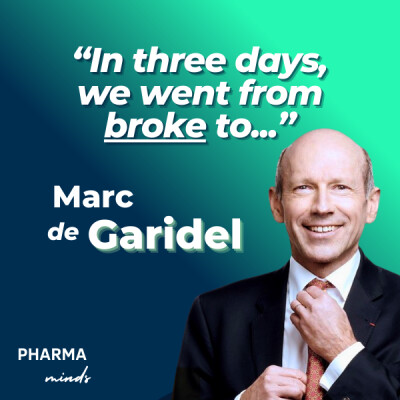
“Within three days, we went from almost bankrupt… to one of the stars of the Nasdaq.”


In this conversation, I take you behind the scenes of a biotech journey that sounds almost unbelievable.


Marc de Garidel, CEO of Abivax, tells me how he rebuilt this French biotech from scratch, designed a strategy powerful enough to attract top US investors and executed one of the largest phase 3 programs in ulcerative colitis: a molecule from French public research (CNRS, Institut Curie and the University of Montpellier) which may have a major impact on patients.

This episode is a masterclass in leadership, execution, courage, and long-term thinking.


Here’s what you’ll hear about in this episode:

◾️ How Marc stepped into a company with almost no long-term plan… and why that turned out to be a surprising advantage.

◾️ The four pillars of a new strategy — and how one of them quietly set the stage for the breakthrough to come.

◾️ What it really takes to run a global phase 3 across dozens of countries — and why Abivax had to reinvent itself to pull it off.

◾️ A mechanism of action unlike anything else in IBD — and why this difference matters more than most people think.

◾️ The hidden lessons from a noisy phase 2 that helped transform the phase 3 into something no one saw coming.

◾️ A leadership philosophy built on transparency and speed, born from a single principle: in biotech, every day counts.

◾️ The unexpected market reaction that changed the fate of the company overnight — with numbers that almost don’t seem real.


If you want to hear a real behind-the-scenes story, hit play.


This episode is an exceptional inside look at what it truly takes to turn science into impact, stand your ground under pressure, and lead a biotech from survival… to breakthrough.


Find Marc de Garidel:
LinkedIn: https://www.linkedin.com/in/marc-de-garidel-097982/


Resources mentioned in the episode:

Abivax https://www.abivax.com/


Pharma Minds episodes mentioned:

His first interview in Pharma Minds in 2023: “CEO Marc De Garidel On Building Something Truly Impactful: Embrace Risks!” https://www.youtube.com/watch?v=mA3-OSltbwQ (in English)


🎧 New here? To get a quick overview of the episodes, download 25 Tips for Purposeful Leadership, a guide inspired by the best advice shared by my guests.


🤝 Want to connect or talk about your current challenges? Let’s connect on LinkedIn.


📩 Curious to dive deeper into the major shifts in the healthcare ecosystem? Subscribe to the Pharma Minds newsletter.


Hébergé par Ausha. Visitez ausha.co/politique-de-confidentialite pour plus d'informations.

Transcription

  • Speaker #0

    If you want medical advance, you need to do some bad. Three months after the readout, we are going to run out of cash. We will go bankrupt. The beauty of Obafacin Mod is that it's not an immunoblocker. It's basically what we call, it resets the immune system. So we win together, we lose together. The tiny little biotech can actually do better in execution of clinical trials than the giant. It's like a Hollywood movie. Three days, we went from maybe we'll go bankrupt. to one of the, honestly, one of the stars of the Nasdaq. Within three hours, we raised $750 million, and we had essentially more than $3 billion in demand.

  • Speaker #1

    Welcome, everyone, to this new episode. Today, I have an exceptional guest. I am with Marc de Garidel. Hello, Marc.

  • Speaker #0

    Thank you for welcoming me.

  • Speaker #1

    Again.

  • Speaker #0

    Thank you.

  • Speaker #1

    Again, here, two years after, you came already here two years ago. You just started a new position as the CEO of Abivax. And long story short, this was a biotech in difficulties at this time. And you started to raise 350 million to start a phase three. You had positive results. and then you just... This summer raised 750 million, which makes the story quite exceptional. And yes, I'm very happy to have you here today again to have the details of the story. It's a masterpiece, I think, in terms of leadership in biotech.

  • Speaker #0

    I don't know.

  • Speaker #1

    For the moment, yes. For the last two years, yes. The future will say that. I would like to start for like a chronologic thing. maybe with the beginning when you arrived at Abivax, the first days. Can you share a bit what you've seen?

  • Speaker #0

    Sure. So, you know, I was actually lucky when I joined to be immediately immersed in the field of gastroenterology because, again, my background was not in gastroenterology. So I was also learning as I went on. But my first days were actually in the U.S. at one of the largest congresses called DDW, where I had the opportunity to meet, you know, with a number of the top carers in the world and where, you know, I could share a bit, you know, thinking around what Abivax was going to go. But it was a very good foundation because I could understand more what essentially physicians wanted with the drug. and how potentially to lead this phase three to success. So that was also the foundation for establishing the strategy of the company. Because if you look back, again, a couple of years ago, the company had been refinanced with essentially sort of a salvage program in September of 2022, where some U.S. investors and so forth, you know, partners, We refianced the company with 50 million euros. And then they did, again, prior to my coming, another crossover round for 130 million euros. That was basically in February of 2023. So when I came in, in April, again, I was lucky to have at least a bit of cash, but not enough to carry on the phase three. So DDW was very important to try to meet the KORs, but also meet with my team. a new team to figure out what would be our strategy. Again, at the time, there was no, when I ask, you know, where is the business plan, where, you know, what are the plans? You know, this company was really built to sell initially.

  • Speaker #1

    Yes.

  • Speaker #0

    And there was not really planned to go to continue and to do the phase three. So, you know, we had to start a bit from scratch about, you know, what, you know, indication we wanted to pursue. You know, how we would go ahead, how we would develop ourselves, especially within the U.S. Because, you know, 70% of the market for IBD is in the U.S. And again, the CDW meeting was a foundation. So then what we did after we heard, you know, a lot of comments about, you know, what we could do or what we should do. As a team, we gathered together in the south of France and we established the foundation for the strategy, which ultimately we presented a month and a half later to the board. And that was actually the basis of what we would do a couple of months later for the IPO. Because when you do an IPO... You need to have a story. And it's not only, you know, a very short-term story. It needs to be also a long-term story of value creation and trying to fulfill, you know, a medical need for patients.

  • Speaker #1

    On the market, yes. Okay, then you started with the science and then the finance and then, yes, operations, the teams and finding the right story. Okay. And do you remember which was the first decision you made? Okay, going to this Congress? And then, yes, starting a plant from scratch.

  • Speaker #0

    Well, yeah. So I think, you know, part of developing a company is you need to have a long-term vision. Because otherwise, as the Americans say, if you don't have a vision, you may end up somewhere else. So what we did is we said, first priority is really develop this drug in ulcerative colitis, where phase three was beginning. Two, we wanted to develop it in a second indication, which is a bit more serious, which is called Crohn's disease. Then we realized that the doctors at the DDW told us you need to develop combination therapy, a bit like in oncology where you combine different mechanism of action in order to improve efficacy while trying to maintain safety. And the fourth pillar of the strategy was try to develop a new compound for a drug. Because in the south of France, in Montpellier, where we have a small research center, we have a library of about 2,000 molecules that could be also helpful, you know, to keep the adventure going beyond the OB-FASI mode, even though OB-FASI mode is turning out to be, you know, and again, a knock on wood because we are not finished yet with the studies, but turns out to be really a fantastic drug. So that was really, you know, the foundation for... for having a strategy. Then the question was, how much is this strategy going to cost and how much money do we need to raise? And we knew we could not get enough money in Europe for carrying the phase three and doing these other things that you described. So,

  • Speaker #1

    you know,

  • Speaker #0

    we built up, essentially, you know, worked with banks, worked on the bank syndicates. to try to access, you know, the Nasdaq. So we were actually, at the end of July of 23, we did what we call test the water meeting with U.S. investors. We got a lot of interest, actually, at the time. You know, the verbal commitment from U.S. investors was $1.2 billion, potentially, of interest, which was, you know, very encouraging. But a couple of months later, actually shortly after our conversation, in October, when we wanted to go public, then, as you know, there were the events in Gaza and, you know, in Israel. So the market started to fall apart. But nevertheless, we were able to raise that, you know, third week of October, you know, $240 million. Actually, that week, there were three companies trying to go. public and we were the only one that actually did it. But we didn't get as much as we wanted compared to what we had in July, but enough to carry on and to execute fully the phase three in insurrective collectives.

  • Speaker #1

    You talked a lot about a lot of things. I just wanted to, it's very interesting, but I wanted to go back to the decision of the indication to decide not to go to To crown first, it was a decision, yes, related to... to science, to budget? Yes,

  • Speaker #0

    it was mostly budget driven. Because we know the phase three in the colitis was going to cost over $350 million. So that alone, and this was the most advanced one. So it was a priority to colitis and put on a second priority Crohn's and start later phase to be in crowds.

  • Speaker #1

    If I understand it well, you were disappointed to raise the first...

  • Speaker #0

    everything is ready it was nevertheless you know the bigger i mean uh put things in perspective it was one of the 11 ipos of of 2023 so it was you know it was obviously the largest ever in the french market for for this for french company so i mean there were a lot of satisfaction if you were to raise this amount that was pretty spectacular in 23 due to make the phase three Yes. So from that sense, it was. It was very good. But nevertheless, if you were looking a few months back, again in July of 23, we thought we could raise 300 million. So it was, you know, it is good, but not enough to what we had hoped for.

  • Speaker #1

    Yes. And you talk about the momentum. Yeah. The momentum. You cannot decide on the momentum of the company. Yeah.

  • Speaker #0

    But I think this was obviously very foundational, the fact that we got to the NASDAQ. Then we could build up our US infrastructure because until then, we were essentially 35 employees in France. And we basically built up another 35 people. in the US. So we opened an office in Boston, in the suburbs in Waltham. Actually, as I say, often very close to the New England Journal of Medicine. So when we get hopefully positive phase three, we can bring back directly the printout to the New England. But yeah, we were able to recruit, I think, some very talented people, also some people who had been in the field of IBD. So, you know, we are out. We were able to attract some people from Arena Pharma, which had been sold just before to Pfizer. So we got a very good experience. Because one of the challenges in biotech, going from phase two to phase three, and certainly was true for Abivax, is phase three is much harder to execute than phase two, and for different reasons. Number one, the scale. Phase three, for example, for us was 36 countries. 600 centers, you know, two and a half year programs, $150 million program. The phase two was, you know, probably about 16 countries and 200 patients, you know, compared to 1,275. So, and the phase three is a pivotal study. or if it's two, you can, you know. the FDA and the EMA are less regarding on how you conduct phase two. So, you know, the level of expectation, level of demands, the level of quality needs to rise significantly from phase two and phase three. So, and the team we had in France, although it was a good team, you know, was not really experienced to do a phase three program.

  • Speaker #1

    Yes, developers, it was researchers. Well,

  • Speaker #0

    it was a clinical team. Clinical team. And again, there was some of the research. people in the south of France.

  • Speaker #1

    Yes, but clinical team for phase two. And then in the US, you... Yeah,

  • Speaker #0

    so we build up, you know, the chief medical officer came from the US. We had a head of clinical operation that ultimately was in the US. So we really reinforced the head of statistics. So, you know, we really build up truly an execution machine. Yes,

  • Speaker #1

    your phase three team was built in the US. Yeah,

  • Speaker #0

    yeah, exactly.

  • Speaker #1

    And for you, it was, yes, not a choice to try to split or to make, you had to focus on the U.S. market. Well,

  • Speaker #0

    we have to focus on the U.S. again, partly because of the size of the market and the importance of the U.S. market in general. But the skill set, you know, there are not too many, you know, employees who have phase three IBD, who had the phase three IBD experience in Europe, unfortunately. It tended to be, you know, U.S. employees.

  • Speaker #1

    Yes. It's related to the numbers of studies conducted from the U.S.?

  • Speaker #0

    Yeah, I think it's also part of the fact that the big leaders in the field of IBD, historically, have been U.S.-based companies.

  • Speaker #1

    Okay.

  • Speaker #0

    You have Gen J, you have AbbVie, for example, you have Lilly, you have Pfizer. Some of the key players are already in the US, so you need to attract some of these talents into a smaller biotech.

  • Speaker #1

    Okay. And then you raised this money and you had to execute this plan?

  • Speaker #0

    Yes. And then things started to get a bit complicated.

  • Speaker #1

    Again?

  • Speaker #0

    Again. Because again, the execution of...

  • Speaker #1

    It seems... an easy story from the outside. Yeah,

  • Speaker #0

    but part of, again, part of the dilemma when you are in a biotech is you are pressed, you know, to execute fast because you run out of cash. In our case, we knew that with the $250 million we had raised, we would run out of cash actually essentially by the end of 2025. So we are only... two years of cash. So the pressure was, we need to finish this study as fast as possible. That's one side. But then the other one was the importance of the quality of the study. And please bear in mind, this study was the second largest ever to be conducted in the field of ulcerative colitis ever. Two, what we wanted to show is that our drug, Obifazimod, was not working potentially well in what we call naive patients, so patients who are put first time on an advanced therapy treatment, but also patients who had been exposed to multiple therapies before and were failing, just as a reference. In the U.S., when you look at the U.S. patients, after three years of treatment, only 5% are on the same drug. So the unmet medical need is huge for having a drug that can help patients that have been already on an advanced treatment, but we failed quickly. This was a valuable position for Bethesda. So what we tried was not only to get these naive patients who are relatively easy to find. for execution, but also this advanced patience. And this is where, you know, the challenge was, this is where why we didn't go as fast as we thought because those patients are hard to get. But ultimately, they proved to be the winning proposition and why, you know, a few months ago, everyone was so impressed by the drug because we were able to essentially include the half of this sir. hard-to-treat or refractory population into our study.

  • Speaker #1

    Oh, okay. And this is, yes, the beginning of the long-term strategy to have something really well-built for the future?

  • Speaker #0

    Yeah.

  • Speaker #1

    To be able to write a big story?

  • Speaker #0

    Yeah, but I think, you know, the fundamental thing is, you know, you need to develop a good drug for patients. That's, you know, the foundation of everything. Yes,

  • Speaker #1

    but it will get approved.

  • Speaker #0

    Yes, clearly. But, you know, the differentiation. When you are in a biotech, actually as a CEO, this is one of the first questions you have to ask yourself, is are your drugs going to be differentiated with the rest of the pack? And in ulcerative colitis, there are many drugs that have been approved. But as I was mentioning just before, those drugs are essentially immunoblockers. So what they do, they work very well, very short term. But then, over time, either... patients develop resistance. So, you know, the human body find a way to develop the inflammation across that, you know, around that pathway. That was one. Or the side effects, because they block the immune system, they create, you know, their own set of issues, like, you know, patients develop opportunistic infection, you know, they have pneumonia, they're hospitalized, and sometimes they could have even, you know, malignancy. So... The beauty of Oberfasimod is that it's not an immunoblocker. It's basically what we call, it resets the immune system. So it's much more, it's more pre-artropic. It works on different pathways, predominantly two. But it reduces the cytokine expression by around 20 to 30 percent, not by 100 percent. And this is why we have this differentiation. So, to get back to you is, at the end, what you really want, you want to develop a drug that is highly differentiated and that will have this sort of nice combination between efficacy and safety.

  • Speaker #1

    And you got that from the beginning and you knew it. could be your winning point.

  • Speaker #0

    Well, at least in the phase two, we had indication that we could get there. But what was very unique in the phase three, and I'm sure we're going to talk about that, is our phase three got even better than phase two. We had greater efficacy and safety profile was actually, to some extent, slightly better, which is very unique. And then that goes, you know, about the learning of when you design study. When you design a phase three, you need to learn about, you know, what happened in the phase two.

  • Speaker #1

    Yes, the differentiation of the phase two.

  • Speaker #0

    Exactly. And to try to, you know, improve what didn't go as well in the phase two and try to, you know, change some of the criteria so that you have better chance of success for the phase three. Because, again, the phase three is a large investment. So, you know, again, 350 million.

  • Speaker #1

    Yes. Okay.

  • Speaker #0

    And it's part of, you know, it's part of drug development. The secret sauce is how do you make sure that when you spend so much amount of money, you work with the experts. To try to optimize the outcome, but the differentiation of the drug so that ultimately it is seen as a medical advance and not a me too of other drugs.

  • Speaker #1

    Okay. It's also a bet. You need also to...

  • Speaker #0

    When you have a new mechanism of action like ours, indeed, it's a bet for sure. But you need to bet. Well, again, if you want medical advance, you need to do some bet. but part of, again, of the art. is to try to mitigate the risk of that bet. Because when you go into a new mechanism of action, for sure, you don't know, you can be 100% sure that, for example, your drug is going to be as safe as others, because this is the first time you try this new pathway. But part of the art, and working with the KORs, is to design a study in such a way that you try to mitigate those risks. But there is, again, no guarantee. This is part of what is wonderful in this industry, is you take risks. Sometimes it works, sometimes it doesn't. But when it works, in general, it's because you thought through what could go wrong and you try to design the study in such a way that chances of going wrong are less than maybe...

  • Speaker #1

    Can you explain a bit how you worked? I don't know if you can, but... How you worked on this to transform the phase two story into a better phase three story then?

  • Speaker #0

    No, I mean, the part of, you know, the recipe is to listen well to the KOLs. You know, and for example, in our case, I think what was very good in the design of the phase three is the fact that those patients tend to receive. concomitant corticosteroid treatments. So what we did is, from the phase 2 to the phase 3, we decided to reduce the use of corticosteroids from 20 mg per day to 15. So that was one. Well, to reduce, to allow the drug efficacy to speak more by itself. rather than using drugs that are efficacious, but long-term corticosteroids are not good for you. So these are, you know, the example of how you can, you know, you learn from your phase two, and then you adapt it for your phase three. So that was an example. Another one, there were, you know, immunomodulators that were in the phase 2B, which could be used, like the thioperines, and we removed them in a phase three. And what we saw in the phase three, one of the reasons why people were so excited about our phase three is that when the results came out in July, late July, our placebo response was the lowest ever in a phase three program. So a tiny little biotech like Abivax. was able to execute a study better than anybody in history of ulcerative colitis. So, you know, it's an interesting lesson, which goes also from the learning of the phase two, but also the focus. I think that was one of my bigger mantra, you know, what I've learned over the years.

  • Speaker #1

    Just like we want.

  • Speaker #0

    It is focus, focus, focus. I think you're... you do a much better job when you spend 100% of your time on something versus working on 30% on three things. I think the Abivax example is a fantastic one because it shows that a tiny little biotech that came out of nowhere can actually do better in execution of clinical trials than the giant, which has demonstrated it. And that's why all the KOLs, when they saw this... This data in July, we're not only impressed by the drug's, you know, ability to function and to do good for patients after eight weeks of treatment, but also the execution of the trial was, you know, again, 36 countries, 1,300 patients. It was a massive undertaking, even though, coming back to one of your remarks before, It took us more time, took us six months more than what we thought originally. So we were late compared to our original IPO plan. But at the end of the day, what counts is ultimately the quality and the results.

  • Speaker #1

    Okay, yes, you have to leverage also the time and to have a bit of time if you need.

  • Speaker #0

    Yeah, the only thing is the clock was ticking because, you know, three months after we read out, we were going to run out of cash and we would go bankrupt. So it was a fairly binary, you know, event for us.

  • Speaker #1

    Yes, and you knew it was, yes, you didn't have choice, but you knew it was a good decision also to be able to finish this way. Yes, that's what we were.

  • Speaker #0

    Yeah, because again...

  • Speaker #1

    You knew the result could be interesting? Ah, yes.

  • Speaker #0

    Yes,

  • Speaker #1

    yeah.

  • Speaker #0

    Well, we had...

  • Speaker #1

    It was a redoubt, yeah.

  • Speaker #0

    Well, we had some anecdotal reports, feedback from the physicians in the various countries. They told us, you know, even though it was blinded, they said, you know, we see some patients who are very severe doing much better, you know, and that couldn't be on placebo for sure. So I think we had some confidence as to that something was going on. Now what you don't know is how good. Yes, yes.

  • Speaker #1

    And you cannot change the plan in the middle.

  • Speaker #0

    Right, exactly. And if the results had not been good, we would have been bankrupt.

  • Speaker #1

    Three months you said.

  • Speaker #0

    Yes. So it shows that what we do is meaningful. But... Sometimes it doesn't end too well, but we are lucky to be on the good side.

  • Speaker #1

    Yes, yes, yes. And yes, one thing I would like to understand also is why you decided to be such ambitious for the phase three.

  • Speaker #0

    Well, I think it goes back again to differentiation, to competition. If you develop a drug that doesn't have much value, why do you spend 300 million to develop a me too? I mean, in my view, it's not. It's not very attractive. And I think, you know, that is one of the reasons I was attracted to Abilax is I felt, also speaking with the carers, this was a very different mechanism of action. This was a very different approach. It was not an immunoblocker. This could make, you know, sort of a leap for treatment. So the excitement of, you know, every day's life, also for our employees. It's when you know you work for something which is meaningful, yeah, that can obviously fail. But if it's successful, it can be wonderful. And this is where at least we are now.

  • Speaker #1

    In the middle, yeah.

  • Speaker #0

    We have only eight weeks of treatment. Our study needs to continue to essentially a year. So we cannot say, you know, we cannot claim victory yet. But the odds that, you know, existed before, you know, six months ago, where, you know... skeptical as to whether this drug would work this way. Obviously, we've passed, obviously, a big hurdle. And it's, you know, we were in Berlin at the big congress called UEG. So we had two late breakers for us, two independent sessions. The first presentations, 700 people, so the room was full. It couldn't be, you know, when you saw the... Yes, the presentations. We presented. especially the detail on how drug does on various type of patients. You know, everyone has been really impressed. And this is only after eight weeks of treatment. So, you know, the feeling of accomplishing something a bit special. was there so ambition goes you know you need you need i think you know you need ambition in in life if you yeah you know it's more exciting so but it's part of also the character you need to have you need to accept that also the wish level is

  • Speaker #1

    high and that you can fail that's that's part of the adventure yes but um and yes you were the good person to be able to also get this uh confidence to be able to execute this.

  • Speaker #0

    Well, I think the advantage I have had is that, you know, since I've been CEO for a number of years, you know, I've developed drugs before, phase three, I've done phase two. So I've seen, you know, success, I've seen failures. You know, you learn also a lot through your failures. So I think, yeah, I was probably more attentive to certain things that some other people may not look at and that contributed to this. But, you know, it's not that easy. It's not an easy adventure. And, you know, there are times where you are, you know, you wonder whether you're going to make it or not. But at the end, you need to be persistent. And, yeah, I have a meaningful mission, I think, fundamentally.

  • Speaker #1

    Yes, but here it was making this with a really small biotech, like just starting to, yeah, starting. And it's also, yes, a risk. And you were able to make this because you add also the confidence, the skills, the experience.

  • Speaker #0

    Yeah, and you get good people around you. Yes, yes,

  • Speaker #1

    you knew how to execute this. Yes, large kind of thing.

  • Speaker #0

    Yeah, and to find the people who are able to execute. And some of the people, you know, also I brought from Syncore were absolutely key to the success because, you know, I knew them. They trusted me. I trusted them. You know, because in all this execution mode, what you want is to resolve the issues, you know, as fast as they come. What you don't want is to have a culture of company where people hide things because they are worried that if they do mistakes. So, and I think...

  • Speaker #1

    Every day counts, yeah.

  • Speaker #0

    Yeah, so every day counts. And then you can correct because you're getting these large clinical trials, again, I'll show you. In our clinical trial, we face some issues on a daily basis. And how you resolve them, how you characterize them, also you have to differentiate what you think is sort of a systemic problem versus a very punctual problem. But if it's a systemic problem, you've got to address it very seriously and take the time for it because otherwise this can contribute to...

  • Speaker #1

    Do you have an example like this?

  • Speaker #0

    For example, we had an issue with our IRT system, so basically, you know, the system that basically delivers the investigator, the drug to patients. And, you know, we had, you know, for a little while, we started to discover that some of the drug were not going to the right patients. And we, thanks God, we picked it up very quickly after one day. But, you know, we had to retrieve some of the... Yes, some of the logistic. Yeah, and do some logistic correction. If we had not picked up that very fast...

  • Speaker #1

    You can lose, yeah.

  • Speaker #0

    This would have been, you know, potentially you could lose the patience to, you know, and the authorities would have said this is not acceptable. So, you know, there are examples of, you know, of things that happen in these large studies that you want to... And that's why you need a culture of transparency, a culture of, you know.

  • Speaker #1

    Responsibility.

  • Speaker #0

    Yeah, responsibility. You know, as I say often, we win together, we lose together. You know, it's not, you know, it's, you know, it's, you know, this feeling we're in a special adventure together. And, you know, we're going to do a few things wrong, but let's correct them quickly and let's move on. And that's not, you know. be aggravated at all time about the mistakes we've done.

  • Speaker #1

    Yes, that's part of your, yes, that's definitely part of the success. Yeah, sure. Yes, and maybe the differentiation also.

  • Speaker #0

    I think that's one of the difficulties, I think, for example, in large companies. Yes. They become so political. People don't want to take risks because they think that, you know, their career is going to be affected. So there is much less, I think, agility. And also, to some extent, modesty. So you need to be, I think when you develop drugs, you need to be very modest because this is a very difficult undertaking. And, you know, the egos need to be lowered. And I think it works much better.

  • Speaker #1

    But yes, we talk about a bit of leadership, but when you arrived, you created this, you took the person like this and you wanted to have this mood.

  • Speaker #0

    Yeah, because I was fundamentally convinced that this drug could be a really good drug. But what was evident from the past is this company was run on a very short term. on a very short-term basis. And, you know, when you have too much of short-term horizon, you're not going to make the best decisions. Because again, ultimately, what you want to do is to develop a good drug for patients in the long term. So, but this is the fruit of experience, you know. Yes, yes.

  • Speaker #1

    But what I'm seeking is, you need also a good leverage. Good balance between long term and short term, because if you just have this choice, you need also to focus on this choice and you don't have the possibility to work on another project.

  • Speaker #0

    No, of course. And I had the credibility, for example, for raising money because I had been successful before. So it is clear that... Yes,

  • Speaker #1

    to explain the story, to explain the story.

  • Speaker #0

    To get the trust also of investors that, you know, I do what I say, I say what I do. So that contributed to it. But again, the role of a leader is to, you know, is to lift up the ambition. But again, and to have the ability to work, you know, to think about the long term, but for sure also on a daily basis to address all the issues that are coming. And it's sort of constant, sort of going up and down from long term to short term. But I think if you are too short term oriented,

  • Speaker #1

    What is long term for you? Like having the drug on the market or a few years after?

  • Speaker #0

    Yeah, sure.

  • Speaker #1

    Or the life of the drug?

  • Speaker #0

    Well, for us, it's then the life cycle.

  • Speaker #1

    Life of a product, yeah.

  • Speaker #0

    Yeah. You know, beyond the ulcerative colitis, developing the Crohn's indication, looking at the combination therapy. So, yeah, it's part of a journey.

  • Speaker #1

    Okay. Can we go back to this day when you, yes, you had the readout. Yes. you You discovered what it makes on the patients?

  • Speaker #0

    Yes. Yeah, well, it was really a special day. So I was in the US. You know, obviously I was, you know, my statistical team had essentially, you know, blinded the data the day before. And I had told my head of statistics to send me a message when I could come into the office to know the result. But, you know, it was actually a Saturday morning, and I said, you know, please text me when I need to come in. And so he texted me, and on the text, there was actually nothing except, you know, sunshine. So I thought that's probably a good sign. That means at least we made a statistical significant, you know, outcome. But what I didn't know... is how shiny would be the sun. And so when I came in, you know, he showed me with the team, you know, these results. And what, again, was amazing is our placebo-corrected effect was 16% in those two studies compared to 12% in the phase 2b. So in other words, we had a more efficacious drug, you know, in phase 3 than in phase 2. And in the history of drug development, That happens very, very rarely. So, you know, I don't have the statistics, but it's extremely rare. So the level of surprise was, you know, beyond expectation because I thought, you know, the best case was 12% to be pretty much at the same level of the phase it has to be because that was part of, you know, the changes we made in the design of the phase three. But we had over, you know, basically overpassed any expectation. So it was fantastic. And then on the safety side, it didn't seem to have, you know, really material. adverse events that would, yeah, pretty much the same as, we saw, you know, some headaches, you know, early on the first week, but the last, you know, couple of days, you take Tylenol and you're all good. And the rest was, there was no incidence of really any major manifestation of side effects on anything. So, I mean, there are obviously some one-off patients that develop certain conditions, But There were no signals of anything. So it was just an absolutely incredible time. And then, as a result... So I called my CFO, I called my head of IR, I said, initially we had planned to take a week to review the data, you know, to prepare another thing and do basically the financial communication the following weekend. And what we did is we accelerated everything. I said we need to have a board meeting, you know, on Sunday night. So we, you know, so within a day we had to put all the slides together. So people were literally day and night. And we did the communication on, you know, essentially on Monday night. And on Tuesday, the stock was traded. We actually blocked, respectively, for 45 minutes, the Euronext, our quotation on Euronext, because it was too much demand. And then when the NASDAQ opened, the same thing happened for nearly, I think it was a bit less, 30 minutes. You know, there was too much demand on the stock, and the stock went out that day. by 600 percent and 600 percent you know no stock on the nasdaq has ever done that so it was a i mean for us it was like uh you know you it's like a hollywood movie you know is it true is it you know what happens is just beyond the beyond expectation so within i would say you know three days we went from maybe we'll go bankrupt if the study doesn't work to you know one of the one of the star of the nasdaq list for 24 for the year So that was the situation. And then on Tuesday night, because since we were listed on the French market, we could not raise, you know, what we wanted to do our follow on the same day, the first day of quotation. So we had to wait basically 24 hours per year regulation in the Euronext. But that night, so we had, you know, with our syndicate of banks. We started a process to raise money. So we said, we want to raise, initially we thought 200, then we said, well, probably 400, given the stock price reaction. And then, which was another sort of extraordinary set of events, within three hours, we raised 750 million, and we had essentially more than 3 billion in demand. So we had to, my team actually spent more time that night to allocate. The amount of money that the funds wanted to see, we were not able to meet. Well, you know, we had basically, you know, from 3.5, I think it was actually 3.5, ultimately to 750. So we had to divide pretty much everything by four or by five, you know, to allocate. So they spend, you know, my CFO, my head of AR with the banks, worked probably until two o'clock in the morning to... allocate what could be given out of the $750 million to all these big funds. Some funds, just to give you an idea, wanted to invest $300 million. So, I mean, this was just a massive event for us and like a kind of a dream. But the good thing is we got the money and now we can carry on and execute again the maintenance, finish this essentially one-year study. I would say restart the Crohn's program because Crohn's, we put it a bit on the side because, again, we put all our money on Aptek. We're focused on Aptek because we knew if Aptek doesn't, doesn't, the 3C didn't work, you know, we'd be dead, right? So now Crohn's, now we are doing also preclinical experiments with combination therapy with other drugs. So we'll report them early next year. And also we're trying to figure out, you know, how to develop a next generation compound. So,

  • Speaker #1

    yeah. Yes, crazy week.

  • Speaker #0

    It was a crazy week, yes, yes.

  • Speaker #1

    No sleep?

  • Speaker #0

    No sleep for a while. Actually, even, you know, the following two weeks, we had a lot of demand. And it's still today. I mean, it's just incredible, the level of, you know, interest we have. But not only from, you know, investors. You know, the day before yesterday, I was with... University of California, and they already want to prepare the launch for 4 million patients. Their doctors, when they saw the data we presented in Berlin, are so interested. They say this drug could become the standard of care in obstructive colitis. So a year and a half before launch, they really want to work with us to prepare everything. So it's obviously pretty spectacular.

  • Speaker #1

    If you need to get used to the normal, that's the thing. Pass to this, okay. I think, yes, talking about this week, I think there is kind of also a good communication drive. Why did you decide to present it so rapidly during the night? Is it a matter of, I don't know?

  • Speaker #0

    No, it's a materiality. I think the risk was that given the quality of the data, you know, you have obviously to make sure because we are a publicly traded company. We didn't want to have any leak.

  • Speaker #1

    Okay, someone to...

  • Speaker #0

    Someone that would get a bit overly excited, speak to someone to say, oh, by the way, they get great data. So it was really driven by compliance.

  • Speaker #1

    Well, compliance,

  • Speaker #0

    so you need to... Compliance,

  • Speaker #1

    you cannot wait to...

  • Speaker #0

    No, because you have two days max. By the time you get... very material information. You have two days to communicate it to the market when you're a public company. So we were kind of... But the decision, obviously, to convoke the board was to address that point because I was afraid that my team would be so excited that they would start to speak.

  • Speaker #1

    And you knew... What did you expect instead of what happened?

  • Speaker #0

    What did I expect in terms of...

  • Speaker #1

    Yes, of, I don't know, of a reaction, of, yes, amount or reactions.

  • Speaker #0

    Well, yeah, I think it surpassed our expectations because, you know, for example, in terms of fundraising...

  • Speaker #1

    You let the market decide.

  • Speaker #0

    Yes, sure. But we thought we could raise, again, you know, the week before, we thought we would raise 200 million. When we saw the data, we looked, we thought we will raise 400 million. And then when actually we went, it was nearly double that and we could have raised more. But then there is also a question of dilution as well. And the board had set basically sort of a max to raise. But 750 million was obviously fantastic in the history of Nasdaq, in biotech, in the top 10.

  • Speaker #1

    Yes. Ah, yes.

  • Speaker #0

    It's in the history. And everything in France is larger. So, you know, this was just already a pretty spectacular fundraise.

  • Speaker #1

    Yes. And the limitation is, yes, it's related to, you said, OK, the board didn't want more. It's a matter of dilution, but it's also a matter of, yeah, can you explain?

  • Speaker #0

    Well, it's a good question of, you know, that. But we thought we needed to have until the U.S. launch. The banks told us, you want to get finance until the U.S. launch because this is the next big material event for the company. So we said 750 is what we needed. And that was the end of the day, the conclusion.

  • Speaker #1

    Okay, and then it means, okay, you talk about the US, launch in the US, and launch in Europe would be after?

  • Speaker #0

    So because the study was done in so many countries, we can file in various different markets. So the US would be number one, then EMA would be the next one. And then we plan in 27. to go to China, to go to Japan, to go to Korea, I mean, to most of the countries, Canada and Switzerland, all the rest of the world, gradually speaking. But our view is from a corporate development standpoint is that it would be very hard for us to execute a launch everywhere. We think in the U.S. we need about 300 people to launch the drug. That's our current estimate. I mean, if we have to build up, you know, in every country, it would be a massive undertaking. So the execution risk, notwithstanding also the money will be required to build up infrastructure in every country, you know, our strategy is to try to find a partner outside of the US. So one company ideally, if not, would have to split, you know, to do the product launch. But the US launch is planned currently around Q3 2027. In other countries, probably, you know, in the following month.

  • Speaker #1

    Okay. Then Abibax is a US company?

  • Speaker #0

    No, it's a French company, but it is publicly listed both in Euronext Paris and in the NASDAQ. And, you know, our operations, you know, will move gradually. who's keeping up with the season. the French operation. But the US is going to take a predominant weight as time goes.

  • Speaker #1

    Yes.

  • Speaker #0

    Because we need to build up, for example, the launch infrastructure. So in the US, to launch, we are against 70 people. By the end of the year, I think it would be at least 100. But we need to probably to hire 200 people. by the end of 27. And that will be mostly in the US. Because of, you know, the US...

  • Speaker #1

    The quarters are in Boston now?

  • Speaker #0

    Yes, in Waltham. So it's on the west side of Boston. We have a lot of biotechs. Actually, we have a new building. It's only a biotech building. So you have plenty of other startups around.

  • Speaker #1

    Yes, yes, yes. And yeah, the question is how you... It's a normal decision? obvious decision to start, yes, with the US to have two years in advance to drug in the US and then for clinical trials abroad.

  • Speaker #0

    The US market is 70% of the, you know, one of the difficulties as you know in our industry is the US pricing is a multiple of Europe or other geographies. So what happens in the infirmary market it. the ratio, which tends to be 1 to 3 in general for drugs, in IBD is more 1 to 6. So the price in the U.S. is six times higher than in Europe. So, you know, as a biotech, you have to go where it's already complicated to develop, you know, yourself. And you need to reward investors for the work you do. So you go to the U.S. first.

  • Speaker #1

    Okay. And in terms of how you were seen in the... In the landscape of these drugs, you were seen as a biotech and now you're seen as a serious biotech and from big pharma who are already existing in this?

  • Speaker #0

    I think certainly there has been a mutation of how the company has been perceived. I mean, for us in Berlin, it was what was astonishing is again, we did the two plenaries, two separate Plenary is the number one presentation on both. So we had 700 people. When our presentations from KORs were finished, half of the room got emptied because it showed that actually people only showed up for our presentation given the level of interest. And yet we had a booth which was, you know, I would say a third of this studio. Yeah, because uh, when we were running out of cash. So when we came to Berlin, we didn't know. So we had a very little booth. Fair enough. No, but it was an amazing contrast. So on the podiums, we were seen as the story of Berlin. I think that's a fact. And yet, we are this tiny little company with a pretty ridiculous booth. But again, my team was wonderful. You've made the job. Yeah, and a lot of people came to see us.

  • Speaker #1

    Yes, and I'm curious also about the conversations that these big spammers can have with you because they must be curious about how you manage this.

  • Speaker #0

    Yeah, they are watching us for sure. They are certainly intrigued. I think initially the mechanism of action. caused some concern on their side. Now we got this pretty brilliant data. We did, by the way, market research in the U.S. in the month that followed, so basically in August. And so we had about 70 physicians from academic centers, all of our community gastroenterologists, and they all said this drug We'd actually probably garner a third of the market in the advanced population, the refractory population, and about 15% in the first line, which would make it the leading drug in the future of IBD. So I think they all confirmed our intuition, which the result in July, that the results are really, you know, such. that this could become, you know, the number one drug in IB. Now, again, we need to wait for the maintenance data, because we still have a few months to go. But that is based upon this eight-week, the profile of the drug is seen. So I think for Big Pharma, they are going to watch us, and, you know, I have no clue what they will do ultimately. But if I were them, at least some of them, I would be very worried, yeah. Yes.

  • Speaker #1

    thank you but it's I come back to the yes we we slowly yes finish I come back to the Beginning when you decided to take this project, you knew you had in hands a lot of differentiation like this. Yes, to be able to say, okay, I could drive something, which is something really different. Or what did you have in mind? You cannot imagine this, like to have one of the biggest drugs.

  • Speaker #0

    I go back to the idea. The phase two was intriguing.

  • Speaker #1

    Okay. The way they built it and the results.

  • Speaker #0

    Yeah. But the results were a bit affected, I think, because of an execution issue. And also it was during COVID where there were some questions not only on the mechanism of action, but on the dose response. So some physicians and some big pharma were concerned that when you don't have a clear dose response in a trial, that may mean that your drug has something a bit, something strange. But what I was able to find out is this question of those was mostly an issue related to the execution. Because we had done, you know, part of the sites that were involved in that phase two were in Ukraine. And in particular, there was one site, you know, again, we cannot look back with precision. because we didn't do a significant audit and things like this. But it turns out that one site really skewed the data in such a way that this dose response was sort of inversed. But again, so that was one of the noise in the phase two that you had to put a bit on the side to say. what is truly the drug versus the execution of the trial. And, you know, and then the bet I had made. But again, thanks to, you know, the discussion we have had with, for example, Sofinova, you know, our partners who has been very critical in that period of time. Also talking with KOLs, you know, I became convinced that this could be noise. even though at the time I was not 100% sure. But then we, you know, thanks to my team, thanks to further work, we got clear that it was more noise and that actually there would be some dose response in the phase three trial, which we kind of saw. Yeah, so, you know, it's... But again, at the end of the day, it's a bet, right? You have to say, you know, what are the plus of this drug? What are the minuses? You know, what are the risks that exist with the profile after you see the phase two? How do you mitigate those risks in a phase three? And then you say, yeah, I go or I don't go. If we had not done the mitigation in a phase three, you know, again, this phase three could have blown up. So even though it's a good drug. So it reminds ourselves that execution is a... an integral part of the success of a company. And that's why, you know, when you come back to leadership of biotech, you know, I am convinced that after the end of phase one, you know, it's very important to bring leaders who have experience in drug development in phase two and phase threes. Because, again, the technicality of, you know... developing a drug until phase one are very different from phase two and phase three. And I think that's one of the challenges. When you have had, for example, a founder who has done a terrific job discovering a drug and bringing it to early human clinical trials, very often those people are not the right ones to continue the story simply because that's not their skill set. And, you know, that's, I think, one of the big considerations in drug development, especially when you run these very large chronic, you know, clinical trials.

  • Speaker #1

    Yes, to be able to see the risk, the balance of risk. Exactly.

  • Speaker #0

    And then to figure out how to have a good team.

  • Speaker #1

    Long-term opportunities, yeah.

  • Speaker #0

    And to have a good team that can develop it, you know. Yes, exactly. At the end of the day, it's my team, you know. I'm the chief of the orchestra. I know when the music doesn't sound right, but the people who play the music is a team,

  • Speaker #1

    and it's a team that makes the company successful. Yes, and you know.

  • Speaker #0

    It's a team.

  • Speaker #1

    Yes, yes. Thank you, Marc. I think, yes, I've had so many incredible stories in one hour. Do you have other things we missed, other stories?

  • Speaker #0

    No, watch what's next. We'll see what happens. Yes,

  • Speaker #1

    wait. You have two years, you say now?

  • Speaker #0

    Yeah, I have two years.

  • Speaker #1

    See you in two years, Marc. Okay. For the conclusion of the story. Thank you, Marc.

  • Speaker #0

    Bye-bye.

  • Speaker #1

    Thank you for listening to this episode. It was great to share this story about connection, inspiration, and creating a positive legacy. Don't forget to subscribe to stay updated on future episodes and talk to you soon. A bientôt.
Chapters

  • Inside Marc’s first days at Abivax: what he discovered changed everything

    00:00

  • The first bold decision that set the entire strategy in motion

    05:28

  • The real reason Abivax didn’t start with Crohn’s

    08:39

  • Why building the phase 3 team in the U.S. became non-negotiable

    12:49

  • The turning point that shaped Abivax’s long-term vision

    16:34

  • How phase 2 learnings quietly engineered a breakthrough phase 3

    21:22

  • The hidden logic behind choosing the most ambitious path for phase 3

    26:39

  • Why Marc’s leadership became the decisive advantage in a high-risk race

    29:09

  • The readout moment: what really happened when the results dropped

    36:02

  • The market reaction no one predicted (not even Marc)

    44:49

  • How big pharma now sees Abivax after its stunning results

    50:10

  • The early clues that convinced Marc this drug could be truly different

    53:33

Description

“Within three days, we went from almost bankrupt… to one of the stars of the Nasdaq.”


In this conversation, I take you behind the scenes of a biotech journey that sounds almost unbelievable.


Marc de Garidel, CEO of Abivax, tells me how he rebuilt this French biotech from scratch, designed a strategy powerful enough to attract top US investors and executed one of the largest phase 3 programs in ulcerative colitis: a molecule from French public research (CNRS, Institut Curie and the University of Montpellier) which may have a major impact on patients.

This episode is a masterclass in leadership, execution, courage, and long-term thinking.


Here’s what you’ll hear about in this episode:

◾️ How Marc stepped into a company with almost no long-term plan… and why that turned out to be a surprising advantage.

◾️ The four pillars of a new strategy — and how one of them quietly set the stage for the breakthrough to come.

◾️ What it really takes to run a global phase 3 across dozens of countries — and why Abivax had to reinvent itself to pull it off.

◾️ A mechanism of action unlike anything else in IBD — and why this difference matters more than most people think.

◾️ The hidden lessons from a noisy phase 2 that helped transform the phase 3 into something no one saw coming.

◾️ A leadership philosophy built on transparency and speed, born from a single principle: in biotech, every day counts.

◾️ The unexpected market reaction that changed the fate of the company overnight — with numbers that almost don’t seem real.


If you want to hear a real behind-the-scenes story, hit play.


This episode is an exceptional inside look at what it truly takes to turn science into impact, stand your ground under pressure, and lead a biotech from survival… to breakthrough.


Find Marc de Garidel:
LinkedIn: https://www.linkedin.com/in/marc-de-garidel-097982/


Resources mentioned in the episode:

Abivax https://www.abivax.com/


Pharma Minds episodes mentioned:

His first interview in Pharma Minds in 2023: “CEO Marc De Garidel On Building Something Truly Impactful: Embrace Risks!” https://www.youtube.com/watch?v=mA3-OSltbwQ (in English)


🎧 New here? To get a quick overview of the episodes, download 25 Tips for Purposeful Leadership, a guide inspired by the best advice shared by my guests.


🤝 Want to connect or talk about your current challenges? Let’s connect on LinkedIn.


📩 Curious to dive deeper into the major shifts in the healthcare ecosystem? Subscribe to the Pharma Minds newsletter.


Hébergé par Ausha. Visitez ausha.co/politique-de-confidentialite pour plus d'informations.

Transcription

  • Speaker #0

    If you want medical advance, you need to do some bad. Three months after the readout, we are going to run out of cash. We will go bankrupt. The beauty of Obafacin Mod is that it's not an immunoblocker. It's basically what we call, it resets the immune system. So we win together, we lose together. The tiny little biotech can actually do better in execution of clinical trials than the giant. It's like a Hollywood movie. Three days, we went from maybe we'll go bankrupt. to one of the, honestly, one of the stars of the Nasdaq. Within three hours, we raised $750 million, and we had essentially more than $3 billion in demand.

  • Speaker #1

    Welcome, everyone, to this new episode. Today, I have an exceptional guest. I am with Marc de Garidel. Hello, Marc.

  • Speaker #0

    Thank you for welcoming me.

  • Speaker #1

    Again.

  • Speaker #0

    Thank you.

  • Speaker #1

    Again, here, two years after, you came already here two years ago. You just started a new position as the CEO of Abivax. And long story short, this was a biotech in difficulties at this time. And you started to raise 350 million to start a phase three. You had positive results. and then you just... This summer raised 750 million, which makes the story quite exceptional. And yes, I'm very happy to have you here today again to have the details of the story. It's a masterpiece, I think, in terms of leadership in biotech.

  • Speaker #0

    I don't know.

  • Speaker #1

    For the moment, yes. For the last two years, yes. The future will say that. I would like to start for like a chronologic thing. maybe with the beginning when you arrived at Abivax, the first days. Can you share a bit what you've seen?

  • Speaker #0

    Sure. So, you know, I was actually lucky when I joined to be immediately immersed in the field of gastroenterology because, again, my background was not in gastroenterology. So I was also learning as I went on. But my first days were actually in the U.S. at one of the largest congresses called DDW, where I had the opportunity to meet, you know, with a number of the top carers in the world and where, you know, I could share a bit, you know, thinking around what Abivax was going to go. But it was a very good foundation because I could understand more what essentially physicians wanted with the drug. and how potentially to lead this phase three to success. So that was also the foundation for establishing the strategy of the company. Because if you look back, again, a couple of years ago, the company had been refinanced with essentially sort of a salvage program in September of 2022, where some U.S. investors and so forth, you know, partners, We refianced the company with 50 million euros. And then they did, again, prior to my coming, another crossover round for 130 million euros. That was basically in February of 2023. So when I came in, in April, again, I was lucky to have at least a bit of cash, but not enough to carry on the phase three. So DDW was very important to try to meet the KORs, but also meet with my team. a new team to figure out what would be our strategy. Again, at the time, there was no, when I ask, you know, where is the business plan, where, you know, what are the plans? You know, this company was really built to sell initially.

  • Speaker #1

    Yes.

  • Speaker #0

    And there was not really planned to go to continue and to do the phase three. So, you know, we had to start a bit from scratch about, you know, what, you know, indication we wanted to pursue. You know, how we would go ahead, how we would develop ourselves, especially within the U.S. Because, you know, 70% of the market for IBD is in the U.S. And again, the CDW meeting was a foundation. So then what we did after we heard, you know, a lot of comments about, you know, what we could do or what we should do. As a team, we gathered together in the south of France and we established the foundation for the strategy, which ultimately we presented a month and a half later to the board. And that was actually the basis of what we would do a couple of months later for the IPO. Because when you do an IPO... You need to have a story. And it's not only, you know, a very short-term story. It needs to be also a long-term story of value creation and trying to fulfill, you know, a medical need for patients.

  • Speaker #1

    On the market, yes. Okay, then you started with the science and then the finance and then, yes, operations, the teams and finding the right story. Okay. And do you remember which was the first decision you made? Okay, going to this Congress? And then, yes, starting a plant from scratch.

  • Speaker #0

    Well, yeah. So I think, you know, part of developing a company is you need to have a long-term vision. Because otherwise, as the Americans say, if you don't have a vision, you may end up somewhere else. So what we did is we said, first priority is really develop this drug in ulcerative colitis, where phase three was beginning. Two, we wanted to develop it in a second indication, which is a bit more serious, which is called Crohn's disease. Then we realized that the doctors at the DDW told us you need to develop combination therapy, a bit like in oncology where you combine different mechanism of action in order to improve efficacy while trying to maintain safety. And the fourth pillar of the strategy was try to develop a new compound for a drug. Because in the south of France, in Montpellier, where we have a small research center, we have a library of about 2,000 molecules that could be also helpful, you know, to keep the adventure going beyond the OB-FASI mode, even though OB-FASI mode is turning out to be, you know, and again, a knock on wood because we are not finished yet with the studies, but turns out to be really a fantastic drug. So that was really, you know, the foundation for... for having a strategy. Then the question was, how much is this strategy going to cost and how much money do we need to raise? And we knew we could not get enough money in Europe for carrying the phase three and doing these other things that you described. So,

  • Speaker #1

    you know,

  • Speaker #0

    we built up, essentially, you know, worked with banks, worked on the bank syndicates. to try to access, you know, the Nasdaq. So we were actually, at the end of July of 23, we did what we call test the water meeting with U.S. investors. We got a lot of interest, actually, at the time. You know, the verbal commitment from U.S. investors was $1.2 billion, potentially, of interest, which was, you know, very encouraging. But a couple of months later, actually shortly after our conversation, in October, when we wanted to go public, then, as you know, there were the events in Gaza and, you know, in Israel. So the market started to fall apart. But nevertheless, we were able to raise that, you know, third week of October, you know, $240 million. Actually, that week, there were three companies trying to go. public and we were the only one that actually did it. But we didn't get as much as we wanted compared to what we had in July, but enough to carry on and to execute fully the phase three in insurrective collectives.

  • Speaker #1

    You talked a lot about a lot of things. I just wanted to, it's very interesting, but I wanted to go back to the decision of the indication to decide not to go to To crown first, it was a decision, yes, related to... to science, to budget? Yes,

  • Speaker #0

    it was mostly budget driven. Because we know the phase three in the colitis was going to cost over $350 million. So that alone, and this was the most advanced one. So it was a priority to colitis and put on a second priority Crohn's and start later phase to be in crowds.

  • Speaker #1

    If I understand it well, you were disappointed to raise the first...

  • Speaker #0

    everything is ready it was nevertheless you know the bigger i mean uh put things in perspective it was one of the 11 ipos of of 2023 so it was you know it was obviously the largest ever in the french market for for this for french company so i mean there were a lot of satisfaction if you were to raise this amount that was pretty spectacular in 23 due to make the phase three Yes. So from that sense, it was. It was very good. But nevertheless, if you were looking a few months back, again in July of 23, we thought we could raise 300 million. So it was, you know, it is good, but not enough to what we had hoped for.

  • Speaker #1

    Yes. And you talk about the momentum. Yeah. The momentum. You cannot decide on the momentum of the company. Yeah.

  • Speaker #0

    But I think this was obviously very foundational, the fact that we got to the NASDAQ. Then we could build up our US infrastructure because until then, we were essentially 35 employees in France. And we basically built up another 35 people. in the US. So we opened an office in Boston, in the suburbs in Waltham. Actually, as I say, often very close to the New England Journal of Medicine. So when we get hopefully positive phase three, we can bring back directly the printout to the New England. But yeah, we were able to recruit, I think, some very talented people, also some people who had been in the field of IBD. So, you know, we are out. We were able to attract some people from Arena Pharma, which had been sold just before to Pfizer. So we got a very good experience. Because one of the challenges in biotech, going from phase two to phase three, and certainly was true for Abivax, is phase three is much harder to execute than phase two, and for different reasons. Number one, the scale. Phase three, for example, for us was 36 countries. 600 centers, you know, two and a half year programs, $150 million program. The phase two was, you know, probably about 16 countries and 200 patients, you know, compared to 1,275. So, and the phase three is a pivotal study. or if it's two, you can, you know. the FDA and the EMA are less regarding on how you conduct phase two. So, you know, the level of expectation, level of demands, the level of quality needs to rise significantly from phase two and phase three. So, and the team we had in France, although it was a good team, you know, was not really experienced to do a phase three program.

  • Speaker #1

    Yes, developers, it was researchers. Well,

  • Speaker #0

    it was a clinical team. Clinical team. And again, there was some of the research. people in the south of France.

  • Speaker #1

    Yes, but clinical team for phase two. And then in the US, you... Yeah,

  • Speaker #0

    so we build up, you know, the chief medical officer came from the US. We had a head of clinical operation that ultimately was in the US. So we really reinforced the head of statistics. So, you know, we really build up truly an execution machine. Yes,

  • Speaker #1

    your phase three team was built in the US. Yeah,

  • Speaker #0

    yeah, exactly.

  • Speaker #1

    And for you, it was, yes, not a choice to try to split or to make, you had to focus on the U.S. market. Well,

  • Speaker #0

    we have to focus on the U.S. again, partly because of the size of the market and the importance of the U.S. market in general. But the skill set, you know, there are not too many, you know, employees who have phase three IBD, who had the phase three IBD experience in Europe, unfortunately. It tended to be, you know, U.S. employees.

  • Speaker #1

    Yes. It's related to the numbers of studies conducted from the U.S.?

  • Speaker #0

    Yeah, I think it's also part of the fact that the big leaders in the field of IBD, historically, have been U.S.-based companies.

  • Speaker #1

    Okay.

  • Speaker #0

    You have Gen J, you have AbbVie, for example, you have Lilly, you have Pfizer. Some of the key players are already in the US, so you need to attract some of these talents into a smaller biotech.

  • Speaker #1

    Okay. And then you raised this money and you had to execute this plan?

  • Speaker #0

    Yes. And then things started to get a bit complicated.

  • Speaker #1

    Again?

  • Speaker #0

    Again. Because again, the execution of...

  • Speaker #1

    It seems... an easy story from the outside. Yeah,

  • Speaker #0

    but part of, again, part of the dilemma when you are in a biotech is you are pressed, you know, to execute fast because you run out of cash. In our case, we knew that with the $250 million we had raised, we would run out of cash actually essentially by the end of 2025. So we are only... two years of cash. So the pressure was, we need to finish this study as fast as possible. That's one side. But then the other one was the importance of the quality of the study. And please bear in mind, this study was the second largest ever to be conducted in the field of ulcerative colitis ever. Two, what we wanted to show is that our drug, Obifazimod, was not working potentially well in what we call naive patients, so patients who are put first time on an advanced therapy treatment, but also patients who had been exposed to multiple therapies before and were failing, just as a reference. In the U.S., when you look at the U.S. patients, after three years of treatment, only 5% are on the same drug. So the unmet medical need is huge for having a drug that can help patients that have been already on an advanced treatment, but we failed quickly. This was a valuable position for Bethesda. So what we tried was not only to get these naive patients who are relatively easy to find. for execution, but also this advanced patience. And this is where, you know, the challenge was, this is where why we didn't go as fast as we thought because those patients are hard to get. But ultimately, they proved to be the winning proposition and why, you know, a few months ago, everyone was so impressed by the drug because we were able to essentially include the half of this sir. hard-to-treat or refractory population into our study.

  • Speaker #1

    Oh, okay. And this is, yes, the beginning of the long-term strategy to have something really well-built for the future?

  • Speaker #0

    Yeah.

  • Speaker #1

    To be able to write a big story?

  • Speaker #0

    Yeah, but I think, you know, the fundamental thing is, you know, you need to develop a good drug for patients. That's, you know, the foundation of everything. Yes,

  • Speaker #1

    but it will get approved.

  • Speaker #0

    Yes, clearly. But, you know, the differentiation. When you are in a biotech, actually as a CEO, this is one of the first questions you have to ask yourself, is are your drugs going to be differentiated with the rest of the pack? And in ulcerative colitis, there are many drugs that have been approved. But as I was mentioning just before, those drugs are essentially immunoblockers. So what they do, they work very well, very short term. But then, over time, either... patients develop resistance. So, you know, the human body find a way to develop the inflammation across that, you know, around that pathway. That was one. Or the side effects, because they block the immune system, they create, you know, their own set of issues, like, you know, patients develop opportunistic infection, you know, they have pneumonia, they're hospitalized, and sometimes they could have even, you know, malignancy. So... The beauty of Oberfasimod is that it's not an immunoblocker. It's basically what we call, it resets the immune system. So it's much more, it's more pre-artropic. It works on different pathways, predominantly two. But it reduces the cytokine expression by around 20 to 30 percent, not by 100 percent. And this is why we have this differentiation. So, to get back to you is, at the end, what you really want, you want to develop a drug that is highly differentiated and that will have this sort of nice combination between efficacy and safety.

  • Speaker #1

    And you got that from the beginning and you knew it. could be your winning point.

  • Speaker #0

    Well, at least in the phase two, we had indication that we could get there. But what was very unique in the phase three, and I'm sure we're going to talk about that, is our phase three got even better than phase two. We had greater efficacy and safety profile was actually, to some extent, slightly better, which is very unique. And then that goes, you know, about the learning of when you design study. When you design a phase three, you need to learn about, you know, what happened in the phase two.

  • Speaker #1

    Yes, the differentiation of the phase two.

  • Speaker #0

    Exactly. And to try to, you know, improve what didn't go as well in the phase two and try to, you know, change some of the criteria so that you have better chance of success for the phase three. Because, again, the phase three is a large investment. So, you know, again, 350 million.

  • Speaker #1

    Yes. Okay.

  • Speaker #0

    And it's part of, you know, it's part of drug development. The secret sauce is how do you make sure that when you spend so much amount of money, you work with the experts. To try to optimize the outcome, but the differentiation of the drug so that ultimately it is seen as a medical advance and not a me too of other drugs.

  • Speaker #1

    Okay. It's also a bet. You need also to...

  • Speaker #0

    When you have a new mechanism of action like ours, indeed, it's a bet for sure. But you need to bet. Well, again, if you want medical advance, you need to do some bet. but part of, again, of the art. is to try to mitigate the risk of that bet. Because when you go into a new mechanism of action, for sure, you don't know, you can be 100% sure that, for example, your drug is going to be as safe as others, because this is the first time you try this new pathway. But part of the art, and working with the KORs, is to design a study in such a way that you try to mitigate those risks. But there is, again, no guarantee. This is part of what is wonderful in this industry, is you take risks. Sometimes it works, sometimes it doesn't. But when it works, in general, it's because you thought through what could go wrong and you try to design the study in such a way that chances of going wrong are less than maybe...

  • Speaker #1

    Can you explain a bit how you worked? I don't know if you can, but... How you worked on this to transform the phase two story into a better phase three story then?

  • Speaker #0

    No, I mean, the part of, you know, the recipe is to listen well to the KOLs. You know, and for example, in our case, I think what was very good in the design of the phase three is the fact that those patients tend to receive. concomitant corticosteroid treatments. So what we did is, from the phase 2 to the phase 3, we decided to reduce the use of corticosteroids from 20 mg per day to 15. So that was one. Well, to reduce, to allow the drug efficacy to speak more by itself. rather than using drugs that are efficacious, but long-term corticosteroids are not good for you. So these are, you know, the example of how you can, you know, you learn from your phase two, and then you adapt it for your phase three. So that was an example. Another one, there were, you know, immunomodulators that were in the phase 2B, which could be used, like the thioperines, and we removed them in a phase three. And what we saw in the phase three, one of the reasons why people were so excited about our phase three is that when the results came out in July, late July, our placebo response was the lowest ever in a phase three program. So a tiny little biotech like Abivax. was able to execute a study better than anybody in history of ulcerative colitis. So, you know, it's an interesting lesson, which goes also from the learning of the phase two, but also the focus. I think that was one of my bigger mantra, you know, what I've learned over the years.

  • Speaker #1

    Just like we want.

  • Speaker #0

    It is focus, focus, focus. I think you're... you do a much better job when you spend 100% of your time on something versus working on 30% on three things. I think the Abivax example is a fantastic one because it shows that a tiny little biotech that came out of nowhere can actually do better in execution of clinical trials than the giant, which has demonstrated it. And that's why all the KOLs, when they saw this... This data in July, we're not only impressed by the drug's, you know, ability to function and to do good for patients after eight weeks of treatment, but also the execution of the trial was, you know, again, 36 countries, 1,300 patients. It was a massive undertaking, even though, coming back to one of your remarks before, It took us more time, took us six months more than what we thought originally. So we were late compared to our original IPO plan. But at the end of the day, what counts is ultimately the quality and the results.

  • Speaker #1

    Okay, yes, you have to leverage also the time and to have a bit of time if you need.

  • Speaker #0

    Yeah, the only thing is the clock was ticking because, you know, three months after we read out, we were going to run out of cash and we would go bankrupt. So it was a fairly binary, you know, event for us.

  • Speaker #1

    Yes, and you knew it was, yes, you didn't have choice, but you knew it was a good decision also to be able to finish this way. Yes, that's what we were.

  • Speaker #0

    Yeah, because again...

  • Speaker #1

    You knew the result could be interesting? Ah, yes.

  • Speaker #0

    Yes,

  • Speaker #1

    yeah.

  • Speaker #0

    Well, we had...

  • Speaker #1

    It was a redoubt, yeah.

  • Speaker #0

    Well, we had some anecdotal reports, feedback from the physicians in the various countries. They told us, you know, even though it was blinded, they said, you know, we see some patients who are very severe doing much better, you know, and that couldn't be on placebo for sure. So I think we had some confidence as to that something was going on. Now what you don't know is how good. Yes, yes.

  • Speaker #1

    And you cannot change the plan in the middle.

  • Speaker #0

    Right, exactly. And if the results had not been good, we would have been bankrupt.

  • Speaker #1

    Three months you said.

  • Speaker #0

    Yes. So it shows that what we do is meaningful. But... Sometimes it doesn't end too well, but we are lucky to be on the good side.

  • Speaker #1

    Yes, yes, yes. And yes, one thing I would like to understand also is why you decided to be such ambitious for the phase three.

  • Speaker #0

    Well, I think it goes back again to differentiation, to competition. If you develop a drug that doesn't have much value, why do you spend 300 million to develop a me too? I mean, in my view, it's not. It's not very attractive. And I think, you know, that is one of the reasons I was attracted to Abilax is I felt, also speaking with the carers, this was a very different mechanism of action. This was a very different approach. It was not an immunoblocker. This could make, you know, sort of a leap for treatment. So the excitement of, you know, every day's life, also for our employees. It's when you know you work for something which is meaningful, yeah, that can obviously fail. But if it's successful, it can be wonderful. And this is where at least we are now.

  • Speaker #1

    In the middle, yeah.

  • Speaker #0

    We have only eight weeks of treatment. Our study needs to continue to essentially a year. So we cannot say, you know, we cannot claim victory yet. But the odds that, you know, existed before, you know, six months ago, where, you know... skeptical as to whether this drug would work this way. Obviously, we've passed, obviously, a big hurdle. And it's, you know, we were in Berlin at the big congress called UEG. So we had two late breakers for us, two independent sessions. The first presentations, 700 people, so the room was full. It couldn't be, you know, when you saw the... Yes, the presentations. We presented. especially the detail on how drug does on various type of patients. You know, everyone has been really impressed. And this is only after eight weeks of treatment. So, you know, the feeling of accomplishing something a bit special. was there so ambition goes you know you need you need i think you know you need ambition in in life if you yeah you know it's more exciting so but it's part of also the character you need to have you need to accept that also the wish level is

  • Speaker #1

    high and that you can fail that's that's part of the adventure yes but um and yes you were the good person to be able to also get this uh confidence to be able to execute this.

  • Speaker #0

    Well, I think the advantage I have had is that, you know, since I've been CEO for a number of years, you know, I've developed drugs before, phase three, I've done phase two. So I've seen, you know, success, I've seen failures. You know, you learn also a lot through your failures. So I think, yeah, I was probably more attentive to certain things that some other people may not look at and that contributed to this. But, you know, it's not that easy. It's not an easy adventure. And, you know, there are times where you are, you know, you wonder whether you're going to make it or not. But at the end, you need to be persistent. And, yeah, I have a meaningful mission, I think, fundamentally.

  • Speaker #1

    Yes, but here it was making this with a really small biotech, like just starting to, yeah, starting. And it's also, yes, a risk. And you were able to make this because you add also the confidence, the skills, the experience.

  • Speaker #0

    Yeah, and you get good people around you. Yes, yes,

  • Speaker #1

    you knew how to execute this. Yes, large kind of thing.

  • Speaker #0

    Yeah, and to find the people who are able to execute. And some of the people, you know, also I brought from Syncore were absolutely key to the success because, you know, I knew them. They trusted me. I trusted them. You know, because in all this execution mode, what you want is to resolve the issues, you know, as fast as they come. What you don't want is to have a culture of company where people hide things because they are worried that if they do mistakes. So, and I think...

  • Speaker #1

    Every day counts, yeah.

  • Speaker #0

    Yeah, so every day counts. And then you can correct because you're getting these large clinical trials, again, I'll show you. In our clinical trial, we face some issues on a daily basis. And how you resolve them, how you characterize them, also you have to differentiate what you think is sort of a systemic problem versus a very punctual problem. But if it's a systemic problem, you've got to address it very seriously and take the time for it because otherwise this can contribute to...

  • Speaker #1

    Do you have an example like this?

  • Speaker #0

    For example, we had an issue with our IRT system, so basically, you know, the system that basically delivers the investigator, the drug to patients. And, you know, we had, you know, for a little while, we started to discover that some of the drug were not going to the right patients. And we, thanks God, we picked it up very quickly after one day. But, you know, we had to retrieve some of the... Yes, some of the logistic. Yeah, and do some logistic correction. If we had not picked up that very fast...

  • Speaker #1

    You can lose, yeah.

  • Speaker #0

    This would have been, you know, potentially you could lose the patience to, you know, and the authorities would have said this is not acceptable. So, you know, there are examples of, you know, of things that happen in these large studies that you want to... And that's why you need a culture of transparency, a culture of, you know.

  • Speaker #1

    Responsibility.

  • Speaker #0

    Yeah, responsibility. You know, as I say often, we win together, we lose together. You know, it's not, you know, it's, you know, it's, you know, this feeling we're in a special adventure together. And, you know, we're going to do a few things wrong, but let's correct them quickly and let's move on. And that's not, you know. be aggravated at all time about the mistakes we've done.

  • Speaker #1

    Yes, that's part of your, yes, that's definitely part of the success. Yeah, sure. Yes, and maybe the differentiation also.

  • Speaker #0

    I think that's one of the difficulties, I think, for example, in large companies. Yes. They become so political. People don't want to take risks because they think that, you know, their career is going to be affected. So there is much less, I think, agility. And also, to some extent, modesty. So you need to be, I think when you develop drugs, you need to be very modest because this is a very difficult undertaking. And, you know, the egos need to be lowered. And I think it works much better.

  • Speaker #1

    But yes, we talk about a bit of leadership, but when you arrived, you created this, you took the person like this and you wanted to have this mood.

  • Speaker #0

    Yeah, because I was fundamentally convinced that this drug could be a really good drug. But what was evident from the past is this company was run on a very short term. on a very short-term basis. And, you know, when you have too much of short-term horizon, you're not going to make the best decisions. Because again, ultimately, what you want to do is to develop a good drug for patients in the long term. So, but this is the fruit of experience, you know. Yes, yes.

  • Speaker #1

    But what I'm seeking is, you need also a good leverage. Good balance between long term and short term, because if you just have this choice, you need also to focus on this choice and you don't have the possibility to work on another project.

  • Speaker #0

    No, of course. And I had the credibility, for example, for raising money because I had been successful before. So it is clear that... Yes,

  • Speaker #1

    to explain the story, to explain the story.

  • Speaker #0

    To get the trust also of investors that, you know, I do what I say, I say what I do. So that contributed to it. But again, the role of a leader is to, you know, is to lift up the ambition. But again, and to have the ability to work, you know, to think about the long term, but for sure also on a daily basis to address all the issues that are coming. And it's sort of constant, sort of going up and down from long term to short term. But I think if you are too short term oriented,

  • Speaker #1

    What is long term for you? Like having the drug on the market or a few years after?

  • Speaker #0

    Yeah, sure.

  • Speaker #1

    Or the life of the drug?

  • Speaker #0

    Well, for us, it's then the life cycle.

  • Speaker #1

    Life of a product, yeah.

  • Speaker #0

    Yeah. You know, beyond the ulcerative colitis, developing the Crohn's indication, looking at the combination therapy. So, yeah, it's part of a journey.

  • Speaker #1

    Okay. Can we go back to this day when you, yes, you had the readout. Yes. you You discovered what it makes on the patients?

  • Speaker #0

    Yes. Yeah, well, it was really a special day. So I was in the US. You know, obviously I was, you know, my statistical team had essentially, you know, blinded the data the day before. And I had told my head of statistics to send me a message when I could come into the office to know the result. But, you know, it was actually a Saturday morning, and I said, you know, please text me when I need to come in. And so he texted me, and on the text, there was actually nothing except, you know, sunshine. So I thought that's probably a good sign. That means at least we made a statistical significant, you know, outcome. But what I didn't know... is how shiny would be the sun. And so when I came in, you know, he showed me with the team, you know, these results. And what, again, was amazing is our placebo-corrected effect was 16% in those two studies compared to 12% in the phase 2b. So in other words, we had a more efficacious drug, you know, in phase 3 than in phase 2. And in the history of drug development, That happens very, very rarely. So, you know, I don't have the statistics, but it's extremely rare. So the level of surprise was, you know, beyond expectation because I thought, you know, the best case was 12% to be pretty much at the same level of the phase it has to be because that was part of, you know, the changes we made in the design of the phase three. But we had over, you know, basically overpassed any expectation. So it was fantastic. And then on the safety side, it didn't seem to have, you know, really material. adverse events that would, yeah, pretty much the same as, we saw, you know, some headaches, you know, early on the first week, but the last, you know, couple of days, you take Tylenol and you're all good. And the rest was, there was no incidence of really any major manifestation of side effects on anything. So, I mean, there are obviously some one-off patients that develop certain conditions, But There were no signals of anything. So it was just an absolutely incredible time. And then, as a result... So I called my CFO, I called my head of IR, I said, initially we had planned to take a week to review the data, you know, to prepare another thing and do basically the financial communication the following weekend. And what we did is we accelerated everything. I said we need to have a board meeting, you know, on Sunday night. So we, you know, so within a day we had to put all the slides together. So people were literally day and night. And we did the communication on, you know, essentially on Monday night. And on Tuesday, the stock was traded. We actually blocked, respectively, for 45 minutes, the Euronext, our quotation on Euronext, because it was too much demand. And then when the NASDAQ opened, the same thing happened for nearly, I think it was a bit less, 30 minutes. You know, there was too much demand on the stock, and the stock went out that day. by 600 percent and 600 percent you know no stock on the nasdaq has ever done that so it was a i mean for us it was like uh you know you it's like a hollywood movie you know is it true is it you know what happens is just beyond the beyond expectation so within i would say you know three days we went from maybe we'll go bankrupt if the study doesn't work to you know one of the one of the star of the nasdaq list for 24 for the year So that was the situation. And then on Tuesday night, because since we were listed on the French market, we could not raise, you know, what we wanted to do our follow on the same day, the first day of quotation. So we had to wait basically 24 hours per year regulation in the Euronext. But that night, so we had, you know, with our syndicate of banks. We started a process to raise money. So we said, we want to raise, initially we thought 200, then we said, well, probably 400, given the stock price reaction. And then, which was another sort of extraordinary set of events, within three hours, we raised 750 million, and we had essentially more than 3 billion in demand. So we had to, my team actually spent more time that night to allocate. The amount of money that the funds wanted to see, we were not able to meet. Well, you know, we had basically, you know, from 3.5, I think it was actually 3.5, ultimately to 750. So we had to divide pretty much everything by four or by five, you know, to allocate. So they spend, you know, my CFO, my head of AR with the banks, worked probably until two o'clock in the morning to... allocate what could be given out of the $750 million to all these big funds. Some funds, just to give you an idea, wanted to invest $300 million. So, I mean, this was just a massive event for us and like a kind of a dream. But the good thing is we got the money and now we can carry on and execute again the maintenance, finish this essentially one-year study. I would say restart the Crohn's program because Crohn's, we put it a bit on the side because, again, we put all our money on Aptek. We're focused on Aptek because we knew if Aptek doesn't, doesn't, the 3C didn't work, you know, we'd be dead, right? So now Crohn's, now we are doing also preclinical experiments with combination therapy with other drugs. So we'll report them early next year. And also we're trying to figure out, you know, how to develop a next generation compound. So,

  • Speaker #1

    yeah. Yes, crazy week.

  • Speaker #0

    It was a crazy week, yes, yes.

  • Speaker #1

    No sleep?

  • Speaker #0

    No sleep for a while. Actually, even, you know, the following two weeks, we had a lot of demand. And it's still today. I mean, it's just incredible, the level of, you know, interest we have. But not only from, you know, investors. You know, the day before yesterday, I was with... University of California, and they already want to prepare the launch for 4 million patients. Their doctors, when they saw the data we presented in Berlin, are so interested. They say this drug could become the standard of care in obstructive colitis. So a year and a half before launch, they really want to work with us to prepare everything. So it's obviously pretty spectacular.

  • Speaker #1

    If you need to get used to the normal, that's the thing. Pass to this, okay. I think, yes, talking about this week, I think there is kind of also a good communication drive. Why did you decide to present it so rapidly during the night? Is it a matter of, I don't know?

  • Speaker #0

    No, it's a materiality. I think the risk was that given the quality of the data, you know, you have obviously to make sure because we are a publicly traded company. We didn't want to have any leak.

  • Speaker #1

    Okay, someone to...

  • Speaker #0

    Someone that would get a bit overly excited, speak to someone to say, oh, by the way, they get great data. So it was really driven by compliance.

  • Speaker #1

    Well, compliance,

  • Speaker #0

    so you need to... Compliance,

  • Speaker #1

    you cannot wait to...

  • Speaker #0

    No, because you have two days max. By the time you get... very material information. You have two days to communicate it to the market when you're a public company. So we were kind of... But the decision, obviously, to convoke the board was to address that point because I was afraid that my team would be so excited that they would start to speak.

  • Speaker #1

    And you knew... What did you expect instead of what happened?

  • Speaker #0

    What did I expect in terms of...

  • Speaker #1

    Yes, of, I don't know, of a reaction, of, yes, amount or reactions.

  • Speaker #0

    Well, yeah, I think it surpassed our expectations because, you know, for example, in terms of fundraising...

  • Speaker #1

    You let the market decide.

  • Speaker #0

    Yes, sure. But we thought we could raise, again, you know, the week before, we thought we would raise 200 million. When we saw the data, we looked, we thought we will raise 400 million. And then when actually we went, it was nearly double that and we could have raised more. But then there is also a question of dilution as well. And the board had set basically sort of a max to raise. But 750 million was obviously fantastic in the history of Nasdaq, in biotech, in the top 10.

  • Speaker #1

    Yes. Ah, yes.

  • Speaker #0

    It's in the history. And everything in France is larger. So, you know, this was just already a pretty spectacular fundraise.

  • Speaker #1

    Yes. And the limitation is, yes, it's related to, you said, OK, the board didn't want more. It's a matter of dilution, but it's also a matter of, yeah, can you explain?

  • Speaker #0

    Well, it's a good question of, you know, that. But we thought we needed to have until the U.S. launch. The banks told us, you want to get finance until the U.S. launch because this is the next big material event for the company. So we said 750 is what we needed. And that was the end of the day, the conclusion.

  • Speaker #1

    Okay, and then it means, okay, you talk about the US, launch in the US, and launch in Europe would be after?

  • Speaker #0

    So because the study was done in so many countries, we can file in various different markets. So the US would be number one, then EMA would be the next one. And then we plan in 27. to go to China, to go to Japan, to go to Korea, I mean, to most of the countries, Canada and Switzerland, all the rest of the world, gradually speaking. But our view is from a corporate development standpoint is that it would be very hard for us to execute a launch everywhere. We think in the U.S. we need about 300 people to launch the drug. That's our current estimate. I mean, if we have to build up, you know, in every country, it would be a massive undertaking. So the execution risk, notwithstanding also the money will be required to build up infrastructure in every country, you know, our strategy is to try to find a partner outside of the US. So one company ideally, if not, would have to split, you know, to do the product launch. But the US launch is planned currently around Q3 2027. In other countries, probably, you know, in the following month.

  • Speaker #1

    Okay. Then Abibax is a US company?

  • Speaker #0

    No, it's a French company, but it is publicly listed both in Euronext Paris and in the NASDAQ. And, you know, our operations, you know, will move gradually. who's keeping up with the season. the French operation. But the US is going to take a predominant weight as time goes.

  • Speaker #1

    Yes.

  • Speaker #0

    Because we need to build up, for example, the launch infrastructure. So in the US, to launch, we are against 70 people. By the end of the year, I think it would be at least 100. But we need to probably to hire 200 people. by the end of 27. And that will be mostly in the US. Because of, you know, the US...

  • Speaker #1

    The quarters are in Boston now?

  • Speaker #0

    Yes, in Waltham. So it's on the west side of Boston. We have a lot of biotechs. Actually, we have a new building. It's only a biotech building. So you have plenty of other startups around.

  • Speaker #1

    Yes, yes, yes. And yeah, the question is how you... It's a normal decision? obvious decision to start, yes, with the US to have two years in advance to drug in the US and then for clinical trials abroad.

  • Speaker #0

    The US market is 70% of the, you know, one of the difficulties as you know in our industry is the US pricing is a multiple of Europe or other geographies. So what happens in the infirmary market it. the ratio, which tends to be 1 to 3 in general for drugs, in IBD is more 1 to 6. So the price in the U.S. is six times higher than in Europe. So, you know, as a biotech, you have to go where it's already complicated to develop, you know, yourself. And you need to reward investors for the work you do. So you go to the U.S. first.

  • Speaker #1

    Okay. And in terms of how you were seen in the... In the landscape of these drugs, you were seen as a biotech and now you're seen as a serious biotech and from big pharma who are already existing in this?

  • Speaker #0

    I think certainly there has been a mutation of how the company has been perceived. I mean, for us in Berlin, it was what was astonishing is again, we did the two plenaries, two separate Plenary is the number one presentation on both. So we had 700 people. When our presentations from KORs were finished, half of the room got emptied because it showed that actually people only showed up for our presentation given the level of interest. And yet we had a booth which was, you know, I would say a third of this studio. Yeah, because uh, when we were running out of cash. So when we came to Berlin, we didn't know. So we had a very little booth. Fair enough. No, but it was an amazing contrast. So on the podiums, we were seen as the story of Berlin. I think that's a fact. And yet, we are this tiny little company with a pretty ridiculous booth. But again, my team was wonderful. You've made the job. Yeah, and a lot of people came to see us.

  • Speaker #1

    Yes, and I'm curious also about the conversations that these big spammers can have with you because they must be curious about how you manage this.

  • Speaker #0

    Yeah, they are watching us for sure. They are certainly intrigued. I think initially the mechanism of action. caused some concern on their side. Now we got this pretty brilliant data. We did, by the way, market research in the U.S. in the month that followed, so basically in August. And so we had about 70 physicians from academic centers, all of our community gastroenterologists, and they all said this drug We'd actually probably garner a third of the market in the advanced population, the refractory population, and about 15% in the first line, which would make it the leading drug in the future of IBD. So I think they all confirmed our intuition, which the result in July, that the results are really, you know, such. that this could become, you know, the number one drug in IB. Now, again, we need to wait for the maintenance data, because we still have a few months to go. But that is based upon this eight-week, the profile of the drug is seen. So I think for Big Pharma, they are going to watch us, and, you know, I have no clue what they will do ultimately. But if I were them, at least some of them, I would be very worried, yeah. Yes.

  • Speaker #1

    thank you but it's I come back to the yes we we slowly yes finish I come back to the Beginning when you decided to take this project, you knew you had in hands a lot of differentiation like this. Yes, to be able to say, okay, I could drive something, which is something really different. Or what did you have in mind? You cannot imagine this, like to have one of the biggest drugs.

  • Speaker #0

    I go back to the idea. The phase two was intriguing.

  • Speaker #1

    Okay. The way they built it and the results.

  • Speaker #0

    Yeah. But the results were a bit affected, I think, because of an execution issue. And also it was during COVID where there were some questions not only on the mechanism of action, but on the dose response. So some physicians and some big pharma were concerned that when you don't have a clear dose response in a trial, that may mean that your drug has something a bit, something strange. But what I was able to find out is this question of those was mostly an issue related to the execution. Because we had done, you know, part of the sites that were involved in that phase two were in Ukraine. And in particular, there was one site, you know, again, we cannot look back with precision. because we didn't do a significant audit and things like this. But it turns out that one site really skewed the data in such a way that this dose response was sort of inversed. But again, so that was one of the noise in the phase two that you had to put a bit on the side to say. what is truly the drug versus the execution of the trial. And, you know, and then the bet I had made. But again, thanks to, you know, the discussion we have had with, for example, Sofinova, you know, our partners who has been very critical in that period of time. Also talking with KOLs, you know, I became convinced that this could be noise. even though at the time I was not 100% sure. But then we, you know, thanks to my team, thanks to further work, we got clear that it was more noise and that actually there would be some dose response in the phase three trial, which we kind of saw. Yeah, so, you know, it's... But again, at the end of the day, it's a bet, right? You have to say, you know, what are the plus of this drug? What are the minuses? You know, what are the risks that exist with the profile after you see the phase two? How do you mitigate those risks in a phase three? And then you say, yeah, I go or I don't go. If we had not done the mitigation in a phase three, you know, again, this phase three could have blown up. So even though it's a good drug. So it reminds ourselves that execution is a... an integral part of the success of a company. And that's why, you know, when you come back to leadership of biotech, you know, I am convinced that after the end of phase one, you know, it's very important to bring leaders who have experience in drug development in phase two and phase threes. Because, again, the technicality of, you know... developing a drug until phase one are very different from phase two and phase three. And I think that's one of the challenges. When you have had, for example, a founder who has done a terrific job discovering a drug and bringing it to early human clinical trials, very often those people are not the right ones to continue the story simply because that's not their skill set. And, you know, that's, I think, one of the big considerations in drug development, especially when you run these very large chronic, you know, clinical trials.

  • Speaker #1

    Yes, to be able to see the risk, the balance of risk. Exactly.

  • Speaker #0

    And then to figure out how to have a good team.

  • Speaker #1

    Long-term opportunities, yeah.

  • Speaker #0

    And to have a good team that can develop it, you know. Yes, exactly. At the end of the day, it's my team, you know. I'm the chief of the orchestra. I know when the music doesn't sound right, but the people who play the music is a team,

  • Speaker #1

    and it's a team that makes the company successful. Yes, and you know.

  • Speaker #0

    It's a team.

  • Speaker #1

    Yes, yes. Thank you, Marc. I think, yes, I've had so many incredible stories in one hour. Do you have other things we missed, other stories?

  • Speaker #0

    No, watch what's next. We'll see what happens. Yes,

  • Speaker #1

    wait. You have two years, you say now?

  • Speaker #0

    Yeah, I have two years.

  • Speaker #1

    See you in two years, Marc. Okay. For the conclusion of the story. Thank you, Marc.

  • Speaker #0

    Bye-bye.

  • Speaker #1

    Thank you for listening to this episode. It was great to share this story about connection, inspiration, and creating a positive legacy. Don't forget to subscribe to stay updated on future episodes and talk to you soon. A bientôt.
Chapters

  • Inside Marc’s first days at Abivax: what he discovered changed everything

    00:00

  • The first bold decision that set the entire strategy in motion

    05:28

  • The real reason Abivax didn’t start with Crohn’s

    08:39

  • Why building the phase 3 team in the U.S. became non-negotiable

    12:49

  • The turning point that shaped Abivax’s long-term vision

    16:34

  • How phase 2 learnings quietly engineered a breakthrough phase 3

    21:22

  • The hidden logic behind choosing the most ambitious path for phase 3

    26:39

  • Why Marc’s leadership became the decisive advantage in a high-risk race

    29:09

  • The readout moment: what really happened when the results dropped

    36:02

  • The market reaction no one predicted (not even Marc)

    44:49

  • How big pharma now sees Abivax after its stunning results

    50:10

  • The early clues that convinced Marc this drug could be truly different

    53:33

Share

Embed

You may also like

Description

“Within three days, we went from almost bankrupt… to one of the stars of the Nasdaq.”


In this conversation, I take you behind the scenes of a biotech journey that sounds almost unbelievable.


Marc de Garidel, CEO of Abivax, tells me how he rebuilt this French biotech from scratch, designed a strategy powerful enough to attract top US investors and executed one of the largest phase 3 programs in ulcerative colitis: a molecule from French public research (CNRS, Institut Curie and the University of Montpellier) which may have a major impact on patients.

This episode is a masterclass in leadership, execution, courage, and long-term thinking.


Here’s what you’ll hear about in this episode:

◾️ How Marc stepped into a company with almost no long-term plan… and why that turned out to be a surprising advantage.

◾️ The four pillars of a new strategy — and how one of them quietly set the stage for the breakthrough to come.

◾️ What it really takes to run a global phase 3 across dozens of countries — and why Abivax had to reinvent itself to pull it off.

◾️ A mechanism of action unlike anything else in IBD — and why this difference matters more than most people think.

◾️ The hidden lessons from a noisy phase 2 that helped transform the phase 3 into something no one saw coming.

◾️ A leadership philosophy built on transparency and speed, born from a single principle: in biotech, every day counts.

◾️ The unexpected market reaction that changed the fate of the company overnight — with numbers that almost don’t seem real.


If you want to hear a real behind-the-scenes story, hit play.


This episode is an exceptional inside look at what it truly takes to turn science into impact, stand your ground under pressure, and lead a biotech from survival… to breakthrough.


Find Marc de Garidel:
LinkedIn: https://www.linkedin.com/in/marc-de-garidel-097982/


Resources mentioned in the episode:

Abivax https://www.abivax.com/


Pharma Minds episodes mentioned:

His first interview in Pharma Minds in 2023: “CEO Marc De Garidel On Building Something Truly Impactful: Embrace Risks!” https://www.youtube.com/watch?v=mA3-OSltbwQ (in English)


🎧 New here? To get a quick overview of the episodes, download 25 Tips for Purposeful Leadership, a guide inspired by the best advice shared by my guests.


🤝 Want to connect or talk about your current challenges? Let’s connect on LinkedIn.


📩 Curious to dive deeper into the major shifts in the healthcare ecosystem? Subscribe to the Pharma Minds newsletter.


Hébergé par Ausha. Visitez ausha.co/politique-de-confidentialite pour plus d'informations.

Transcription

  • Speaker #0

    If you want medical advance, you need to do some bad. Three months after the readout, we are going to run out of cash. We will go bankrupt. The beauty of Obafacin Mod is that it's not an immunoblocker. It's basically what we call, it resets the immune system. So we win together, we lose together. The tiny little biotech can actually do better in execution of clinical trials than the giant. It's like a Hollywood movie. Three days, we went from maybe we'll go bankrupt. to one of the, honestly, one of the stars of the Nasdaq. Within three hours, we raised $750 million, and we had essentially more than $3 billion in demand.

  • Speaker #1

    Welcome, everyone, to this new episode. Today, I have an exceptional guest. I am with Marc de Garidel. Hello, Marc.

  • Speaker #0

    Thank you for welcoming me.

  • Speaker #1

    Again.

  • Speaker #0

    Thank you.

  • Speaker #1

    Again, here, two years after, you came already here two years ago. You just started a new position as the CEO of Abivax. And long story short, this was a biotech in difficulties at this time. And you started to raise 350 million to start a phase three. You had positive results. and then you just... This summer raised 750 million, which makes the story quite exceptional. And yes, I'm very happy to have you here today again to have the details of the story. It's a masterpiece, I think, in terms of leadership in biotech.

  • Speaker #0

    I don't know.

  • Speaker #1

    For the moment, yes. For the last two years, yes. The future will say that. I would like to start for like a chronologic thing. maybe with the beginning when you arrived at Abivax, the first days. Can you share a bit what you've seen?

  • Speaker #0

    Sure. So, you know, I was actually lucky when I joined to be immediately immersed in the field of gastroenterology because, again, my background was not in gastroenterology. So I was also learning as I went on. But my first days were actually in the U.S. at one of the largest congresses called DDW, where I had the opportunity to meet, you know, with a number of the top carers in the world and where, you know, I could share a bit, you know, thinking around what Abivax was going to go. But it was a very good foundation because I could understand more what essentially physicians wanted with the drug. and how potentially to lead this phase three to success. So that was also the foundation for establishing the strategy of the company. Because if you look back, again, a couple of years ago, the company had been refinanced with essentially sort of a salvage program in September of 2022, where some U.S. investors and so forth, you know, partners, We refianced the company with 50 million euros. And then they did, again, prior to my coming, another crossover round for 130 million euros. That was basically in February of 2023. So when I came in, in April, again, I was lucky to have at least a bit of cash, but not enough to carry on the phase three. So DDW was very important to try to meet the KORs, but also meet with my team. a new team to figure out what would be our strategy. Again, at the time, there was no, when I ask, you know, where is the business plan, where, you know, what are the plans? You know, this company was really built to sell initially.

  • Speaker #1

    Yes.

  • Speaker #0

    And there was not really planned to go to continue and to do the phase three. So, you know, we had to start a bit from scratch about, you know, what, you know, indication we wanted to pursue. You know, how we would go ahead, how we would develop ourselves, especially within the U.S. Because, you know, 70% of the market for IBD is in the U.S. And again, the CDW meeting was a foundation. So then what we did after we heard, you know, a lot of comments about, you know, what we could do or what we should do. As a team, we gathered together in the south of France and we established the foundation for the strategy, which ultimately we presented a month and a half later to the board. And that was actually the basis of what we would do a couple of months later for the IPO. Because when you do an IPO... You need to have a story. And it's not only, you know, a very short-term story. It needs to be also a long-term story of value creation and trying to fulfill, you know, a medical need for patients.

  • Speaker #1

    On the market, yes. Okay, then you started with the science and then the finance and then, yes, operations, the teams and finding the right story. Okay. And do you remember which was the first decision you made? Okay, going to this Congress? And then, yes, starting a plant from scratch.

  • Speaker #0

    Well, yeah. So I think, you know, part of developing a company is you need to have a long-term vision. Because otherwise, as the Americans say, if you don't have a vision, you may end up somewhere else. So what we did is we said, first priority is really develop this drug in ulcerative colitis, where phase three was beginning. Two, we wanted to develop it in a second indication, which is a bit more serious, which is called Crohn's disease. Then we realized that the doctors at the DDW told us you need to develop combination therapy, a bit like in oncology where you combine different mechanism of action in order to improve efficacy while trying to maintain safety. And the fourth pillar of the strategy was try to develop a new compound for a drug. Because in the south of France, in Montpellier, where we have a small research center, we have a library of about 2,000 molecules that could be also helpful, you know, to keep the adventure going beyond the OB-FASI mode, even though OB-FASI mode is turning out to be, you know, and again, a knock on wood because we are not finished yet with the studies, but turns out to be really a fantastic drug. So that was really, you know, the foundation for... for having a strategy. Then the question was, how much is this strategy going to cost and how much money do we need to raise? And we knew we could not get enough money in Europe for carrying the phase three and doing these other things that you described. So,

  • Speaker #1

    you know,

  • Speaker #0

    we built up, essentially, you know, worked with banks, worked on the bank syndicates. to try to access, you know, the Nasdaq. So we were actually, at the end of July of 23, we did what we call test the water meeting with U.S. investors. We got a lot of interest, actually, at the time. You know, the verbal commitment from U.S. investors was $1.2 billion, potentially, of interest, which was, you know, very encouraging. But a couple of months later, actually shortly after our conversation, in October, when we wanted to go public, then, as you know, there were the events in Gaza and, you know, in Israel. So the market started to fall apart. But nevertheless, we were able to raise that, you know, third week of October, you know, $240 million. Actually, that week, there were three companies trying to go. public and we were the only one that actually did it. But we didn't get as much as we wanted compared to what we had in July, but enough to carry on and to execute fully the phase three in insurrective collectives.

  • Speaker #1

    You talked a lot about a lot of things. I just wanted to, it's very interesting, but I wanted to go back to the decision of the indication to decide not to go to To crown first, it was a decision, yes, related to... to science, to budget? Yes,

  • Speaker #0

    it was mostly budget driven. Because we know the phase three in the colitis was going to cost over $350 million. So that alone, and this was the most advanced one. So it was a priority to colitis and put on a second priority Crohn's and start later phase to be in crowds.

  • Speaker #1

    If I understand it well, you were disappointed to raise the first...

  • Speaker #0

    everything is ready it was nevertheless you know the bigger i mean uh put things in perspective it was one of the 11 ipos of of 2023 so it was you know it was obviously the largest ever in the french market for for this for french company so i mean there were a lot of satisfaction if you were to raise this amount that was pretty spectacular in 23 due to make the phase three Yes. So from that sense, it was. It was very good. But nevertheless, if you were looking a few months back, again in July of 23, we thought we could raise 300 million. So it was, you know, it is good, but not enough to what we had hoped for.

  • Speaker #1

    Yes. And you talk about the momentum. Yeah. The momentum. You cannot decide on the momentum of the company. Yeah.

  • Speaker #0

    But I think this was obviously very foundational, the fact that we got to the NASDAQ. Then we could build up our US infrastructure because until then, we were essentially 35 employees in France. And we basically built up another 35 people. in the US. So we opened an office in Boston, in the suburbs in Waltham. Actually, as I say, often very close to the New England Journal of Medicine. So when we get hopefully positive phase three, we can bring back directly the printout to the New England. But yeah, we were able to recruit, I think, some very talented people, also some people who had been in the field of IBD. So, you know, we are out. We were able to attract some people from Arena Pharma, which had been sold just before to Pfizer. So we got a very good experience. Because one of the challenges in biotech, going from phase two to phase three, and certainly was true for Abivax, is phase three is much harder to execute than phase two, and for different reasons. Number one, the scale. Phase three, for example, for us was 36 countries. 600 centers, you know, two and a half year programs, $150 million program. The phase two was, you know, probably about 16 countries and 200 patients, you know, compared to 1,275. So, and the phase three is a pivotal study. or if it's two, you can, you know. the FDA and the EMA are less regarding on how you conduct phase two. So, you know, the level of expectation, level of demands, the level of quality needs to rise significantly from phase two and phase three. So, and the team we had in France, although it was a good team, you know, was not really experienced to do a phase three program.

  • Speaker #1

    Yes, developers, it was researchers. Well,

  • Speaker #0

    it was a clinical team. Clinical team. And again, there was some of the research. people in the south of France.

  • Speaker #1

    Yes, but clinical team for phase two. And then in the US, you... Yeah,

  • Speaker #0

    so we build up, you know, the chief medical officer came from the US. We had a head of clinical operation that ultimately was in the US. So we really reinforced the head of statistics. So, you know, we really build up truly an execution machine. Yes,

  • Speaker #1

    your phase three team was built in the US. Yeah,

  • Speaker #0

    yeah, exactly.

  • Speaker #1

    And for you, it was, yes, not a choice to try to split or to make, you had to focus on the U.S. market. Well,

  • Speaker #0

    we have to focus on the U.S. again, partly because of the size of the market and the importance of the U.S. market in general. But the skill set, you know, there are not too many, you know, employees who have phase three IBD, who had the phase three IBD experience in Europe, unfortunately. It tended to be, you know, U.S. employees.

  • Speaker #1

    Yes. It's related to the numbers of studies conducted from the U.S.?

  • Speaker #0

    Yeah, I think it's also part of the fact that the big leaders in the field of IBD, historically, have been U.S.-based companies.

  • Speaker #1

    Okay.

  • Speaker #0

    You have Gen J, you have AbbVie, for example, you have Lilly, you have Pfizer. Some of the key players are already in the US, so you need to attract some of these talents into a smaller biotech.

  • Speaker #1

    Okay. And then you raised this money and you had to execute this plan?

  • Speaker #0

    Yes. And then things started to get a bit complicated.

  • Speaker #1

    Again?

  • Speaker #0

    Again. Because again, the execution of...

  • Speaker #1

    It seems... an easy story from the outside. Yeah,

  • Speaker #0

    but part of, again, part of the dilemma when you are in a biotech is you are pressed, you know, to execute fast because you run out of cash. In our case, we knew that with the $250 million we had raised, we would run out of cash actually essentially by the end of 2025. So we are only... two years of cash. So the pressure was, we need to finish this study as fast as possible. That's one side. But then the other one was the importance of the quality of the study. And please bear in mind, this study was the second largest ever to be conducted in the field of ulcerative colitis ever. Two, what we wanted to show is that our drug, Obifazimod, was not working potentially well in what we call naive patients, so patients who are put first time on an advanced therapy treatment, but also patients who had been exposed to multiple therapies before and were failing, just as a reference. In the U.S., when you look at the U.S. patients, after three years of treatment, only 5% are on the same drug. So the unmet medical need is huge for having a drug that can help patients that have been already on an advanced treatment, but we failed quickly. This was a valuable position for Bethesda. So what we tried was not only to get these naive patients who are relatively easy to find. for execution, but also this advanced patience. And this is where, you know, the challenge was, this is where why we didn't go as fast as we thought because those patients are hard to get. But ultimately, they proved to be the winning proposition and why, you know, a few months ago, everyone was so impressed by the drug because we were able to essentially include the half of this sir. hard-to-treat or refractory population into our study.

  • Speaker #1

    Oh, okay. And this is, yes, the beginning of the long-term strategy to have something really well-built for the future?

  • Speaker #0

    Yeah.

  • Speaker #1

    To be able to write a big story?

  • Speaker #0

    Yeah, but I think, you know, the fundamental thing is, you know, you need to develop a good drug for patients. That's, you know, the foundation of everything. Yes,

  • Speaker #1

    but it will get approved.

  • Speaker #0

    Yes, clearly. But, you know, the differentiation. When you are in a biotech, actually as a CEO, this is one of the first questions you have to ask yourself, is are your drugs going to be differentiated with the rest of the pack? And in ulcerative colitis, there are many drugs that have been approved. But as I was mentioning just before, those drugs are essentially immunoblockers. So what they do, they work very well, very short term. But then, over time, either... patients develop resistance. So, you know, the human body find a way to develop the inflammation across that, you know, around that pathway. That was one. Or the side effects, because they block the immune system, they create, you know, their own set of issues, like, you know, patients develop opportunistic infection, you know, they have pneumonia, they're hospitalized, and sometimes they could have even, you know, malignancy. So... The beauty of Oberfasimod is that it's not an immunoblocker. It's basically what we call, it resets the immune system. So it's much more, it's more pre-artropic. It works on different pathways, predominantly two. But it reduces the cytokine expression by around 20 to 30 percent, not by 100 percent. And this is why we have this differentiation. So, to get back to you is, at the end, what you really want, you want to develop a drug that is highly differentiated and that will have this sort of nice combination between efficacy and safety.

  • Speaker #1

    And you got that from the beginning and you knew it. could be your winning point.

  • Speaker #0

    Well, at least in the phase two, we had indication that we could get there. But what was very unique in the phase three, and I'm sure we're going to talk about that, is our phase three got even better than phase two. We had greater efficacy and safety profile was actually, to some extent, slightly better, which is very unique. And then that goes, you know, about the learning of when you design study. When you design a phase three, you need to learn about, you know, what happened in the phase two.

  • Speaker #1

    Yes, the differentiation of the phase two.

  • Speaker #0

    Exactly. And to try to, you know, improve what didn't go as well in the phase two and try to, you know, change some of the criteria so that you have better chance of success for the phase three. Because, again, the phase three is a large investment. So, you know, again, 350 million.

  • Speaker #1

    Yes. Okay.

  • Speaker #0

    And it's part of, you know, it's part of drug development. The secret sauce is how do you make sure that when you spend so much amount of money, you work with the experts. To try to optimize the outcome, but the differentiation of the drug so that ultimately it is seen as a medical advance and not a me too of other drugs.

  • Speaker #1

    Okay. It's also a bet. You need also to...

  • Speaker #0

    When you have a new mechanism of action like ours, indeed, it's a bet for sure. But you need to bet. Well, again, if you want medical advance, you need to do some bet. but part of, again, of the art. is to try to mitigate the risk of that bet. Because when you go into a new mechanism of action, for sure, you don't know, you can be 100% sure that, for example, your drug is going to be as safe as others, because this is the first time you try this new pathway. But part of the art, and working with the KORs, is to design a study in such a way that you try to mitigate those risks. But there is, again, no guarantee. This is part of what is wonderful in this industry, is you take risks. Sometimes it works, sometimes it doesn't. But when it works, in general, it's because you thought through what could go wrong and you try to design the study in such a way that chances of going wrong are less than maybe...

  • Speaker #1

    Can you explain a bit how you worked? I don't know if you can, but... How you worked on this to transform the phase two story into a better phase three story then?

  • Speaker #0

    No, I mean, the part of, you know, the recipe is to listen well to the KOLs. You know, and for example, in our case, I think what was very good in the design of the phase three is the fact that those patients tend to receive. concomitant corticosteroid treatments. So what we did is, from the phase 2 to the phase 3, we decided to reduce the use of corticosteroids from 20 mg per day to 15. So that was one. Well, to reduce, to allow the drug efficacy to speak more by itself. rather than using drugs that are efficacious, but long-term corticosteroids are not good for you. So these are, you know, the example of how you can, you know, you learn from your phase two, and then you adapt it for your phase three. So that was an example. Another one, there were, you know, immunomodulators that were in the phase 2B, which could be used, like the thioperines, and we removed them in a phase three. And what we saw in the phase three, one of the reasons why people were so excited about our phase three is that when the results came out in July, late July, our placebo response was the lowest ever in a phase three program. So a tiny little biotech like Abivax. was able to execute a study better than anybody in history of ulcerative colitis. So, you know, it's an interesting lesson, which goes also from the learning of the phase two, but also the focus. I think that was one of my bigger mantra, you know, what I've learned over the years.

  • Speaker #1

    Just like we want.

  • Speaker #0

    It is focus, focus, focus. I think you're... you do a much better job when you spend 100% of your time on something versus working on 30% on three things. I think the Abivax example is a fantastic one because it shows that a tiny little biotech that came out of nowhere can actually do better in execution of clinical trials than the giant, which has demonstrated it. And that's why all the KOLs, when they saw this... This data in July, we're not only impressed by the drug's, you know, ability to function and to do good for patients after eight weeks of treatment, but also the execution of the trial was, you know, again, 36 countries, 1,300 patients. It was a massive undertaking, even though, coming back to one of your remarks before, It took us more time, took us six months more than what we thought originally. So we were late compared to our original IPO plan. But at the end of the day, what counts is ultimately the quality and the results.

  • Speaker #1

    Okay, yes, you have to leverage also the time and to have a bit of time if you need.

  • Speaker #0

    Yeah, the only thing is the clock was ticking because, you know, three months after we read out, we were going to run out of cash and we would go bankrupt. So it was a fairly binary, you know, event for us.

  • Speaker #1

    Yes, and you knew it was, yes, you didn't have choice, but you knew it was a good decision also to be able to finish this way. Yes, that's what we were.

  • Speaker #0

    Yeah, because again...

  • Speaker #1

    You knew the result could be interesting? Ah, yes.

  • Speaker #0

    Yes,

  • Speaker #1

    yeah.

  • Speaker #0

    Well, we had...

  • Speaker #1

    It was a redoubt, yeah.

  • Speaker #0

    Well, we had some anecdotal reports, feedback from the physicians in the various countries. They told us, you know, even though it was blinded, they said, you know, we see some patients who are very severe doing much better, you know, and that couldn't be on placebo for sure. So I think we had some confidence as to that something was going on. Now what you don't know is how good. Yes, yes.

  • Speaker #1

    And you cannot change the plan in the middle.

  • Speaker #0

    Right, exactly. And if the results had not been good, we would have been bankrupt.

  • Speaker #1

    Three months you said.

  • Speaker #0

    Yes. So it shows that what we do is meaningful. But... Sometimes it doesn't end too well, but we are lucky to be on the good side.

  • Speaker #1

    Yes, yes, yes. And yes, one thing I would like to understand also is why you decided to be such ambitious for the phase three.

  • Speaker #0

    Well, I think it goes back again to differentiation, to competition. If you develop a drug that doesn't have much value, why do you spend 300 million to develop a me too? I mean, in my view, it's not. It's not very attractive. And I think, you know, that is one of the reasons I was attracted to Abilax is I felt, also speaking with the carers, this was a very different mechanism of action. This was a very different approach. It was not an immunoblocker. This could make, you know, sort of a leap for treatment. So the excitement of, you know, every day's life, also for our employees. It's when you know you work for something which is meaningful, yeah, that can obviously fail. But if it's successful, it can be wonderful. And this is where at least we are now.

  • Speaker #1

    In the middle, yeah.

  • Speaker #0

    We have only eight weeks of treatment. Our study needs to continue to essentially a year. So we cannot say, you know, we cannot claim victory yet. But the odds that, you know, existed before, you know, six months ago, where, you know... skeptical as to whether this drug would work this way. Obviously, we've passed, obviously, a big hurdle. And it's, you know, we were in Berlin at the big congress called UEG. So we had two late breakers for us, two independent sessions. The first presentations, 700 people, so the room was full. It couldn't be, you know, when you saw the... Yes, the presentations. We presented. especially the detail on how drug does on various type of patients. You know, everyone has been really impressed. And this is only after eight weeks of treatment. So, you know, the feeling of accomplishing something a bit special. was there so ambition goes you know you need you need i think you know you need ambition in in life if you yeah you know it's more exciting so but it's part of also the character you need to have you need to accept that also the wish level is

  • Speaker #1

    high and that you can fail that's that's part of the adventure yes but um and yes you were the good person to be able to also get this uh confidence to be able to execute this.

  • Speaker #0

    Well, I think the advantage I have had is that, you know, since I've been CEO for a number of years, you know, I've developed drugs before, phase three, I've done phase two. So I've seen, you know, success, I've seen failures. You know, you learn also a lot through your failures. So I think, yeah, I was probably more attentive to certain things that some other people may not look at and that contributed to this. But, you know, it's not that easy. It's not an easy adventure. And, you know, there are times where you are, you know, you wonder whether you're going to make it or not. But at the end, you need to be persistent. And, yeah, I have a meaningful mission, I think, fundamentally.

  • Speaker #1

    Yes, but here it was making this with a really small biotech, like just starting to, yeah, starting. And it's also, yes, a risk. And you were able to make this because you add also the confidence, the skills, the experience.

  • Speaker #0

    Yeah, and you get good people around you. Yes, yes,

  • Speaker #1

    you knew how to execute this. Yes, large kind of thing.

  • Speaker #0

    Yeah, and to find the people who are able to execute. And some of the people, you know, also I brought from Syncore were absolutely key to the success because, you know, I knew them. They trusted me. I trusted them. You know, because in all this execution mode, what you want is to resolve the issues, you know, as fast as they come. What you don't want is to have a culture of company where people hide things because they are worried that if they do mistakes. So, and I think...

  • Speaker #1

    Every day counts, yeah.

  • Speaker #0

    Yeah, so every day counts. And then you can correct because you're getting these large clinical trials, again, I'll show you. In our clinical trial, we face some issues on a daily basis. And how you resolve them, how you characterize them, also you have to differentiate what you think is sort of a systemic problem versus a very punctual problem. But if it's a systemic problem, you've got to address it very seriously and take the time for it because otherwise this can contribute to...

  • Speaker #1

    Do you have an example like this?

  • Speaker #0

    For example, we had an issue with our IRT system, so basically, you know, the system that basically delivers the investigator, the drug to patients. And, you know, we had, you know, for a little while, we started to discover that some of the drug were not going to the right patients. And we, thanks God, we picked it up very quickly after one day. But, you know, we had to retrieve some of the... Yes, some of the logistic. Yeah, and do some logistic correction. If we had not picked up that very fast...

  • Speaker #1

    You can lose, yeah.

  • Speaker #0

    This would have been, you know, potentially you could lose the patience to, you know, and the authorities would have said this is not acceptable. So, you know, there are examples of, you know, of things that happen in these large studies that you want to... And that's why you need a culture of transparency, a culture of, you know.

  • Speaker #1

    Responsibility.

  • Speaker #0

    Yeah, responsibility. You know, as I say often, we win together, we lose together. You know, it's not, you know, it's, you know, it's, you know, this feeling we're in a special adventure together. And, you know, we're going to do a few things wrong, but let's correct them quickly and let's move on. And that's not, you know. be aggravated at all time about the mistakes we've done.

  • Speaker #1

    Yes, that's part of your, yes, that's definitely part of the success. Yeah, sure. Yes, and maybe the differentiation also.

  • Speaker #0

    I think that's one of the difficulties, I think, for example, in large companies. Yes. They become so political. People don't want to take risks because they think that, you know, their career is going to be affected. So there is much less, I think, agility. And also, to some extent, modesty. So you need to be, I think when you develop drugs, you need to be very modest because this is a very difficult undertaking. And, you know, the egos need to be lowered. And I think it works much better.

  • Speaker #1

    But yes, we talk about a bit of leadership, but when you arrived, you created this, you took the person like this and you wanted to have this mood.

  • Speaker #0

    Yeah, because I was fundamentally convinced that this drug could be a really good drug. But what was evident from the past is this company was run on a very short term. on a very short-term basis. And, you know, when you have too much of short-term horizon, you're not going to make the best decisions. Because again, ultimately, what you want to do is to develop a good drug for patients in the long term. So, but this is the fruit of experience, you know. Yes, yes.

  • Speaker #1

    But what I'm seeking is, you need also a good leverage. Good balance between long term and short term, because if you just have this choice, you need also to focus on this choice and you don't have the possibility to work on another project.

  • Speaker #0

    No, of course. And I had the credibility, for example, for raising money because I had been successful before. So it is clear that... Yes,

  • Speaker #1

    to explain the story, to explain the story.

  • Speaker #0

    To get the trust also of investors that, you know, I do what I say, I say what I do. So that contributed to it. But again, the role of a leader is to, you know, is to lift up the ambition. But again, and to have the ability to work, you know, to think about the long term, but for sure also on a daily basis to address all the issues that are coming. And it's sort of constant, sort of going up and down from long term to short term. But I think if you are too short term oriented,

  • Speaker #1

    What is long term for you? Like having the drug on the market or a few years after?

  • Speaker #0

    Yeah, sure.

  • Speaker #1

    Or the life of the drug?

  • Speaker #0

    Well, for us, it's then the life cycle.

  • Speaker #1

    Life of a product, yeah.

  • Speaker #0

    Yeah. You know, beyond the ulcerative colitis, developing the Crohn's indication, looking at the combination therapy. So, yeah, it's part of a journey.

  • Speaker #1

    Okay. Can we go back to this day when you, yes, you had the readout. Yes. you You discovered what it makes on the patients?

  • Speaker #0

    Yes. Yeah, well, it was really a special day. So I was in the US. You know, obviously I was, you know, my statistical team had essentially, you know, blinded the data the day before. And I had told my head of statistics to send me a message when I could come into the office to know the result. But, you know, it was actually a Saturday morning, and I said, you know, please text me when I need to come in. And so he texted me, and on the text, there was actually nothing except, you know, sunshine. So I thought that's probably a good sign. That means at least we made a statistical significant, you know, outcome. But what I didn't know... is how shiny would be the sun. And so when I came in, you know, he showed me with the team, you know, these results. And what, again, was amazing is our placebo-corrected effect was 16% in those two studies compared to 12% in the phase 2b. So in other words, we had a more efficacious drug, you know, in phase 3 than in phase 2. And in the history of drug development, That happens very, very rarely. So, you know, I don't have the statistics, but it's extremely rare. So the level of surprise was, you know, beyond expectation because I thought, you know, the best case was 12% to be pretty much at the same level of the phase it has to be because that was part of, you know, the changes we made in the design of the phase three. But we had over, you know, basically overpassed any expectation. So it was fantastic. And then on the safety side, it didn't seem to have, you know, really material. adverse events that would, yeah, pretty much the same as, we saw, you know, some headaches, you know, early on the first week, but the last, you know, couple of days, you take Tylenol and you're all good. And the rest was, there was no incidence of really any major manifestation of side effects on anything. So, I mean, there are obviously some one-off patients that develop certain conditions, But There were no signals of anything. So it was just an absolutely incredible time. And then, as a result... So I called my CFO, I called my head of IR, I said, initially we had planned to take a week to review the data, you know, to prepare another thing and do basically the financial communication the following weekend. And what we did is we accelerated everything. I said we need to have a board meeting, you know, on Sunday night. So we, you know, so within a day we had to put all the slides together. So people were literally day and night. And we did the communication on, you know, essentially on Monday night. And on Tuesday, the stock was traded. We actually blocked, respectively, for 45 minutes, the Euronext, our quotation on Euronext, because it was too much demand. And then when the NASDAQ opened, the same thing happened for nearly, I think it was a bit less, 30 minutes. You know, there was too much demand on the stock, and the stock went out that day. by 600 percent and 600 percent you know no stock on the nasdaq has ever done that so it was a i mean for us it was like uh you know you it's like a hollywood movie you know is it true is it you know what happens is just beyond the beyond expectation so within i would say you know three days we went from maybe we'll go bankrupt if the study doesn't work to you know one of the one of the star of the nasdaq list for 24 for the year So that was the situation. And then on Tuesday night, because since we were listed on the French market, we could not raise, you know, what we wanted to do our follow on the same day, the first day of quotation. So we had to wait basically 24 hours per year regulation in the Euronext. But that night, so we had, you know, with our syndicate of banks. We started a process to raise money. So we said, we want to raise, initially we thought 200, then we said, well, probably 400, given the stock price reaction. And then, which was another sort of extraordinary set of events, within three hours, we raised 750 million, and we had essentially more than 3 billion in demand. So we had to, my team actually spent more time that night to allocate. The amount of money that the funds wanted to see, we were not able to meet. Well, you know, we had basically, you know, from 3.5, I think it was actually 3.5, ultimately to 750. So we had to divide pretty much everything by four or by five, you know, to allocate. So they spend, you know, my CFO, my head of AR with the banks, worked probably until two o'clock in the morning to... allocate what could be given out of the $750 million to all these big funds. Some funds, just to give you an idea, wanted to invest $300 million. So, I mean, this was just a massive event for us and like a kind of a dream. But the good thing is we got the money and now we can carry on and execute again the maintenance, finish this essentially one-year study. I would say restart the Crohn's program because Crohn's, we put it a bit on the side because, again, we put all our money on Aptek. We're focused on Aptek because we knew if Aptek doesn't, doesn't, the 3C didn't work, you know, we'd be dead, right? So now Crohn's, now we are doing also preclinical experiments with combination therapy with other drugs. So we'll report them early next year. And also we're trying to figure out, you know, how to develop a next generation compound. So,

  • Speaker #1

    yeah. Yes, crazy week.

  • Speaker #0

    It was a crazy week, yes, yes.

  • Speaker #1

    No sleep?

  • Speaker #0

    No sleep for a while. Actually, even, you know, the following two weeks, we had a lot of demand. And it's still today. I mean, it's just incredible, the level of, you know, interest we have. But not only from, you know, investors. You know, the day before yesterday, I was with... University of California, and they already want to prepare the launch for 4 million patients. Their doctors, when they saw the data we presented in Berlin, are so interested. They say this drug could become the standard of care in obstructive colitis. So a year and a half before launch, they really want to work with us to prepare everything. So it's obviously pretty spectacular.

  • Speaker #1

    If you need to get used to the normal, that's the thing. Pass to this, okay. I think, yes, talking about this week, I think there is kind of also a good communication drive. Why did you decide to present it so rapidly during the night? Is it a matter of, I don't know?

  • Speaker #0

    No, it's a materiality. I think the risk was that given the quality of the data, you know, you have obviously to make sure because we are a publicly traded company. We didn't want to have any leak.

  • Speaker #1

    Okay, someone to...

  • Speaker #0

    Someone that would get a bit overly excited, speak to someone to say, oh, by the way, they get great data. So it was really driven by compliance.

  • Speaker #1

    Well, compliance,

  • Speaker #0

    so you need to... Compliance,

  • Speaker #1

    you cannot wait to...

  • Speaker #0

    No, because you have two days max. By the time you get... very material information. You have two days to communicate it to the market when you're a public company. So we were kind of... But the decision, obviously, to convoke the board was to address that point because I was afraid that my team would be so excited that they would start to speak.

  • Speaker #1

    And you knew... What did you expect instead of what happened?

  • Speaker #0

    What did I expect in terms of...

  • Speaker #1

    Yes, of, I don't know, of a reaction, of, yes, amount or reactions.

  • Speaker #0

    Well, yeah, I think it surpassed our expectations because, you know, for example, in terms of fundraising...

  • Speaker #1

    You let the market decide.

  • Speaker #0

    Yes, sure. But we thought we could raise, again, you know, the week before, we thought we would raise 200 million. When we saw the data, we looked, we thought we will raise 400 million. And then when actually we went, it was nearly double that and we could have raised more. But then there is also a question of dilution as well. And the board had set basically sort of a max to raise. But 750 million was obviously fantastic in the history of Nasdaq, in biotech, in the top 10.

  • Speaker #1

    Yes. Ah, yes.

  • Speaker #0

    It's in the history. And everything in France is larger. So, you know, this was just already a pretty spectacular fundraise.

  • Speaker #1

    Yes. And the limitation is, yes, it's related to, you said, OK, the board didn't want more. It's a matter of dilution, but it's also a matter of, yeah, can you explain?

  • Speaker #0

    Well, it's a good question of, you know, that. But we thought we needed to have until the U.S. launch. The banks told us, you want to get finance until the U.S. launch because this is the next big material event for the company. So we said 750 is what we needed. And that was the end of the day, the conclusion.

  • Speaker #1

    Okay, and then it means, okay, you talk about the US, launch in the US, and launch in Europe would be after?

  • Speaker #0

    So because the study was done in so many countries, we can file in various different markets. So the US would be number one, then EMA would be the next one. And then we plan in 27. to go to China, to go to Japan, to go to Korea, I mean, to most of the countries, Canada and Switzerland, all the rest of the world, gradually speaking. But our view is from a corporate development standpoint is that it would be very hard for us to execute a launch everywhere. We think in the U.S. we need about 300 people to launch the drug. That's our current estimate. I mean, if we have to build up, you know, in every country, it would be a massive undertaking. So the execution risk, notwithstanding also the money will be required to build up infrastructure in every country, you know, our strategy is to try to find a partner outside of the US. So one company ideally, if not, would have to split, you know, to do the product launch. But the US launch is planned currently around Q3 2027. In other countries, probably, you know, in the following month.

  • Speaker #1

    Okay. Then Abibax is a US company?

  • Speaker #0

    No, it's a French company, but it is publicly listed both in Euronext Paris and in the NASDAQ. And, you know, our operations, you know, will move gradually. who's keeping up with the season. the French operation. But the US is going to take a predominant weight as time goes.

  • Speaker #1

    Yes.

  • Speaker #0

    Because we need to build up, for example, the launch infrastructure. So in the US, to launch, we are against 70 people. By the end of the year, I think it would be at least 100. But we need to probably to hire 200 people. by the end of 27. And that will be mostly in the US. Because of, you know, the US...

  • Speaker #1

    The quarters are in Boston now?

  • Speaker #0

    Yes, in Waltham. So it's on the west side of Boston. We have a lot of biotechs. Actually, we have a new building. It's only a biotech building. So you have plenty of other startups around.

  • Speaker #1

    Yes, yes, yes. And yeah, the question is how you... It's a normal decision? obvious decision to start, yes, with the US to have two years in advance to drug in the US and then for clinical trials abroad.

  • Speaker #0

    The US market is 70% of the, you know, one of the difficulties as you know in our industry is the US pricing is a multiple of Europe or other geographies. So what happens in the infirmary market it. the ratio, which tends to be 1 to 3 in general for drugs, in IBD is more 1 to 6. So the price in the U.S. is six times higher than in Europe. So, you know, as a biotech, you have to go where it's already complicated to develop, you know, yourself. And you need to reward investors for the work you do. So you go to the U.S. first.

  • Speaker #1

    Okay. And in terms of how you were seen in the... In the landscape of these drugs, you were seen as a biotech and now you're seen as a serious biotech and from big pharma who are already existing in this?

  • Speaker #0

    I think certainly there has been a mutation of how the company has been perceived. I mean, for us in Berlin, it was what was astonishing is again, we did the two plenaries, two separate Plenary is the number one presentation on both. So we had 700 people. When our presentations from KORs were finished, half of the room got emptied because it showed that actually people only showed up for our presentation given the level of interest. And yet we had a booth which was, you know, I would say a third of this studio. Yeah, because uh, when we were running out of cash. So when we came to Berlin, we didn't know. So we had a very little booth. Fair enough. No, but it was an amazing contrast. So on the podiums, we were seen as the story of Berlin. I think that's a fact. And yet, we are this tiny little company with a pretty ridiculous booth. But again, my team was wonderful. You've made the job. Yeah, and a lot of people came to see us.

  • Speaker #1

    Yes, and I'm curious also about the conversations that these big spammers can have with you because they must be curious about how you manage this.

  • Speaker #0

    Yeah, they are watching us for sure. They are certainly intrigued. I think initially the mechanism of action. caused some concern on their side. Now we got this pretty brilliant data. We did, by the way, market research in the U.S. in the month that followed, so basically in August. And so we had about 70 physicians from academic centers, all of our community gastroenterologists, and they all said this drug We'd actually probably garner a third of the market in the advanced population, the refractory population, and about 15% in the first line, which would make it the leading drug in the future of IBD. So I think they all confirmed our intuition, which the result in July, that the results are really, you know, such. that this could become, you know, the number one drug in IB. Now, again, we need to wait for the maintenance data, because we still have a few months to go. But that is based upon this eight-week, the profile of the drug is seen. So I think for Big Pharma, they are going to watch us, and, you know, I have no clue what they will do ultimately. But if I were them, at least some of them, I would be very worried, yeah. Yes.

  • Speaker #1

    thank you but it's I come back to the yes we we slowly yes finish I come back to the Beginning when you decided to take this project, you knew you had in hands a lot of differentiation like this. Yes, to be able to say, okay, I could drive something, which is something really different. Or what did you have in mind? You cannot imagine this, like to have one of the biggest drugs.

  • Speaker #0

    I go back to the idea. The phase two was intriguing.

  • Speaker #1

    Okay. The way they built it and the results.

  • Speaker #0

    Yeah. But the results were a bit affected, I think, because of an execution issue. And also it was during COVID where there were some questions not only on the mechanism of action, but on the dose response. So some physicians and some big pharma were concerned that when you don't have a clear dose response in a trial, that may mean that your drug has something a bit, something strange. But what I was able to find out is this question of those was mostly an issue related to the execution. Because we had done, you know, part of the sites that were involved in that phase two were in Ukraine. And in particular, there was one site, you know, again, we cannot look back with precision. because we didn't do a significant audit and things like this. But it turns out that one site really skewed the data in such a way that this dose response was sort of inversed. But again, so that was one of the noise in the phase two that you had to put a bit on the side to say. what is truly the drug versus the execution of the trial. And, you know, and then the bet I had made. But again, thanks to, you know, the discussion we have had with, for example, Sofinova, you know, our partners who has been very critical in that period of time. Also talking with KOLs, you know, I became convinced that this could be noise. even though at the time I was not 100% sure. But then we, you know, thanks to my team, thanks to further work, we got clear that it was more noise and that actually there would be some dose response in the phase three trial, which we kind of saw. Yeah, so, you know, it's... But again, at the end of the day, it's a bet, right? You have to say, you know, what are the plus of this drug? What are the minuses? You know, what are the risks that exist with the profile after you see the phase two? How do you mitigate those risks in a phase three? And then you say, yeah, I go or I don't go. If we had not done the mitigation in a phase three, you know, again, this phase three could have blown up. So even though it's a good drug. So it reminds ourselves that execution is a... an integral part of the success of a company. And that's why, you know, when you come back to leadership of biotech, you know, I am convinced that after the end of phase one, you know, it's very important to bring leaders who have experience in drug development in phase two and phase threes. Because, again, the technicality of, you know... developing a drug until phase one are very different from phase two and phase three. And I think that's one of the challenges. When you have had, for example, a founder who has done a terrific job discovering a drug and bringing it to early human clinical trials, very often those people are not the right ones to continue the story simply because that's not their skill set. And, you know, that's, I think, one of the big considerations in drug development, especially when you run these very large chronic, you know, clinical trials.

  • Speaker #1

    Yes, to be able to see the risk, the balance of risk. Exactly.

  • Speaker #0

    And then to figure out how to have a good team.

  • Speaker #1

    Long-term opportunities, yeah.

  • Speaker #0

    And to have a good team that can develop it, you know. Yes, exactly. At the end of the day, it's my team, you know. I'm the chief of the orchestra. I know when the music doesn't sound right, but the people who play the music is a team,

  • Speaker #1

    and it's a team that makes the company successful. Yes, and you know.

  • Speaker #0

    It's a team.

  • Speaker #1

    Yes, yes. Thank you, Marc. I think, yes, I've had so many incredible stories in one hour. Do you have other things we missed, other stories?

  • Speaker #0

    No, watch what's next. We'll see what happens. Yes,

  • Speaker #1

    wait. You have two years, you say now?

  • Speaker #0

    Yeah, I have two years.

  • Speaker #1

    See you in two years, Marc. Okay. For the conclusion of the story. Thank you, Marc.

  • Speaker #0

    Bye-bye.

  • Speaker #1

    Thank you for listening to this episode. It was great to share this story about connection, inspiration, and creating a positive legacy. Don't forget to subscribe to stay updated on future episodes and talk to you soon. A bientôt.

Chapters

  • Inside Marc’s first days at Abivax: what he discovered changed everything

    00:00

  • The first bold decision that set the entire strategy in motion

    05:28

  • The real reason Abivax didn’t start with Crohn’s

    08:39

  • Why building the phase 3 team in the U.S. became non-negotiable

    12:49

  • The turning point that shaped Abivax’s long-term vision

    16:34

  • How phase 2 learnings quietly engineered a breakthrough phase 3

    21:22

  • The hidden logic behind choosing the most ambitious path for phase 3

    26:39

  • Why Marc’s leadership became the decisive advantage in a high-risk race

    29:09

  • The readout moment: what really happened when the results dropped

    36:02

  • The market reaction no one predicted (not even Marc)

    44:49

  • How big pharma now sees Abivax after its stunning results

    50:10

  • The early clues that convinced Marc this drug could be truly different

    53:33

Description

“Within three days, we went from almost bankrupt… to one of the stars of the Nasdaq.”


In this conversation, I take you behind the scenes of a biotech journey that sounds almost unbelievable.


Marc de Garidel, CEO of Abivax, tells me how he rebuilt this French biotech from scratch, designed a strategy powerful enough to attract top US investors and executed one of the largest phase 3 programs in ulcerative colitis: a molecule from French public research (CNRS, Institut Curie and the University of Montpellier) which may have a major impact on patients.

This episode is a masterclass in leadership, execution, courage, and long-term thinking.


Here’s what you’ll hear about in this episode:

◾️ How Marc stepped into a company with almost no long-term plan… and why that turned out to be a surprising advantage.

◾️ The four pillars of a new strategy — and how one of them quietly set the stage for the breakthrough to come.

◾️ What it really takes to run a global phase 3 across dozens of countries — and why Abivax had to reinvent itself to pull it off.

◾️ A mechanism of action unlike anything else in IBD — and why this difference matters more than most people think.

◾️ The hidden lessons from a noisy phase 2 that helped transform the phase 3 into something no one saw coming.

◾️ A leadership philosophy built on transparency and speed, born from a single principle: in biotech, every day counts.

◾️ The unexpected market reaction that changed the fate of the company overnight — with numbers that almost don’t seem real.


If you want to hear a real behind-the-scenes story, hit play.


This episode is an exceptional inside look at what it truly takes to turn science into impact, stand your ground under pressure, and lead a biotech from survival… to breakthrough.


Find Marc de Garidel:
LinkedIn: https://www.linkedin.com/in/marc-de-garidel-097982/


Resources mentioned in the episode:

Abivax https://www.abivax.com/


Pharma Minds episodes mentioned:

His first interview in Pharma Minds in 2023: “CEO Marc De Garidel On Building Something Truly Impactful: Embrace Risks!” https://www.youtube.com/watch?v=mA3-OSltbwQ (in English)


🎧 New here? To get a quick overview of the episodes, download 25 Tips for Purposeful Leadership, a guide inspired by the best advice shared by my guests.


🤝 Want to connect or talk about your current challenges? Let’s connect on LinkedIn.


📩 Curious to dive deeper into the major shifts in the healthcare ecosystem? Subscribe to the Pharma Minds newsletter.


Hébergé par Ausha. Visitez ausha.co/politique-de-confidentialite pour plus d'informations.

Transcription

  • Speaker #0

    If you want medical advance, you need to do some bad. Three months after the readout, we are going to run out of cash. We will go bankrupt. The beauty of Obafacin Mod is that it's not an immunoblocker. It's basically what we call, it resets the immune system. So we win together, we lose together. The tiny little biotech can actually do better in execution of clinical trials than the giant. It's like a Hollywood movie. Three days, we went from maybe we'll go bankrupt. to one of the, honestly, one of the stars of the Nasdaq. Within three hours, we raised $750 million, and we had essentially more than $3 billion in demand.

  • Speaker #1

    Welcome, everyone, to this new episode. Today, I have an exceptional guest. I am with Marc de Garidel. Hello, Marc.

  • Speaker #0

    Thank you for welcoming me.

  • Speaker #1

    Again.

  • Speaker #0

    Thank you.

  • Speaker #1

    Again, here, two years after, you came already here two years ago. You just started a new position as the CEO of Abivax. And long story short, this was a biotech in difficulties at this time. And you started to raise 350 million to start a phase three. You had positive results. and then you just... This summer raised 750 million, which makes the story quite exceptional. And yes, I'm very happy to have you here today again to have the details of the story. It's a masterpiece, I think, in terms of leadership in biotech.

  • Speaker #0

    I don't know.

  • Speaker #1

    For the moment, yes. For the last two years, yes. The future will say that. I would like to start for like a chronologic thing. maybe with the beginning when you arrived at Abivax, the first days. Can you share a bit what you've seen?

  • Speaker #0

    Sure. So, you know, I was actually lucky when I joined to be immediately immersed in the field of gastroenterology because, again, my background was not in gastroenterology. So I was also learning as I went on. But my first days were actually in the U.S. at one of the largest congresses called DDW, where I had the opportunity to meet, you know, with a number of the top carers in the world and where, you know, I could share a bit, you know, thinking around what Abivax was going to go. But it was a very good foundation because I could understand more what essentially physicians wanted with the drug. and how potentially to lead this phase three to success. So that was also the foundation for establishing the strategy of the company. Because if you look back, again, a couple of years ago, the company had been refinanced with essentially sort of a salvage program in September of 2022, where some U.S. investors and so forth, you know, partners, We refianced the company with 50 million euros. And then they did, again, prior to my coming, another crossover round for 130 million euros. That was basically in February of 2023. So when I came in, in April, again, I was lucky to have at least a bit of cash, but not enough to carry on the phase three. So DDW was very important to try to meet the KORs, but also meet with my team. a new team to figure out what would be our strategy. Again, at the time, there was no, when I ask, you know, where is the business plan, where, you know, what are the plans? You know, this company was really built to sell initially.

  • Speaker #1

    Yes.

  • Speaker #0

    And there was not really planned to go to continue and to do the phase three. So, you know, we had to start a bit from scratch about, you know, what, you know, indication we wanted to pursue. You know, how we would go ahead, how we would develop ourselves, especially within the U.S. Because, you know, 70% of the market for IBD is in the U.S. And again, the CDW meeting was a foundation. So then what we did after we heard, you know, a lot of comments about, you know, what we could do or what we should do. As a team, we gathered together in the south of France and we established the foundation for the strategy, which ultimately we presented a month and a half later to the board. And that was actually the basis of what we would do a couple of months later for the IPO. Because when you do an IPO... You need to have a story. And it's not only, you know, a very short-term story. It needs to be also a long-term story of value creation and trying to fulfill, you know, a medical need for patients.

  • Speaker #1

    On the market, yes. Okay, then you started with the science and then the finance and then, yes, operations, the teams and finding the right story. Okay. And do you remember which was the first decision you made? Okay, going to this Congress? And then, yes, starting a plant from scratch.

  • Speaker #0

    Well, yeah. So I think, you know, part of developing a company is you need to have a long-term vision. Because otherwise, as the Americans say, if you don't have a vision, you may end up somewhere else. So what we did is we said, first priority is really develop this drug in ulcerative colitis, where phase three was beginning. Two, we wanted to develop it in a second indication, which is a bit more serious, which is called Crohn's disease. Then we realized that the doctors at the DDW told us you need to develop combination therapy, a bit like in oncology where you combine different mechanism of action in order to improve efficacy while trying to maintain safety. And the fourth pillar of the strategy was try to develop a new compound for a drug. Because in the south of France, in Montpellier, where we have a small research center, we have a library of about 2,000 molecules that could be also helpful, you know, to keep the adventure going beyond the OB-FASI mode, even though OB-FASI mode is turning out to be, you know, and again, a knock on wood because we are not finished yet with the studies, but turns out to be really a fantastic drug. So that was really, you know, the foundation for... for having a strategy. Then the question was, how much is this strategy going to cost and how much money do we need to raise? And we knew we could not get enough money in Europe for carrying the phase three and doing these other things that you described. So,

  • Speaker #1

    you know,

  • Speaker #0

    we built up, essentially, you know, worked with banks, worked on the bank syndicates. to try to access, you know, the Nasdaq. So we were actually, at the end of July of 23, we did what we call test the water meeting with U.S. investors. We got a lot of interest, actually, at the time. You know, the verbal commitment from U.S. investors was $1.2 billion, potentially, of interest, which was, you know, very encouraging. But a couple of months later, actually shortly after our conversation, in October, when we wanted to go public, then, as you know, there were the events in Gaza and, you know, in Israel. So the market started to fall apart. But nevertheless, we were able to raise that, you know, third week of October, you know, $240 million. Actually, that week, there were three companies trying to go. public and we were the only one that actually did it. But we didn't get as much as we wanted compared to what we had in July, but enough to carry on and to execute fully the phase three in insurrective collectives.

  • Speaker #1

    You talked a lot about a lot of things. I just wanted to, it's very interesting, but I wanted to go back to the decision of the indication to decide not to go to To crown first, it was a decision, yes, related to... to science, to budget? Yes,

  • Speaker #0

    it was mostly budget driven. Because we know the phase three in the colitis was going to cost over $350 million. So that alone, and this was the most advanced one. So it was a priority to colitis and put on a second priority Crohn's and start later phase to be in crowds.

  • Speaker #1

    If I understand it well, you were disappointed to raise the first...

  • Speaker #0

    everything is ready it was nevertheless you know the bigger i mean uh put things in perspective it was one of the 11 ipos of of 2023 so it was you know it was obviously the largest ever in the french market for for this for french company so i mean there were a lot of satisfaction if you were to raise this amount that was pretty spectacular in 23 due to make the phase three Yes. So from that sense, it was. It was very good. But nevertheless, if you were looking a few months back, again in July of 23, we thought we could raise 300 million. So it was, you know, it is good, but not enough to what we had hoped for.

  • Speaker #1

    Yes. And you talk about the momentum. Yeah. The momentum. You cannot decide on the momentum of the company. Yeah.

  • Speaker #0

    But I think this was obviously very foundational, the fact that we got to the NASDAQ. Then we could build up our US infrastructure because until then, we were essentially 35 employees in France. And we basically built up another 35 people. in the US. So we opened an office in Boston, in the suburbs in Waltham. Actually, as I say, often very close to the New England Journal of Medicine. So when we get hopefully positive phase three, we can bring back directly the printout to the New England. But yeah, we were able to recruit, I think, some very talented people, also some people who had been in the field of IBD. So, you know, we are out. We were able to attract some people from Arena Pharma, which had been sold just before to Pfizer. So we got a very good experience. Because one of the challenges in biotech, going from phase two to phase three, and certainly was true for Abivax, is phase three is much harder to execute than phase two, and for different reasons. Number one, the scale. Phase three, for example, for us was 36 countries. 600 centers, you know, two and a half year programs, $150 million program. The phase two was, you know, probably about 16 countries and 200 patients, you know, compared to 1,275. So, and the phase three is a pivotal study. or if it's two, you can, you know. the FDA and the EMA are less regarding on how you conduct phase two. So, you know, the level of expectation, level of demands, the level of quality needs to rise significantly from phase two and phase three. So, and the team we had in France, although it was a good team, you know, was not really experienced to do a phase three program.

  • Speaker #1

    Yes, developers, it was researchers. Well,

  • Speaker #0

    it was a clinical team. Clinical team. And again, there was some of the research. people in the south of France.

  • Speaker #1

    Yes, but clinical team for phase two. And then in the US, you... Yeah,

  • Speaker #0

    so we build up, you know, the chief medical officer came from the US. We had a head of clinical operation that ultimately was in the US. So we really reinforced the head of statistics. So, you know, we really build up truly an execution machine. Yes,

  • Speaker #1

    your phase three team was built in the US. Yeah,

  • Speaker #0

    yeah, exactly.

  • Speaker #1

    And for you, it was, yes, not a choice to try to split or to make, you had to focus on the U.S. market. Well,

  • Speaker #0

    we have to focus on the U.S. again, partly because of the size of the market and the importance of the U.S. market in general. But the skill set, you know, there are not too many, you know, employees who have phase three IBD, who had the phase three IBD experience in Europe, unfortunately. It tended to be, you know, U.S. employees.

  • Speaker #1

    Yes. It's related to the numbers of studies conducted from the U.S.?

  • Speaker #0

    Yeah, I think it's also part of the fact that the big leaders in the field of IBD, historically, have been U.S.-based companies.

  • Speaker #1

    Okay.

  • Speaker #0

    You have Gen J, you have AbbVie, for example, you have Lilly, you have Pfizer. Some of the key players are already in the US, so you need to attract some of these talents into a smaller biotech.

  • Speaker #1

    Okay. And then you raised this money and you had to execute this plan?

  • Speaker #0

    Yes. And then things started to get a bit complicated.

  • Speaker #1

    Again?

  • Speaker #0

    Again. Because again, the execution of...

  • Speaker #1

    It seems... an easy story from the outside. Yeah,

  • Speaker #0

    but part of, again, part of the dilemma when you are in a biotech is you are pressed, you know, to execute fast because you run out of cash. In our case, we knew that with the $250 million we had raised, we would run out of cash actually essentially by the end of 2025. So we are only... two years of cash. So the pressure was, we need to finish this study as fast as possible. That's one side. But then the other one was the importance of the quality of the study. And please bear in mind, this study was the second largest ever to be conducted in the field of ulcerative colitis ever. Two, what we wanted to show is that our drug, Obifazimod, was not working potentially well in what we call naive patients, so patients who are put first time on an advanced therapy treatment, but also patients who had been exposed to multiple therapies before and were failing, just as a reference. In the U.S., when you look at the U.S. patients, after three years of treatment, only 5% are on the same drug. So the unmet medical need is huge for having a drug that can help patients that have been already on an advanced treatment, but we failed quickly. This was a valuable position for Bethesda. So what we tried was not only to get these naive patients who are relatively easy to find. for execution, but also this advanced patience. And this is where, you know, the challenge was, this is where why we didn't go as fast as we thought because those patients are hard to get. But ultimately, they proved to be the winning proposition and why, you know, a few months ago, everyone was so impressed by the drug because we were able to essentially include the half of this sir. hard-to-treat or refractory population into our study.

  • Speaker #1

    Oh, okay. And this is, yes, the beginning of the long-term strategy to have something really well-built for the future?

  • Speaker #0

    Yeah.

  • Speaker #1

    To be able to write a big story?

  • Speaker #0

    Yeah, but I think, you know, the fundamental thing is, you know, you need to develop a good drug for patients. That's, you know, the foundation of everything. Yes,

  • Speaker #1

    but it will get approved.

  • Speaker #0

    Yes, clearly. But, you know, the differentiation. When you are in a biotech, actually as a CEO, this is one of the first questions you have to ask yourself, is are your drugs going to be differentiated with the rest of the pack? And in ulcerative colitis, there are many drugs that have been approved. But as I was mentioning just before, those drugs are essentially immunoblockers. So what they do, they work very well, very short term. But then, over time, either... patients develop resistance. So, you know, the human body find a way to develop the inflammation across that, you know, around that pathway. That was one. Or the side effects, because they block the immune system, they create, you know, their own set of issues, like, you know, patients develop opportunistic infection, you know, they have pneumonia, they're hospitalized, and sometimes they could have even, you know, malignancy. So... The beauty of Oberfasimod is that it's not an immunoblocker. It's basically what we call, it resets the immune system. So it's much more, it's more pre-artropic. It works on different pathways, predominantly two. But it reduces the cytokine expression by around 20 to 30 percent, not by 100 percent. And this is why we have this differentiation. So, to get back to you is, at the end, what you really want, you want to develop a drug that is highly differentiated and that will have this sort of nice combination between efficacy and safety.

  • Speaker #1

    And you got that from the beginning and you knew it. could be your winning point.

  • Speaker #0

    Well, at least in the phase two, we had indication that we could get there. But what was very unique in the phase three, and I'm sure we're going to talk about that, is our phase three got even better than phase two. We had greater efficacy and safety profile was actually, to some extent, slightly better, which is very unique. And then that goes, you know, about the learning of when you design study. When you design a phase three, you need to learn about, you know, what happened in the phase two.

  • Speaker #1

    Yes, the differentiation of the phase two.

  • Speaker #0

    Exactly. And to try to, you know, improve what didn't go as well in the phase two and try to, you know, change some of the criteria so that you have better chance of success for the phase three. Because, again, the phase three is a large investment. So, you know, again, 350 million.

  • Speaker #1

    Yes. Okay.

  • Speaker #0

    And it's part of, you know, it's part of drug development. The secret sauce is how do you make sure that when you spend so much amount of money, you work with the experts. To try to optimize the outcome, but the differentiation of the drug so that ultimately it is seen as a medical advance and not a me too of other drugs.

  • Speaker #1

    Okay. It's also a bet. You need also to...

  • Speaker #0

    When you have a new mechanism of action like ours, indeed, it's a bet for sure. But you need to bet. Well, again, if you want medical advance, you need to do some bet. but part of, again, of the art. is to try to mitigate the risk of that bet. Because when you go into a new mechanism of action, for sure, you don't know, you can be 100% sure that, for example, your drug is going to be as safe as others, because this is the first time you try this new pathway. But part of the art, and working with the KORs, is to design a study in such a way that you try to mitigate those risks. But there is, again, no guarantee. This is part of what is wonderful in this industry, is you take risks. Sometimes it works, sometimes it doesn't. But when it works, in general, it's because you thought through what could go wrong and you try to design the study in such a way that chances of going wrong are less than maybe...

  • Speaker #1

    Can you explain a bit how you worked? I don't know if you can, but... How you worked on this to transform the phase two story into a better phase three story then?

  • Speaker #0

    No, I mean, the part of, you know, the recipe is to listen well to the KOLs. You know, and for example, in our case, I think what was very good in the design of the phase three is the fact that those patients tend to receive. concomitant corticosteroid treatments. So what we did is, from the phase 2 to the phase 3, we decided to reduce the use of corticosteroids from 20 mg per day to 15. So that was one. Well, to reduce, to allow the drug efficacy to speak more by itself. rather than using drugs that are efficacious, but long-term corticosteroids are not good for you. So these are, you know, the example of how you can, you know, you learn from your phase two, and then you adapt it for your phase three. So that was an example. Another one, there were, you know, immunomodulators that were in the phase 2B, which could be used, like the thioperines, and we removed them in a phase three. And what we saw in the phase three, one of the reasons why people were so excited about our phase three is that when the results came out in July, late July, our placebo response was the lowest ever in a phase three program. So a tiny little biotech like Abivax. was able to execute a study better than anybody in history of ulcerative colitis. So, you know, it's an interesting lesson, which goes also from the learning of the phase two, but also the focus. I think that was one of my bigger mantra, you know, what I've learned over the years.

  • Speaker #1

    Just like we want.

  • Speaker #0

    It is focus, focus, focus. I think you're... you do a much better job when you spend 100% of your time on something versus working on 30% on three things. I think the Abivax example is a fantastic one because it shows that a tiny little biotech that came out of nowhere can actually do better in execution of clinical trials than the giant, which has demonstrated it. And that's why all the KOLs, when they saw this... This data in July, we're not only impressed by the drug's, you know, ability to function and to do good for patients after eight weeks of treatment, but also the execution of the trial was, you know, again, 36 countries, 1,300 patients. It was a massive undertaking, even though, coming back to one of your remarks before, It took us more time, took us six months more than what we thought originally. So we were late compared to our original IPO plan. But at the end of the day, what counts is ultimately the quality and the results.

  • Speaker #1

    Okay, yes, you have to leverage also the time and to have a bit of time if you need.

  • Speaker #0

    Yeah, the only thing is the clock was ticking because, you know, three months after we read out, we were going to run out of cash and we would go bankrupt. So it was a fairly binary, you know, event for us.

  • Speaker #1

    Yes, and you knew it was, yes, you didn't have choice, but you knew it was a good decision also to be able to finish this way. Yes, that's what we were.

  • Speaker #0

    Yeah, because again...

  • Speaker #1

    You knew the result could be interesting? Ah, yes.

  • Speaker #0

    Yes,

  • Speaker #1

    yeah.

  • Speaker #0

    Well, we had...

  • Speaker #1

    It was a redoubt, yeah.

  • Speaker #0

    Well, we had some anecdotal reports, feedback from the physicians in the various countries. They told us, you know, even though it was blinded, they said, you know, we see some patients who are very severe doing much better, you know, and that couldn't be on placebo for sure. So I think we had some confidence as to that something was going on. Now what you don't know is how good. Yes, yes.

  • Speaker #1

    And you cannot change the plan in the middle.

  • Speaker #0

    Right, exactly. And if the results had not been good, we would have been bankrupt.

  • Speaker #1

    Three months you said.

  • Speaker #0

    Yes. So it shows that what we do is meaningful. But... Sometimes it doesn't end too well, but we are lucky to be on the good side.

  • Speaker #1

    Yes, yes, yes. And yes, one thing I would like to understand also is why you decided to be such ambitious for the phase three.

  • Speaker #0

    Well, I think it goes back again to differentiation, to competition. If you develop a drug that doesn't have much value, why do you spend 300 million to develop a me too? I mean, in my view, it's not. It's not very attractive. And I think, you know, that is one of the reasons I was attracted to Abilax is I felt, also speaking with the carers, this was a very different mechanism of action. This was a very different approach. It was not an immunoblocker. This could make, you know, sort of a leap for treatment. So the excitement of, you know, every day's life, also for our employees. It's when you know you work for something which is meaningful, yeah, that can obviously fail. But if it's successful, it can be wonderful. And this is where at least we are now.

  • Speaker #1

    In the middle, yeah.

  • Speaker #0

    We have only eight weeks of treatment. Our study needs to continue to essentially a year. So we cannot say, you know, we cannot claim victory yet. But the odds that, you know, existed before, you know, six months ago, where, you know... skeptical as to whether this drug would work this way. Obviously, we've passed, obviously, a big hurdle. And it's, you know, we were in Berlin at the big congress called UEG. So we had two late breakers for us, two independent sessions. The first presentations, 700 people, so the room was full. It couldn't be, you know, when you saw the... Yes, the presentations. We presented. especially the detail on how drug does on various type of patients. You know, everyone has been really impressed. And this is only after eight weeks of treatment. So, you know, the feeling of accomplishing something a bit special. was there so ambition goes you know you need you need i think you know you need ambition in in life if you yeah you know it's more exciting so but it's part of also the character you need to have you need to accept that also the wish level is

  • Speaker #1

    high and that you can fail that's that's part of the adventure yes but um and yes you were the good person to be able to also get this uh confidence to be able to execute this.

  • Speaker #0

    Well, I think the advantage I have had is that, you know, since I've been CEO for a number of years, you know, I've developed drugs before, phase three, I've done phase two. So I've seen, you know, success, I've seen failures. You know, you learn also a lot through your failures. So I think, yeah, I was probably more attentive to certain things that some other people may not look at and that contributed to this. But, you know, it's not that easy. It's not an easy adventure. And, you know, there are times where you are, you know, you wonder whether you're going to make it or not. But at the end, you need to be persistent. And, yeah, I have a meaningful mission, I think, fundamentally.

  • Speaker #1

    Yes, but here it was making this with a really small biotech, like just starting to, yeah, starting. And it's also, yes, a risk. And you were able to make this because you add also the confidence, the skills, the experience.

  • Speaker #0

    Yeah, and you get good people around you. Yes, yes,

  • Speaker #1

    you knew how to execute this. Yes, large kind of thing.

  • Speaker #0

    Yeah, and to find the people who are able to execute. And some of the people, you know, also I brought from Syncore were absolutely key to the success because, you know, I knew them. They trusted me. I trusted them. You know, because in all this execution mode, what you want is to resolve the issues, you know, as fast as they come. What you don't want is to have a culture of company where people hide things because they are worried that if they do mistakes. So, and I think...

  • Speaker #1

    Every day counts, yeah.

  • Speaker #0

    Yeah, so every day counts. And then you can correct because you're getting these large clinical trials, again, I'll show you. In our clinical trial, we face some issues on a daily basis. And how you resolve them, how you characterize them, also you have to differentiate what you think is sort of a systemic problem versus a very punctual problem. But if it's a systemic problem, you've got to address it very seriously and take the time for it because otherwise this can contribute to...

  • Speaker #1

    Do you have an example like this?

  • Speaker #0

    For example, we had an issue with our IRT system, so basically, you know, the system that basically delivers the investigator, the drug to patients. And, you know, we had, you know, for a little while, we started to discover that some of the drug were not going to the right patients. And we, thanks God, we picked it up very quickly after one day. But, you know, we had to retrieve some of the... Yes, some of the logistic. Yeah, and do some logistic correction. If we had not picked up that very fast...

  • Speaker #1

    You can lose, yeah.

  • Speaker #0

    This would have been, you know, potentially you could lose the patience to, you know, and the authorities would have said this is not acceptable. So, you know, there are examples of, you know, of things that happen in these large studies that you want to... And that's why you need a culture of transparency, a culture of, you know.

  • Speaker #1

    Responsibility.

  • Speaker #0

    Yeah, responsibility. You know, as I say often, we win together, we lose together. You know, it's not, you know, it's, you know, it's, you know, this feeling we're in a special adventure together. And, you know, we're going to do a few things wrong, but let's correct them quickly and let's move on. And that's not, you know. be aggravated at all time about the mistakes we've done.

  • Speaker #1

    Yes, that's part of your, yes, that's definitely part of the success. Yeah, sure. Yes, and maybe the differentiation also.

  • Speaker #0

    I think that's one of the difficulties, I think, for example, in large companies. Yes. They become so political. People don't want to take risks because they think that, you know, their career is going to be affected. So there is much less, I think, agility. And also, to some extent, modesty. So you need to be, I think when you develop drugs, you need to be very modest because this is a very difficult undertaking. And, you know, the egos need to be lowered. And I think it works much better.

  • Speaker #1

    But yes, we talk about a bit of leadership, but when you arrived, you created this, you took the person like this and you wanted to have this mood.

  • Speaker #0

    Yeah, because I was fundamentally convinced that this drug could be a really good drug. But what was evident from the past is this company was run on a very short term. on a very short-term basis. And, you know, when you have too much of short-term horizon, you're not going to make the best decisions. Because again, ultimately, what you want to do is to develop a good drug for patients in the long term. So, but this is the fruit of experience, you know. Yes, yes.

  • Speaker #1

    But what I'm seeking is, you need also a good leverage. Good balance between long term and short term, because if you just have this choice, you need also to focus on this choice and you don't have the possibility to work on another project.

  • Speaker #0

    No, of course. And I had the credibility, for example, for raising money because I had been successful before. So it is clear that... Yes,

  • Speaker #1

    to explain the story, to explain the story.

  • Speaker #0

    To get the trust also of investors that, you know, I do what I say, I say what I do. So that contributed to it. But again, the role of a leader is to, you know, is to lift up the ambition. But again, and to have the ability to work, you know, to think about the long term, but for sure also on a daily basis to address all the issues that are coming. And it's sort of constant, sort of going up and down from long term to short term. But I think if you are too short term oriented,

  • Speaker #1

    What is long term for you? Like having the drug on the market or a few years after?

  • Speaker #0

    Yeah, sure.

  • Speaker #1

    Or the life of the drug?

  • Speaker #0

    Well, for us, it's then the life cycle.

  • Speaker #1

    Life of a product, yeah.

  • Speaker #0

    Yeah. You know, beyond the ulcerative colitis, developing the Crohn's indication, looking at the combination therapy. So, yeah, it's part of a journey.

  • Speaker #1

    Okay. Can we go back to this day when you, yes, you had the readout. Yes. you You discovered what it makes on the patients?

  • Speaker #0

    Yes. Yeah, well, it was really a special day. So I was in the US. You know, obviously I was, you know, my statistical team had essentially, you know, blinded the data the day before. And I had told my head of statistics to send me a message when I could come into the office to know the result. But, you know, it was actually a Saturday morning, and I said, you know, please text me when I need to come in. And so he texted me, and on the text, there was actually nothing except, you know, sunshine. So I thought that's probably a good sign. That means at least we made a statistical significant, you know, outcome. But what I didn't know... is how shiny would be the sun. And so when I came in, you know, he showed me with the team, you know, these results. And what, again, was amazing is our placebo-corrected effect was 16% in those two studies compared to 12% in the phase 2b. So in other words, we had a more efficacious drug, you know, in phase 3 than in phase 2. And in the history of drug development, That happens very, very rarely. So, you know, I don't have the statistics, but it's extremely rare. So the level of surprise was, you know, beyond expectation because I thought, you know, the best case was 12% to be pretty much at the same level of the phase it has to be because that was part of, you know, the changes we made in the design of the phase three. But we had over, you know, basically overpassed any expectation. So it was fantastic. And then on the safety side, it didn't seem to have, you know, really material. adverse events that would, yeah, pretty much the same as, we saw, you know, some headaches, you know, early on the first week, but the last, you know, couple of days, you take Tylenol and you're all good. And the rest was, there was no incidence of really any major manifestation of side effects on anything. So, I mean, there are obviously some one-off patients that develop certain conditions, But There were no signals of anything. So it was just an absolutely incredible time. And then, as a result... So I called my CFO, I called my head of IR, I said, initially we had planned to take a week to review the data, you know, to prepare another thing and do basically the financial communication the following weekend. And what we did is we accelerated everything. I said we need to have a board meeting, you know, on Sunday night. So we, you know, so within a day we had to put all the slides together. So people were literally day and night. And we did the communication on, you know, essentially on Monday night. And on Tuesday, the stock was traded. We actually blocked, respectively, for 45 minutes, the Euronext, our quotation on Euronext, because it was too much demand. And then when the NASDAQ opened, the same thing happened for nearly, I think it was a bit less, 30 minutes. You know, there was too much demand on the stock, and the stock went out that day. by 600 percent and 600 percent you know no stock on the nasdaq has ever done that so it was a i mean for us it was like uh you know you it's like a hollywood movie you know is it true is it you know what happens is just beyond the beyond expectation so within i would say you know three days we went from maybe we'll go bankrupt if the study doesn't work to you know one of the one of the star of the nasdaq list for 24 for the year So that was the situation. And then on Tuesday night, because since we were listed on the French market, we could not raise, you know, what we wanted to do our follow on the same day, the first day of quotation. So we had to wait basically 24 hours per year regulation in the Euronext. But that night, so we had, you know, with our syndicate of banks. We started a process to raise money. So we said, we want to raise, initially we thought 200, then we said, well, probably 400, given the stock price reaction. And then, which was another sort of extraordinary set of events, within three hours, we raised 750 million, and we had essentially more than 3 billion in demand. So we had to, my team actually spent more time that night to allocate. The amount of money that the funds wanted to see, we were not able to meet. Well, you know, we had basically, you know, from 3.5, I think it was actually 3.5, ultimately to 750. So we had to divide pretty much everything by four or by five, you know, to allocate. So they spend, you know, my CFO, my head of AR with the banks, worked probably until two o'clock in the morning to... allocate what could be given out of the $750 million to all these big funds. Some funds, just to give you an idea, wanted to invest $300 million. So, I mean, this was just a massive event for us and like a kind of a dream. But the good thing is we got the money and now we can carry on and execute again the maintenance, finish this essentially one-year study. I would say restart the Crohn's program because Crohn's, we put it a bit on the side because, again, we put all our money on Aptek. We're focused on Aptek because we knew if Aptek doesn't, doesn't, the 3C didn't work, you know, we'd be dead, right? So now Crohn's, now we are doing also preclinical experiments with combination therapy with other drugs. So we'll report them early next year. And also we're trying to figure out, you know, how to develop a next generation compound. So,

  • Speaker #1

    yeah. Yes, crazy week.

  • Speaker #0

    It was a crazy week, yes, yes.

  • Speaker #1

    No sleep?

  • Speaker #0

    No sleep for a while. Actually, even, you know, the following two weeks, we had a lot of demand. And it's still today. I mean, it's just incredible, the level of, you know, interest we have. But not only from, you know, investors. You know, the day before yesterday, I was with... University of California, and they already want to prepare the launch for 4 million patients. Their doctors, when they saw the data we presented in Berlin, are so interested. They say this drug could become the standard of care in obstructive colitis. So a year and a half before launch, they really want to work with us to prepare everything. So it's obviously pretty spectacular.

  • Speaker #1

    If you need to get used to the normal, that's the thing. Pass to this, okay. I think, yes, talking about this week, I think there is kind of also a good communication drive. Why did you decide to present it so rapidly during the night? Is it a matter of, I don't know?

  • Speaker #0

    No, it's a materiality. I think the risk was that given the quality of the data, you know, you have obviously to make sure because we are a publicly traded company. We didn't want to have any leak.

  • Speaker #1

    Okay, someone to...

  • Speaker #0

    Someone that would get a bit overly excited, speak to someone to say, oh, by the way, they get great data. So it was really driven by compliance.

  • Speaker #1

    Well, compliance,

  • Speaker #0

    so you need to... Compliance,

  • Speaker #1

    you cannot wait to...

  • Speaker #0

    No, because you have two days max. By the time you get... very material information. You have two days to communicate it to the market when you're a public company. So we were kind of... But the decision, obviously, to convoke the board was to address that point because I was afraid that my team would be so excited that they would start to speak.

  • Speaker #1

    And you knew... What did you expect instead of what happened?

  • Speaker #0

    What did I expect in terms of...

  • Speaker #1

    Yes, of, I don't know, of a reaction, of, yes, amount or reactions.

  • Speaker #0

    Well, yeah, I think it surpassed our expectations because, you know, for example, in terms of fundraising...

  • Speaker #1

    You let the market decide.

  • Speaker #0

    Yes, sure. But we thought we could raise, again, you know, the week before, we thought we would raise 200 million. When we saw the data, we looked, we thought we will raise 400 million. And then when actually we went, it was nearly double that and we could have raised more. But then there is also a question of dilution as well. And the board had set basically sort of a max to raise. But 750 million was obviously fantastic in the history of Nasdaq, in biotech, in the top 10.

  • Speaker #1

    Yes. Ah, yes.

  • Speaker #0

    It's in the history. And everything in France is larger. So, you know, this was just already a pretty spectacular fundraise.

  • Speaker #1

    Yes. And the limitation is, yes, it's related to, you said, OK, the board didn't want more. It's a matter of dilution, but it's also a matter of, yeah, can you explain?

  • Speaker #0

    Well, it's a good question of, you know, that. But we thought we needed to have until the U.S. launch. The banks told us, you want to get finance until the U.S. launch because this is the next big material event for the company. So we said 750 is what we needed. And that was the end of the day, the conclusion.

  • Speaker #1

    Okay, and then it means, okay, you talk about the US, launch in the US, and launch in Europe would be after?

  • Speaker #0

    So because the study was done in so many countries, we can file in various different markets. So the US would be number one, then EMA would be the next one. And then we plan in 27. to go to China, to go to Japan, to go to Korea, I mean, to most of the countries, Canada and Switzerland, all the rest of the world, gradually speaking. But our view is from a corporate development standpoint is that it would be very hard for us to execute a launch everywhere. We think in the U.S. we need about 300 people to launch the drug. That's our current estimate. I mean, if we have to build up, you know, in every country, it would be a massive undertaking. So the execution risk, notwithstanding also the money will be required to build up infrastructure in every country, you know, our strategy is to try to find a partner outside of the US. So one company ideally, if not, would have to split, you know, to do the product launch. But the US launch is planned currently around Q3 2027. In other countries, probably, you know, in the following month.

  • Speaker #1

    Okay. Then Abibax is a US company?

  • Speaker #0

    No, it's a French company, but it is publicly listed both in Euronext Paris and in the NASDAQ. And, you know, our operations, you know, will move gradually. who's keeping up with the season. the French operation. But the US is going to take a predominant weight as time goes.

  • Speaker #1

    Yes.

  • Speaker #0

    Because we need to build up, for example, the launch infrastructure. So in the US, to launch, we are against 70 people. By the end of the year, I think it would be at least 100. But we need to probably to hire 200 people. by the end of 27. And that will be mostly in the US. Because of, you know, the US...

  • Speaker #1

    The quarters are in Boston now?

  • Speaker #0

    Yes, in Waltham. So it's on the west side of Boston. We have a lot of biotechs. Actually, we have a new building. It's only a biotech building. So you have plenty of other startups around.

  • Speaker #1

    Yes, yes, yes. And yeah, the question is how you... It's a normal decision? obvious decision to start, yes, with the US to have two years in advance to drug in the US and then for clinical trials abroad.

  • Speaker #0

    The US market is 70% of the, you know, one of the difficulties as you know in our industry is the US pricing is a multiple of Europe or other geographies. So what happens in the infirmary market it. the ratio, which tends to be 1 to 3 in general for drugs, in IBD is more 1 to 6. So the price in the U.S. is six times higher than in Europe. So, you know, as a biotech, you have to go where it's already complicated to develop, you know, yourself. And you need to reward investors for the work you do. So you go to the U.S. first.

  • Speaker #1

    Okay. And in terms of how you were seen in the... In the landscape of these drugs, you were seen as a biotech and now you're seen as a serious biotech and from big pharma who are already existing in this?

  • Speaker #0

    I think certainly there has been a mutation of how the company has been perceived. I mean, for us in Berlin, it was what was astonishing is again, we did the two plenaries, two separate Plenary is the number one presentation on both. So we had 700 people. When our presentations from KORs were finished, half of the room got emptied because it showed that actually people only showed up for our presentation given the level of interest. And yet we had a booth which was, you know, I would say a third of this studio. Yeah, because uh, when we were running out of cash. So when we came to Berlin, we didn't know. So we had a very little booth. Fair enough. No, but it was an amazing contrast. So on the podiums, we were seen as the story of Berlin. I think that's a fact. And yet, we are this tiny little company with a pretty ridiculous booth. But again, my team was wonderful. You've made the job. Yeah, and a lot of people came to see us.

  • Speaker #1

    Yes, and I'm curious also about the conversations that these big spammers can have with you because they must be curious about how you manage this.

  • Speaker #0

    Yeah, they are watching us for sure. They are certainly intrigued. I think initially the mechanism of action. caused some concern on their side. Now we got this pretty brilliant data. We did, by the way, market research in the U.S. in the month that followed, so basically in August. And so we had about 70 physicians from academic centers, all of our community gastroenterologists, and they all said this drug We'd actually probably garner a third of the market in the advanced population, the refractory population, and about 15% in the first line, which would make it the leading drug in the future of IBD. So I think they all confirmed our intuition, which the result in July, that the results are really, you know, such. that this could become, you know, the number one drug in IB. Now, again, we need to wait for the maintenance data, because we still have a few months to go. But that is based upon this eight-week, the profile of the drug is seen. So I think for Big Pharma, they are going to watch us, and, you know, I have no clue what they will do ultimately. But if I were them, at least some of them, I would be very worried, yeah. Yes.

  • Speaker #1

    thank you but it's I come back to the yes we we slowly yes finish I come back to the Beginning when you decided to take this project, you knew you had in hands a lot of differentiation like this. Yes, to be able to say, okay, I could drive something, which is something really different. Or what did you have in mind? You cannot imagine this, like to have one of the biggest drugs.

  • Speaker #0

    I go back to the idea. The phase two was intriguing.

  • Speaker #1

    Okay. The way they built it and the results.

  • Speaker #0

    Yeah. But the results were a bit affected, I think, because of an execution issue. And also it was during COVID where there were some questions not only on the mechanism of action, but on the dose response. So some physicians and some big pharma were concerned that when you don't have a clear dose response in a trial, that may mean that your drug has something a bit, something strange. But what I was able to find out is this question of those was mostly an issue related to the execution. Because we had done, you know, part of the sites that were involved in that phase two were in Ukraine. And in particular, there was one site, you know, again, we cannot look back with precision. because we didn't do a significant audit and things like this. But it turns out that one site really skewed the data in such a way that this dose response was sort of inversed. But again, so that was one of the noise in the phase two that you had to put a bit on the side to say. what is truly the drug versus the execution of the trial. And, you know, and then the bet I had made. But again, thanks to, you know, the discussion we have had with, for example, Sofinova, you know, our partners who has been very critical in that period of time. Also talking with KOLs, you know, I became convinced that this could be noise. even though at the time I was not 100% sure. But then we, you know, thanks to my team, thanks to further work, we got clear that it was more noise and that actually there would be some dose response in the phase three trial, which we kind of saw. Yeah, so, you know, it's... But again, at the end of the day, it's a bet, right? You have to say, you know, what are the plus of this drug? What are the minuses? You know, what are the risks that exist with the profile after you see the phase two? How do you mitigate those risks in a phase three? And then you say, yeah, I go or I don't go. If we had not done the mitigation in a phase three, you know, again, this phase three could have blown up. So even though it's a good drug. So it reminds ourselves that execution is a... an integral part of the success of a company. And that's why, you know, when you come back to leadership of biotech, you know, I am convinced that after the end of phase one, you know, it's very important to bring leaders who have experience in drug development in phase two and phase threes. Because, again, the technicality of, you know... developing a drug until phase one are very different from phase two and phase three. And I think that's one of the challenges. When you have had, for example, a founder who has done a terrific job discovering a drug and bringing it to early human clinical trials, very often those people are not the right ones to continue the story simply because that's not their skill set. And, you know, that's, I think, one of the big considerations in drug development, especially when you run these very large chronic, you know, clinical trials.

  • Speaker #1

    Yes, to be able to see the risk, the balance of risk. Exactly.

  • Speaker #0

    And then to figure out how to have a good team.

  • Speaker #1

    Long-term opportunities, yeah.

  • Speaker #0

    And to have a good team that can develop it, you know. Yes, exactly. At the end of the day, it's my team, you know. I'm the chief of the orchestra. I know when the music doesn't sound right, but the people who play the music is a team,

  • Speaker #1

    and it's a team that makes the company successful. Yes, and you know.

  • Speaker #0

    It's a team.

  • Speaker #1

    Yes, yes. Thank you, Marc. I think, yes, I've had so many incredible stories in one hour. Do you have other things we missed, other stories?

  • Speaker #0

    No, watch what's next. We'll see what happens. Yes,

  • Speaker #1

    wait. You have two years, you say now?

  • Speaker #0

    Yeah, I have two years.

  • Speaker #1

    See you in two years, Marc. Okay. For the conclusion of the story. Thank you, Marc.

  • Speaker #0

    Bye-bye.

  • Speaker #1

    Thank you for listening to this episode. It was great to share this story about connection, inspiration, and creating a positive legacy. Don't forget to subscribe to stay updated on future episodes and talk to you soon. A bientôt.

Chapters

  • Inside Marc’s first days at Abivax: what he discovered changed everything

    00:00

  • The first bold decision that set the entire strategy in motion

    05:28

  • The real reason Abivax didn’t start with Crohn’s

    08:39

  • Why building the phase 3 team in the U.S. became non-negotiable

    12:49

  • The turning point that shaped Abivax’s long-term vision

    16:34

  • How phase 2 learnings quietly engineered a breakthrough phase 3

    21:22

  • The hidden logic behind choosing the most ambitious path for phase 3

    26:39

  • Why Marc’s leadership became the decisive advantage in a high-risk race

    29:09

  • The readout moment: what really happened when the results dropped

    36:02

  • The market reaction no one predicted (not even Marc)

    44:49

  • How big pharma now sees Abivax after its stunning results

    50:10

  • The early clues that convinced Marc this drug could be truly different

    53:33

Share

Embed

You may also like