- Speaker #0
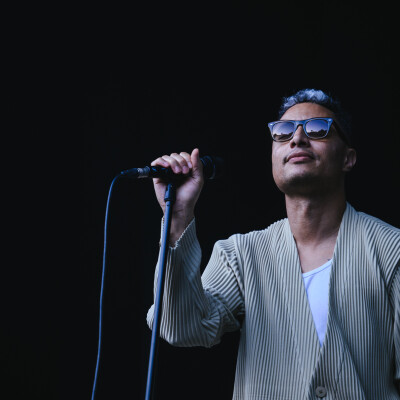
Welcome everybody and welcome to this new episode of Memory Lane, Secret of the Scene and the Studio. A new interview that will be in English because I have the pleasure of interviewing an artist who comes to us from the United States, José James. José James was on his way to Lyon at the Nuit de Fourvière festival on June 27th for a solo night in which he gave life to Marvin Gaye's iconic album I Want You. And we... In 1976, 50 years later, we celebrate the 50th anniversary of this album, which has changed a lot for the approach of R&B composers and who do crossover between genres. Procegem is an artist who identifies himself completely in this genre crossover and who tries to reconcile hip-hop, jazz and soul. To do this, he invites brand guests, including Chana Moses, who we were able to meet in an interview a few months ago, and who were already doing... the teasing of this collaboration and his turn also of really remarkable musicians like Big Yuki on the keyboard or Jarry Sucli on drums. During this interview, we discuss the influence of Marvin Gaye on his music as much as on his personal life, what he represents in terms of black love, a little nod to our Redamn Talk on the subject, and then many other things about the legacy of soul music and its sound approach. Let's listen. My pleasure to meet you. Actually, this is the second time that I'm meeting you. I met you before. Well, I've seen, I saw you before in 2021. Okay. Clermont-Ferrand, that was for an event called Forum Jazra. And you were playing with... with your special guest, Tali. And so it was a great surprise because I've been a fan of Tali's work before and didn't know you collaborate together. Oh, nice. So my pleasure. to meet you again properly. And I wanted to know if this is your first time here in four years.
- Speaker #1
In this venue.
- Speaker #0
In this venue.
- Speaker #1
Yeah, this is my first time. All right. Beautiful.
- Speaker #0
Yeah. Okay. So welcome in Lyon. This is my hometown, by the way.
- Speaker #1
Nice.
- Speaker #0
My name is Marcus. I'm the editor-in-chief of Sounds Beautiful, which is a media dedicated to neo-soul, hip-hop, jazz, gospel. And we're doing this interview for our podcast. which is called Memory Lane, Secrets of Stage and Studio. And I really wanted to have this little moment with you because I'm a big fan of Marvin Gaye as well. A few months ago, we held a music conference about the black love and Marvin Gaye was one of the artists that we wanted to mention who talked about the black love in the music. So really important to meet you finally. I wanted to know why Marvin Gaye for you because this is not your first time uh paying homage to Marvin Gaye so why do you admire admire your soul so much about him and and why is it important for you to to pay another homage for to him yeah well
- Speaker #1
thanks for having me on the on the show man um you know Marvin is the link to me between jazz and R&B you know him and Leon Ware um Quincy Jones you know all these people who trained in jazz and followed in the footsteps of Ray Charles.
- Speaker #0
Okay.
- Speaker #1
That was their idol, you know, for all three of them, you know. Okay. And Ray really opened, he was the connector of gospel, blues, rhythm and blues, jazz. Yes. And they all kind of expanded from that. So for me, Marvin phrases like a jazz singer. He thinks like a jazz singer. His harmony, his harmonic understanding is very jazz and gospel combined. um so i i just love what he does i love everything he he projects you can feel his heart in his music you can feel his spirit his soul you know he believes every word that he's singing you know and that's pretty rare honestly in music um and he's also from an era where it was doggy dog you had to prove yourself you know he was on motown yes he put out some jazz records they weren't they weren't selling that well and back then you know the person who was on the charts got the work you know Smokey Robinson didn't get a record deal for years he just had to write for other people so Marvin's the product of all that jazz training plus that church training plus the Motown pressure cooker so he's really like all three different worlds of black music in one person
- Speaker #0
I get it I heard about the commercial difficulties for the first weeks or years for the album and then it became one of the it's more successful but I didn't know about all this pressure. How did you observe this and is it something that sometimes affects you in your work in your career? How do you challenge this?
- Speaker #1
It's a little different now you know like back then Motown, so I Want You is an important album because it's the first album on Motown created by one producer, Leon Ware. Leon Ware wrote and produced the whole thing. And it's really a concept album. Before that on Motown, it was basically just a bunch of singles put together. I get it. It wasn't like an album the way we think of an album. So this was like the first one with one producer. It was a big deal, you know. Okay. And there's a whole backstory to it, which I won't get into. No, we all have to for this ballgame. Yeah, but that's why that album is such a landmark. Because when you look forward from that album, you see Quiet Storm, Anita Baker, and that whole movement coming from that, you know, from Leon and Marvin. You see D'Angelo, Voodoo. You see Erykah Badu, Mama's Gun. You see all these influences coming from this one particular album. True, true. So for me, It's an important album, and of course it's the 50th anniversary, because it has proven to be one of his, maybe his most influential album, if you think about it. It's not his most popular album. That's like, what's going on? Or it's sexual healing, you know? But in terms of what's come out of that album, when you think of Voodoo, D'Angelo, it comes directly out of this album.
- Speaker #0
The strings, maybe, for D'Angelo. I'm thinking about hip-hop in black culture. And we can mention Kendrick Lamar. We can mention Dr. Dre.
- Speaker #1
Yeah.
- Speaker #0
Sampled a lot of this album.
- Speaker #1
Right.
- Speaker #0
So I got you. Yeah, yeah. The question about the pressure that is there wasn't written, but as you come up with this, it is quite interesting. Plus, I was about to talk about China Moses, which we invited, and we had an interview a few months ago. ago together and we we talked about it's complicated the album yeah and all the the pressure but in terms of that was a little interesting but brackets uh closed uh tell us about your bond with chana moses why did you uh choose her for this particular tool yeah we've been friends for a long time you know and i know her mom didi really well yes and
- Speaker #1
you know she's just been such a champion of black music and of our scene for a long time on the radio in France, in the UK. And we talked about this project a couple of years ago and I kind of told her I was working on it. And, you know, it's kind of hard to find people who know jazz and also R&B equally, you know, because it's kind of both. It's really an R&B album, but the harmonies are really jazz. So it's not just a lot of R&B singers. singers don't sing jazz and a lot of jazz most jazz singers don't sing r&b so it's kind of an interesting position to fill even in the states because even in the states even in the states yeah right like yeah you know there's there's there are exceptions for sure but people who do both well equally that's pretty rare for singers in my opinion that's funny you know i mean there there are you know someone like rachelle farrell wow you know or maybe like lisa fisher okay let us see you know leila hathaway but that's a very okay esteemed list you know yeah most jazz singers you know they sing jazz okay and they don't sing hip-hop or r&b and most r&b and and rap singers they don't really mess with jazz like that. Like... Really, really. Because Marvin and Leon Ware were real jazz musicians. They would sit down at the piano and play Duke Ellington or, you know what I mean? So it was a different level.
- Speaker #0
I get you, I get you. That's funny because we here in France, we love to separate jazz and hip hop. and when we try to dig in the African American culture we tend to believe that it's melted and it's much more about the culture that's what we were talking about with Chana about the culture and the feeling than the genre itself so your take is kind of interesting actually I understand better what you mean and in fact she does cross all the other genres from rock to jazz to hip-hop she can rap she can sing she can so exactly i understand i understand yeah and how do you push these boundaries with your musicians because you're playing uh during in this tour with uh the greatest musicians i'm a big fan for example of jerry shockley yeah yeah on drums uh so i'm really curious on how you explore and reinvent your sound and the sound of Marvin Gaye on tour.
- Speaker #1
Yeah. Well, all these guys can play everything. You know, that's what makes them so special. You know, Big Yuki, wow, he's playing with everybody, you know, from jazz people to, you know, Q-Tip, you know, Busta Rhymes. Like, so he goes, all of them cross boundaries all the time. You know, they'll be playing a rap gig, like a hardcore rap gig. They'll be playing a super hardcore jazz gig. You know, they do all of it, you know.
- Speaker #0
All right.
- Speaker #1
So they're all handpicked. To me, this is the A-team of New York. These guys are like the squad, you know. Facts. Yeah. So they can play. And it's pretty rare, you know, to have somebody like Jairus or Yuki or Machado or Parker McAllister who can play and do play everything equally well. You know, I'm never like when we go another way. they let me down now they're always there so sometimes like on um come live with me angel the um the second track on i want you on the end is kind of just like an instrumental vibe out like almost hip-hop you know you can hear how hip-hop evolved from that music of the 70s okay so sometimes I'll just drop like black magic like my song black magic over that and it fits perfectly and if I want to do a vocal scratch or something or take it somewhere else they're like right there with you so it's more about um it's less about it being jazz and more about it just being in the moment and improvising to me that's what the spirit of jazz is. It may not sound like the way that you think like
- Speaker #0
1950s jazz is but i'm not necessarily interested in that i want that feeling of the immediacy you know that's what i'm into actually yeah the contemporary jazz trying to push the boundaries not to be in contemporary i had this talk with some of her joy for example right who said she can't sound like joe cannington or saravong because she's uh the interview was back in 2023 because she was 20... in 2023. She's not going to try to imitate or mimic, but try to be as contemporary and be in the moment. That's what I mean. If we're going to expect this for your tour, that's special. Yeah, exactly. Next question about the feel of this album. Quite cinematic with the strings, with the emotions. I noticed that you're too Thank you. a fan of cinema. Your last album, 1978, The Revenge of the Dragon, mentioned some cinema references, like Spock Station, Kung Fu. And I want to know, if your music, like the memento for this concert, was a movie, what kind of movie would that be?
- Speaker #1
Ooh. Definitely a lot of afros and trench coats. Okay. Yeah. yeah the blackest night the blackest night yeah for sure but it would be like a anime version though oh right it would be like it would be like all in tokyo just a bunch of brothers in tokyo with subtitles running around having a little adventure solving crimes yeah yeah that's the vibe you play a bit japanese do you speak a little japanese yeah because i've been over there so much just basic stuff you know hello So...
- Speaker #0
goodbye pleased to meet you pleasure working with you little things that go a long way you know all right all right i love asking those questions especially when you you have snow uh when you picture something when you play something though uh okay okay in the blackest night i love it yeah i like this uh final final question i get um I got two, maybe three. I was talking about the black love when it comes to Marvin Gaye and how much his songs inspire your own love conversations, which is in your music, your love conversation, or in your life, actually.
- Speaker #1
That's a good question. You know, my wife and I are expecting a baby. Oh, congratulations. Yeah, the son this fall. Okay. Yeah, and I have a daughter from my first wife, too, who's 13. Okay. in, in, I want you there's a moment in his his wife Janice talks about this Marvin's wife where he talks talks to all his kids he says good night to all his children okay it's like a really tender moment and he says I'll always love you Janice and he says good night little Marvin okay Nona little Frankie, you know, and I look, you know, I'll always love you, Janice. And she said, wow, that's something that they'll always have that moment on his album. OK, where he just said goodnight to his children. It's such a tender moment of black love. So in the set, when I do that, I say goodnight to my children. Oh,
- Speaker #0
no, you don't.
- Speaker #1
Yeah, man. Yeah, man. So, you know,
- Speaker #0
it's OK.
- Speaker #1
It's what I love about Marvin is that. He loved deeply. He loved the music. He loved his people. I think with all of their complexity, you know, obviously he came from the church and there were a lot of issues in that church with his father and the family. But he never abandoned them, you know, and he never abandoned his people. He always stayed around D.C., always stayed around his people. And I think he should really be commended for that, you know, because now we're in an era where it's like. black stars get that money they move away they don't necessarily could stay connected to the hood and marvin was always deeply connected to his people in such a profound way you know he knew he knew he was the voice of his generation you know when his brother came back from vietnam okay told him about what happened over there then he writes you know what's going on yeah so it that's another kind of love his brother's pain and he transformed it into Thank you. a powerful protest, you know? So yeah, this is all in there. It's all in there.
- Speaker #0
Okay. Wow. That was deep. That was deep. Real quick. All right. Um, um, yeah. Noelle had a question.
- Speaker #1
Yeah. Yeah.
- Speaker #0
Um, about, you know, the, um, the fact that you pay homage, you pay tribute to, to big legends, um, Bill Weathers, Marvin Gaye. and we wondered what kind of legacy would you hope to leave behind?
- Speaker #1
your music or for your people for for the music i hope that people when they look back i mean it's kind of way already happened like they've some i'm in touch with some of the younger jazz singers like cecile mclaren savant people like that uh it kept niquele you know okay she's dope too check her out yeah i'm gonna i'm gonna check her how do you spell it uh e-k-e-p okay e-k-e-p n-k and Kate and I had you read that You got me You got me Hold up I got you I just interviewed her For my book too Okay great Yeah I'm writing a book About jazz singing Yeah Alright Yeah Hold up I got you The last name always gets me. N-K-W-E-L-L-E. Okay. N'Kwelle. She's killing it. So, yeah, for me, in terms of, like, legacy, I would be satisfied if they look back in 50 years or whatever. Okay, Jose James, like he was the dude who in the hip hop generation came out of that and connected jazz tradition with people like Flying Lotus, people like Moby, people like Goldie, people like Giles Peterson. Okay. You know, obviously I, you know, I pay respect to the elders too, McCoy, Tyner. But I think what I've done is, and hope to continue to do, is say that... I'm not necessarily the best jazz singer, but I think I'm the one who has opened the most doors and given permission. Like I do a, you know, a tour playing rock guitar with my shirt off, jumping in the crowd. I'll do a tour with an NPC on the stage. I'll do a tour, you know, with a big band. I'll do all of it. I'll write rock songs. I'll write pop songs. I'll write funk songs. I'll say, Hey, a jazz singer can pay tribute to Billie Holiday and Bill Withers. and Erykah Badu, because I think the power of jazz is saying, kind of like hip-hop, you know, because jazz came first, they're like cousins, but jazz was like, oh, that's jazz, like John Coltrane heard and he's like, that's jazz, you heard Indian music, he's like, that's jazz,
- Speaker #0
because I make it jazz,
- Speaker #1
you know, in a cool way, so yeah, I think, I know that Cecile and Akep told me, like, yo, you opened some doors for me, so. That makes me feel good. It's the mission. Yeah, yeah.
- Speaker #0
Making the connections and pushing boundaries, creating new ways of approaching and making music. Right.
- Speaker #1
Because sometimes, just to give you the whole picture, sometimes in the industry when people hear, oh, jazz singer, immediately they think suit, tie, supper club, swinging, playing standards, which is cool. But that's not the whole story. And when you even even way before me, you know, people like Abby Lincoln or Nina Simone, you know, people who are doing like groundbreaking work politically. Yes.
- Speaker #0
socioeconomically culturally so i i would just want to keep reminding people like no no no this is a big big word i think it's happening though because um with my peeps here in france when we think jazz we think of the likes of robert glasper we think of my colleague yeah we think of uh you know uh cory henry uh all these people that um blends the boundaries between funk gospel hip-hop
- Speaker #1
But that's not... that's not the case in america oh yeah no it's still very like like a lot of rap people don't mess with jazz at all like i know jay-z's like i'm jazz whatever you know i mean okay so it's kind of interesting like a lot of brothers are like oh jazz is like white music or something oh yeah in the states yeah wow yeah so you know we're we still got a lot of work to do to just keep
- Speaker #0
connected you know i understand yeah thank you very much for your time um Thank you. Is there an album coming out from this Marvin Gaye tribute?
- Speaker #1
No, this is only live, bro. Only live. I got a book coming, like I said. Okay. Working on that. Hopefully it'll be out in 2028. Okay. It's called The Art of Jazz Singing.
- Speaker #0
Okay.
- Speaker #1
And we'll have tours and masterclasses and albums around that too. So that's kind of my main focus. And I'm doing a tribute to Frank Sinatra. Oh, yes, yes. With John Clayton, the great arranger. Yeah, because I want to explore his jazz side and his ties to Billie Holiday too.
- Speaker #0
I understand. It's busy. It's busy. It's busy out here. Looking forward to it. And thank you very much again for your time. Thank you. See you later. Thank you for the great question.