- Speaker #0
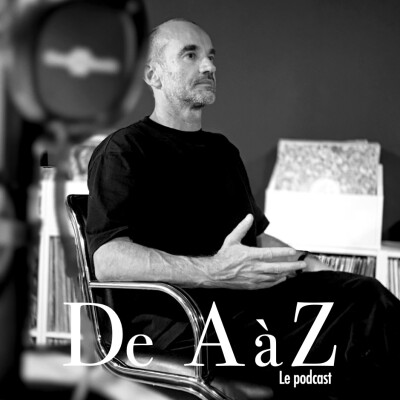
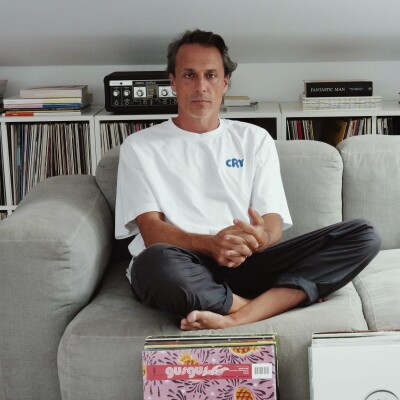
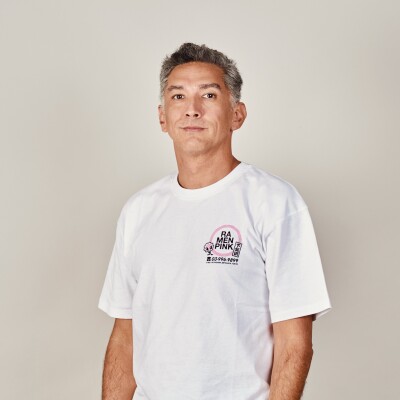
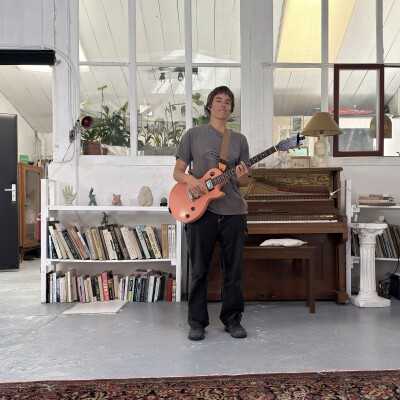
I love meeting people who build a life around what they love and sometimes not just one thing. My guest today has always moved. between different worlds. Design, photography, surf, fashion, music, without ever really choosing one over the others. But what I find really interesting about him is the way he approaches creativity. For him, design isn't just about making beautiful things. It's about finding solutions, understanding a problem, a brand, a client, and creating something that actually makes sense. Then, of course, there's style. Not style as something that looks good, but as a language, a way of expressing ideas. So today, I'm very happy to welcome to the AZ studio, someone who's pretty difficult to put in just one box. Creative director, designer, photographer, music curator, and DJ. The very talented Aitor Molina. Bienvenido.
- Speaker #1
Thanks, Alain. Thanks for having me. It's my pleasure.
- Speaker #0
Thanks for crossing the border. You, you, you. You live in San Sebastian, right?
- Speaker #1
Yes, that's correct.
- Speaker #0
You were born and raised?
- Speaker #1
Yeah, I'm born and raised in San Sebastian, but I lived almost a bit longer than 10 years in Madrid.
- Speaker #0
Okay. We met each other while you were creative director for Pucas. You did that for how many years?
- Speaker #1
I don't know. I've been related to Pucas for a very long time and I'm still related to them. I think I started around 2010, something like that, or 11, 12. I don't remember. But to me, it's been like my very first professional approach to creativity. So that's like where I landed there.
- Speaker #0
So before talking about the podcast era, tell us, how did you get there? How did you grow up? We know you grew up in San Sebastian.
- Speaker #1
Yeah. So I had a pretty standard childhood, very connected to the sea through surfing. And almost all my relations were driven by surfing at the beginning. And then I had a very strong connection with music when I was in my late teen era, like, I don't know, with 15, 16. So I got deeper into music since then. So I always had these two worlds connecting together, but at the same time being very separate in terms of characters and what kind of people were impacting me from one side to another. So as you may know, they're very different worlds. So yeah, my early beginning was very into water sports, like surfing and staying by the beach with friends and all that thing. So then I went to university to study engineering because I wanted to design cars at the beginning. I've always been fascinated by the old school cars and the old fashioned styles and designers and all the things. So I wanted to be like a car designer, like Pininfarina or Bertone or these guys. And so I started... my career in engineering. I had the doubt of doing architecture at that time, but I've decided to go to the engineering thing. And I think at the second or third year of the degree, I got deeper into music and I felt kind of like disconnected from the car thing, not because of a lack of love to design. But just because of how engineering was teaching in, you know, was teached in the Basque country, that was like very technical, very industrial. And so I felt kind of like not, you know, falling in love with that path.
- Speaker #0
So you were studying in San Sebastian?
- Speaker #1
I started in San Sebastian, but then I told my parents that I was going to become like a full-time DJ. And because of that, they found that in Madrid, they were starting. the studies of industrial design. So we can connect, you know, kind of those both. And they told me, you know, you have this possibility. If you don't like it, at least you will be in Madrid where music is like, you know, like the real thing. So you could like... probably become like a better DJ or well-known DJ in Madrid. So in a month I was moving to Madrid with 21 years old. And then I spent like 10, 12 years there. And I think that shaped my whole life because it's like being in the epicenter of a lot of things.
- Speaker #0
So your parents were very supportive. When you told them you wanted to become a DJ, which is not necessarily the case.
- Speaker #1
It is not the case, but for a better understanding, my parents are both a psychologist. So they've been very connected to culture and to the emotional decisions. So I felt exposed to music because of them. Like when I was very young, my dad is very into jazz. on into and Ethnical music. So I've been exposed to several kinds of rhythms and stuff. And my mom, she's more into like a singing or singer music style. So I started having piano and music lessons with seven, eight years old. So that shaped a lot like how I was like understanding music. Then by the age of 10 or something, I started singing in a chorus in the Basque country. in a pretty, like, let's say famous one. So we were, like, doing tours around Europe, doing concerts in theaters. And, like, I've sung in, like, you know, probably the main theaters in San Sebastian, Bilbao, and so on. So they really knew that I had a connection with music, but that's, like, a different story of, you know, having your 15-year-old kid and going to clubs. where you're not allowed to get in, you know, by that age. So the thing is that I've never been into drugs and I've never drank alcohol. So I had a very... Never, ever. Ever in my life. So that's like a... And we're cool to say that it's because of health issues. It's not. It's because I don't like the taste of, you know, whatever you put in my Coca-Cola by the time. So no, I don't even drink Coca-Cola, but... that time I've loved to drink cola. And if you put rum or gin or whatever to my Coca-Cola, then you will, you know, have me angry because I don't like the taste of that. And the drug thing, maybe it's more connected because of the ultra exposure that the world has to drugs. And I really liked just the music. So I've never been into the older sides of the socialization. And because of my early interest in music, I've never had this, like, the cluber or the audience feeling of the party. I've been always on the DJ booth. So I never had this. Actually, I don't know how to hang out on a club if I'm not playing in. Because I'm getting like, you know, I don't know where to go. I don't know what to do. So if I'm not in the dance floor. or in the Digibooth, I'm kind of like lost there. So to me, it's kind of like hard to deal with that. And I think that helped me a lot. Well, then we've lost some friends because of drugs and stuff. So then you start having the real magnitude of what you're playing with. So my music career was this kind of like, you know. This journey, I started helping on a record store in San Sebastian that was called Hobby Mart Records, that was at that time inside the first Loreac Mendian shop. So at that time, music and design started to feel part of my life. And step by step, I've been exposed to design trends, to fashion houses, to all that thing, because of the music. So even I wanted to have like a design career because of the engineering and car design, actually music took me there, you know, from the other way around. And that's super interesting to me because when they both engineering and fashion styling came together, that's where I could like develop my method or my way to approach creativity problems. And that's why, for example, if you talk to friends or to colleagues, They say that I'm never getting nervous, and that's not correct, but I have systems to solve problems, because on engineering, you are, you know, facing like... big problems that you have to give like one answer that is a number and in design you have several answers that's why i'm like you know i don't give a fuck because if if this is not working i have another 20 ideas that maybe one of them will work so it's not gonna be an issue for that you know so um when i told my father my parents that i wanted to become a musician a dj um they felt kind of like okay but so i mean Yee. But you can make a living with it or how you're going to, you know, react. Because I never hide anything from the nightlife to them. Actually, they were coming to see my gigs and, you know, they were driving me. So they see, like, step by step how serious I was, like, taking that. And, for example, I think it was the year 2009 where I was booked. to open the Sonar Festival in Barcelona on the main stage.
- Speaker #0
Which is one of the most iconic electronic music festivals in the world, pretty much.
- Speaker #1
To me, it was like my life milestone. I was like a year before that, I was telling my mom, like when I was, you know, when I will become like a proper DJ, maybe I will perform at Sonar. And 11 months later... We were all together there and my family came. So they really see how my approach was and how serious it was to me. So I remember very well the track list I selected to that opening. So I started with some classical music. Then I played some Basque music. And then I connected that with Maurizio and Basic Channel and all these Berlin deep techno era things. So it became something that was pretty special. that time later they would have gone, I mean, after me, we're playing like Carl Craig, Jeff Mills, Luomo. So that was like a big name thing. And to me, it was like the same. I was not nervous. I was doing my thing, like very calm. And so that's why I think they felt that, okay, so if you like it, you know, try to go for that. But then somehow because of that Sonar gig, I started touring a lot around Europe. But after a couple of years of touring, because one important thing is that I've never got into production that much. I've always selected myself, I mean, I've always felt myself like a selector, a music creator. So like a proper digital, not like I'm a producer. And I didn't like the idea of making sheet records to get... gigs, you know, so if you want me to go to your place and then I'm going to put the thing, you know, upside down, but I'm not going to create records just to take that if you don't want me for that, that's fine. So I had a lot of gigs during two or three years and I started to have friends that are like today, like very well-known DJs worldwide. They became like, like big names, but at that time they were like, you know. Maybe more underground issues. But I don't know, maybe like 10, 15 years older than me. And I was looking at their lives with how they deal with family issues, like being 200 days a year on tour and all the things. So I felt at some point that I didn't want to have that life, that personal one. I didn't want to pay the price of not being able to have a proper family. or to have fun with your friends. Because for two, three, four years, I wasn't able to stay on a weekend with my family, with my friends, with, you know, going skiing, surfing, whatever. I do have the week. But during the week, your friends are working. So that disconnection with life was to me maybe too hard. And so I made a decision on focusing on the day life. I kept collecting records till today. So I've never stopped like buying records and being connected with producers and shops and stuff. But I stopped touring and I moved back from Madrid to San Sebastian. What happened is that all that music years living in Madrid somehow exposed me and connected me to probably you the most interesting characters of a city and maybe a country. And that helped me out a lot to have the kind of projects that I do have today. I always say that if I've stayed in San Sebastian, I will not be able to do what I'm doing now because of the lack of connections and friendships and all that thing.
- Speaker #0
Was it because you had access to a network or also you had access to a broader culture than staying in San Sebastian?
- Speaker #1
It is a very good question. And now that I see that with perspective, you know, the perspective of the ages. I have been very curious since I was very young. And I think because of all the cultural impacts that surfing and skateboarding had on my early, you know, early ages, that shaped, because you know how surfing was in the 90s. There was like very eye-catching, you know, colors, shapes. Brands were very personal. Now fashion is becoming like very, you know, copy-paste. But at that time, it was everything about personality. And then, you know, those hot tuna ads or reef, you know, with the ads and everything. It was like a very, like a shaping a character. So me going to the most centric place in Spain without sea and everything. But having the connection with that kind of like aesthetics drove me on a wave of connections with people that could be pretty random, but using both my design path and my music path, having the connection around, somehow made me feel comfortable there and somehow make those guys having... some sort of interest on me because I was a total outsider. I always say one thing. When I told you that the record shop was inside a fashion shop called L'Oreal Mendean, which it's like a well-known Basque brand. The foundation of this brand, it's from two guys. It's Victor and Xavi, and both were friends of mine. And I felt like very inspired. inspired by them, but I didn't know anyone when I came to Madrid. So I asked Xavi if he knew someone that he can connect me. And he told me, you know, go to one shop that is called Mini and find one guy called Oscar, which is the owner, and he will help you out. So the funny story is that I just went there the first weekend that I have. And I just went there, I introduced myself, like, so I'm a Tor, I'm, you know, I'm 21 and I'm coming from San Sebastian, so I have friends with these guys and stuff. So he opened me to a total crazy world of people because this shop was a super small shop, but it was the shop introducing brands like Balenciaga, Acne, I don't know, all the cool brands. When they were very in the beginnings, these guys were the catalyst, you know, coming in with these guys. So their clients were like musicians, designers, architects, bar owners or club or discos or businessmen. But let's say the most special ones from each other. So they all together were like a kind of like a group of people, you know. So me being that young and feeling exposed to that made me like, you know, having conversations with a variety of people that to me was super interesting. So we would just, there was no internet, no Instagram, no nothing.
- Speaker #0
Which year was that, that you arrived in Madrid?
- Speaker #1
I'm 44 at the moment. So that will be like 24 years ago. So by the early 2000s. Okay. So you have to think that by that time, the electro music like Justice or Banger, all these guys, they were like starting to set up. So we were booking like Blackstraw or even, you know, these guys from Germany or from Paris. that come in, you know, Digifalcon even, or these guys, they were like starting to, you know, to see the light. you know, on the end of the tunnel. So it was a very interesting thing. Music-wise, I've been always more connected to the house and techno than the electro thing. So I've been always like more on the pure side of things. But Madrid had and offered everything. So one night we will be on an electro night with Tiga and then on a Saturday on a techno night with, I don't know, Alexander Kowalski or these guys. So. The exposure to the music was super interesting, very rich. And the people attending to that parties, they were, let's say, more on the cultural and intellectual side, more than the party tiger style like Ibiza or other things. So all the connections made at that time now probably are like very well-known fashion designers or architects or businessmen. So that connections made me feel like very comfortable. with a very different kind of people and being able to talk about different things. And I don't know why, but somehow all of them were kind of like in love with my city, with San Sebastian. So everything went like very easy, you know. And because of that, I think everything came very naturally. And me being like touring almost every weekend out of the city and coming back on Mondays, that was like, you know, so I have to... the compression thing during the weekdays. So, because at that time, I've never disconnected the design work from the music one. So I always kept like works during the week. And so then I was, of course, doing that my record shopping for the weekends and stuff, but always had the day life connection. So everything was like a very strange, but comfortable to me balance on that way.
- Speaker #0
So you mentioned, something very interesting. You said you were, you arrived in Madrid as an outsider. So you had one foot in the surfing, skateboarding scene, and then another foot in the electronic music scene. Did you at the time consider that as a strength or as a weakness? I ask you this just because from a personal perspective, I was very insecure when I was a teenager and I was passionate about music. and about surfing. And to me, I had this kind of imposter syndrome.
- Speaker #1
Yeah, totally.
- Speaker #0
Not being legit because jumping from one to the other.
- Speaker #1
Okay, I'm going to give you two answers, two separate ones. The first one is that I have always felt an stranger or an outsider on both worlds because of the style. And I'm going to explain you this. I've never been a good surfer, but I do have style. So if you shoot me a photo surfing, you'll say, okay, so this guy is, you know, he's ripping. I'm not. But I just somehow, you know, have this aesthetic thing. So I like to choose a nice board. I like to, you know, to write it on the weights, you know. looks good so that make me makes me feel fine so um being like a poor surfer um made me feel strong on the style side and put pressure out of me like because my friends like a dude from pucas or or you know all the good surfers around like whatever to me they were like ronaldo i'm just like a dog you know But somehow I can stay there with them feeling comfortable because I'm doing my thing on style. So do your thing with the barrels. You know, I'm not going to, you know, we're not going to go against one another because I don't have balls to surf like at it. But I know how to, you know, how to make something beautiful on a two feet wave. And I'm still feeling like a real part of that community. And, you know, and with the music. It happened, let's say, like the opposite. I knew I was good. I always say that the best thing I know I can do is to make people dance and feel things through music. So I felt an enormous confidence in myself with the ditching thing. So that made me easy to go, you know. Let's say Ministry of Sound in London or whatever in Ibiza. I don't give a fuck if you are Bob Sinclair or Ritchie Harding. You know, I know I'm going to be at the level. That took all the pressure off me. So it's like the opposite on surfing. On surfing, I was bad, but with style in the music, I was good, but without that social drug after our thing. So I felt confident there. That was the first answer. And the second one, it's something that you may relate with that a lot. I learned with the ages and with the years that creativity, no matter what area you are applying and leadership. They both have two things in common. One is loneliness. You feel lonely when you are creative or you feel lonely when you are leading or you are the boss or, you know, and insecurity, both things. And I would like to explain this and every time I have the occasion or I... do talks or whatever. I want to say this to the younger people, because you always gonna be feeling lonely and insecure if you have to deliver a creative act of anything. Because at some point you will be alone making the decision of what is going to be or what not, you know, or point one direction. And I don't mind if it's a branding campaign for Quicksilver or if it's like, you making a photo of a football player. You have to decide if that's the one or not. And that makes you feel unsecure. And I'm feeling that every day. And I'm, you know, I'm used to that. But it's like, for example, tomorrow I'm going to be presenting to Mango, the fashion house from Spain, Mango, a creative concept for events in the presentation of the party collection for Christmas. So there are going to be two events, one in one store in Milan, in Corso Como, and the other one in Madrid, the best shops in Europe of them. I don't know when I'm going to present them. That's, I mean, hopefully this podcast is going to be out later. So I'm leading with, you know, I have ideas. I know where I'm going to go, but I don't necessarily have the, you know, the fine concept at the moment. But I know tomorrow I'm going to have. So. That thing and being able to live with that, to me, is the only way of navigating this design and creativity thing. But it's the same with the music, because with the gigs, I always said that in a year of 160 gigs, I can't come with a hand. The ones that are going to be good.
- Speaker #0
Yeah.
- Speaker #1
The other one is going to be work, you know. So it's the same. and being this leadership and creative alliance because of the insecurity and loneliness to me it's very important because I felt and I had this conversation with with very important CEOs of companies and they say you know it I feel lonely in my company because at some point I have to fire people or I have to you know to say no to whatever and it makes me feel lonely and then I have the insecurity of feeling if I'm not doing the right thing And I think people relate to that with their experience.
- Speaker #0
Definitely. Let me go back to something what you just said, because I think it's super paradoxical and interesting. You said you live with this daily insecurity that is somehow the fundamental of any creative job. But in the same time, you tell me like you're going tomorrow to present to this huge client and you still don't know what you're going to present. That's a lot of trust in yourself. So you know what I mean. Because you need to get confidence in yourself knowing, I wouldn't record if I wasn't sure that I have the skills to present something good tomorrow, even if I don't know what I'm going to present.
- Speaker #1
Yeah, the thing is that I've created systems. So now everything is connecting again. So I started engineering in product design, in industrial design. you Engineers tend to solve problems with one single answer.
- Speaker #0
So they have the huge problem and then they tell you, okay, so give me whatever, a thousand euros and give me six months and then I'm coming back with the answer. So six months later, they sell you two. That's the answer. It's two. But in design, it's not two. It could be two, two hundred, two thousand or whatever. So the good thing is that I've created systems to work or methods to work. So I know how to deal with the white paper. So I can start with the process. And I don't really care if you want me to design you a chair, a house, or a strategy, or a brand, or whatever, or an event. My process is going to be always the same. So I do an information phase, let's say, where I ask a lot of... documentation and information so I have the better information quality that I can have. And then I go through an analysis or analytical phase where I connect all that with my influences, with the information that I know, with my background, with a lot of different other information. And with that analysis, I know that much about the company and about the project. that I'm feeling comfortable to propose my ideas. So I think this is interesting for, again, for the younger guys that are, you know, coming to these creative professions that I always wanted because the system had the goal to separate the taste from the delivery. I've never wanted to any client to tell me that... I like it or not. Design is not about if you like it or not. It's about if it works and solves your problem or not. I'm not an artist. So the way I... I feel an artist with music, but not with the design. With the design, I can do beautiful things, but to me, taste, it's a commodity. It's coming with me. You know, it's like in surfing. It's the way I do it. But the real delivery... is the problem solving. So when you do and you work with this information analysis and proposals system that can be small or can be huge, can be a week or a year, then when you propose your proposal to the client, they know that you know a lot about them. You know that much. Maybe you know more than them. So when you put things on the table, Of course, they're going to be beautiful, but especially they are rooted on their own information. Because when you study that on the way that engineering does, for example, to put, you know, rockets on the sky, you really need to study. You have to, you know, to work your ass off. So that's what I'm doing. And that's the only way I've never had, you know, this kind of like a magic happen in a minute. It happened when you spent two weeks working your thing and then by now you have the idea, but it's not coming alone. It's coming because all the work and research you've done on that.
- Speaker #1
So basically your creativity is nourished by...
- Speaker #0
By the process.
- Speaker #1
By the process. And you have a very disciplined approach. Yes, yes,
- Speaker #0
yes. Then if you see me working... It will look kind of like chaotic sometimes because I'm jumping from one thing to another because I do a lot of research and all that research is calling me from one project to another. So I'm always like having like two, three, four projects at the same time running. So that makes me, you know, that connects me a lot with different moods and stuff. But it is very intense and it takes a lot of hours. even If I'm not having a project at the moment, I keep doing like, for example, let's say I can spend in between four and five hours a day doing research, reading things, watching films or, you know, whatever in the Internet, watching interviews. So trying to know what's going on in my business and, you know, what guys like, you know, my, my, my, my, my, how my business, it's, it's, it's moving on. So I can be like very, you know, on point with the things that I like and that I think are important to me.
- Speaker #1
Okay, that's super interesting. Before going deeper on this, let's talk again about the music and the DJing. Did you have the same approach in DJing? Yeah. Did you prepare your sets? That's a tricky question.
- Speaker #0
I mean, not to me. You and me, we are like build guys now. In my time... everything was on vinyl. So I really find a joy in the limitation of the space. So I will be able to select in between 60 to 100 songs or records for each gig. Actually, when I was preparing gigs, I was selecting in between 60 to 100 records for three weeks at three gigs, because I was living in my home on a Thursday night. and not coming back till Monday. So probably I will have like two or three gigs that weekend. So I will need to, you know, to solve that with just, you know, in between 60 and 100 records.
- Speaker #1
So let me interrupt. Just for the younger audience to understand. Yeah. Digging in vinyls, like the depth of what you can propose is limited, but what you can carry. Correct. By yourself.
- Speaker #0
Correct.
- Speaker #1
So which means like you can carry at maximum two. heavy DJ bags, which means like what, roughly 200 records or something like that.
- Speaker #0
Yeah, but if you fly like, that was my case, you will just have one record bag because I will take it with me. I will never, you know, put it on the... So the thing is that I found safely to just have a backpack with my clothing and then just one record bag with in between 80 to 100 records.
- Speaker #1
And some of the records you can play two tracks maybe at maximum. So that means like... If you're lucky. You have access to a hundred tracks to do a gig of a set of what, like a couple of hours?
- Speaker #0
You have to tell your story with that. But I find that as a positive thing because first, each record in my bag had a purpose, like my opening ones. And on top of that... I've never been like a well-known DJ doing pick time in Pasha. So I was always doing like openings or warm-ups for bigger names or maybe then in an after hour having the pick time. So I had to cover like several, you know, like different kinds of sets. And for that, my approach was the same. I was doing a lot of research, a lot of study because of my relation with that. shop in San Sebastian I had access to a lot of promos and like early you know like like having all the the newest records and and then having access to talk directly to artists or to the record labels so I created a lot of relations and that made me very somehow feel let's say confident on my work. because I send my confidence towards the labels I was trusting and the artists I was trusting on. And back in that days, I remember there was this social network called MySpace. I don't know if you remember that. So that was like the very early connection to talk directly to, you know, a Canadian producer or a guy from Norway or to Paris, whatever. so so We made a small community there that was very underground, but I have still friends from that space. Yeah, yeah, yeah.
- Speaker #1
Not only Tom.
- Speaker #0
Yeah,
- Speaker #1
no. Tom from that space. No,
- Speaker #0
totally. But for example, I have a friend called Petter. This guy is from Stockholm, and he was one of the guys of Border Community, the label from James Holden. Yes. So this guy is still my friend. We still send out... messages and and you know we haven't seen film for a long time but uh we still have that connection and for example i do have a record from petter uh i can't remember the name it was the reference number seven of body community i guess it was like a bird in in in the cover i know that with that record i will turn upside down whatever party i don't give a fuck if it's techno if it's house if it's reggae whatever it's gonna work because it's an amazing record and it's from a friend of mine. So I have that attachment to that. And because of my confidence when I was playing that, people will take that. To me, I don't want to sound like these old guys saying that, you know, the past is always better because it's not. I think it's an amazing music today. But back in the days, because of the limitation of the tool that we have, we will be very picky with what we're putting on the record back or not. And if you have the right way or the right... let's say charisma, to translate that to the audience, then they will take that. And to me, it's very simple. You have to love it. And this will sound kind of like for the Instagrams, this kind of like, you know, viral content. But I really believe that... If you want to be a DJ because of the DJ thing, then you're fucked. You have to love the music. If not, at some point it's going to be empty. So I really love that shit, like the music. And if it's 10 people in the dance floor, I'm happy. If the sound system is good, I will be happy. It's fine. And I don't really mind if it's 10,000 or 10,000 because the music is going to be amazing the same way. So it's just... creating connections in between you as an artist and the audience. And if it's two people, it's two people. I had amazing DJ sets connecting just with two people in the dance floor in between thousands. But that's just doing my thing for those two people.
- Speaker #1
I know. And that's amazing. I know what you mean. It's funny. I think I quit DJing at some point when I realized that I lost that... transmission thing and i was just i had i had a kind of a formula and i knew it works based on just like 30 years of teaching so we had like enough depth of tracks to to tap into a different style but but i lost this thing like of sharing and making this cover yeah and if and and i had kind of like bitter feeling after that, even though it was... kind of like successful set.
- Speaker #0
Yeah.
- Speaker #1
And that's the moment I knew that I had to quit.
- Speaker #0
Yeah, I know totally what you mean. It didn't happen to me because I stopped because of a conscious decision, you know, to step in a way of that. But I've always missed it. So I still do like a couple of gigs a year, like very selecting them. um Lately, I'm starting doing one, to me, a new format, which is with just one turntable. And I'm introducing each record, like telling the story of the record.
- Speaker #1
So it's what is called a listening session.
- Speaker #0
Yes, yes.
- Speaker #1
I saw that. I was about to bring that to you. Yeah. You did few lately. I saw that. Yeah, yeah. So tell us more about it.
- Speaker #0
Okay. So to me, the thing is that... It happened to me that in a lot of the latest DJ sets in clubs or festivals, whatever, a lot of people were asking me about the tracks that I was playing because they were not in Shazam or whatever. Because there were records from 25 years ago, you know, and they sound super fresh today. So it's like I do have new records, but I always, you know, I don't know how. putting like my old stuff. So because of that situation that having a lot of young people without knowing the beginning of techno, the beginning of house, like, you know, this kind of, you have record there. I saw it. It's from Africanism. It's from Bob Sinclair's record label.
- Speaker #1
Second label. Actually, his first label was called Yellow.
- Speaker #0
Yes, yes.
- Speaker #1
And it was called DJ. This one is,
- Speaker #0
I like this a lot because it's now that all this. Afro house is super hyping and stuff. So this shit, it's crazy, you know, and that's like 20 years ago. So Chris, like Bob Sinclair, was doing that, was like really opening the mind. Like, okay, so I'm a house DJ, but I like African records and I have African music and I do have, I like hip hop. So this kind of thing, it's like what I've embraced with that. So with this new format, I'm trying to explain. the records to people. And because of the time I was lucky enough to live, I do have a lot of... first reference of a lot of well-known labels. For example, now there is this German club from Berlin called Berhein, which is very famous. So in the last listening session, I played the promo of the Osgutton 1, which is the first record of the record label of Berghain, which is from, I think it's from 2008, or I can't remember well. So... that record, it's amazing. It's like a deep house, in between deep house and deep techno. It's very hypnotic, but sounds ultra fresh today. But if I can't tell the story of that record to the audience, they will miss a lot of the meaning that that record carries with it because it is the first record of a global movement that moved techno towards today. So. I did this listening session and I started with some ambient music explaining what a warm-up is and not mixing the record, just putting the record from start to finish and explaining the feelings of opening a night in London on an empty club where you don't have any idea about English. Because I have no idea about English. I was traveling to Europe without knowing the language. I mean, so... It's fun because you expose yourself to new things. And the good thing is that I was thinking to myself, okay, if it's going wrong, you know, I don't care because no one is going to know me and I'm going to take the flag back tomorrow. And, you know, at home, no one is going to notice about this. It's not like today that everything is in socials and stuff. So this listening sessions thing, it's beautiful because the reaction of the people, it's crazy. It's like the last one I did in San Sebastian with... just a very small group of people there was people like um clapping for three four minutes like they were like really feeling like different about the music and it was club music i played like a record from lauren garnier or um i don't know i played burial i played um some classic house records and then some some techno and they really got it like okay and many of them came later to me to talk and and they were like asking me like could we do this but more focused on for example one gender or one label or one style or one age or one club and i'm like yes i mean we can do whatever you want because it's just you know a matter of of having the tools which are the records but they were very curious about especially the younger guys like feeling like so i heard this track and i don't know where in what festival but i didn't knew that it was like you know There was the one from the Berline. So given the significance or let's say the meaning that they have, it really changed the way they were taking it. And I think that's very important because of the context. I would say that the contexts are very important. That's why sound systems matter a lot. That's why now all these listening bars or hi-fi things are coming up and fashion is taking because the way you feel it.
- Speaker #1
it matters it is really different how many tracks you you you play in a in an event like this uh in between
- Speaker #0
15 and 18.
- Speaker #1
okay kind of it's it's a short thing the thing is that the tracks are maybe like six minutes and i guess you need to pick like some tracks that are not like 12 minutes yeah well what i do is i jump them
- Speaker #0
Okay. Yeah. Okay. Yeah. So I introduced myself. So I'm going to jump like two minutes and then it's going to come the break. I want you to listen to the break, what's going on. And so I was, and even sometimes I explain like what I lived. For example, you know, this record at what club in Romania that happened, you know, like then the sun came in and it was like a magical thing or whatever. My memories, you know, but it's connecting the whole story.
- Speaker #1
So it's a mix of explaining the track. where it comes from and also your personal experience as a DJ.
- Speaker #0
Yes, yes, yes.
- Speaker #1
Are you going to do more of this?
- Speaker #0
Yes, yes. I don't have anything closed yet. I'm trying to find the right format and the right partner to do that. I'm going to do something soon in Madrid by the guys of... a very well-known it's not a musical thing it's more like hotels and this kind of like more corporate thing because what I need is people to stay seated And we need a good sound system. So it has to be in what kind of like theaters or atriums. It's not easy to find like a right space to do it.
- Speaker #1
Yeah, I guess the space is a big part of the success of it.
- Speaker #0
I'm connecting that a lot with the art and the galleries and that scene. And I'm working more on the direction of pointing that to art galleries and this kind of like situations that... people go with the mindset of leaving something that is going to be very unique and very just for that moment, that they're not going to be able to see that again.
- Speaker #1
It's a very immersive experience for the audience. How big is the audience in an event like that?
- Speaker #0
In between 100 and 500.
- Speaker #1
Oh, okay.
- Speaker #0
It could be like a proper theater if the sound system is good.
- Speaker #1
Okay, great. Yeah, if there's any that you did or that we can find on YouTube, for example?
- Speaker #0
I don't think so because I'm trying to not record them.
- Speaker #1
Okay.
- Speaker #0
I'm allowing the promoters to make like social like cuts and stuff, but not putting the set together because I want like to keep the, if you want it, you have to come. Yeah, yeah, yeah. I think it's important. Yeah. It's not more, it's not because of the exclusivity. To me, it's more because I want them to come like very like open mind and without
- Speaker #1
making you know um the an idea of what they've seen you know so i'm trying to keep that okay i get it um so let's go back to the dj years at some point you realize like you're not going to make your life being a dj so that's the moment you decide to quit madrid to come back to san Sebastian?
- Speaker #0
Yeah, more or less. In Madrid, I've... I've always worked on both music and creative careers. And I think it's not that connected to that, but that's some... I remember I was in a bus, because in Madrid I haven't had a car. So I was always like walking or having buses or on the ground, whatever. So I need like an hour and a half of commuting to go to the agency I was working at that time. And so that means three hours a day. So, and I've loved that. I miss that a lot.
- Speaker #1
Oh, really?
- Speaker #0
Yes, because there was no Instagram and no Facebook and no nothing. So there was just music and you. Well, I was learning English looking at TV movies or whatever in an iPod with the subtitles. Yeah, yeah. When I was with good vision, not like now. But I miss... Those commuting times of staying with yourself and thinking and, you know, with your thoughts. And I was living in Madrid with no surfing, but it's like the same of going to the water. You know, you don't have the phone, you're not with your friends, so you are with yourself. And that to me, it's very a beautiful situation. But at some point I made the math of, OK, so if a week is five days of work and I'm commuting three days a week, that's... almost a day per week, losing on commuting. So I don't know why I made the click. So I called my parents and said, I'm coming back. And they were like, okay, but why? I don't know, but I'm coming back. And I came back, and in a couple of months, I was starting working in PUCAS.
- Speaker #1
Okay, so you make the transition for me. So you come back, and you started working with PUCAS as a... creative director yeah i mean at that time i was super young so i had no idea about what was you know directing creativity so sorry before i'm talking about your position can
- Speaker #0
you explain us what is pukas sure because some of our audience don't necessarily pukas yeah pukas is a family the owner business. that that's been related to surfing for, I don't know.
- Speaker #1
Four decades, I would say. Yeah,
- Speaker #0
from the late 70s. And Pucas is born from two families, which is Miguel and Marian, which are brothers, and then the husband of Marian, Inigo. So they've created that. that business. At the beginning, they started making surfboards and bikinis. Then they came with the, with the surf shops and then they created the Zalaut Pro contest in Zalaut. So, um, They started in Zarauz and then they have shops in San Sebastian too. So they have a sulfur manufacturing company and then they have the shops. So somehow people maybe they're not relating both together at the beginning, but they're separate businesses, but are like both connected and same ownership and everything. So, um, uh, Adur, which is the son of Marian, one of the founders, is like my brother. He's actually probably one of my closest friends, if it's not the closest one. And Tala, his sister, at some point we met in the street and she was like, oh, so you came back from Madrid? I was like, yeah, yeah. And what are you going to do? And I'm like, I don't know. And so she said, OK, so you have to come to us. And so we talked together and we somehow found like a way to put me inside the survival factory. I had the office in the survival factory and I started helping with designs and with shooting. I've shoot photos almost all my life, very just as a very documentative purpose. So I started shooting photos like almost every day in the factory. And I still do that. So I still shoot photos for them and design stuff and hold them with anything they need. Now as a freelance, but I've spent like a lot of years working with them.
- Speaker #1
So yeah, Pucas, to complete what you said, is definitely one of the most influential surfing companies, at least in Europe. family-owned business which is pretty rare now in in this industry and and started as um yeah shapers local shapers and then i started to invite more and more um yeah global that's a beautiful story shapers tell us more about this because that was the time you were there yeah yeah totally i I mean,
- Speaker #0
I always said that... I will never be thankful enough to the Pucas family. I'm not part of the Pucas family, but somehow I've been very attached to them since that years. But I am where I am because of them somehow, because they opened like a blank canvas to me to do whatever I wanted to help them without having them asking me what to do. Like, you know, there is everything to do, so do whatever you feel like. So I started shooting and doing a lot of things with Adud and with Marcos, with all the family there. And as you said, Pucos started as a very local brand. But since the very beginning, they wanted to be felt as a shapers club. Like, you know, giving the opportunity to a place like the Basque Country to have access to the best shapers in the world. So they started flying shapers like Peter Daniels or Bob McTavish, Chris Christensen, like, you know, all the big names like, I don't know, Tokoro. Matt Barriolos. Yeah, all of them. Well, Matt is different because Matt came here to develop his own brand, Lost. I mean, they were all friends and I'm friends with Matt too. He's a very unique guy and he's super fun and is the kind of guy that you don't want to mess with. He looks like. Yeah, he is. But he's amazing and just staying with him, it's like going to university. And with the time, Pucas took the distribution for Europe and the manufacturing to Europe for Lost and to Almaric. So those brands give them more connections and stuff. you Pucas as a brand, they were always focused on trying to put the best shapers to the guys in the Basque Country. So, for example, Peter Daniels, I mean, he was making boards for Kelly Slater or Andy Irons. So this, you know, this is the level of the shapers that were coming. And Peter, you know, keep coming to the Basque Country till he died there because he died in Yarton, very close to the factory.
- Speaker #1
And he was originally from South Africa. South Africa.
- Speaker #0
Yes.
- Speaker #1
Yes. Yes.
- Speaker #0
Yeah. Peter, he's been like a very unique guy in the industry. But I'll tell you one thing later about Kepa and Peter. But having them all together, mixing with Brazilians, with Americans, then Peter coming. So to me, it was like having access to the highest egos on the industry. But then knowing that they're going to be having lunch together all, you know, and that create like situations like very unique ones. and especially because each one was like very made on its own path you know for example bob mctavish which is like the the founder of the of the thruster now it's more well known because of long boards and stuff but he came with it with the idea of the three fin on a surfboard so having these guys around and hand shaping or or designing or whatever it's very unique so uh i just started shooting them on a daily basis. Like if they were not around, I will shoot the guy glassing their boards or the fins or whatever. So we were just creating like a photo base of all that. And being exposed to that created on me a very open-minded and a very wide approach to how design can be achieved. He goes, I will say one thing about the surfing and especially about the surfboards. The majority of the surfboards are made the same way than 35 years ago or 50 years ago. So there are new materials, there are new technologies, but the majority of the boards are made on fiberglass and foam. So they had the same constraints and limitations, but yet they were all doing very different things. So that to me was very inspiring. Like, you know, knowing how each one was understanding the needs of a wave of or a surfer or a contest and trying to achieve a solution for them. That was to me very like something that was very captivating. And I was about to tell one thing about Peter. You know.
- Speaker #1
Before you tell me about Peter, actually, there is someone who has a question for you. That's one of the traditions of this podcast.
- Speaker #0
Okay.
- Speaker #2
Aydor, my dear friend, just wanted to thank you, first of all, for all that you brought to my mind in terms of design and aesthetics. I want to make you two questions that I talked with your good friend, Adu Rletamendia. And first of all, after being with some of the best shapers in the world, like Christensen, Mikel Agote, Kavianka, Matt Biolos, Peter Daniels and many more, after so many surfboards that you saw and that you shot, which one of the boards would you keep for you as the best design? And Second one, after knowing and shooting so many good surfers, different characters, which one of all of them has been the one that had more impact in your philosophy and lifestyle, aesthetics, design, everything? Aitor, big hug to you and hope to see you soon.
- Speaker #0
brother so who was that that was my beloved Kepa which is one of the most beautiful human beings on earth for sure for sure 100% agree yeah Kepa is we have many stories with him but to me this feels very emotional because he's being part of when I arrived to Pucas he was already a team rider And he's still one today. And that's to me, it's very, it's something that I feel very honored on, you know, being cross paths with him.
- Speaker #1
Before I let you answer to his question, there's a lot of loyalty with Pucca's family towards people like Kepa Acero, Aritz Aramburu, Nacho and all the team, the surfers they've been with Pucca for. Yes, absolutely.
- Speaker #0
It's something that it's not easy to achieve. on us or me when I was working on marketing and whatever we needed to do. Sometimes it's hard to deal with that because you want all your surfers with the Pucas boards, you know. But the good thing is that, as I told you, Pucas was born as a shapers club. So the goal of all the Pucas crew was to give the surfer the best tools to achieve their dreams or their goals, you know. So somehow it was super nice for them to be able to have different shapers under one brand. Like I'm going to take you an example of Gabriel Medina. When Gabriel was a Pucca's team surfer from the... His very beginning till he was world champion with Johnny Cavianca. Now he has his own business and stuff. But at the beginning, Gabriel was using Johnny's boards, like Cavianca boards, for the whole year. But when he was going to Tahiti or he was going to Hawaii, we had Tokoto there. So he was doing Pucas Tokotos for Gabriel Medina. So that was something that, for example, the guys from Channel Island or whatever other brands, they couldn't achieve. Because, you know, you have to stick with your brand, with your Sherpa. But we were open to that. So we were paying the boards to be done or to be shipped to Australia, to whatever. And that's something that to me, it's very, let's say, unique. And even if we had to deal... on special situations like with Bradley, with Arith, whatever, because he's like, you know, finding one board that... There are always like dedicated situations, but at the end of the day, it's like if you feel like you need it, you know, let's go for that. Let's find a way to do it properly. Let's put the sticker. I mean, let's do it on a good way, but let's do it because you need that board to, you know, to face, I don't know, you know, 10 feet in Chaupo. on your head.
- Speaker #1
Yeah, I remember back then some surfers doing it on their own, like ordering for some Tokoro while arriving to Hawaii, but not selling the box sponsor and just putting stickers on.
- Speaker #0
The good thing is that then we will fly Tokoro to the Basque country, so the guys of Rocaputa or Mundaka, they can surf the same surfboards that they were using in Hawaii, which is something that today maybe it's not that unique, but... you know, in the 90s or the early 2000s, that were very unique because you were able to buy or even to order a custom of Tokoro shipping for you for Mundaka. And that's very crazy by the time. So that made all the surfers feel very connected to the brand and very supported by them because we were always trying to help them on... not just giving them boards, just trying to help them to be, you know, to be better. And if, for example, if someone is going to Australia, we will connect them with surfers, with shapers, with factories, with, you know. So everything is coming very together. And then back in the days, Inyo Adur's dad, he was doing like a very important job that was having the relation. So he was spending the winters in Hawaii with Sanne Garcia or then traveling the world, following the world tour and just making relations with Jeff Hackman, with all these guys. So everything came together on a very intense way and back in the days surfing was very intense, especially by night. So that somehow connected and if I mean, you are you know, old like me so...
- Speaker #1
Even older.
- Speaker #0
Yeah, a bit more. But that. The nightlife somehow always connected things.
- Speaker #1
Yeah, it was part of the culture.
- Speaker #0
Yeah.
- Speaker #1
That's why you were creating the real boner, I would say.
- Speaker #0
Yes, yes. So that then, I think, is still working somehow for Pukas. So this feeling of the Shapers Club, and Pukas has never done a board without the Shapers name, ever. That's very crazy. They've never put a board outside. without the signature of a shaper.
- Speaker #1
I think Pucas was the very, and I guess your contribution on this is super important, but was the very first brand to... embody the role of the shipper and give faces and give them short personalities.
- Speaker #0
Absolutely. And I can tell you...
- Speaker #1
And then we come back to... Yeah, no worries.
- Speaker #0
Just for you to know how deep is this feeling for them, even with the shops, they do the same. Actually, if you go to Pucasurfshop.com, you will find... the finest selection of surfboards in the world available in stock. You can go now and buy the most amazing surfboards in the world that are already done waiting for you in our facilities. So it will be easy to just focus on selling Puka Sports. You know, we have enough. But we've always, or they've always felt that. as a service to the community. So, okay, you can buy, you know, my brand, but if you want, you know, you can name any shape in the world. We would probably have that. I'm talking about brown microwave television from Alex Nost. I'm not talking about the commercial ones. I'm talking about the real gems of, you know, you can have Fantastic Acid. You can have Son of Cobra. You can have Ellis Erickson. You can have anything you want, you know. And the good thing is that...
- Speaker #1
Even if they don't come to shape at Pucas. Of course. That's what you say. Of course,
- Speaker #0
of course. They're coming to shape in, for example, in whatever, in Hosegor, or they come into Biarritz, or we go and probably because of our order, they're able to come.
- Speaker #1
Yeah, wow.
- Speaker #0
You know? So to us or to Pucas, that's important because we are helping to... I don't want to say that we are helping... them to develop anything but it's the way we believe that we have to do things you know and it's the way pukas always behave that it's for the community it's we want people have access to the finest surfboards in the world and having that here it's very to me as a as a creative and a photographer it's amazing i'm shooting photos to for example a couple of months ago you We've been shooting Nick Melanson. Nick Melanson is at 20, I don't know, 1, 2, 3, 4, I don't know. It's a kid, but he's amazing. It's great. He's crafting boards that are wonderful. And he's been living in a parking in Sano in California because he just didn't want to drive 20 minutes to his parents' homes, you know. So. Being part of this as a PUCAS institution, it tells a lot about how deep they feel, you know, the way that they are trying to fulfill the purpose that they have as a company, which is like, you know, creating the strongest community of surfalikes that we can have.
- Speaker #1
Get it. So, Kepa's question, do you want to listen to them again?
- Speaker #0
No, it's fine.
- Speaker #1
it's fine so there were there were two questions from Kepa first one the surfboards okay well to me it's hard
- Speaker #0
I think I haven't surfed for the last four years at all but I do have at home around 12 to 15 boards Yeah, my wife doesn't like that.
- Speaker #1
Sounds very familiar.
- Speaker #0
The good thing is that I pretend to think that it's like going on a bicycle, that you're not going to lose the ability to do that, hopefully. The thing is that to me, because of my personal taste, I've been always fascinated by the old boards. the boards that defined certain types of movement or timing or whatever. But then because of how Puccas has been rooted in high-performance surfing, I've been fascinated too on how the shaper could listen to the surfer and try to make super small and subtle tweaks. try to, you know, fine tune that board for whatever the contest, whatever it is. And then the third thing is that it's the big wave scene. I'm probably the most or the less brave guy when it comes to big waves. So I'm very scared about the big waves. But I've been exposed to them, especially through Adur and his approach to surfing the big waves and his magnetism with that. So we've been connected to all the Nazare and all this thing, making boards for all the craziest guys. So it's very hard to me to choose one board. If I have to go for just one, I will go for one from Peter Daniels because of an emotional attachment to him and to what him drives. to my life in terms of how rude he was on somehow and then how sweet could be at the same time and his approach to detail when it comes to design. He's the only shaper I've seen in my whole life putting duct tape on the bottom of each board when he was finishing one. So it doesn't put on top of all of the dust. So when it comes to glassing, they took it off and everything is perfectly clear. I've never seen that, you know, ever again. So Peter had a surfboard called the Fang, which has a central channel. It was a thruster and then you have two fangs, you know, like the vampires. So that board to me was the... the most or let's say the pinnacle of high performance and style bending when it comes to a surfboard because for example if you ask Adit Saramburu his very magic board was a fang that he trade I don't know where or lost anywhere and he will pay everything to have it back but then if you ask Kepa I'm Some fans were like, you know, the fastest ones and the most performative ones. So it was like the very beginning to me of this like total new school approach to high performance. If I have to choose another one, it will be a MacTavish because he came on his first trip here. I was super interested on the asymmetric boards. I'm talking about like, you know, many years ago. So he shaped an asymmetric one for Aritz and he wrote all the theory of why each side is done this way so we can learn from that.
- Speaker #1
Oh, wow.
- Speaker #0
So you have, so this is the toe, you know, the toe side and this is shorter because of this. So everything is handwritten there. Yeah, I think Aritz has that board. It's with, I remember placing... two stars of Pukas on the top of the board and then his clear glassing. So that board to me was like very iconic because I had Bob McTavish, which is like an icon and, you know, living history of surfing, hand shaping that for rates while I was shooting photos for him. So that board to me has a lot of meaning. But if I had to choose one, it would be like the fan from Peter. And then the second question was about which shaper was more charismatic regarding style and stuff.
- Speaker #1
Which one had the most impact?
- Speaker #0
Yeah, to me, it's been Chris Christensen.
- Speaker #1
Okay.
- Speaker #0
Because Chris, I'm lucky enough to call him a good friend now. The story of how Chris came to Pucas, it's very... It's very interesting because back in the days, Adur was traveling because he was part of their first big wave world tour. And he flew to Portland, to Oregon, to a contest there. And somehow, I can't remember why or how, he ended up sharing a room with Chris because Chris was at... that time shaping boards for Greg Long like all these guys like um Ian Walsh and all this. And before that, we were like very, let's say, in love with Chris from, you know, from the distance because he has this aura of like the bad boy of surf surfing. But then having very clean lines and, you know, so then having a very eclectic yet impressive team riders. So everything was kind of like enigmatic for us. So we were dreaming on having him coming to Pucas, like, you know, to make Pucas Christians on boards. So in the middle of that thing, then Adur ended up sleeping with him in the same room. So when he came back, not without having some nice stories about sharks and big waves and stuff, somehow we made a deal. And he made a deal with Chris to, you know, to fly over. So he came with the mullet hair and this, you know, the glasses and all this, like the bad boy feeling. But then he says he came with a batch of boards that were amazing, like beautifully designed, like the glassing was perfect, proportions, like everything was made on purpose. And the way he understood design. of a surfer to me really impacted me because by that time I was, let's say, I was used to talk to shapers, like to proper ones, you know, like Matt Violas or, you know, all these guys. But the way he was taking the information of the surfer and applying that, always, you know, merging that with the relevance of the gliding. how the water was moving towards the board, how the bottoms, the different bottoms, the fins, the angles, all that technical things, I think to me he's like the very master on that. Of course, if we're talking about high performance, then Matt Viola is God to me. But in my style of aesthetics and the way I like to surf the waves, Chris was very impacting me. many ways and um i think it's not actuality but that's why he's like now like shaping snowboards for john snowboards and like he has a very natural um or intuition or way of understanding you know how fluids and because i've studied engineering and i can relate i could validate some of his theories because of my engineering thing but he came there you Just by intuition.
- Speaker #1
Okay.
- Speaker #0
You know, that's very, because his background, he was learning with Skip Fry and all these, you know, the old legends. But he really packed that knowledge and be able to come from the high performance to the classic, to the B wave. And if you surf some of his boards, it's really a speed weapon. It really goes, you know. So I think Chris is the guy.
- Speaker #1
What was the special story you were about to tell between Kepa and Peter Daniels? Because when I spoke with Kepa preparing the show, I could feel there was something very special with Peter Daniels.
- Speaker #0
Yes. I mean, you already know, but people have to know that Kepa Acero is a guy that really... has a very unique way of living and to approaching everything, you know, let's say love, surfing, work, whatever. It's very unique. And it's impossible to not like him. I can't find anyone saying, you know, like, I don't like Epa. It's impossible. And I think his success is to be able to feel the average surfer. Being, connecting with him in the terms of, you know, I could be like him. Because you can't be Cologe Andino, or you can't be Jeremy Flores, or you can't be Aditana Buru. They are like powerhouses, you know. Or Dane Reynolds or Gabriel Mene. You can make like, you know, three meter errors.
- Speaker #1
They're not accessible.
- Speaker #0
But yeah, totally inaccessible. But Kepa, he's inaccessible when it comes to surfing, but it doesn't look like. And that's, to me, the magic.
- Speaker #1
It makes it look easy in a way.
- Speaker #0
And he shows you the pain and he shows you the bad day. And, you know, so. he really created a story about the truth of the relation with, you know, with the purpose and with the failure and, you know, with the ocean. So I think all, I think his magic is to be the voice of the common surfer, you know, without hypertension. Then you go to Mundaka with a double overhead and that's a different situation. And then Kepa is still there, you know, having fun. um There is a very funny story with Kepa and Peter, because as I told you, Pucas was like a shaper's club. So we never forced the surfers to choose each shaper. So they could order, you know, a couple of words from Peter, a couple of words from Mikel or from Johnny or whatever, or Axel. Of course, if we were launching a new model or whatever, we will say, OK. I'll give you, you know, I will make you two, you know, two of these. But then whatever you need, just order. And Peter was surfing boards. I mean, he was surfing. He was making and shaping boards for Kepa for a very long time. And Kepa has another two brothers, Iker and Eneko. So they were all well known with Peter and with Pukas, whatever. So Kepa had a board. called La Lola. La Lola was a model from Peter that was like a high performance board but with a wider silhouette so it was a bit more volume and it was a super success board and Kepa loved that. But Kepa had one magic wand and as every surfer they were like using a lot. So the ball was almost disappearing under his feet. So he came to the factory and he said to Peter, you know, Peter, just make me another one like this. I really need this. And Peter looked at him and said, yeah, yeah. Well, no, I'll make you a better one. And Kepa was like, but Peter, please, I just want this. You know, just copy it. You know, make the same one. And Peter was, no, I'm going to make you a better one. But I'm going to let you choose the color, Kepa. So you could choose that. So Kepa said, okay, so I wanted red. And Peter said, okay, perfect. So we made the board and the board was green. So that shows how Peter was like, you know, approaching everything. So he was doing every time 100%. what he was feeling to do. And that board, I can't remember. We will need to ask Kepa about if that board was good or not. But he was a total character. And he was the one or the only one on the position to do that kind of thing. Because he really, you know, believed all that amazing board for them. So you could know, okay, so Peter, whatever, you know. That's a fun story about that.
- Speaker #1
How long were you creative director for PUCAS?
- Speaker #0
You know, the good thing is that my role at PUCAS, I will not say that was creative direction because I was doing marketing, I was doing design, I was shooting photos, I was editing catalogs. So we have now, I think there is a real creative direction. for the boards, which is Marcos Azpiroz, which is one of the sons of Miguel, one of the founders. And he's doing an amazing job with the graphics of the boards and stuff. But I was more on the overall with Adur. I think the 100% of the job I did in Pucas, we were doing like a couple with Adur and myself. And so I was designing, I was shooting, I was like, you know. delivering boards to surfers having feedback with them like you know being part of the whole thing and um yeah but i i think yeah i think that was for yeah since i think since 2011 or 12 till let's say today more or less that was part of the journey and then why did you leave your full-time position so It's fun because I live twice. I left once because I do have kind of like a strong character. And somehow I like to do things like my own or on my own idea or on my own way. And as I said earlier, I'm not part of the Pucas family. So I couldn't get a more, let's say, a higher role in the company without being a family. And I started to feel kind of like... stuck because of of the way i wanted to do things then how the market was moving at that time so everything came you know on on a situation and uh i got an an offer of a of a branding agency or branding studio in shang tzu bach and that was at that time a very well-known one and uh they offered me to be like their executive creative director so it felt super fancy to me at the moment. So I talked to Adur and I said, okay, I have this thing and I'm going to leave. But I came back within a month and a half.
- Speaker #1
Why? You didn't like the other job?
- Speaker #0
Not at all. But not because of the job. It's because of the people that I have in that job and the way they treat people. So I said, you know... I think on the third week or fourth week, I said, I'm going to leave. And I haven't spoke to Pukas at the time. So I'm leaving. I'm quitting because I don't like how you treat people. So if I do have teams, I would like to take care of them and teach them and not to treat, you know, on bad manners. So I said, I'm going to leave. And I called Miguel, Adur's uncle, and asked him, like, so I quit. can I go back? And he said, okay, so let me talk to, to, to, to Adur and to, and to the family. But, oh yeah. Like, I mean, you, you have your office, like you, like you left. And I came back in, in, in a week and I have, that's funny, but I have the chocolates that I used to have in, in my table. They were on the table. Like everything was like, I haven't left.
- Speaker #1
Like you never left. Yeah.
- Speaker #0
Yeah. Yeah. Yeah. And, uh, so I stayed, I stayed like, I don't know, like another four, five, six years more. And then I had the opportunity to move to Demen, which is like an industrial design studio, a product design studio in the Basque country, developing and designing like very high-end products. And to me, it felt like a very strong opportunity. So I talked to Adur and I said, so this is happening, but I would like to keep. working with you so i i i what i did with with the guys at demon is that i said i'm not gonna work with anyone that you work but i want to be able to keep freelancing for pukas because to me that's important so they told me like with no problem and uh so we did that way and then i left but uh actually never left because i'm still working with them a lot okay so tell us more about this experience with them and how long did you stay with them um five six years i don't know around that so five years okay so around that um i don't look at you yeah the good thing is that my first connection to the guys of demon came from music because um one day in in the record shop i was working in san sebastian and in L'Oreal Médiane, I found a super small mini magazine that was called Demon Book No. 1. And that was the introduction of their studio. And I'm talking when I was studying in Madrid. So I first got this kind of connection with them because of that. And then the wife of the owner of the record shop was the sister of... the founder of Daemon. So when I was a student, they invited me to go and to, you know, to know their studio. They were starting at the moment. So to me, it was like very shocking and I felt them like very inaccessible to me. So when then somehow, Asier, the owner of Daemon, throw me a message in LinkedIn, like, hey, can we talk? Let's talk. I felt like very... because I've never thought they were thinking of me to be connected with them somehow for work. But he proposed me to lead a new area for them that was called brand strategy and help them in terms of how brands need products, identities, and how, you know, to take care about the brand because they were creating and developing products, but not brands. So we... We were like a very small team and we did, I think, very amazing works for companies. Because I always say that it's very easy to make a fancy catalog for surfboards. But doing that for an industry that it's not fancy or not sexy, to me, that was a real challenge. And I feel very proud of the work we did because we helped a lot to companies and businesses from the Basque Country and from Spain. To create not only products, but, you know, all the surrounding and trying to communicate the product and to develop the brand in terms of identities and positioning and strategies. So to me, it was like a very, very shocking period because I was coming from surfing and fashion and then matching this very fast world to an industry where everything is super slow. Because when you think on, I don't know, on a company like, for example, there's one company called Danovat that they create milling machines, milling machines for four million euros, like buildings, you know. So the way they develop products and the time of the go-to market, it's like years. And to me, that was like, dude, I'm going to die. You know, because you know that in the fashion industry and surfing, you have four seasons a year. So you are all this time super fast. You're always late. You're, you know, always running with a lot of pressure. And there was a, okay, so I'm launching this in three years. And I was like, dude, three years.
- Speaker #1
Can you project yourself that far? No, I can't. No,
- Speaker #0
it's impossible to me. I can't project in a week. So to me, it was really shocking. and then it was very interesting because I was learning a lot on how deep they were doing to create all the things. And then I started to learn a lot about trade shows because to me, trade shows were like parties, you know, in the surfing industry, a trade show was like a party more. But here they were creating booths and, you know, throwing tons of money and, you know. For example, just moving a machine like that towards a trade show in Munich or Frankfurt, that was a month driving. So because of the sizing, you have to drive by night. Logistics are very important. So it really takes the time for everything. But having time then allows you to really nail every detail, everything. It's very on point. And having generous... So it's very interesting to me. And I think I learned a lot about all this product and methodologies on developing that. The good thing is that the approach of design that they have, it was very like mine. Like, I really felt embraced because how they approach this information analysis and proposals method to deliver even a bike helmet or a boat. You know, like, it doesn't matter the size or the complexity. We will just add layers of information and complexity to the analysis. So we will come up with more information and deliverable. So it's been very interesting. And the best thing to me is like the same that in Pucas. The people that were running the company, they were amazing. They are amazing people. They're good friends of mine. And I'm still sending them work when I have the opportunity. And we're good friends.
- Speaker #1
So this project. somehow reconnected you with your engineer studies in a way not really um i mean it's a very understandable understandable question but to me the thing is that i've never felt connected to engineering okay like i don't like it it's
- Speaker #0
it's very i suffered a lot in the university because on how engineering is stitched in in in spanish and in spain which is Just exposing you to a constant frustration. So, okay. I got it, but I think it's too hard. You know, I have friends, a lot of them that quit, you know, during the journey. So what I learned about them in Demen is probably how important it is to really be able to see through details and to listen. Because as I told you, in surfing and fashion, everything goes that fast. And... it lays a lot on your taste. And here, things have to work. You know, it's a lot of money there. If you're going to do a machine to create microchips for a Tesla, that machine, you know, it better work because if not, you're going to have an issue. You'll have a problem. But then my approach there was trying to, okay, it's going to be a machine, but let's try to make it... tell you a story, you know, not just to be like a robot or like, so let's make you feel something when you face that. And let's think on the worker that it's going to be eight hours with the machine. Let's try to understand what it's going to feel. For example, I'm always using a very graphic example. We had a meeting, I can't remember the client, but we were developing a very high-end machine and them The screen that they were proposing to the client, proposing to use was this old school screen that you will need like a pen, you know, to point it. Like when you go to shop meat or fish, you know, they use a pen and they were like clicking on the screen. And at that time I was having the iPhone 7 or 8, I don't know, but an iPhone. So I asked them to, OK, could you? put your phone on the table and all of them were using like you know like high-end cell phones i don't know samsung whatever there is no way you're gonna sell uh you know a million dollar machine with a screen like that if you have this phone on your pocket because the guy that are gonna use it he already has it on his pocket so the feeling that this guy is gonna have from you putting him in front of a screen that needs to be used with a pen is that the machine is old, that you have no idea about what technology means. And especially it's fucking cheap. It's a fucking screen. So let's find a touch screen that works, you know, but let's make it feel like, you know, like an iPhone, because the experience, it really tells you a story. So my... my work and my relation with brands were more deep and in this kind of sense of the relations and experiences and how then, for example, how the shooting should be, the art direction for industry or for cycling or for whatever. So it's very interesting how, for example, the locks of the lockers, how you interact with them in a gym. It's a drama. So we had a client that is Ohmar, which is a very well-known company from Basque Country, making locks for lockers. And they were amazing, doing a lot of things, but the brand was very out of date. It was, you know, the Playmobil toys. So the brand was made with a Playmobil typeface. So I was like, dude, you're talking to me about technology, but you have the fucking Playmobil type. So I can't, you know, I can't focus. So we rebrand all the identity and everything. But to me, I think the most beautiful thing, it's been something that I was already feeling in Pucas, which is how the oldest guys, the owners of the companies, were probably the most modern and open-minded to these new strategies and new positionings for their brands. Because the marketing guys, they were like trying to stick to the table, you know, not really pushing the company to his maximum. And watching and working with guys from 60, 70 years, like founders of the companies, but like really old guys giving you and pushing you like, you know, I wanted the most modern and the most technology and the most iconic brand we can do. Let's go for that. So to me that. That's a very deep learning that I'm taking with me on how open-minded these guys were. And to me, it explains why are there, you know, with their companies, because they will really have that vision of going forwards and not just trying to save your ass on like... a lot of marketing teams on this standard industry that they were having.
- Speaker #1
Was it during your time with Daemon that you started to do some work with some of your other passions like cycling companies and running companies? Or was it after?
- Speaker #0
It was before.
- Speaker #1
It was before. Yeah.
- Speaker #0
I've been always... been very curious so i've always had like side jobs or side projects um i i don't know how to make things without putting myself on 100 so um and uh i've always uh been very connected to sports so in pucas i was working a lot but then i mean without having kids life it gets like way easier so i had time to do a lot of things you And so I've created with some friends a running company, a running clothing company in Barcelona. And then I designed and rebranded like cycling magazines and started working with cycling companies, like doing creative direction and shootings and designs for them. So everything came like pretty natural. Everything came first by passion and then by work. So I first became a cyclist. And then because of my background, they proposed me, okay, so help me with this. So everything went like very natural. But I've always, you know, been like together having, I've been a freelance because in Spain you have to pay to be a freelance, like a lot of money. So I've been having both a full-time job and a freelance career for 15 years now.
- Speaker #1
Okay.
- Speaker #0
Yeah. So. So I just made everything together.
- Speaker #1
And cycling and running, right now, it's two very, I would say, trendy sports. Yeah. But you were there way, way before all the sports became on trend.
- Speaker #0
Yeah, that's something that I'm getting used to that. I don't like it. But yeah, somehow. Somehow now, I think it's because of the COVID and all the thing, but all the outdoor sports were like very popular. The thing is that I had a friend in Barcelona because of the cycling and he wanted me to help them to create like a cycling brand. And in the conversation we were like, yeah, but cycling brands, you know, they're already like Rafa or some other like. nice brands doing amazing jobs but there is not like properly done on running so we we moved and and pivoted that idea to the running thing and we created um let's say the first premium running brand in europe for for for that time uh with with merino fabrics and so i i've designed everything the collections and and pricing was crazy uh The good thing is that I had access because of friends of friends and my other works in Pucas and with other companies. So I have access to factories and to know, you know, where to do the best garments for each purpose. But then you faced how hard it is to work on the fashion industry because you have to pay a lot of money in advance. And then if everything goes well, you will have, you know. something back but um i learned a lot and uh as you said now they're becoming like very like hyped you know both cycling and running um but that time they were more core but um they helped me a lot to to to understand for example how important was what surfing industry made for other businesses you Because if you sit with Simon Motram, which is the founder and CEO of Rafa, the cycling company, he wanted to create what surfing brands did. So he wanted to make a cycling company creating not only core products like hardwoods or cycling on bike products, but having... off-bike products. So not today, you're not wearing surfing clothing and neither I, but in the 90s. we were all looking like each other, like, okay, so you're a surfer like me, you know? So that street style or lifestyle clothing that surfing was able to throw to the world, that never happened in cycling, for example, or never in running, or now with the mountain, this outdoor thing, then it's happening. But it never happened that a sport could, you know, go to school with your kids and having, you know, selling backpacks. I don't know, how many backpacks did Rip Corl sell in the 90s? Or Quicksilver Hats. So that was crazy. I mean, Quicksilver had a shop in the 5th Avenue in New York.
- Speaker #1
And one in Champs-Élysées in Paris. That was the same.
- Speaker #0
That is crazy for a surfing company. If you take the real meaning of that, it's very impressive. So these guys that were very smart, they wanted to recreate that for the cycling or we wanted to recreate that for the running. So then you realized how hard it's to do that, to achieve that. And that's why you realize how magic the surfing is. Because if that's happening, it's because the power of having the nature pushing you in a wave, that's something that is unique. That's really unique. And that changed everything.
- Speaker #1
Right. There's a lot of other sports trying to recreate this, kind of capturing the cultural components to bring into the fashion. I see that a lot in golf right now. There's some very edgy golf brand taking the exact same code of the surfing or skateboarding industry. Yeah, Malone. Exactly. It's kind of interesting. So
- Speaker #0
It's coming to tennis, for example.
- Speaker #1
So, yeah, you make an easy transition. You're super into tennis right now. But let's finish with this. Do you have any regrets, like, being part of this too early on a professional level?
- Speaker #0
I would like to say not at all, because it put me where I am today. What makes me feel a bit sad is that those businesses wouldn't perform way better today, so I would be more wealthy than I am. But in terms of what we did and how we did it, I think we did it on the best way possible we can. I'm kind of tired of listening to people telling me, That if I lived in New York or I lived in California, we will be rich and we will succeed and stuff. But I think what we did, we did it based on purpose. And this is something that I'm really obsessed with when I'm working. Design and brands have to be landed on real purposes. You cannot just... Open a business or a brand to make money. Money is going to be the consequence of having a great purpose and making things relevant and making your meaning relevant to the people. People, it's not buying what you do. They buy why you do it. That's why they buy. And to me, that click, it's very important. And I think this is going to be the real... characteristic that it's going to make a business last or not if you have a strong purpose and if you are able to tell it to the people did you were you partners in some of those companies you help creating yeah uh so um to try to to make it interesting to to all those entrepreneurs that are working or listening and all the young guys now entrepreneurship is it's like cool you know everyone is an entrepreneur or Um, when I decided to, to, to work on my own and to be a full-time freelance, uh, what I did is it's, I, I tried to design my life like, okay, so I'm going to take my life and I'm going to make a design project of what I want to make my life to be. So, um, first I wanted to, to, to be able to have time for my family, for my friends, for me. So I... I wanted to do like a proper business plan for myself. I'm not using it, but I did it. But I want to explain it because it's important because what I wanted to be... It's free to be able to find time for what to me is important. And with that, I draw like a business plan where I have what kind of projects I wanted to do and what kind of income I need to live. But that time. happened that my wife had, well, we had just our second son born and my wife had her first cancer. So it really put my world like upside down, like it was like a total nightmare at some point. But I think it was good to really put focus on what was important. We just came back from COVID. So it was like a lot of emotionally moving situations. And what I did is to... to make the decision of leaving them and just focus myself on freelancing and creating my own solo studio because I don't want to have employees. And that's one of my first decisions that I wrote on my business plan because to me it will be easy to take clients that approach to me because of myself and then having juniors or interns to develop, you know, like. mid-level or even good level work. But that's not what I wanted. I wanted to be able to speak with the CEOs myself and with the teams myself and really deliver what I wanted to be and how I wanted to be. And that came with the very first problem that was that the numbers were not working. So if I only can work my hours a day, I need to work like 40 hours a day to make, you know, the income enough to live and stuff. So the first decision was to try to focus on clients that can pay higher rates. That's the easy one. The hard one is to find them. But somehow everything came naturally because of my connections, because of living in Madrid, because of the music and all that thing. So I started by, you know. it started developing that um at that time i started working with rafa uh as a consultant um so i had some like like monthly incomes like even there were small sorry so rafa for people who don't know is the
- Speaker #1
the psych it's a cycling apparel brand that make that created oh okay i to say that that may help make cycling cool.
- Speaker #0
Yeah, and stylish. Certainly. Rafa is an English company. It's founded by Simon Motram, which is an amazing human being. And he was like a brand consultant. And he created Rafa as a brand, not as a product company. So he wanted to create meaning and community. And when he created Rafa, he always... had this mantra of enhancing the beauty of cycling as a sport, not his products as a performance tools. Now it's changed because, you know, I mean, it's been sold. And so, I mean, things happened. But at the beginning, it was like a very, very purpose-driven company. And Rafa, way before I was... having relation with them, made me go back to cycling. I found a magazine called Ruler with an advertising of Rafa, and I was shocked because it was the first time that I saw a beautiful photo of a guy climbing wherever he held, you know. So I felt like, okay, so I can ride without looking as an advertising guy, you know, because... You may know that the Basque Country is a very cycling heritage part. So, I mean, cycling is very into our culture. So we've been very connected to that. So in Rafa, I have a very, we can say it's a small role, but I think it's important. I make and I'm in charge of proofreading and making like... like a content consultancy about everything that is getting translated from English to Spanish.
- Speaker #1
Okay. You're still doing some stuff for them?
- Speaker #0
Yeah, yeah. I'm still doing that. And some people... sometimes told me, yeah, but I mean, with the kind of projects you do, doing that, it's like, you know, like a minor thing. And I said, no, no, it's super important because I'm modulating how a brand is speaking for an audience for the half of the world.
- Speaker #1
Yeah. And I think a lot of people don't realize the importance of that until they confront it to that, because everything that is written in English sounds always better in English. Absolutely. Then put it in French or Spanish. Spanish and it's easy to make it sound like shit.
- Speaker #0
Totally. And I think Spanish and French, they have in common that are very complicated languages.
- Speaker #1
Yeah.
- Speaker #0
Because we have a lot of accents, we have genders. For example, the gender thing to me, it's crazy because in English for most of the sentences, it's gender neutral. But in Spanish, we don't have gender neutral sentences. So that's really like a pain in the ass and it's very important. So balancing this kind of like let's say, like, based projects that allows me to try to cover expenses and stuff. And then my other decision, looking at the numbers, was like, OK, so if I have a limited amount of hours, I better find a way to have a longer relation with brands. So I've started off not only charging them on fees or in money. but in shares. So I'm being part of some companies when I find a way or when we feel that there is a connection. So I'm comfortable enough on saying, okay, so if we have to do all this amount of job and this is going to be whatever money, I'm going to have just maybe the half in a paycheck and then the other one is going to be stock options or it's going to be shares or phantom shares. different options there. But I think it's interesting because I'm losing immediate income, but I'm sitting, you know, on a different kind of sectors. So somehow I have the hope that, you know, I can add value to those companies and then somehow this is going to come back on a better way.
- Speaker #1
Okay, let's step back for a second. So your wife has a cancer? Yeah. twice you have to take care of the family yeah you have to take care of her and that's the moment you decide to kind of like downscale you amount of work um i mean and i mean you you you make this choice which on the paper sounds really good but the reality why were you scared at that time like to make these choices the first cancer was uh i was still working at demon and um that was just uh
- Speaker #0
after the COVID and that was the, the, the, the click to me to, to just go full-time freelancing and like to be able to, to spend time with my son, to spend time with my wife, because at the moment you didn't know how long, you know, or how they're going to think develop. And, um, I said, okay, so I mean, I, I'm not afraid of, of, of starting over if it's needed, you know, but, uh, I will try to, to really pursue what I think it's going to be better for the family.
- Speaker #1
Okay, so the quality and the amount of the time you could spend with your family was more valuable than just providing,
- Speaker #0
just the financial. The thing is that when you work freelance, even it sounds hard, it is, but you choose what you want to charge for project. So if you have confidence and you deliver, then... it's easy to, let's say, make a better income than working full-time for a company. Because working full-time for a company gives you some sort of security, which I think it's not that real, but it has the feeling, you know? But then the income, it's not, it is what it is, you know? I mean, I had a very good income from both in Pocas, both in them, and I had a very good income because I have good positions. I, more or less, in a couple of months, I was on top of that. So the income was there. It was not crazy, but it was okay. My wife wasn't working because when she had the first cancer, she was taking care of our baby. So we hadn't any insurance or any help. So there was no money, just mine. I was happy to be home. So at that moment, what I did is I rented a studio outside home to be able to focus when I was working and then go back home to stay with family and stuff. But then after a couple of years, I decided to move back home and to have my own studio at home. We have two floors, so I have the studio on the upper floor. And I think it's the best decision I made because I'm ultra-efficient. I wake up very early, like 6, 5.36. So I work, I have all the teams of different projects running before they get up. Then I can stay with the kids and I can drive them to school or even go bye-bye with them or whatever. And then get back to work. I usually play tennis or train in the middle of the day, like around 1, 1.30. I try to do that like four times a week. more or less. So I play tennis one or two times and then I train strength like two or three times a week too. So that keeps me like on a schedule. And then in the afternoon I work like, I don't know, I would say a couple of hours. It's usually like eight. But the good thing is that because if it's at home, I can just jump into the table and do one thing and then, you know, play with the it or whatever so it It works for me at the moment, and I feel it kind of healthy. It's people that maybe because of their job or whatever, I don't have a boss, so I work everything with my clients on video, and I have a good system with my servers and everything. So everything is well-connected, and I'm delivering international projects and local projects. I'm not working in the Basque Country almost. I have just Pucas and... sometime like another project. Usually I work with Barcelona, Madrid, and then like overseas. And this comes again with a strategic decision for myself, which is the amount of fees that I can charge to an American company. It's like five times the fees I can charge for a Basque country company. So it's just trying to be efficient with that. And yeah, that's it.
- Speaker #1
I'm impressed because, I mean, I know your skills, I know you're super talented, but going that direction to me requires a lot of self-confidence. Do you feel the same? That's a tricky question. No,
- Speaker #0
I mean, if you ask my wife, she will tell you yes. I just feel that I did what I had to do. Like, I don't feel that having any other option.
- Speaker #1
That was what I was about to ask you. Do you feel this decision was made out of necessity because of the context in your family?
- Speaker #0
I think so. Not just because of the context in the bad way, but just on the context of what I wanted in the good one. I always say, of course, I don't want anyone to have cancer and all that things because it's really painful. but in our family, cancer took... Horrible things, but took very beautiful things too. So my wife and myself, we changed our relationship for the better. The way she's living and understanding life, it's way better than the one she had before. I always had a very deep connection with death and because of sports and surfing, I'm okay. I'm super okay with dying. Like, you know, I lived very to the max. of what it is to me. You have to think that my biggest wave, it's like two meters, okay? But to me, that's like super crazy thing, you know? But I can say that I did what I really wanted to do most of the time, you know? And I have my purpose very clear and I always say that if now I'll become a millionaire, I will change anything in my life. I will change my house. I will not change my car. I will not change anything. I just have more tranquility, you know. But I am where I want to be. And the only thing that comes, as I said, with the creativity is this insecurity and loneliness that I'm facing too in this case of how to provide to my family, you know, because I don't know what I'm going to have in six months. I know that I have six months covered with projects. but I can't project myself more than six months in that way. But somehow for six years it worked. So I can expect to keep that way. I don't know. Let's see.
- Speaker #1
There's another tradition in the AZ is that for every guest I receive in the studio, I offer one book of my personal collection. Okay. So I try to... Pressure was high. to find something good for you, to be honest.
- Speaker #0
Okay.
- Speaker #1
This is it. I'll let you tell us what it is. I don't know if you know it.
- Speaker #0
I know it works. You have it? No, I don't have it.
- Speaker #1
I was like, okay, if it has it, I need to get it back up.
- Speaker #0
It's out of stock.
- Speaker #1
Oh, yeah.
- Speaker #0
Yeah. That's for me?
- Speaker #1
Yeah. That's a real present.
- Speaker #0
Thanks a lot.
- Speaker #1
I tried to make this moment a special moment. And I think you give a lot, so it's giving back. So what is this book? Tell us what is this book?
- Speaker #0
Okay, so this book, it's about nightclubs and discotheques and dancing spaces. And it's like, I don't know how to say it in English, retrospective.
- Speaker #1
Yeah.
- Speaker #0
Yeah, okay. So from the 60s till today about white clubs, the flyers, the architecture, the Ys. And to me as a music lover and design lover, it's a very, like a super desired book. And I'm super thankful for it. Thank you.
- Speaker #1
My pleasure. That makes me transition to my next question. What part music has in your life today?
- Speaker #0
A very important one. Because as I told you, I don't have employees. So I can put music. I have music running in the studio the whole time. And because I do have part of my collection with me, I don't use Spotify. I use just my records. So this forced me to get up from the table every 10 minutes or 8 minutes to change the record. Sometimes it's half an hour with the record clicking, because I'm thinking... Because you're focused on something. Yeah, whatever, or in a call or something. But usually it's music playing. And the most amazing thing is I'm still discovering tracks inside my collection that I had no idea that I had. And that's an amazing thing. Okay, I have to say that and admit that my collection is quite big. So it's not something that you can cover in a month. But I can tell you that I know the 95% of my records. But even in those, I find like new tracks or tracks that I've forgotten or, you know, the B-side of whatever track or a new remix. And that, to me, it's like an amazing feeling. And especially if it's from a friend that I can, you know, write him an email or whatever and say, dude, I just found this track. And then they probably may, you know, be mad at me because, you know, they released that like 20 years ago and I just discovered today. But I live there and then I do have like a physical connection with the music. We've been talking about that earlier before. But the thing is that when you have the records there, like living with you, you see them and they see you. And when you put one record, you take it out of the sleeve and you watch the cover. I know where I bought any of those.
- Speaker #1
Yeah, me too.
- Speaker #0
That's crazy. Yeah, I can tell you the shop, the day. who I was with, how I was feeling.
- Speaker #1
The other record you bought that day. Yeah,
- Speaker #0
totally, totally. And I remember who was my girlfriend at that time, or I was, you know, that was in Berlin, that was in London, that was in Barcelona, that was wherever. And the good thing is that music to me, it's not an empty thing. It's really like the way of connecting a lot of things in my life. And another thing that... It's connecting with the listening sessions that we were talking earlier today. Is that when you do have a story with each record, the meaning of that record, it's bigger than the music itself. So that is, to me, what makes magic because of the music. And that's, to me, the shame of the music today, that we are consuming music. We are not listening it. And I see that with my kids even, that they both love music. And I really like how they use music because they have totally different senses and tastes. they really take it important. Like, you know, they give importance to the music. And that to me is important because what I'm really against is against not having the action of listening to music. Just putting the music in the background. You know, I'm not, if I'm explaining myself well, but what I wanted to say is that to me, to listen to music, it's an act itself. You know, you can find me sitting in a chair listening to music, not doing things while I listen to music. And now, because in Spotify there is everything, it seems that music lost value. So you have it, everything, you know, and all the time playing, but you're not putting your attention to the music. You have, you know, the company of the music, but to me it's not having the company, it's the act of putting your time to listen to that music. I try to do that almost every day, at least for a couple of records, to decompress and to, of course, I'm lucky enough to have my collection and to have a proper sound system and to not have neighbors, so I can really play it loud and to feel it. But it's the same with headphones. Just give yourself the time daily to listen to a couple of songs. It's 10 minutes. It's not more. It's 10 minutes. But it really makes the difference. on how you relation with your music because it makes you connect on a deeper level and especially when it comes to electronic music like the one I like, which are more based on grooves and on fillings and on building, you know, layering, that it's not too evident, you know. It's not like having Daft Punk or LSD Sound System with proper songs or like...
- Speaker #1
like mindsets or mind states and that's what i like with with the music wow that talks a lot to me yeah yeah i think that's the reason why actually i moved my my record collection to my studio yeah yeah
- Speaker #0
totally because it makes more sense to me yeah and then to me it has a beauty thing yeah like of course because it it you can relate design trends with the record covers you can you know if you see how the Thank you. For example, the labels, the warp with Apex Twin labels, all the design. So it's ultra modern today. Like it looks like a Valenciaga ad, you know, and it's Apex Twin from the 90s. So all the things that are coming. And then so to me, it's very inspiring.
- Speaker #1
If you cross a young Aitor today, which piece of advice would you give him?
- Speaker #0
Well, it's hard because I thought about... this a lot especially since i have kids um i will say that um i will tell to this uh early i thought to not have the fears that i had because um if you feel something in your in your god or you know if you feel the need of doing something, you will find a reason for that. But you have to follow that. And sometimes I felt that I was kind of like too slow on doing some things or making some decisions. And I will say that is one. And the other one, maybe it's very connected. But for example, I wanted to be an architect. And I did not study architect because... It was too long and I was kind of like scared of not being able to, you know, to achieve that in that long term. And I think now the funny thing is that I'm designing houses and I hire architects to do what I want to do. But I don't think I will have a better life. But I've always had that thing of what if I did that, you know. But, um... To me, it's very related to be a bit more brave to go on your own ideas, and not thinking that much on that. Because life, it's very short, and you never know where it's going to be, you know, the wipeout. So it's important to that.
- Speaker #1
Aitor Molina, thanks a lot. It's great, Casco. That was a beautiful conversation. And that's the end of this conversation. De A à Z. Merci beaucoup, Aitor. Thanks a lot. Thank you very much.
- Speaker #0
De A à Z.