
Description
Passionnate about car rental company transformation in yield management, Emmanuel Scuto interviews the industry experts to put the light on revenue management.
Hosted on Ausha. See ausha.co/privacy-policy for more information.
Description
Passionnate about car rental company transformation in yield management, Emmanuel Scuto interviews the industry experts to put the light on revenue management.
Hosted on Ausha. See ausha.co/privacy-policy for more information.
39 episodes
Season 1

This podcast is produced by WeYield, the revenue management company dedicated to the car rental industry. In this episode, Emmanuel Scuto, founder and CEO of WeYield, interviews Alienor Izri, a revenue management consultant in the car rental industry. Alienor is a French car rental optimization expert since 2015 and is based in New Zealand. Alienor has a very scientific academic background combined with a creative passion in many fields (theater, photography). Moving to New Zealand to experience a new life, she started in car rental at Easy Car. Alienor moved the organization from static to dynamic pricing with the help of external consultants to implement this new approach with great improvements in efficiency. Quickly, Excel was not enough and systems were needed to update pricing at scale. For her, internal communication is crucial to facilitate exchanges between the different departments. Revenue Management quickly became the control tower of the organization. Timeline - 0:00:00 to 0:07:50 Introduction of Alienor, history of mathematics - 0:07:50 to 0:11:00 Start of car rental with Easy Car Rental - 0:11:00 to 0:17:55 Switch from static to dynamic pricing - 0:17:55 to 0:28:35 First results on company performance - 0:28:35 to 0:38:20 System change to update prices at scale by leaving excel - 0:38:20 to 0:43:35 Organization of internal communication between all departments - 0:43:35 to 1:00:40 Transition from an independent car rental company to a large international brand - 1:00:40 to 1:21:40 A strong choice to reconcile work and freedom - 1:21:30 to 1:31:40 Advice to Alienor by Alienor Reference of the book "The Alchemist" by Paulo Coelho References - Cars+ by Thermeon - Wheels by Wheelsys - MarginFuel - WeYield - instagram : alienorphotonz - linked: alienor-izri-47355a52 - Wild life expo www.photo-montier.org/en/ Hosted on Ausha. See ausha.co/privacy-policy for more information.
1h31 | Published on December 29, 2022

This podcast is producted by WeYield, the revenue management company dedicated to the car rental industry. In this episode, Emmanuel Scuto, Founder and CEO of WeYield, interviews Michael Meyer, Founder and CEO of Rate Highway. Established in Irvine, California, Rate Highway has a 20-year long well known experience in the automated rate positioning technology for the car rental industry. Michael started is career in the mid-1980 and saw all the evolution of the technology from his first Commodore computer to today internet predominancy in all our life. Timeline - 0:00:00 to 0:05:50 Introduction of Michael - 0:05:50 to 0:08:26 How programing became the core of problem solving - 0:08:26 to 0:33:00 Symmetry Computing, first company - 0:33:00 to 0:42:00 Rateshoping started in hotels - 0:42:00 to 1:00:00 US market vs the rest of the world - 1:00:00 to 1:12:00 How has the techno impacted Ratehighway? - 1:12:00 to end How does Michael learn and improve? Book references: - The phantom Tollbooth from Norton Juster - The Power of Habit from Charles Duhigg Hosted on Ausha. See ausha.co/privacy-policy for more information.
1h41 | Published on November 11, 2022
Other episodes

Arturs boasts over 25 years in the car rental sector, initially with Avis in Latvia. His foresight in transport economics led to a pioneering thesis on car rental models, anticipating the shift from vehicle ownership to renting. After establishing a luxury car club in Russia and a move to US, he transitioned to Italy, focusing on electronic distribution and online markets. For him, the legacy brands underestimated online potential, assuming their reputation sufficed. Sixt and Enterprise differed, prioritizing customer-centric services. Disparities in pricing strategies between the US and Europe influenced sales tactics and customer interactions significantly, with aggressive upselling tactics commonplace in the US. Brokers reshaped the industry by mastering online marketing, although some struggle to be profitable amid saturation and technological demands. New brands stemming from the resale car market present challenges due to limited rental expertise. The recent expansion of the affiliation programs in the car rental is driven by experienced managers from established brands pivoted to offer fresh sales approaches. Brokers embraced these innovations through platform upgrades and digitalized customer service, reducing operational costs for new brands. Overall, the industry evolved due to a clash between stagnant legacy players and innovative disruptors, fostering a new era of cost-effective and tech-savvy rental models. Timeline - 0:00:00 to 0:08:05 Introduction of Arturs - 0:06:20 to 0:14:35 Entrepreneurship in Russia called Garage #1 - 0:14:35 to 0:23:35 First mistake of the big brands - 0:23:35 to 0:28:20 Sixt is on a different path - 0:28:20 to 0:30:35 Difference between a franchise in Europe and the same brand in US - 0:38:45 to 0:52:08 Are all the brokers efficient and profitable? - 0:52:08 to 1:03:45 Residual value scisor effect - 1:03:45 to 1:14:50 Affiliation brands expanding - 1:14:50 to 1:31:05 Control the techno, use it as a servant for the customer satisfaction - 1:31:05 to end References - Rently https://www.rentlysoft.com/ - Cartrawler https://corporate.cartrawler.com/en-gb/ - Sixt https://www.sixt.com/ - Advanced Car Rental https://www.advancedcarrent.com/ - Rate Highway https://www.ratehighway.com/savings.html - previous episodes talked Shady Younis, Nicolas Le Nue, Jared Kinnaird and Julian Espiritu Hosted on Ausha. See ausha.co/privacy-policy for more information.
1h42 | Published on December 26, 2023

Like the majority of car hire companies, it almost certain that your pricing strategy and execution are in the hand of one person. So what happens if this suddenly, this key player in your organization becomes unavailable? Specifically in the yield management domain, this situation can have a major impact on your sales performane including also managing your distribution channels. With his long experience in car rental, Adrian Treacy, customer success manager at WeYield, shares his vision on how to important is to have a continuity plan. He also lists the 4 steps to anticipate any foreseen events and implement proactive processes to 1/ identify the key roles that are critical to day-to-day crucial to the business 2/ cross-train the team member to step in different roles 3/ succession planning to identify potential replacers for key roles 4/ documentation and knowledge shares to be encouraged with enough and updated procedures To implementation the plan, here is Adrian'tips: 1/ conduct a risk assessement 2/ develop a business continuity team 3/ review and update plans on a regular basis 4/ test the effectiveness of the plan 5/ communicate and educate teams Embrace the unexpected, get prepared with automation to continue piloting your operations with the less impact possible in the case of unexpected unavailabilyt of one of your key staff. Hosted on Ausha. See ausha.co/privacy-policy for more information.
12min | Published on December 12, 2023

Implementing an effective pricing strategy in the competitive car rental industry demands a keen understanding of market dynamics and recent pricing shifts. Rate Highway's 1999 innovation introduced software as a service, transforming accessibility and maintenance. While Europe's pricing simplicity contrasts with broker complexity, continuous rate monitoring remains crucial. Automated pricing updates are now vital, easing manual management challenges and enhancing revenue by fostering forward-thinking analysis. Successful revenue management relies on the 3C's: collection, comparison, and correction. Prioritizing data refinement over daily operations is necessary. Suggestion: starting with a simple strategy and gradually integrating advanced features proves beneficial, while even a small time commitment towards pricing optimization yields significant financial gains. Simplifying tactics and setting clear goals are key to profitability amid the forthcoming AI-driven pricing landscape. Julie Flores on linked In https://www.linkedin.com/in/julieanneflores/ Timeline - 0:00:00 to 0:08:00 Introduction of Julie Flores - 0:06:20 to 0:09:20 History of Rate Highway started 1999 - 0:09:20 to 0:18:05 Comparison between US and Europe way of managing their price - 0:18:05 to 0:22:45 Why using automatic rate updating system - 0:22:45 to 0:30:35 How does Rate Monitor work - 0:30:35 to 0:42:40 Start simple for a successful pricing strategy - 0:42:40 to 0:56:40 Avoid these pitfalls - 0:56:40 to 1:01:05 AI and machine learning in automatic pricing - 1:01:05 to end Conclusion References - Wheelsys https://wheelsys.com/ - TSD https://tsdweb.com/ - Blue Bird https://www.barsnet.com/products/ - Rate Highway https://www.ratehighway.com/service.html Hosted on Ausha. See ausha.co/privacy-policy for more information.
1h07 | Published on November 19, 2023

What inspired Vassilis to venture into creating and operating software specifically tailored for car rental businesses? What motivates him both personally and as a leader? What key milestones mark his successful journey spanning three decades? Vassilis Devletoglou is the Founder and CEO of Wheelsys, a Greek software company specializing in the management of various car rental operations. Why did he choose the car rental industry in his early twenties during the late 90s? It was during his master's program in technology and yield management that he discovered the complexity and fascination of car rental operations. In December 2003, he introduced the first functional software that clients could fully utilize. "The disparity in quality between Vassilis personally handling a task and micromanaging a team to do it his way is merely 5%." However, this micromanagement consumes opportunities for business expansion. Granting the Wheelsys team autonomy allows the company to operate successfully on its own. The success isn't solely attributed to Wheelsys being good software, but rather to their ongoing commitment to creativity and weekly updates, continuously enhancing their operating system. They are not content with staying within their comfort zone. As an example, Vassilis Devletoglou made the bold decision to transition Wheelsys entirely to a web-based version, while many competitors still operated on local servers or maintained both options. How do you prepare for such a significant change in the operating system? A successful migration begins with management's commitment to the switch and a thorough understanding of internal strengths and weaknesses. It goes beyond merely signing a contract and paying a fee. Success hinges on the team's dedication, supported by the management team. It requires stepping out of the company's comfort zone, and it's essential not to expect operations to continue in the same way as before. Engaging a consulting firm can significantly facilitate communication between the client and the supplier. Let make things by the staff that technology can not do. Vassilis Devletoglou on linked In https://www.linkedin.com/in/vassilis-devletoglou/ Timeline - 0:00:00 to 0:08:00 Introduction of Vassilis Devletoglou - 0:08:00 to 0:17:00 Vassilis history as software engineer who focused on car software - 0:17:00 to 0:26:40 Vassilis first rental experiences in 2001 to explore the process - 0:26:40 to 0:36:15 2004, Olympic games and first 5 clients followed by 30 - 0:36:15 to 0:42:30 Hiring: no coincidence in two persons matching - 0:42:30 to 0:52:00 Sharing values but no micro-managing - 0:52:00 to 1:04:45 Internationalization and migration as a webapp - 1:04:45 to 1:25:10 How to prepare a system migration with success - 1:25:10 to 1:43:45 The future of the operating system - 1:04:45 to 1:52:28 Impact of electric fleet - 1:52:28 to end How does Vassilis continue to learn, conclusion References - Avance.gr - Greenmotion - Migration journey from Denis Maure, Sepamat Europcar Atlantic, Podcast #10 - The Infinite Game from Simon Sinek - The 5am Club from Robin Sharma This podcast is produced by WeYield, the revenue management company dedicated to the car rental industry. Hosted on Ausha. See ausha.co/privacy-policy for more information.
2h06 | Published on October 17, 2023
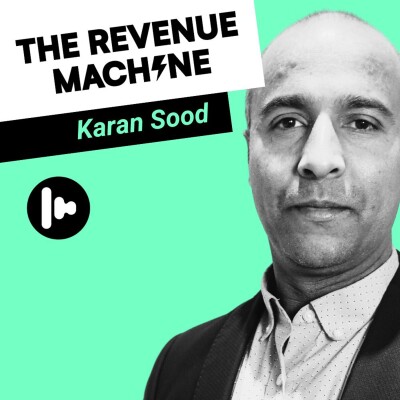
Is everything a commodity, even something as basic as water or car rentals? Karan confidently asserts that with the right approach, anything can be transformed into a valuable brand asset. The perception of something as a mere commodity arises from a lack of perceived value and effective marketing strategies. That is said! Karan is the undisputed reference of pricing strategies, dedicating his entire career to mastering this vital domain. He's left his mark across diverse industries, from automobiles to Yellow Pages and health products, and is currently at the helm of pricing excellence at Rakuten, overseeing the Kobo reader. Here is some of what you will find in this episode: Within our cognitive framework, two distinct mental processes govern our pricing decisions. One is the rapid, instinctual reaction that references price as a primary factor. Simultaneously, a slower cognitive process evaluates the various elements comprising the value proposition, including intricate psychological factors that influence pricing. Remember, a strong brand isn't cultivated on third-party broker sites; it blossoms on your very own platform and during the delivery of exceptional service. Building a brand demands both time and financial investments. However, car rental operators needn't scramble to attract all customer segments simultaneously, whether they're low-value, mid-value, or high-value customers. It's important to recognize that most individuals are inherently more averse to losses than they are drawn to potential gains. Karan Sood on linked In https://www.linkedin.com/in/soodkaran/ Timeline - 0:00:00 to 0:06:00 Introduction of Karan Sood - 0:06:00 to 0:19:00 100% as pricer in a wide range of sectors - 0:19:00 to 0:27:40 Everything is a commodity if you leave the space for a commodity - 0:27:40 to 0:37:55 Do the operators competete on price or on the realvalue proposition? - 0:37:55 to 0:54:00 Brand building is off the transaction, much earlier - 0:54:00 to 1:12:00 Understand the "good, better and best" concept - 1:12:00 to 1:20:00 Do not be shy to do A/B testing in price - 1:20:00 to the end conclusion References - Kobo by Rakuten https://www.kobo.com/ - Daniel Kanheman https://www.kobo.com/us/en/ebook/thinking-fast-and-slow - Liquid death https://liquiddeath.com/ - Advanced Car Lebanon https://www.advancedcarrent.com/ - Rent a Wreck https://www.rentawreck.com/ - U-Haul https://fr.uhaul.com/ - Predictably Irrational by Dr. Dan Ariely https://www.kobo.com/us/en/ebook/predictably-irrational-revised-and-expanded-edition - Steven Forth, Ibaka - Snow White at AirB&B https://techcrunch.com/2012/07/18/airbnb-brian-chesky-snow-white/ This podcast is produced by WeYield, the revenue management company dedicated to the car rental industry. Hosted on Ausha. See ausha.co/privacy-policy for more information.
1h34 | Published on September 14, 2023

Pourquoi et comment changer de système de gestion opérationnel (aussi appelé ERP) ? Dans cet épisode, Emmanuel Scuto, fondateur et PDG de WeYield, échange avec Denis Maure, co-associé et Directeur Général de Sepamat, le premier franchisé Europcar en France, autour du projet de migration de son ERP vieu de 40 ans vers la solution Wheels. Denis partage la méthode employée pour faire de ce chantier titanesque un succès. Sujets du podcast - changer son système d'information ERP, pourquoi ? comment ? - quelles sont les étapes clefs? - comment organiser et animer les équipes en interne - les éléments clefs du succès Sepamat, entreprise pionnière en mobilité automobile, promeut l'usage judicieux de la voiture via 25 agences dans l'ouest de la France. Les marques qu'elle opère sont Europcar, LocEco et Marguerite (auto-partage), avec une flotte totale de 7000 véhicules pour un CA de 60m€. Face à l'arrêt imminent du système opérationnel vieillissant après 40 ans, Sepamat agit. Collaborant avec un consultant externe, elle effectue un audit interne pour les spécifications. Le choix s'arrête sur le système Wheels par Invensys qui édite un logiciel entièrement dédié à la location de voitures. Coordonner les multiples interfaces était clé pour le lancement. Le projet a également été l'occasion de revoir le site web et de la gestion des données. La barrière de la lanque a été gérée facilement et les adaptations se sont faites en interne. L'organisation fut essentielle : réunions hebdo supervisées par le consultant extérieur de Next Décision, comité de projet régulier. L'entreprise s'est segmentée en processus métier gérés par des responsables dédiés en charge de la livraison des modules et de leur recettage. La Covid a été une bonne chose car elle a libèré des ressources pour ce projet. Le lancement, intialement prévu fin février 2021 est retardé au week-end de Pâques pour optimiser les ressources. Le rôle du DG a été de maintenir les liens avec les parties prenantes et d'anticiper les risques. Ce projet a été au-delà d'une simple mise à jour informatique : c'est une transformation organisationnelle exigeant une équipe compétente et une gestion adéquate. La disponibilité des équipes (50% de leur temps) est cruciale. Le lancement est salué pour la hausse d'efficacité et de productivité, permettant de nouveaux développements. Il a également mis en lumière les impacts sur le back-office, sous-estimés au départ du projet. Pour suivre Denis, https://www.linkedin.com/in/denis-maure/ Dans cet épisode : 0:00:00 to 0:05:40 introduction de Denis Maure, présentation de Sepamat Europcar Atlantique 0:05:40 to 0:9:15 pourquoi changer de PMS-système opérationnel ? 0:9:15 to 0:17:30 organiser un audit interne pour aider à réaliser le cahier des charges 0:17:30 to 0:28:50 choix de la solution Wheelsys par Invensys avec quels arbitrages 0:28:50 to 0:40:00 comment coordonner tous les intervenants et animer le(s) projet(s)? 0:40:00 to 0:50:00 go live : quelle date ? 0:40:00 à 0:50:00 go live : quelle date ? 0:50:00 à la fin enseignements et résultats tirés de cette migration References: Sepamat https://www.sepamat.fr/ Europcar Atlantique https://www.europcar-atlantique.fr/ Loceco https://www.loceco.com/ Marguerite auto-partage https://www.imarguerite.com/ Wheelsys https://wheelsys.com/ Nextdecision https://www.next-decision.fr/ WeYield revenue management https://fr.weyield.io/ SalesForce https://www.salesforce.com/fr/ Aris https://www.aris.fr/ Hosted on Ausha. See ausha.co/privacy-policy for more information.
1h01 | Published on August 12, 2023

This podcast is producted by WeYield, the revenue management company dedicated to the car rental industry. In this episode, Emmanuel Scuto, Founder and CEO of WeYield, shares his point of view on the coexistence between brokers and car rental companies. He explains the differences in perception of the business on both sides and shares his recommendations for car rental companies to better manage this relationship built on the basis of power relations. Timeline - 00:50 - introduction, context, differences between car rental operators and brokers, Emmanuel Scuto perspective, - 02:04 - definitions - 03:34 - history of car rental operators (Sixt, Hertz, Avis, Europcar) and history of OTA (Expedia, Last Minute) and brokers (Booking.com, Rentalcars, Cartrawler and more) - 07:16 - differences between brokers and car rental operators - 14:00 - pressure on the supply (fleet) for the car rental operators - 15:40 - WeYield tips on how to monitor precisely the broker performance (volume of activity and cancelations generated too) via https://www.weyield.io/ Hosted on Ausha. See ausha.co/privacy-policy for more information.
26min | Published on October 22, 2022
Description
Passionnate about car rental company transformation in yield management, Emmanuel Scuto interviews the industry experts to put the light on revenue management.
Hosted on Ausha. See ausha.co/privacy-policy for more information.
39 episodes
Season 1
This podcast is produced by WeYield, the revenue management company dedicated to the car rental industry. In this episode, Emmanuel Scuto, founder and CEO of WeYield, interviews Alienor Izri, a revenue management consultant in the car rental industry. Alienor is a French car rental optimization expert since 2015 and is based in New Zealand. Alienor has a very scientific academic background combined with a creative passion in many fields (theater, photography). Moving to New Zealand to experience a new life, she started in car rental at Easy Car. Alienor moved the organization from static to dynamic pricing with the help of external consultants to implement this new approach with great improvements in efficiency. Quickly, Excel was not enough and systems were needed to update pricing at scale. For her, internal communication is crucial to facilitate exchanges between the different departments. Revenue Management quickly became the control tower of the organization. Timeline - 0:00:00 to 0:07:50 Introduction of Alienor, history of mathematics - 0:07:50 to 0:11:00 Start of car rental with Easy Car Rental - 0:11:00 to 0:17:55 Switch from static to dynamic pricing - 0:17:55 to 0:28:35 First results on company performance - 0:28:35 to 0:38:20 System change to update prices at scale by leaving excel - 0:38:20 to 0:43:35 Organization of internal communication between all departments - 0:43:35 to 1:00:40 Transition from an independent car rental company to a large international brand - 1:00:40 to 1:21:40 A strong choice to reconcile work and freedom - 1:21:30 to 1:31:40 Advice to Alienor by Alienor Reference of the book "The Alchemist" by Paulo Coelho References - Cars+ by Thermeon - Wheels by Wheelsys - MarginFuel - WeYield - instagram : alienorphotonz - linked: alienor-izri-47355a52 - Wild life expo www.photo-montier.org/en/ Hosted on Ausha. See ausha.co/privacy-policy for more information.
1h31 | Published on December 29, 2022
This podcast is producted by WeYield, the revenue management company dedicated to the car rental industry. In this episode, Emmanuel Scuto, Founder and CEO of WeYield, interviews Michael Meyer, Founder and CEO of Rate Highway. Established in Irvine, California, Rate Highway has a 20-year long well known experience in the automated rate positioning technology for the car rental industry. Michael started is career in the mid-1980 and saw all the evolution of the technology from his first Commodore computer to today internet predominancy in all our life. Timeline - 0:00:00 to 0:05:50 Introduction of Michael - 0:05:50 to 0:08:26 How programing became the core of problem solving - 0:08:26 to 0:33:00 Symmetry Computing, first company - 0:33:00 to 0:42:00 Rateshoping started in hotels - 0:42:00 to 1:00:00 US market vs the rest of the world - 1:00:00 to 1:12:00 How has the techno impacted Ratehighway? - 1:12:00 to end How does Michael learn and improve? Book references: - The phantom Tollbooth from Norton Juster - The Power of Habit from Charles Duhigg Hosted on Ausha. See ausha.co/privacy-policy for more information.
1h41 | Published on November 11, 2022
Other episodes
Arturs boasts over 25 years in the car rental sector, initially with Avis in Latvia. His foresight in transport economics led to a pioneering thesis on car rental models, anticipating the shift from vehicle ownership to renting. After establishing a luxury car club in Russia and a move to US, he transitioned to Italy, focusing on electronic distribution and online markets. For him, the legacy brands underestimated online potential, assuming their reputation sufficed. Sixt and Enterprise differed, prioritizing customer-centric services. Disparities in pricing strategies between the US and Europe influenced sales tactics and customer interactions significantly, with aggressive upselling tactics commonplace in the US. Brokers reshaped the industry by mastering online marketing, although some struggle to be profitable amid saturation and technological demands. New brands stemming from the resale car market present challenges due to limited rental expertise. The recent expansion of the affiliation programs in the car rental is driven by experienced managers from established brands pivoted to offer fresh sales approaches. Brokers embraced these innovations through platform upgrades and digitalized customer service, reducing operational costs for new brands. Overall, the industry evolved due to a clash between stagnant legacy players and innovative disruptors, fostering a new era of cost-effective and tech-savvy rental models. Timeline - 0:00:00 to 0:08:05 Introduction of Arturs - 0:06:20 to 0:14:35 Entrepreneurship in Russia called Garage #1 - 0:14:35 to 0:23:35 First mistake of the big brands - 0:23:35 to 0:28:20 Sixt is on a different path - 0:28:20 to 0:30:35 Difference between a franchise in Europe and the same brand in US - 0:38:45 to 0:52:08 Are all the brokers efficient and profitable? - 0:52:08 to 1:03:45 Residual value scisor effect - 1:03:45 to 1:14:50 Affiliation brands expanding - 1:14:50 to 1:31:05 Control the techno, use it as a servant for the customer satisfaction - 1:31:05 to end References - Rently https://www.rentlysoft.com/ - Cartrawler https://corporate.cartrawler.com/en-gb/ - Sixt https://www.sixt.com/ - Advanced Car Rental https://www.advancedcarrent.com/ - Rate Highway https://www.ratehighway.com/savings.html - previous episodes talked Shady Younis, Nicolas Le Nue, Jared Kinnaird and Julian Espiritu Hosted on Ausha. See ausha.co/privacy-policy for more information.
1h42 | Published on December 26, 2023
Like the majority of car hire companies, it almost certain that your pricing strategy and execution are in the hand of one person. So what happens if this suddenly, this key player in your organization becomes unavailable? Specifically in the yield management domain, this situation can have a major impact on your sales performane including also managing your distribution channels. With his long experience in car rental, Adrian Treacy, customer success manager at WeYield, shares his vision on how to important is to have a continuity plan. He also lists the 4 steps to anticipate any foreseen events and implement proactive processes to 1/ identify the key roles that are critical to day-to-day crucial to the business 2/ cross-train the team member to step in different roles 3/ succession planning to identify potential replacers for key roles 4/ documentation and knowledge shares to be encouraged with enough and updated procedures To implementation the plan, here is Adrian'tips: 1/ conduct a risk assessement 2/ develop a business continuity team 3/ review and update plans on a regular basis 4/ test the effectiveness of the plan 5/ communicate and educate teams Embrace the unexpected, get prepared with automation to continue piloting your operations with the less impact possible in the case of unexpected unavailabilyt of one of your key staff. Hosted on Ausha. See ausha.co/privacy-policy for more information.
12min | Published on December 12, 2023
Implementing an effective pricing strategy in the competitive car rental industry demands a keen understanding of market dynamics and recent pricing shifts. Rate Highway's 1999 innovation introduced software as a service, transforming accessibility and maintenance. While Europe's pricing simplicity contrasts with broker complexity, continuous rate monitoring remains crucial. Automated pricing updates are now vital, easing manual management challenges and enhancing revenue by fostering forward-thinking analysis. Successful revenue management relies on the 3C's: collection, comparison, and correction. Prioritizing data refinement over daily operations is necessary. Suggestion: starting with a simple strategy and gradually integrating advanced features proves beneficial, while even a small time commitment towards pricing optimization yields significant financial gains. Simplifying tactics and setting clear goals are key to profitability amid the forthcoming AI-driven pricing landscape. Julie Flores on linked In https://www.linkedin.com/in/julieanneflores/ Timeline - 0:00:00 to 0:08:00 Introduction of Julie Flores - 0:06:20 to 0:09:20 History of Rate Highway started 1999 - 0:09:20 to 0:18:05 Comparison between US and Europe way of managing their price - 0:18:05 to 0:22:45 Why using automatic rate updating system - 0:22:45 to 0:30:35 How does Rate Monitor work - 0:30:35 to 0:42:40 Start simple for a successful pricing strategy - 0:42:40 to 0:56:40 Avoid these pitfalls - 0:56:40 to 1:01:05 AI and machine learning in automatic pricing - 1:01:05 to end Conclusion References - Wheelsys https://wheelsys.com/ - TSD https://tsdweb.com/ - Blue Bird https://www.barsnet.com/products/ - Rate Highway https://www.ratehighway.com/service.html Hosted on Ausha. See ausha.co/privacy-policy for more information.
1h07 | Published on November 19, 2023
What inspired Vassilis to venture into creating and operating software specifically tailored for car rental businesses? What motivates him both personally and as a leader? What key milestones mark his successful journey spanning three decades? Vassilis Devletoglou is the Founder and CEO of Wheelsys, a Greek software company specializing in the management of various car rental operations. Why did he choose the car rental industry in his early twenties during the late 90s? It was during his master's program in technology and yield management that he discovered the complexity and fascination of car rental operations. In December 2003, he introduced the first functional software that clients could fully utilize. "The disparity in quality between Vassilis personally handling a task and micromanaging a team to do it his way is merely 5%." However, this micromanagement consumes opportunities for business expansion. Granting the Wheelsys team autonomy allows the company to operate successfully on its own. The success isn't solely attributed to Wheelsys being good software, but rather to their ongoing commitment to creativity and weekly updates, continuously enhancing their operating system. They are not content with staying within their comfort zone. As an example, Vassilis Devletoglou made the bold decision to transition Wheelsys entirely to a web-based version, while many competitors still operated on local servers or maintained both options. How do you prepare for such a significant change in the operating system? A successful migration begins with management's commitment to the switch and a thorough understanding of internal strengths and weaknesses. It goes beyond merely signing a contract and paying a fee. Success hinges on the team's dedication, supported by the management team. It requires stepping out of the company's comfort zone, and it's essential not to expect operations to continue in the same way as before. Engaging a consulting firm can significantly facilitate communication between the client and the supplier. Let make things by the staff that technology can not do. Vassilis Devletoglou on linked In https://www.linkedin.com/in/vassilis-devletoglou/ Timeline - 0:00:00 to 0:08:00 Introduction of Vassilis Devletoglou - 0:08:00 to 0:17:00 Vassilis history as software engineer who focused on car software - 0:17:00 to 0:26:40 Vassilis first rental experiences in 2001 to explore the process - 0:26:40 to 0:36:15 2004, Olympic games and first 5 clients followed by 30 - 0:36:15 to 0:42:30 Hiring: no coincidence in two persons matching - 0:42:30 to 0:52:00 Sharing values but no micro-managing - 0:52:00 to 1:04:45 Internationalization and migration as a webapp - 1:04:45 to 1:25:10 How to prepare a system migration with success - 1:25:10 to 1:43:45 The future of the operating system - 1:04:45 to 1:52:28 Impact of electric fleet - 1:52:28 to end How does Vassilis continue to learn, conclusion References - Avance.gr - Greenmotion - Migration journey from Denis Maure, Sepamat Europcar Atlantic, Podcast #10 - The Infinite Game from Simon Sinek - The 5am Club from Robin Sharma This podcast is produced by WeYield, the revenue management company dedicated to the car rental industry. Hosted on Ausha. See ausha.co/privacy-policy for more information.
2h06 | Published on October 17, 2023
Is everything a commodity, even something as basic as water or car rentals? Karan confidently asserts that with the right approach, anything can be transformed into a valuable brand asset. The perception of something as a mere commodity arises from a lack of perceived value and effective marketing strategies. That is said! Karan is the undisputed reference of pricing strategies, dedicating his entire career to mastering this vital domain. He's left his mark across diverse industries, from automobiles to Yellow Pages and health products, and is currently at the helm of pricing excellence at Rakuten, overseeing the Kobo reader. Here is some of what you will find in this episode: Within our cognitive framework, two distinct mental processes govern our pricing decisions. One is the rapid, instinctual reaction that references price as a primary factor. Simultaneously, a slower cognitive process evaluates the various elements comprising the value proposition, including intricate psychological factors that influence pricing. Remember, a strong brand isn't cultivated on third-party broker sites; it blossoms on your very own platform and during the delivery of exceptional service. Building a brand demands both time and financial investments. However, car rental operators needn't scramble to attract all customer segments simultaneously, whether they're low-value, mid-value, or high-value customers. It's important to recognize that most individuals are inherently more averse to losses than they are drawn to potential gains. Karan Sood on linked In https://www.linkedin.com/in/soodkaran/ Timeline - 0:00:00 to 0:06:00 Introduction of Karan Sood - 0:06:00 to 0:19:00 100% as pricer in a wide range of sectors - 0:19:00 to 0:27:40 Everything is a commodity if you leave the space for a commodity - 0:27:40 to 0:37:55 Do the operators competete on price or on the realvalue proposition? - 0:37:55 to 0:54:00 Brand building is off the transaction, much earlier - 0:54:00 to 1:12:00 Understand the "good, better and best" concept - 1:12:00 to 1:20:00 Do not be shy to do A/B testing in price - 1:20:00 to the end conclusion References - Kobo by Rakuten https://www.kobo.com/ - Daniel Kanheman https://www.kobo.com/us/en/ebook/thinking-fast-and-slow - Liquid death https://liquiddeath.com/ - Advanced Car Lebanon https://www.advancedcarrent.com/ - Rent a Wreck https://www.rentawreck.com/ - U-Haul https://fr.uhaul.com/ - Predictably Irrational by Dr. Dan Ariely https://www.kobo.com/us/en/ebook/predictably-irrational-revised-and-expanded-edition - Steven Forth, Ibaka - Snow White at AirB&B https://techcrunch.com/2012/07/18/airbnb-brian-chesky-snow-white/ This podcast is produced by WeYield, the revenue management company dedicated to the car rental industry. Hosted on Ausha. See ausha.co/privacy-policy for more information.
1h34 | Published on September 14, 2023
Pourquoi et comment changer de système de gestion opérationnel (aussi appelé ERP) ? Dans cet épisode, Emmanuel Scuto, fondateur et PDG de WeYield, échange avec Denis Maure, co-associé et Directeur Général de Sepamat, le premier franchisé Europcar en France, autour du projet de migration de son ERP vieu de 40 ans vers la solution Wheels. Denis partage la méthode employée pour faire de ce chantier titanesque un succès. Sujets du podcast - changer son système d'information ERP, pourquoi ? comment ? - quelles sont les étapes clefs? - comment organiser et animer les équipes en interne - les éléments clefs du succès Sepamat, entreprise pionnière en mobilité automobile, promeut l'usage judicieux de la voiture via 25 agences dans l'ouest de la France. Les marques qu'elle opère sont Europcar, LocEco et Marguerite (auto-partage), avec une flotte totale de 7000 véhicules pour un CA de 60m€. Face à l'arrêt imminent du système opérationnel vieillissant après 40 ans, Sepamat agit. Collaborant avec un consultant externe, elle effectue un audit interne pour les spécifications. Le choix s'arrête sur le système Wheels par Invensys qui édite un logiciel entièrement dédié à la location de voitures. Coordonner les multiples interfaces était clé pour le lancement. Le projet a également été l'occasion de revoir le site web et de la gestion des données. La barrière de la lanque a été gérée facilement et les adaptations se sont faites en interne. L'organisation fut essentielle : réunions hebdo supervisées par le consultant extérieur de Next Décision, comité de projet régulier. L'entreprise s'est segmentée en processus métier gérés par des responsables dédiés en charge de la livraison des modules et de leur recettage. La Covid a été une bonne chose car elle a libèré des ressources pour ce projet. Le lancement, intialement prévu fin février 2021 est retardé au week-end de Pâques pour optimiser les ressources. Le rôle du DG a été de maintenir les liens avec les parties prenantes et d'anticiper les risques. Ce projet a été au-delà d'une simple mise à jour informatique : c'est une transformation organisationnelle exigeant une équipe compétente et une gestion adéquate. La disponibilité des équipes (50% de leur temps) est cruciale. Le lancement est salué pour la hausse d'efficacité et de productivité, permettant de nouveaux développements. Il a également mis en lumière les impacts sur le back-office, sous-estimés au départ du projet. Pour suivre Denis, https://www.linkedin.com/in/denis-maure/ Dans cet épisode : 0:00:00 to 0:05:40 introduction de Denis Maure, présentation de Sepamat Europcar Atlantique 0:05:40 to 0:9:15 pourquoi changer de PMS-système opérationnel ? 0:9:15 to 0:17:30 organiser un audit interne pour aider à réaliser le cahier des charges 0:17:30 to 0:28:50 choix de la solution Wheelsys par Invensys avec quels arbitrages 0:28:50 to 0:40:00 comment coordonner tous les intervenants et animer le(s) projet(s)? 0:40:00 to 0:50:00 go live : quelle date ? 0:40:00 à 0:50:00 go live : quelle date ? 0:50:00 à la fin enseignements et résultats tirés de cette migration References: Sepamat https://www.sepamat.fr/ Europcar Atlantique https://www.europcar-atlantique.fr/ Loceco https://www.loceco.com/ Marguerite auto-partage https://www.imarguerite.com/ Wheelsys https://wheelsys.com/ Nextdecision https://www.next-decision.fr/ WeYield revenue management https://fr.weyield.io/ SalesForce https://www.salesforce.com/fr/ Aris https://www.aris.fr/ Hosted on Ausha. See ausha.co/privacy-policy for more information.
1h01 | Published on August 12, 2023
This podcast is producted by WeYield, the revenue management company dedicated to the car rental industry. In this episode, Emmanuel Scuto, Founder and CEO of WeYield, shares his point of view on the coexistence between brokers and car rental companies. He explains the differences in perception of the business on both sides and shares his recommendations for car rental companies to better manage this relationship built on the basis of power relations. Timeline - 00:50 - introduction, context, differences between car rental operators and brokers, Emmanuel Scuto perspective, - 02:04 - definitions - 03:34 - history of car rental operators (Sixt, Hertz, Avis, Europcar) and history of OTA (Expedia, Last Minute) and brokers (Booking.com, Rentalcars, Cartrawler and more) - 07:16 - differences between brokers and car rental operators - 14:00 - pressure on the supply (fleet) for the car rental operators - 15:40 - WeYield tips on how to monitor precisely the broker performance (volume of activity and cancelations generated too) via https://www.weyield.io/ Hosted on Ausha. See ausha.co/privacy-policy for more information.
26min | Published on October 22, 2022